


Audi Hungaria has made 45 million engines including electric and ICE.
Audi Hungaria has achieved a historic production milestone, rolling out its 45 millionth powertrain — a 220 kW electric drive unit destined for the upcoming Audi Q6 e-tron. This drive will be transported from Győr to Ingolstadt on carbon-neutral “green trains,” underscoring the company’s commitment to sustainability.
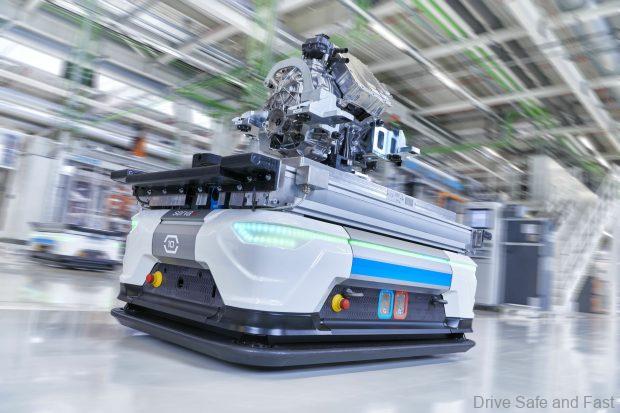
Powertrain production in Győr began in 1994 with a four-cylinder, five-valve petrol engine. Over the decades, the portfolio expanded to include a wide range of internal combustion engines from three to ten cylinders, as well as cutting-edge electric drives. Today, the site produces nearly two million powertrains annually for the Volkswagen Group’s global network.
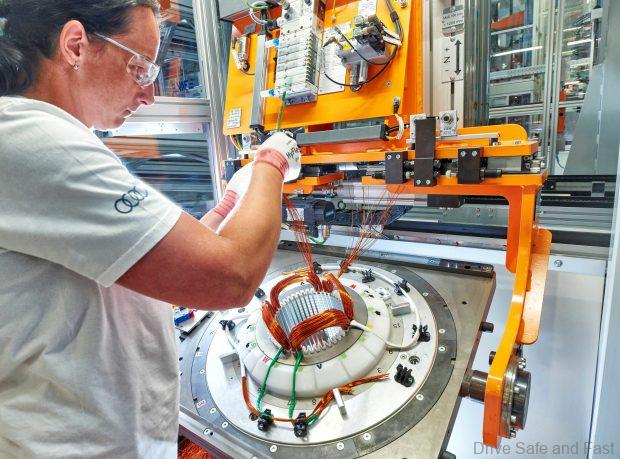
Audi Hungaria has firmly established itself as the world’s largest powertrain manufacturer, a position it continues to hold thanks to its ability to adapt to the automotive industry’s rapid changes. Since 2018, the company has increasingly focused on electric mobility, producing more than 580,000 electric drives to date.
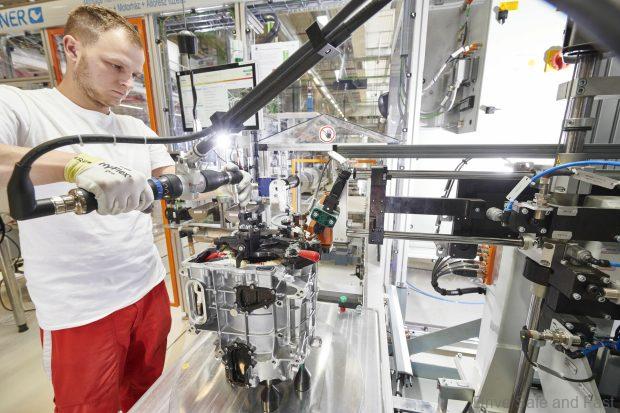
A significant portion of this electric production is dedicated to Premium Platform Electric (PPE) drives, developed jointly with Porsche. Manufactured on a 15,000 m² production line, PPE drive assembly involves the production of stators, transmission components, and complete drive units. Nearly 48,000 PPE drives have already been built, many of which will power the Audi Q6 e-tron and other PPE-based models.
Of the total 45 million powertrains produced in Győr, more than 22 million have been four-cylinder petrol engines and over 11 million have been four-cylinder diesel engines. The steady rise in electric motor output reflects the company’s strategic pivot toward electromobility while maintaining strong internal combustion engine production for the Group’s global needs.
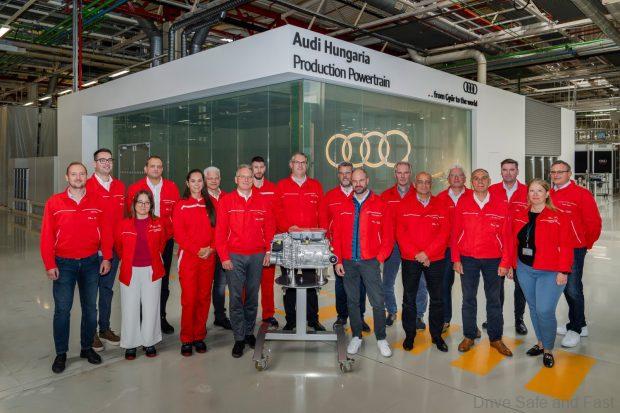
The milestone reflects more than three decades of accumulated expertise, advanced technology, and the dedication of Audi Hungaria’s workforce. With a proven track record in both combustion and electric powertrain production, the company is well-prepared for the transition to sustainable mobility. Its ability to respond flexibly to market changes and adopt future-focused projects ensures that it remains a cornerstone of the Audi and Volkswagen Group’s production strategy.
Looking ahead, the target is clear: the 50 millionth powertrain. Given its track record and adaptability, Audi Hungaria’s role in shaping the next chapter of powertrain technology appears stronger than ever.

