

The company that helped put BYD on the map has now exited his investment.
Berkshire Hathaway has fully exited its investment in BYD, bringing an end to a 17-year story that delivered an astonishing 3,890% return. The decision has raised questions across financial and automotive circles: was Warren Buffett’s legendary investment firm signalling the end of BYD’s explosive growth phase, or simply cashing out at the right time?

A Historic Investment Comes Full Circle
Berkshire Hathaway, led by Warren Buffett and strongly influenced by the late Charlie Munger, first invested in BYD in 2008, purchasing 225 million shares at just 8 HKD (USD 1.03) each. Seventeen years later, the return has been staggering. BYD grew into the world’s largest EV maker by sales, expanding from a niche Chinese automaker into a global powerhouse with a growing presence in Europe, Southeast Asia, and Latin America. Between 2008 and 2025, BYD’s stock price surged nearly 3,900%, making it one of Berkshire’s most lucrative foreign investments.

Why Berkshire Likely Sold Out
From one perspective, Berkshire’s exit signals that BYD’s most aggressive growth phase may be over.
- Slowing Growth: BYD’s sales growth in July and August 2025 barely rose year-over-year (0.1% and 0.2%, respectively). This is the slowest pace since January 2021.
- Lower Targets: The company has internally cut its ambitious 2025 sales goal from 5.5 million to 4.6 million vehicles, indicating expectations are being tempered.
- Fierce Competition: China’s EV market is now saturated, with BYD locked in price wars that the Chinese government now aims to put an end to
- Return Maximisation: With Berkshire having already enjoyed almost four decades’ worth of returns in under 20 years, it may have judged the “easy money” phase complete.
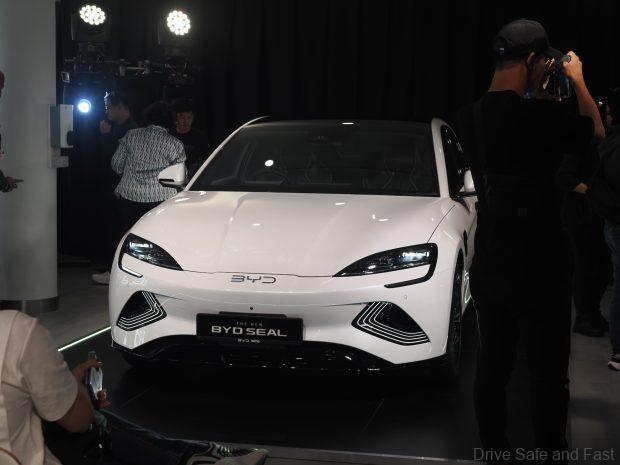
In this light, Berkshire’s full exit looks less like a loss of confidence and more like a disciplined decision to collect the maximum return while the market remains strong. Not everyone sees this as a warning sign. Li Yunfei, BYD’s Brand General Manager, downplayed the exit, calling it a “normal thing” and thanking Buffett and Munger for their support.
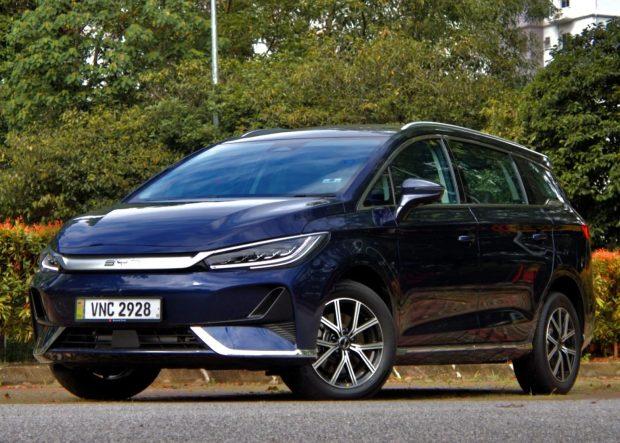
From this perspective, Berkshire’s sale is simply portfolio management:
- Buffett has always maintained that no company stays in Berkshire’s portfolio forever.
- Regulatory disclosures meant Berkshire had to publicly report its holdings, which could have added unnecessary scrutiny.
- BYD, meanwhile, remains a dominant player in the global EV market, and its international expansion is still in its early stages.

For long-term EV watchers, Berkshire’s exit may be less about BYD slowing down and more about Buffett sticking to his disciplined sell-high, buy-low philosophy. For now, Berkshire’s chapter in BYD’s story has closed. But whether the brand’s next era is defined by consolidation or renewed global expansion remains to be seen.

