

The Chery Group are bringing the Jetour T2 and iCaur V23 to Malaysia soon. Which to buy?
The Chery Group’s strategy to tackle the adventurous SUV segment is taking shape with two compelling, soon-to-be-launched challengers: the Jetour T2 and the iCaur V23. Both vehicles hail from relatively new Chinese brands, both adopt the desirable boxy aesthetic, and both promise rugged capability for four to five adults. However, they are built upon fundamentally different philosophies regarding size, power, and design, targeting distinct buyers within the fast-growing electrified SUV market. So for the adventurous at heart, which boxy off-roader SUV from China should you put your money on?
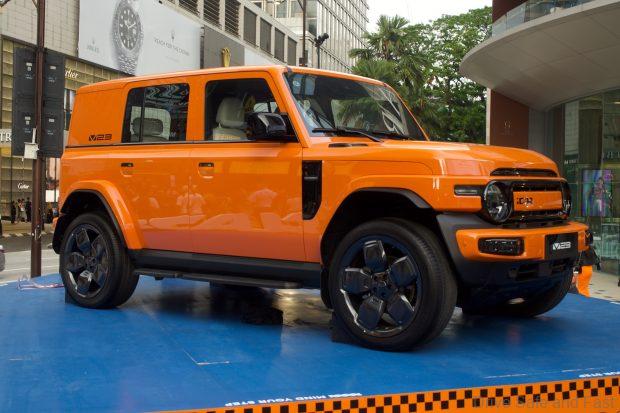
We’re going to avoid talking in too much detail about things like dealer network and brand power – both brands are new and expanding and both are under the Chery Group but Jetour is handled by Berjaya while iCaur falls more under the Jaecoo team. Let’s focus instead on the products.

Design and Footprint: Size vs. Style
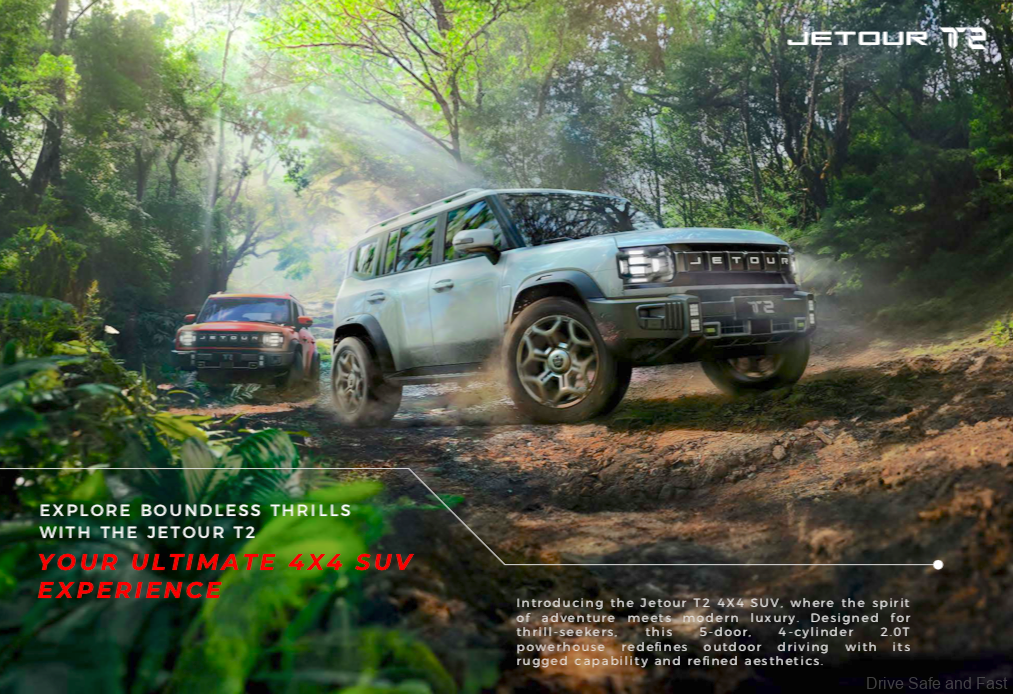
The most immediate difference is scale. The Jetour T2 presents a larger form of the rugged SUV, drawing aesthetic inspiration from the new Defender. Measuring 4,785 mm in length and over 2,000 mm in width, it boasts a substantial road presence, comparable in size to a large seven-seater SUV, but it is configured for five. Its styling is aggressive, featuring square lights, an upright stance, and a distinctive LARGE box on the side-hinged tailgate which houses a space saver SPARE TYRE.
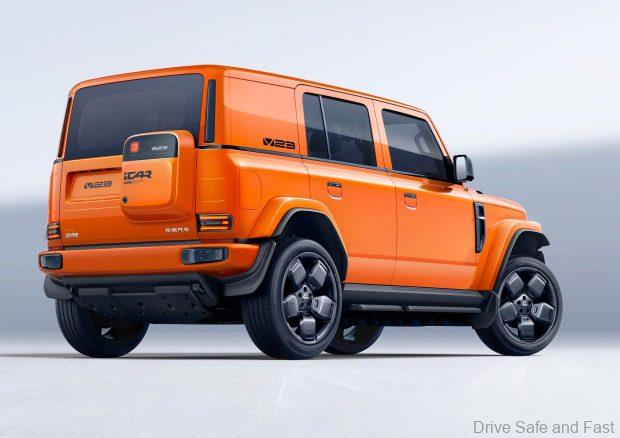
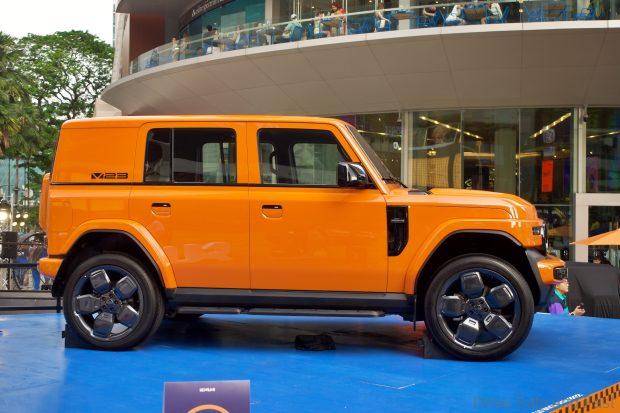
In stark contrast, the iCaur V23 leans heavily into retro charm paying homage to classic off-roaders like the Toyota J40 Land Cruiser with perhaps a hint of modern G Wagon at the rear. At 4,220 mm long, it occupies a much smaller footprint than the T2, yet its extreme height of 1,845 mm and minimal body overhangs give it a commanding, tall profile that visually belies its length. This highly compact form factor is key to its off-roading geometry. However the box on the tailgate here is only used for storing the charging cable. It’s also worth noting that the V23 is a little cramped at the rear. Even though it has seating and seatbelts for 5, there isn’t a centre headrest.
Power and Drivetrain: Engine Flexibility vs. Electric Purity
The choice between these two may come down to a preference for power source. The T2 offers traditional flexibility. It will likely start here with a 2.0L turbo petrol with 254 PS and 390 Nm of torque which is sent to all four wheels via a seven-speed wet Dual-Clutch Transmission (DCT).
For those seeking electrification, a Plug-in Hybrid (PHEV) variant is planned, combining a smaller 1.5-litre turbo engine with an electric motor and a dedicated hybrid transmission (DHT), offering a pure-electric range of 160 km if Jetour equips it with their largest battery option.
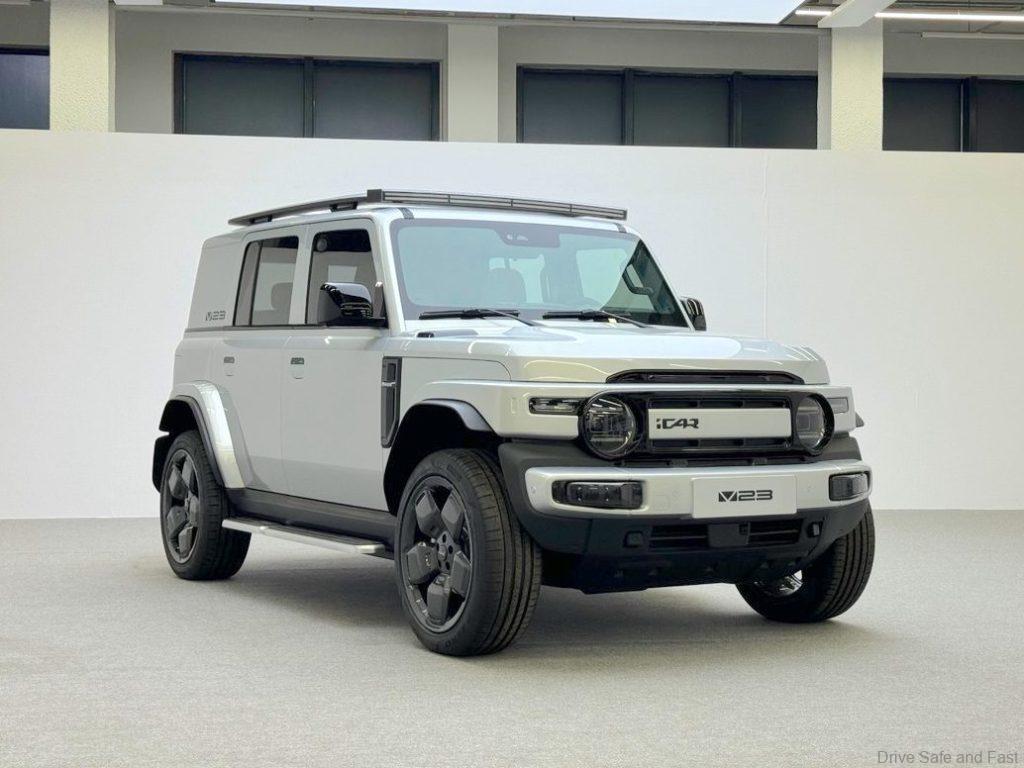
The V23, on the other hand, is a dedicated Battery Electric Vehicle (BEV). It offers a choice between a rear-wheel-drive setup (136 PS) and an intelligent All-Wheel Drive (iWD) dual-motor variant (211PS, 292Nm). While this version will likely feel faster than the T2 off the line, the T2 is probably going to be faster on the open road especially with the PHEV option. The V23’s larger NMC battery provides an estimated NEDC range of over 400 km. Despite the limitations and lower output, some will prefer an EV over an ICE or PHEV option if they’re purchasing a little city runabout and emphasize quiet, nippy road behaviour with minimal running costs.
Off-Road Credentials and Quirks
While both are styled as rugged vehicles built on a unibody chassis, their true off-road strengths differ. The T2 is undeniably powerful, but its use of a DCT in the turbo-petrol model may cause limitations during prolonged, low-speed, high-stress off-road driving. Not many off-roaders use DCTs. On the flip side, petrol and PHEV powertrains are the preferred option for going off the beaten path, as range is less of an issue. Plus, the T2 has a spare tyre right there on the back… though its use off-road is questionable given that it’s just a space saver.
The V23, thanks to its electric architecture, might be arguably the more technically capable off-roader. Its immediate, finely controllable electric torque and superior geometric metrics—including a 200 mm ground clearance, 600 mm wading depth, and excellent approach and departure angles (42° and 40° respectively)—make it an ideal companion for serious rock crawling or traversing rough terrain where precision is key. A valuable quirk is the inclusion of a Vehicle-to-Load (V2L) system, making it a rolling power station for campsite use.

However, we don’t think either vehicle will actually be used for any serious off-roading.
Interior Layout and Technology
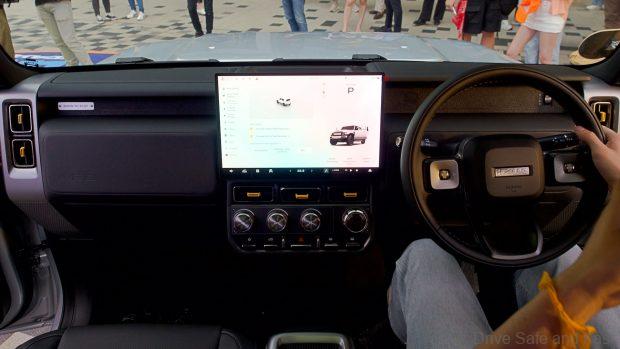
Both cabins feature very similar themes with boxy retro-inspired cues such as taller air vents (the ones in the V23 are split) and a flat dashboard with metallic trim pieces. However there are key differences.
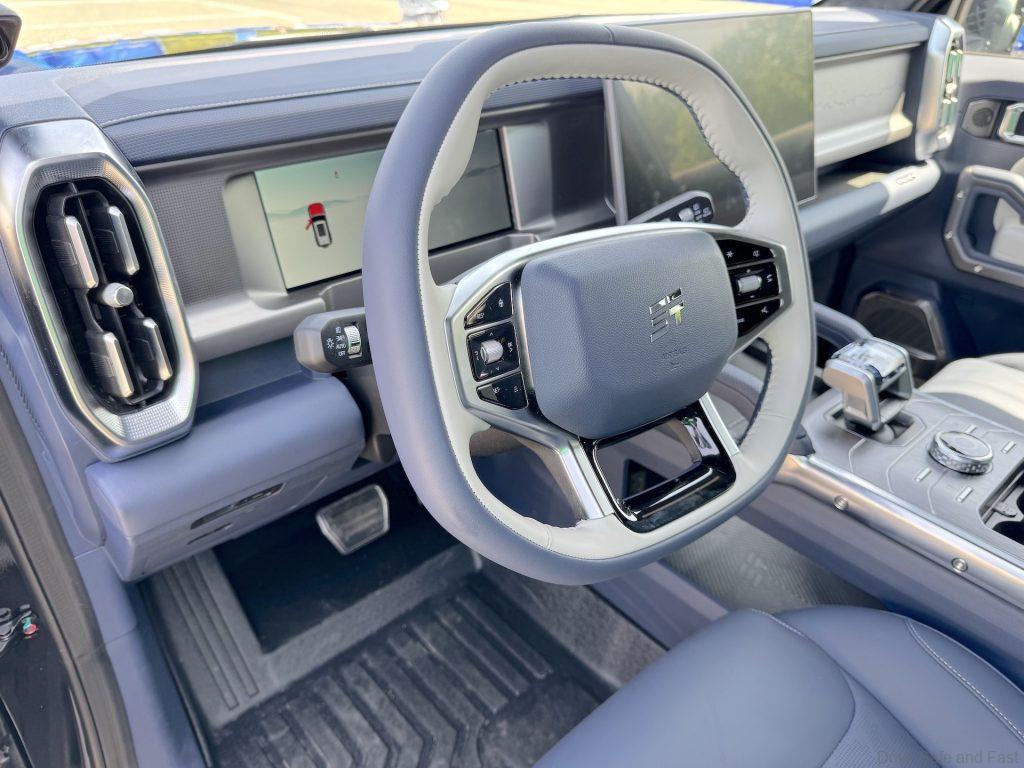
In the Jetour T2 you get two distinct digital displays: a 10.25-inch cluster for the driver and a large 15.6-inch central touchscreen. In the iCaur V23, you have just a single 15.4-inch central display, which handles both infotainment and crucial driving information. However you also get physical dials and switches for a more tactile user experience.
Market Positioning and Timeline
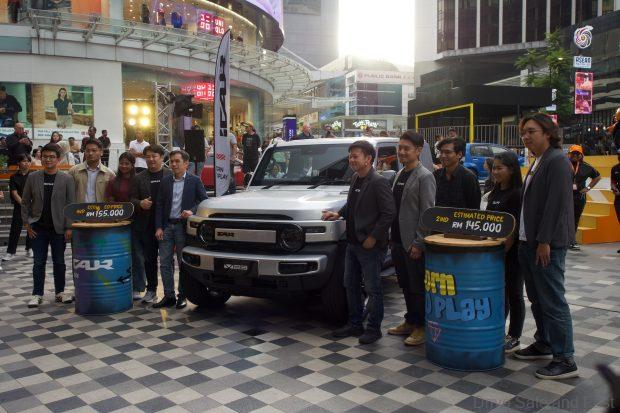
The iCaur V23 is positioned as the more accessible and immediate choice, with an estimated launch price ranging from RM145,000 to RM155,000 for its two variants and an anticipated market debut by the end of the year. The Jetour T2, being a larger machine with a PHEV option and higher expected specification levels, carries a significantly higher estimated price of RM178,888 and is slated for an official launch in the first quarter of 2026.

