


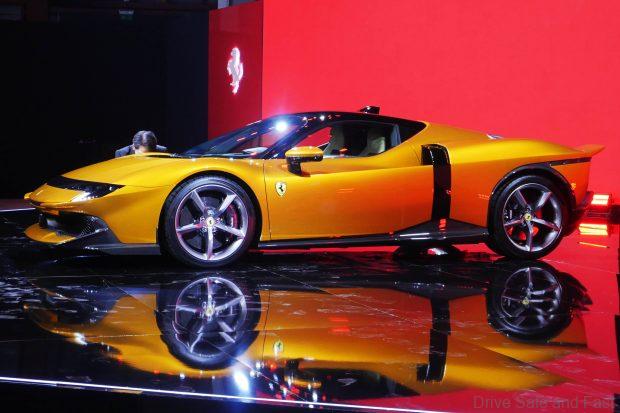
We were in Thailand earlier today to witness the South East Asian premier of the Ferrari 849 Testarossa, the latest and greatest from the brand.
Ferrari initially introduced the Testa Rossa designation in 1956 to denote the color of the cam cover on Ferrari’s most high-performance racing engines. Later, in 1984, the renowned road-going V12 model adopted the name Testarossa. Presently, the newly introduced 849 Testarossa carries on this legacy with a mid-rear mounted twin-turbo V8 plug-in hybrid configuration. This setup is capable of producing an impressive 1050 horsepower. In isolation, the eight-cylinder engine generates 830 horsepower, complemented by three additional electric motors (one at the rear and two more at the front axle). These motors collectively contribute an additional 220 horsepower, along with on-demand four-wheel drive and torque vectoring capabilities.
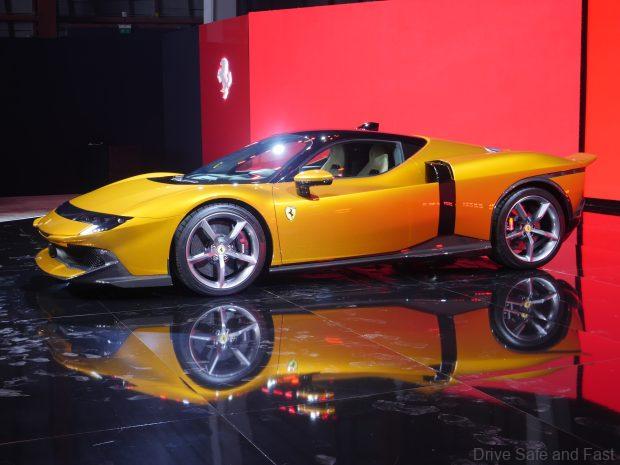
Ferrari has fitted the 849 Testarossa with its latest brake-by-wire system and an ABS Evo controller for better braking precision and consistency. The spring and damper setup has been completely revised to improve the car’s behaviour at the limit of grip. Extensive component weight reduction has allowed the 849 Testarossa to boast the best power-to-weight ratio ever for a range model. This enormous performance increase hasn’t resulted in any additional weight compared to the SF90 Stradale.
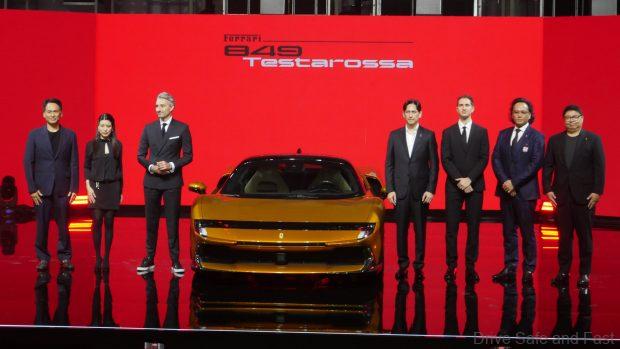
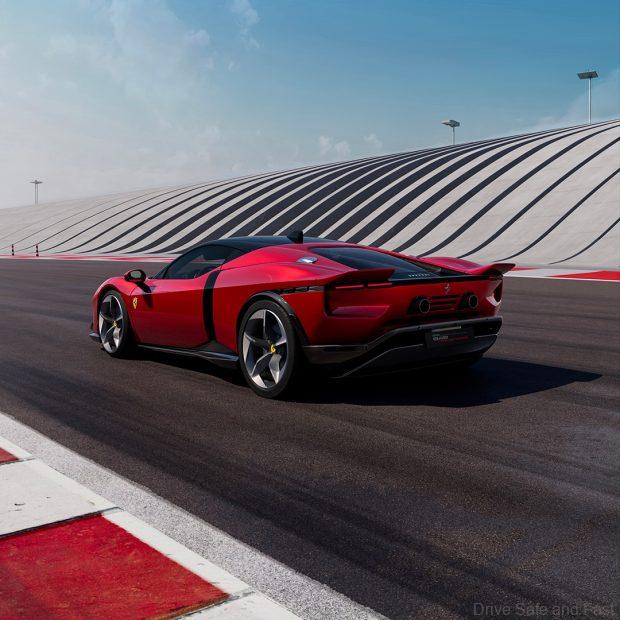
From a styling point of view, the 849 Testarossa marks a revolution in the concept of a Ferrari V8 mid-rear berlinetta. Inspired by 1970s sports prototypes, it features sharp and geometric lines that create a unique and timeless design. The synergy between form and function has enabled impressive aerodynamic performance. The total downforce at 250 km/h is 415 kg, a 25 kg increase over the SF90 Stradale. This also provides a 15% boost in cooling power for the powertrain and brakes.

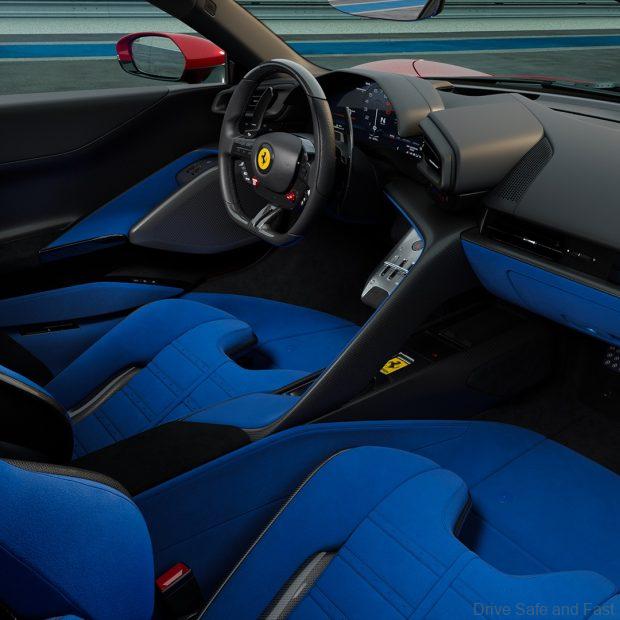
The cockpit is even more enveloping and ergonomic than before. The central sail motif with the integrated gear-change gate, inspired by the F80, improves component positioning and accessibility. The new steering wheel, equipped with mechanical buttons (including the iconic engine start button), elevates the driving experience while maintaining the high functionality of the latest-generation Ferrari steering wheels. Finally, a new HMI system makes interaction with the car even simpler and more intuitive.
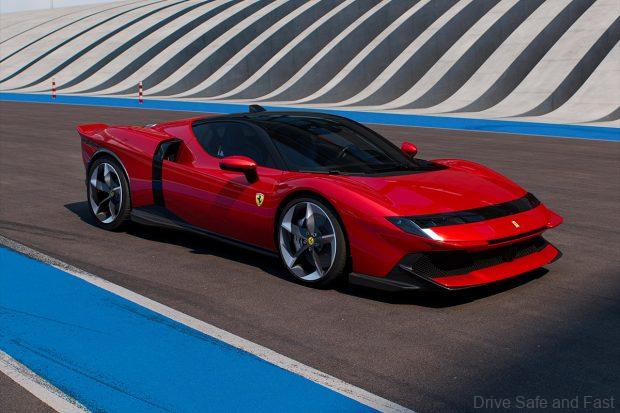
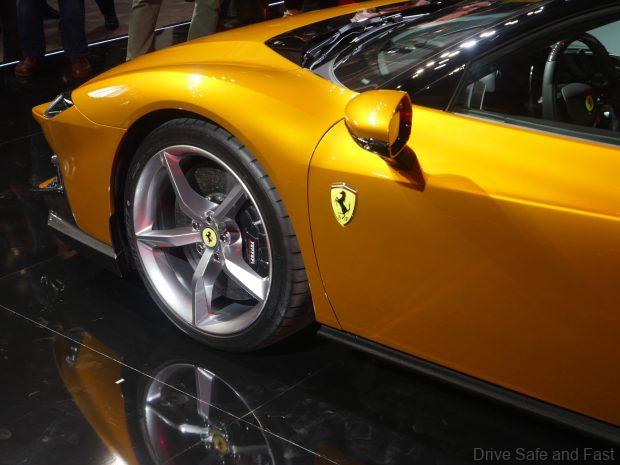
The Assetto Fiorano trim level is an optional configuration for the 849 Testarossa, offering exclusive content that cannot be specified on the standard car. Developed to maximise the car’s dynamic and aerodynamic performance, Assetto Fiorano provides an overall weight reduction of approximately 30kg. This reduction is achieved through the extensive use of composite materials such as carbon fibre and titanium. Specific components include a new lightweight tubular seat upholstered in black Alcantara©, which saves around 18kg compared to the standard seats, and 20” carbon fibre wheels that reduce unsprung mass and improve responsiveness during acceleration and braking.
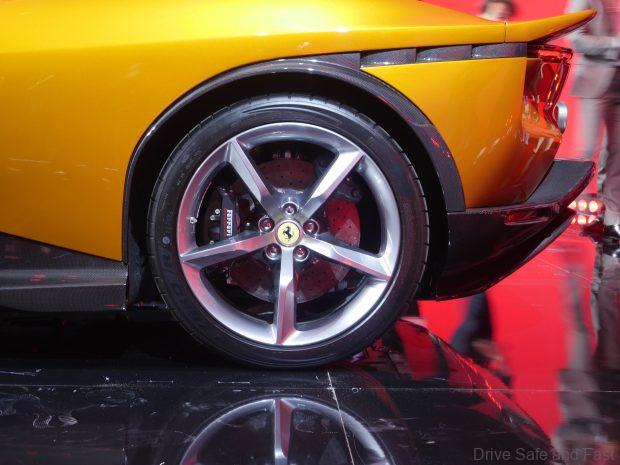
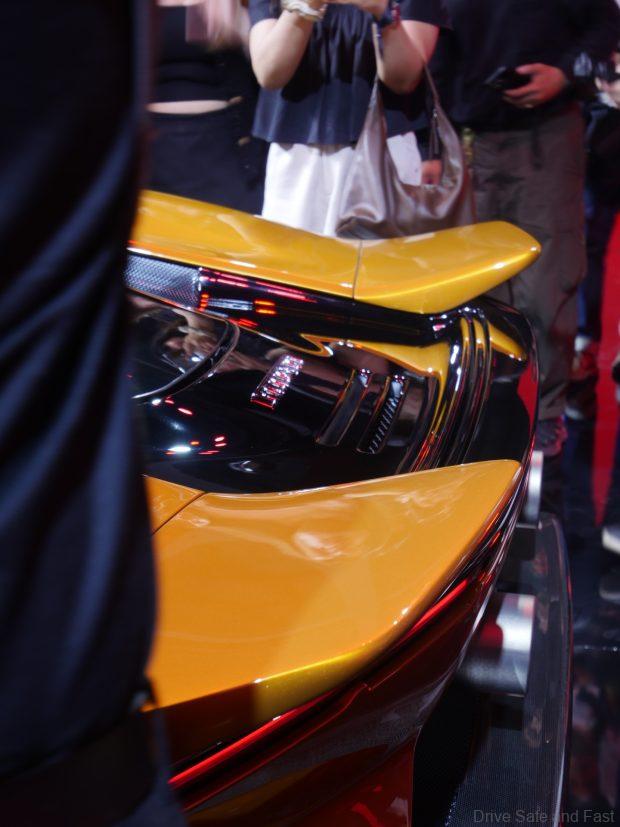
From an aerodynamic perspective, Assetto Fiorano introduces significant changes. The front features larger flicks, and the front underfloor is equipped with an additional pair of vortex generators, enhancing local aspiration and ensuring perfect aerodynamic balance. At the rear, two twin wings replace the twin tails, which are spoilers surmounted by high-incidence aerodynamic profiles set between two vertical endplates. This solution triples the vertical downforce compared to the twin tails without significantly compromising aerodynamic drag.
Vehicle dynamics have been optimised with stiffer, single-rate Multimatic shock absorbers, springs lightened by 35%, and a roll gradient reduced by 10%. These improvements enhance body control and aerodynamic efficiency. For the first time, the Assetto Fiorano specification also offers the option of the front lifter, which maintains the semi-active Magneride suspension. Among the tyres available are the Michelin Pilot Sport Cup2 tyres, specifically developed for this version, ensuring greater grip, consistency, and performance in sporty driving conditions.
The Assetto Fiorano specification can be completed with an exclusive livery available in two colour variants: Bianco Cervino and Rosso Corsa. These livery options feature a graduated background, reinterpreting the classic double longitudinal stripe theme with a graduated effect. The motif begins at the end of the bonnet, crosses the roof, and ends on the rear deck, generating a strong sense of dynamism and modernity.
Ferrari’s unparalleled quality standards and growing emphasis on client service underpin the extended seven-year maintenance programme offered with the 849 Testarossa. This exclusive service is available across the entire range and covers all regular maintenance for the first seven years of the car’s life. It ensures clients’ cars are kept at peak performance and safety over the years. This service is also available to owners of pre-owned Ferraris.
Regular maintenance, original spares, and meticulous checks by staff trained directly at the Ferrari Training Centre in Maranello using the most modern diagnostic tools are just some of the main advantages of the Genuine Maintenance Programme. The service is available on all markets worldwide and from all Dealerships in the Official Dealership Network.
Ferrari offers a wide range of after-sales services. Two programmes, named Warranty Extension Hybrid and Power Hybrid, are now available to meet the needs of clients who want to preserve the performance and excellence of their hybrid Ferrari sports cars over time. Owners of a Prancing Horse PHEV already enjoy a five-year warranty on the hybrid components. If they choose the Warranty Extension Hybrid programme, they will receive a factory-backed, all-inclusive extended warranty that covers the entire car. If they extend the warranty up to the eighth year, the high-voltage battery pack (HVB) will be replaced at no extra cost. The new Power Hybrid programme allows clients to extend the factory warranty on all major powertrain components, including those related to the hybrid system, from year 8 to year 16. Again, it foresees the replacement of the high-voltage battery pack (HVB) from year 16 at no extra cost.

