

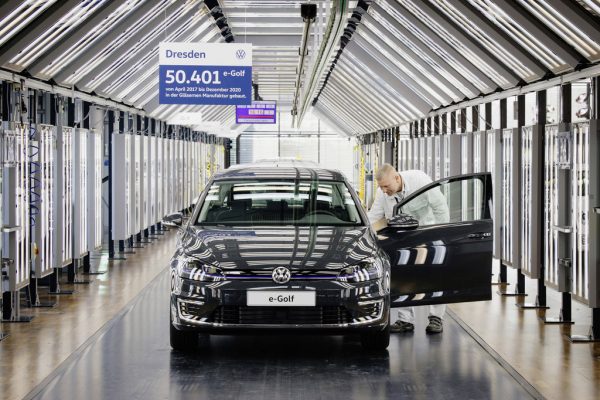
Volkswagen has officially halted vehicle manufacturing at its famous “Transparent Factory” in Dresden.
Talks of plant closures were confirmed over a year ago for Volkswagen and now the first German factory has been shut down. The closure of the Dresden production line signals a significant shift for the German automotive giant as it grapples with severe macroeconomic challenges and intense cash flow pressure. The decision follows a “triple whammy” of declining sales in China, sluggish demand in Europe, and the looming impact of US tariffs.
Mounting Financial Pressure and Budget Cuts
Volkswagen is currently navigating a complex financial landscape, with its CFO, Arno Antlitz, recently indicating that net cash flow for 2025 might only be “slightly positive”. To maintain financial stability, the automaker has been forced to reassess its massive investment plans.
- Investment Reductions: Volkswagen’s rolling five-year investment budget, which once peaked at 180 billion euros, has been cut to approximately 160 billion euros for the current cycle through 2030.
- Longer Life for Internal Combustion Engines: Despite its electrification push, Volkswagen must continue to invest in new generations of gasoline-powered technologies as the transition to EVs takes longer than originally predicted.
The Legacy and Future of the Dresden Plant
Opened in 2002, the glass-walled Dresden facility was originally designed as a high-end showcase for VW’s engineering capabilities.

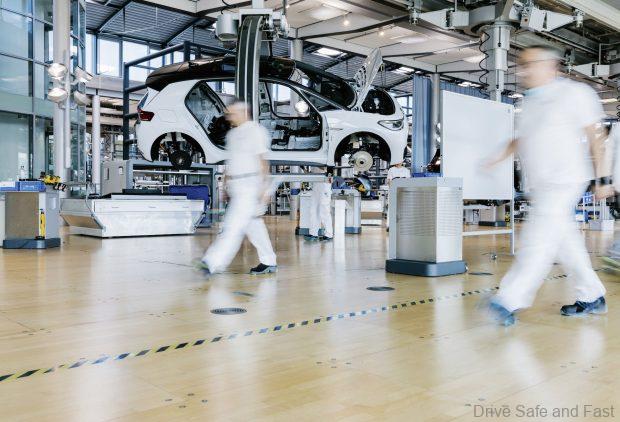
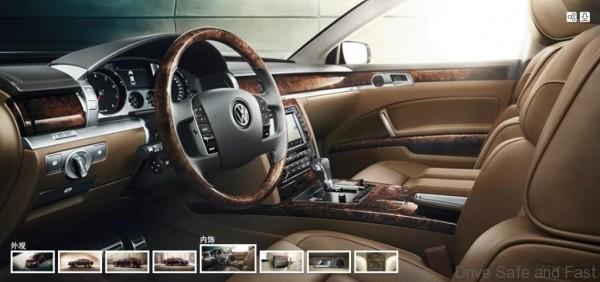
- Production History: Over its 23-year lifespan, the plant produced fewer than 200,000 vehicles—including the luxury Phaeton and, most recently, the battery-powered ID.3. This is a fraction of the output of Volkswagen’s main Wolfsburg facility, which produces over 500,000 cars annually.
- Repurposing into a Research Hub: The site will now be leased to the Technical University of Dresden (TU Dresden) to establish a research campus focused on artificial intelligence (AI), robotics, and semiconductor development. Volkswagen has pledged to invest 50 million euros over the next seven years into this partnership.
Wider Impact on German Operations
The Dresden closure is part of a broader capacity reduction strategy agreed upon with unions, which includes 35,000 job cuts across the VW brand in Germany by 2030. While the company aims to avoid compulsory redundancies through termination agreements and transfers, the closure remains a symbolic and essential step toward long-term profitability.
Volkswagen plans to continue using the Dresden facility as a customer delivery center and a tourist attraction while the research campus takes shape.

