


Battery replacement costs compared between BMW and Tesla EVs.
With petrol subsidies shrinking, many more Malaysians will now consider a tax-free Electric vehicle (EV) as their next vehicle. However, one big obstacle looming over any potential EV purchase is the unknown long-term ownership costs. Where an older petrol car may have a hundred smaller parts that need replacement and maintenance, an EV has one essential part that may cost many times the used value of the car after warranty – the battery. It doesn’t help that most EV manufacturers don’t officially share battery replacement costs upfront and instead insist that prices will always come down for these batteries and that they are rated for the lifetime of the vehicle with a generous warranty thrown in.

To be fair, a warranty is about all they can reasonably do at the point of purchase – after all, no one asks how much an engine replacement will cost when they buy a new petrol car either. But to put your mind at ease (or perhaps unease) we did a bit of digging to find out how much these EV batteries cost to replace from two relatively popular ‘upmarket’ brands selling EVs – BMW and Tesla.
Replacing a battery pack on a high-performance EV like the Tesla Model 3 Performance currently costs around US$14,500 in the USA, or just under RM60,000 before taxes and duties. While that may sound like a lot, it’s actually a little bit cheaper than replacing the engine of a high-performance petrol vehicle. Tesla batteries are also rated for extreme longevity – at least half a million kms according to some estimates. So the fear of battery replacement costs are often overhyped.
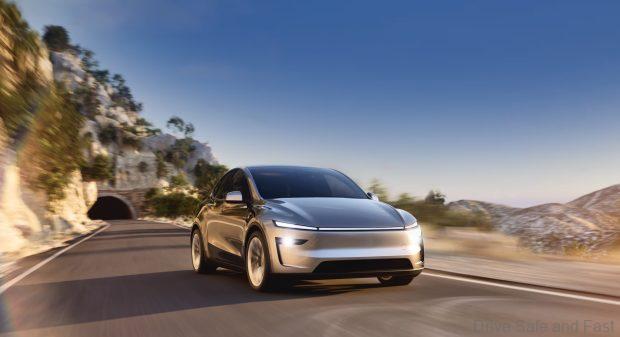
For consumers tracking costs in Malaysia, the price of a full EV battery for a Tesla generally falls within the range of RM40,000 to RM106,000, depending on the specific model and whether the unit is new or remanufactured. For instance, a new battery for the popular Tesla Model 3 is estimated at the higher end of this range, around RM105,985. However, standard replacements can start significantly lower. The mid-sized Tesla Model Y replacement costs are typically estimated between RM30,000 and RM60,000, although high-capacity variants can exceed RM100,000. Even older, out-of-warranty Tesla Model S packs (2012–2015) in the US cost between $11,000 and $16,000 (roughly RM52,000 – RM75,000) before taxes, showing relative cost stability over time compared to older combustion engine maintenance. Again, these are all estimates as real numbers are still not shared by manufacturers. It’s also worth noting that Tesla’s service network in Malaysia is much smaller and aftermarket support is not guaranteed.

BMW has replacement estimates that are competitive but differ due to their technology. Full EV battery packs for models like the i4 and iX average between £8,000 and £20,000 (approximately RM45,000 to RM114,000), placing them in a similar bracket to Tesla. However, some BMW models utilizes a modular battery architecture. This design is a key differentiator, as it allows for partial, and thus cheaper, repairs. Individual battery modules for some BMW models can cost between US$3,000 and US$9,000 each. Since many packs contain five to six modules, repairing only the faulty section is often a more financially viable alternative than a full pack swap, significantly impacting the potential EV battery replacement cost for owners.

Again, replacement costs seem to be still a little vague and opaque. These estimates show that they’re still often cheaper than replacing whole engines of high performance pedigree. Cost is a valid concern, but it’s also important not to overstate problem. After all, like we mentioned at the opening, when’s the last time anyone looked up engine or transmission replacement costs before buying a petrol vehicle? There’s enough long-term data now to show that a vast majority of EV batteries are stable for long term use.

