


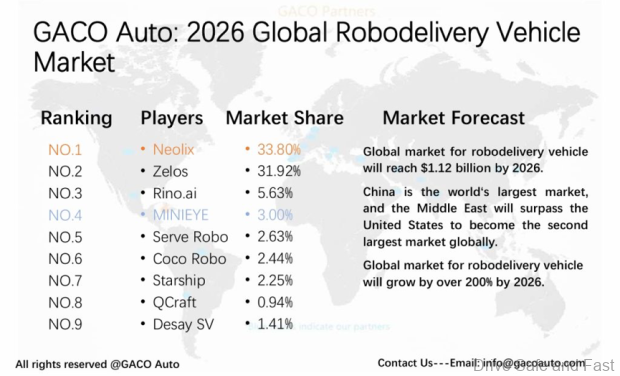
According to a global robodelivery vehicle report released by GACO Auto, the global autonomous delivery vehicle market is projected to reach USD1.118 billion by 2026, with an annual growth rate exceeding 200%, setting the fastest growth record in the intelligent transportation sector.
China continues to hold the position of the world’s largest market, while the Middle East is rapidly overtaking the United States to become the second largest market globally. Cities in the UAE and Saudi Arabia have become crucial battlegrounds for companies expanding internationally.
Major global autonomous delivery vehicle companies include Neolix, Zelos, Rino.ai, MINIEYE, Serve Robo, Coco Robo, Starship, QCraft, Desay SV, Meituan, JD.com, XingShen Intelligent, Nuro, Rivian, Momenta, EasyMile, Auro Robotics, Udelv, OttoMotors, Local Motors, 2getthere, Robby Technologies, Cleveron, ZMP, Kiwibot, Cartken, WeRide, Unity-Drive Innovation, LionsBot, and UISEE.
Chinese Power Dominates Global Competition
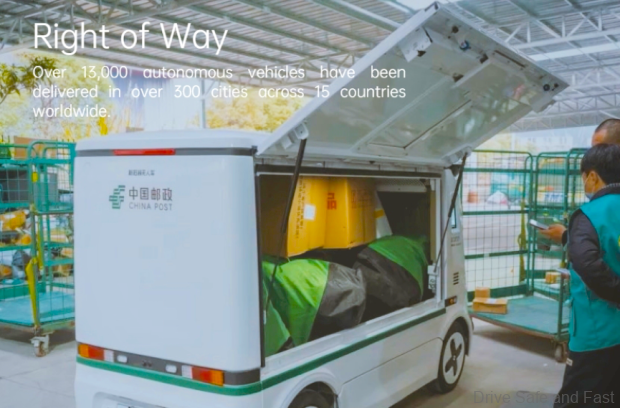
Chinese companies are playing a leading role in this technological revolution. Neolix, headquartered in Beijing, has deployed its fleet in over 300 cities across 15 countries worldwide, and its cumulative deliveries are expected to exceed 15,000 units by the end of 2025, setting a new record for L4 autonomous delivery vehicle deployment globally.
The over US$600 million Series D financing completed in 2025 is not only one of the largest private equity financings in China’s autonomous driving sector to date, but also demonstrates the capital market’s recognition of its technology roadmap.
“Our goal is to build an intelligent transportation network that serves society,” said the founder of Neolix at the financing announcement. “We expect global market demand to exceed 100,000 units by 2027, and large cities will see thousands of units in operation in the next three years.”
The company plans to deploy 5,000 autonomous vehicles in the UAE, making the Middle East a core hub for its global expansion.
Meanwhile, Zelos, another leading company in the industry, is also experiencing rapid growth. By the end of 2024, its order backlog exceeded 10,000 units, with cumulative deliveries surpassing 3,000 units, serving over 600 customers, and exceeding all key performance indicators.
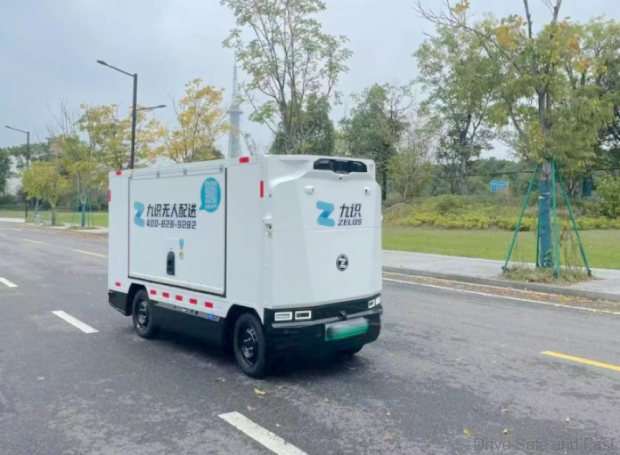
Just one year later, Zelos’s cumulative deliveries caught up with Neolix, reaching 15,000 units, with business covering over 300 cities in China and successfully expanding to Singapore, Japan, South Korea, and the Middle East markets.
A USD400 million Series B financing round provided strong momentum for its expansion, and the company explicitly stated that it would increase investment in technology R&D and strengthen its independent and controllable supply chain capabilities.
“The potential of the Middle East market has exceeded expectations, and we plan to deploy more than 2,000 unmanned delivery vehicles,” the CEO of Zelos revealed in an interview.
Production capacity layout has become a core competitive advantage for Chinese companies.
Neolix has put four production bases into operation, while Zelos has established five operational bases and signed contracts for three new factories. Both companies have achieved an annual production capacity of tens of thousands of units, forming a complete closed-loop system of “supply chain – operation – data.”
This vertical integration capability gives Chinese companies a cost and efficiency advantage in global competition, shortening delivery cycles by more than 30% compared to international counterparts.
Global Players Accelerate Market Expansion
In the fierce market competition, emerging companies and international giants are all increasing their investments.
The growth curve of Rino.ai robodelivery vehicles is particularly steep: at the end of 2023, there were only 100 active vehicles, increasing to 200 in the first quarter of 2025, jumping to 500 in the second quarter, and exceeding 2,000 by December, achieving regular operation in over 170 cities worldwide, with business scale growing by more than 20 times in two years.
The USD100 million annual financing will be mainly used for technology R&D and mass production capacity building, driving its transformation from a regional player to a global participant.
The rising star MINIEYE also performed remarkably, breaking through 1,000 orders within just three months of entering the unmanned logistics market. It is expected to reach a delivery scale of tens of thousands of units by 2026, with a long-term plan to complete the deployment of 1,000 unmanned vehicles in the Middle East before 2030.
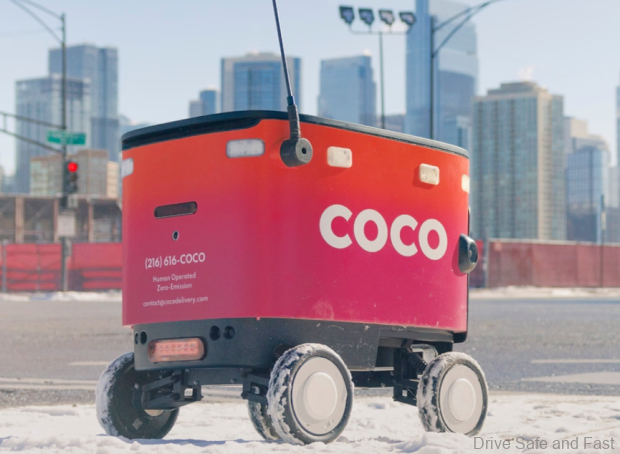
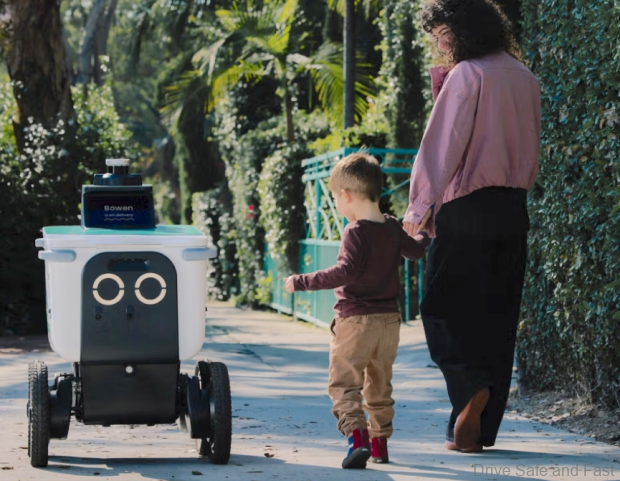
In the international arena, Serve Robotics of the United States has already deployed 1,000 of its third-generation autonomous sidewalk delivery robots by 2025; Coco Robotics has set an ambitious goal of operating 10,000 robots by the end of 2026; and Starship Technologies is aiming to expand its delivery robot fleet to over 12,000 units by 2027.
The Middle East Market Becomes a New Battleground
The biggest change in the market landscape is the rapid emergence of the Middle East. Thanks to strong government support for intelligent transportation, high-density urban populations, and the demand for delivery services in high temperatures, the Middle East is becoming a “golden market” for autonomous delivery vehicles.
Local governments not only provide policy incentives but also designate special testing areas in cities like Dubai and Riyadh, simplifying approval processes and attracting global companies.
“The acceptance and growth rate of the Middle East market have surprised us,” one industry analyst noted. “Consumers here are highly receptive to new technologies, business scenarios are concentrated, and the efficiency per delivery is higher, resulting in significantly better return on investment than in the European and American markets.”
Source link: https://gacoauto.com/global-robodelivery-vehicle-market-will-reach-1-12-billion-by-2026/

