


The new Nissan Serena e-POWER is the best option for a people mover in its price bracket.
Last week, Edaran Tan Chong finally launched the C28 Nissan Serena e-Power. While it is late to the game, it’s hard to argue against the overall value proposition. In the previous C27 generation, the Serena had essentially no direct competition in this segment. Now it does have to go up against the Toyota Innova Zenix but we feel this new Serena has some unique advantages in just about every department. Another thing you may notice is the relatively unchanged silhouette of the Serena. In fact, there are a couple of things that tie this new C28 generation Serena with its predecessor, including the split tailgate, the ‘e-power’ moniker and the chassis itself. However, there are more than enough changes here to warrant treating it as an all-new generation vehicle. Let’s start with the least obvious change which comes under the hood.
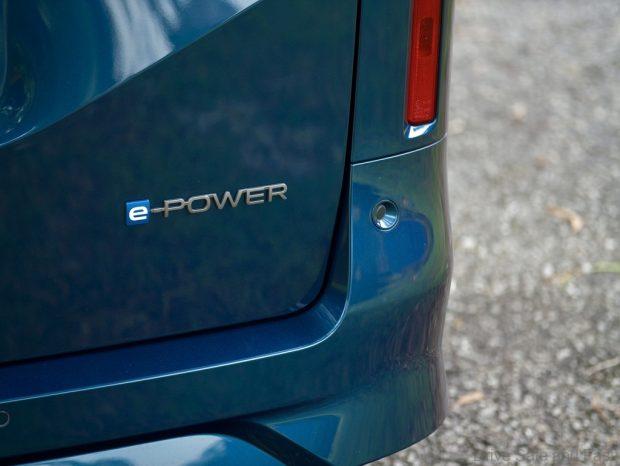
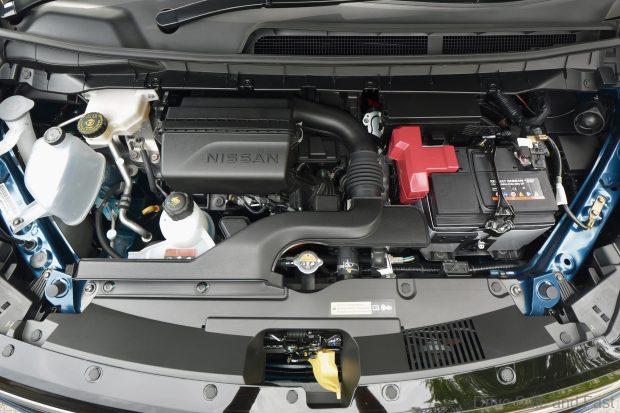
e-Power in the case of this new C28 Serena means something completely different than before. Now the wheels are driven ONLY by an electric motor. The petrol motor serves ONLY as a generator for a relatively small battery. You never need to plug it in to charge, you only need to fuel up at a petrol station. It’s a similar system to what’s found on the Kicks e-POWER, but with some minor specification changes. What’s the advantage of this e-POWER system over a typical hybrid? Well, for one, the petrol engine doesn’t propel the wheels, so there’s less wasted energy in the conversion. On a similar note, the petrol engine is tuned to rev with less noise and vibration, as it serves as a generator with slightly less jarring start-stop cycles. More importantly, because propulsion is done directly with electric motors, torque is instant and plentiful – perfect for the application of an MPV. To top it all off, since the petrol engine here is used as a generator, you don’t need something large. You get a 1.4L 3-cylinder instead of a 2.0L 4-cylinder, reducing fuel use and your annual road tax substantially.
What are the advantages of this e-POWER system over a typical EV? Well, you never have to plug it in to charge it. Since the petrol motor does the battery charging, you just need to spend a few minutes at the fuel pump. This saves money and has no learning curve as it requires no habit retraining for existing ICE users. It also removes range anxiety and the need to install a home charger to gain the full cost benefits of an EV. You also get a very small battery, which should remove long term component costs, likely preserving resale value in the long term though this is debatable. At the very least it’s likely many times cheaper to replace the battery here than it is to replace the battery in an equivalent EV.
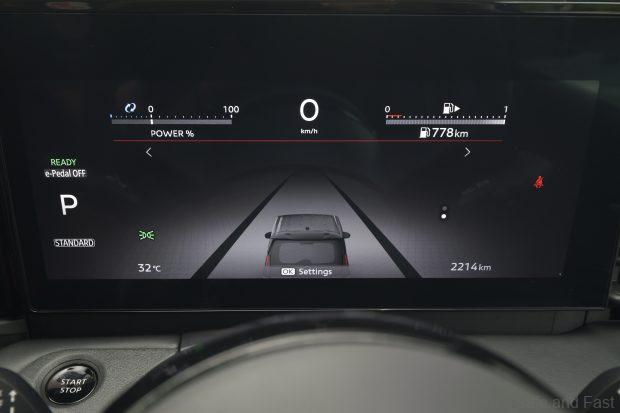
Practically speaking what it means is that you get around 800km of range from about 50 litres of fuel, which is an incredibly low running cost for an MPV of this class. If you plan to use one vehicle for your whole family and put a lot of KMs on, the Serena e-POWER is the best way to save money without needing to plug in and charge.
It’s likely the chassis on the C28 shares things in common with the C27 but is simply modernised and improved in places. From a driving standpoint, it does seem a tad quieter and slightly more comfortable than before. The real improvement comes in looks. While one could hardly call the new Serena beautiful, it’s certainly a much cleaner and futuristic design than before. There’s a lot more personality and a real effort has been made to disguise the strange tall proportions of the MPV. The dual tone treatment, available on higher variants such as the Premium Highway Star we test drove, disguises the large glass house quite nicely. While the glossy black strip connecting the headlight cluster and grill to the A-pillar help to mask the uncomfortably large glasshouse. The design choices solve the problems created by the tall roof of the C27 and C28, which is there to improve the perceived sense of space in the cabin as well as improve overall visibility. Both of these aspects are vital in an MPV as it means keeping occupants relaxed and safe.
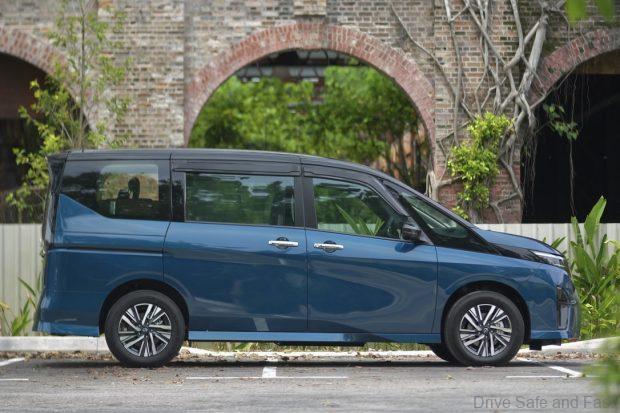
The new slate grille design is more authorative than the outgoing Serena’s V-motion grille. Certainly it’s hard to deny the new face is far tidier and it really comes across as the kind of vehicle one would see sold in Japan, which it is. The treatment to the rear is also more handsome and mature with more gloss black plastics and more measured use of chrome. The taillight graphic is also tidier and modernised. The icing on the cake is the new Nissan logo, which is nice step forward for the brand.
To me it’s the interior that seals the deal. Every row features some attention to detail.
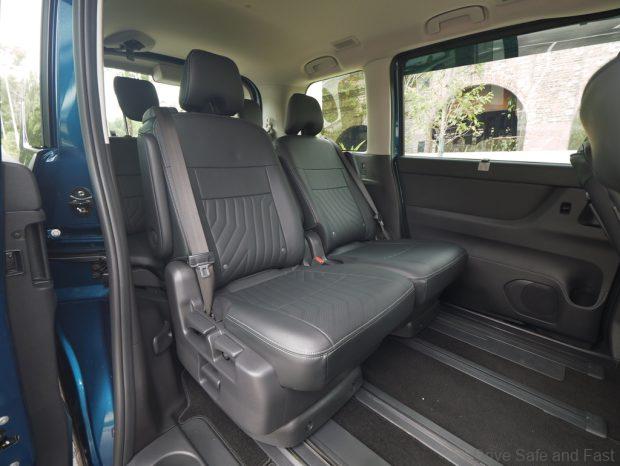
The third row of seat can take three smaller passengers but has a 50:50 split.
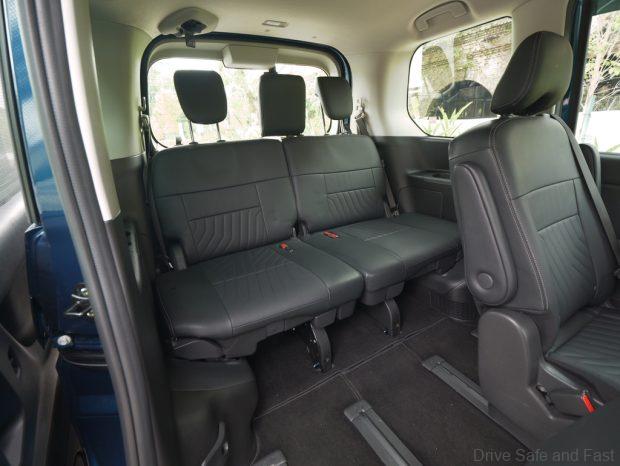
Each side features a manual slider, meaning you can make adjustments for many different cargo and passenger configurations.
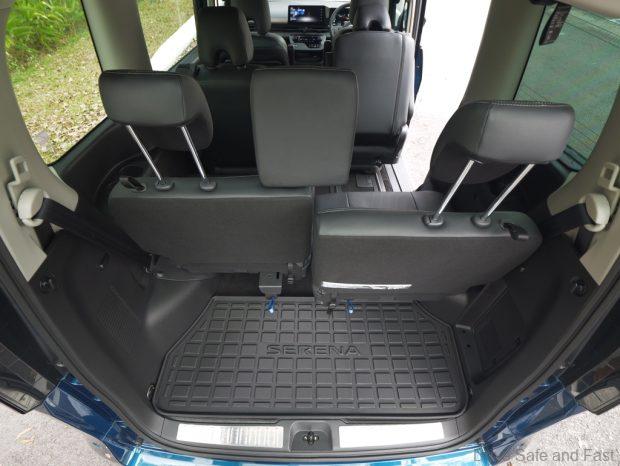
Of course these seats also fold up and away from each other.
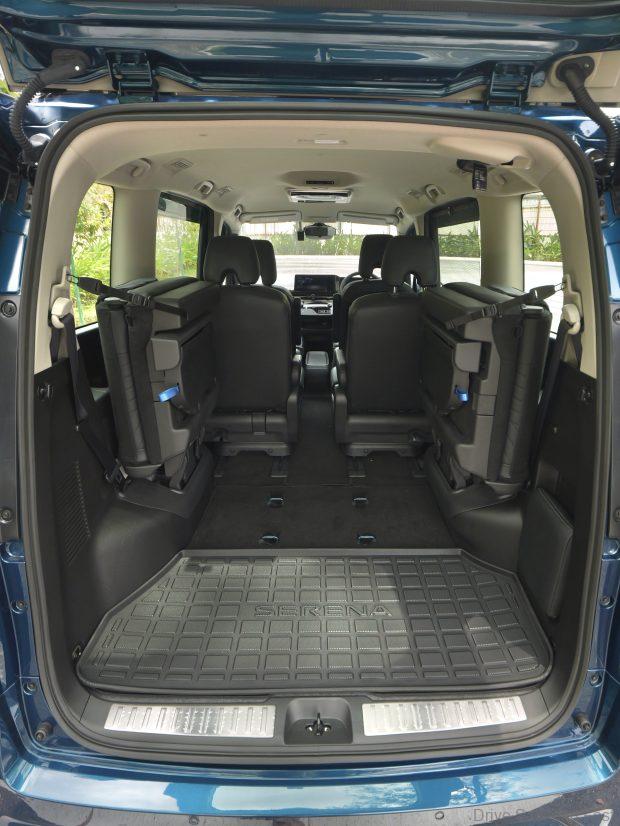
What’s good is that these seats can fold nearly flat for increased cargo space alongside the rearmost row. Or they can be configured in multiple positions forward or back or side to side.
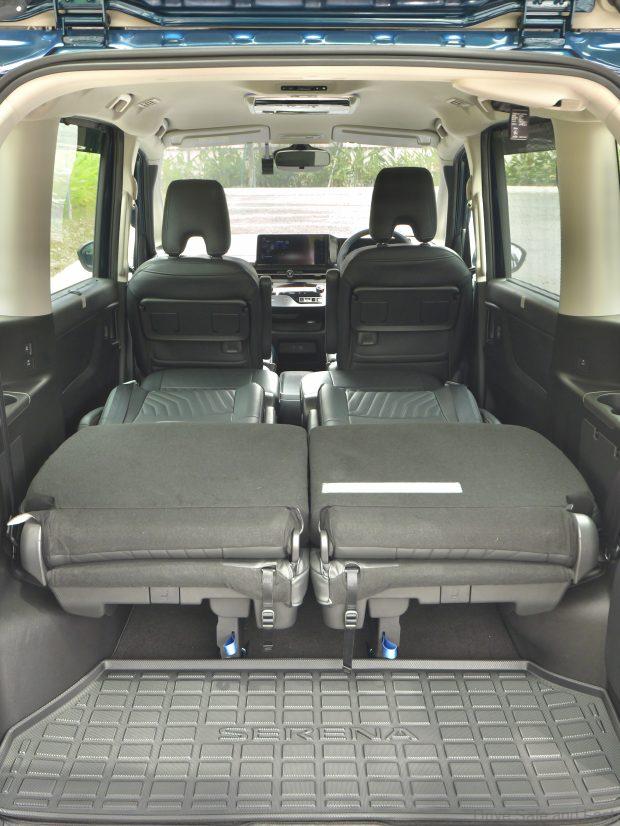
This puts a lot more power into your hands to decide what use case the new Serena e-Power needs to be set up for.
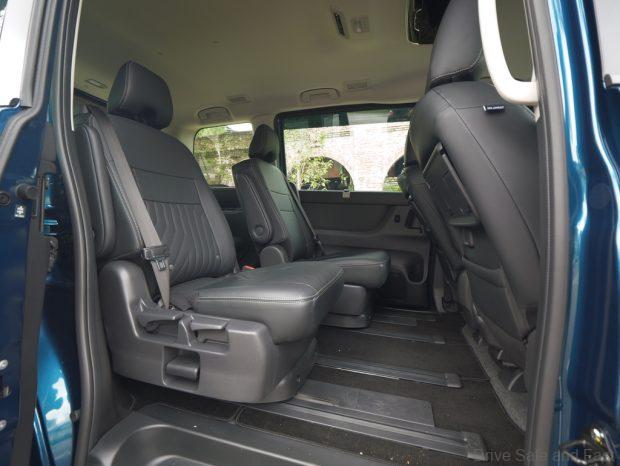
The middle row seats are not quite captain seats though they have narrow individual arm rests. These only have a single fixed stop. Not the most comfortable place to be, indicating the Serena is focused on family and not boss-chauffering. You can separate the two middle seats or squeeze them together depending on what they’re being used for.
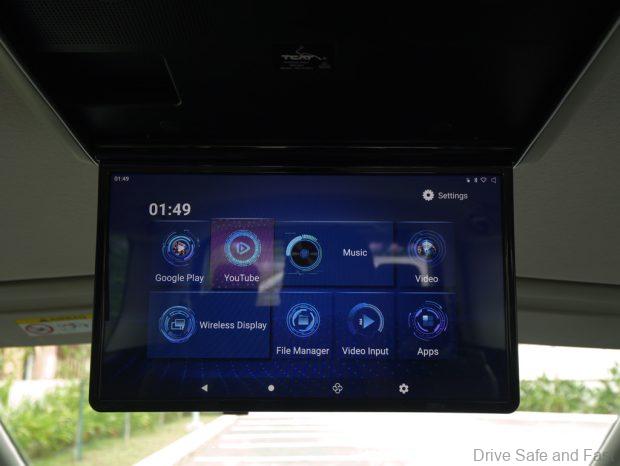
Each passenger in the rear is taken care of with ceiling-mounted air cond vents, grab handles, a flip down monitor running Android, cupholders and USB-C ports.
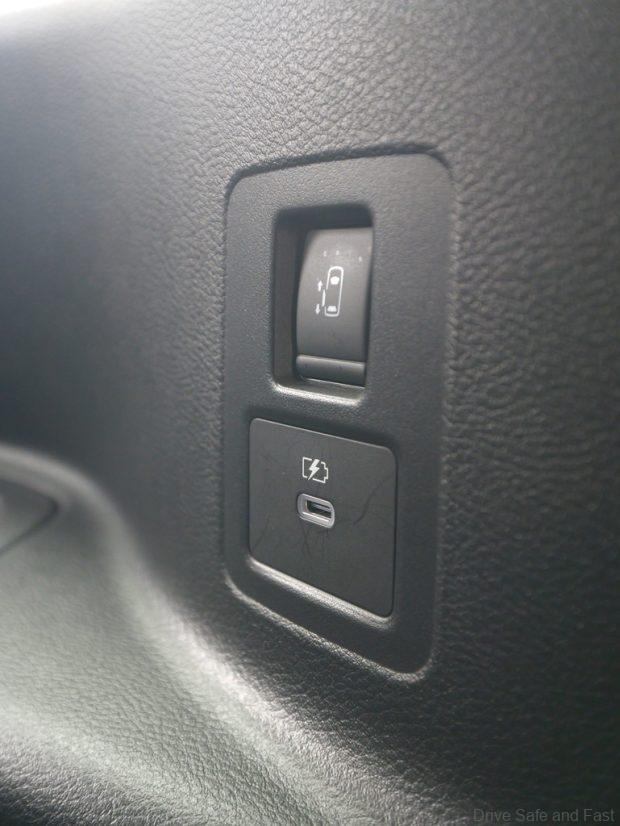
The rearmost passenger at the rear has access to a button that opens the left side power sliding door. The sliding doors can be operated from the driver’s seat, from the key fob, and from inside and outside each of those doors too. From the outside, the door handles can be pulled or a button can be pressed.
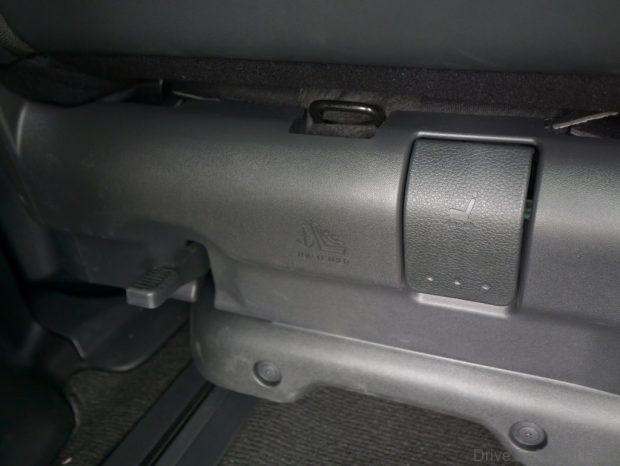
Third row passengers also have a pedal to slide the middle row of seats forward to exit the vehicle. The left side can adjust this slide length without collapsing the seat forward completely.
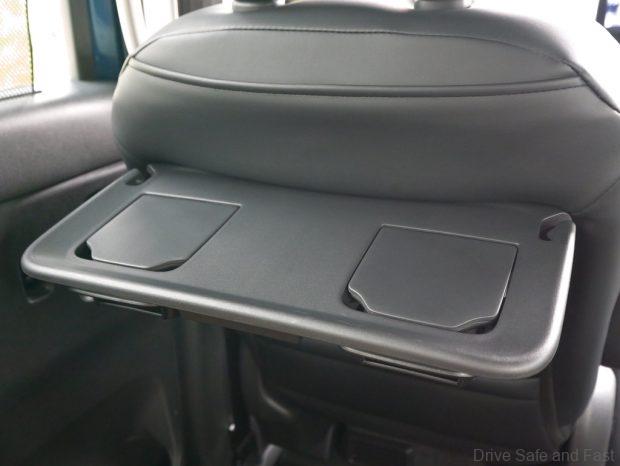
There tray tables have been redesigned to be flipped up to deploy. This means that overloading them doesn’t break the hinge, it simply collapses the table.
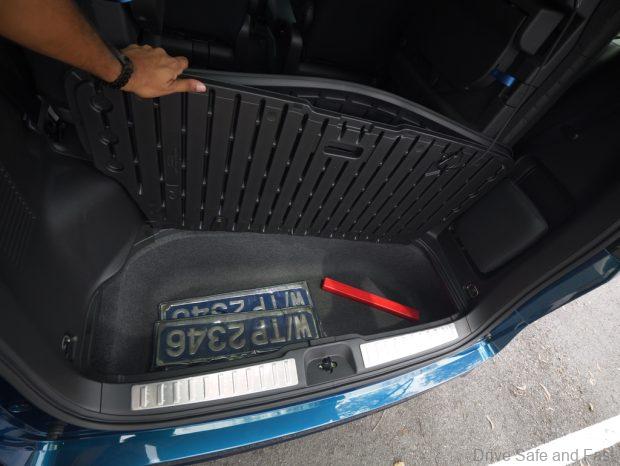
I have a very short list of complaints about this interior, though for the most part it does a really good job with the space that it has. First, the front row of seats don’t slide back as far as I’d like them too. I definitely feel uncomfortably close against the dashboard as a 6 foot tall individual. Second, the boot space with all seats occupied is genuinely smaller than expected. There’s room under the floor but the multiple layers of protective mats make it tough to access versus some rivals where this extra space is always exposed.
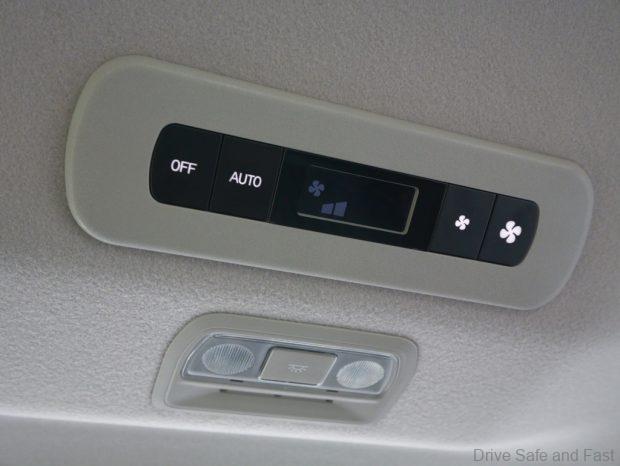
Finally, the rear air cond controls are on the ceiling – tough to reach and not accessible from the front either (besides just an on-off function).
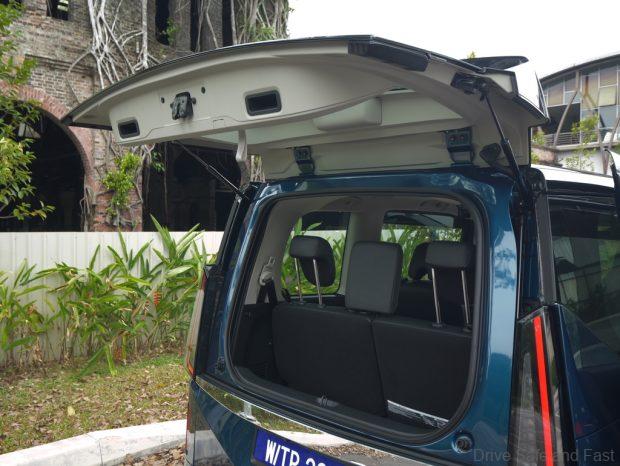
It’s a mild improvement over the C27 with some welcome returning features such as the split tailgate.
Most of the changes come to the front of the cabin. The large mildly perforated sunvisors help to deal with that massive windscreen, the glove box is large, there’s a hidden dashboard compartment (the driver’s side one is now missing), there are 3 cupholders up front, a wireless phone charger and a high friction surface on the centre tray for loose items. The biggest improvement comes in the form of a very neat and tidy dashboard design. It stands in stark contrast with the outgoing Serena’s strangely designed cabin.
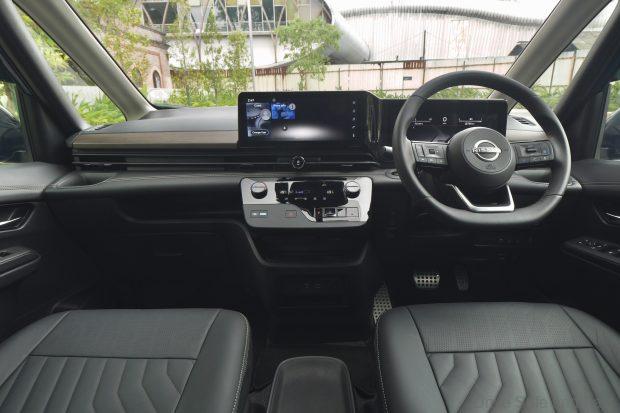
Everything looks and feels modern. The displays are nice and crisp with good animations and contrast. The digital climate control is a nice mix of tactile knobs and capacitive buttons.
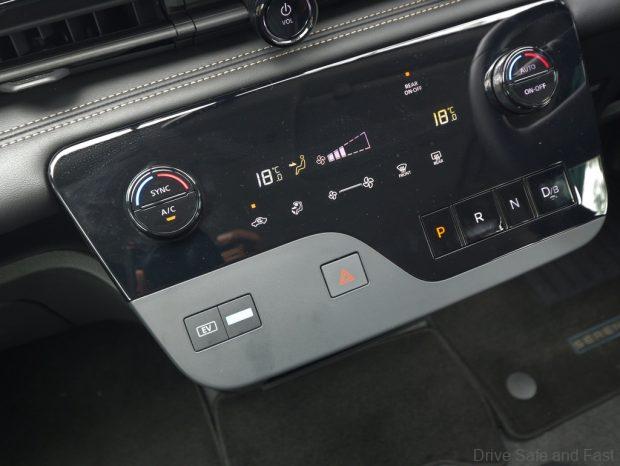
There are physical buttons throughout for many vehicle functions such as the e-pedal (single pedal driving), drive mode, EV mode (forces the engine to stay off for slightly extended periods, autohold, EPB, the hazard lights and more.
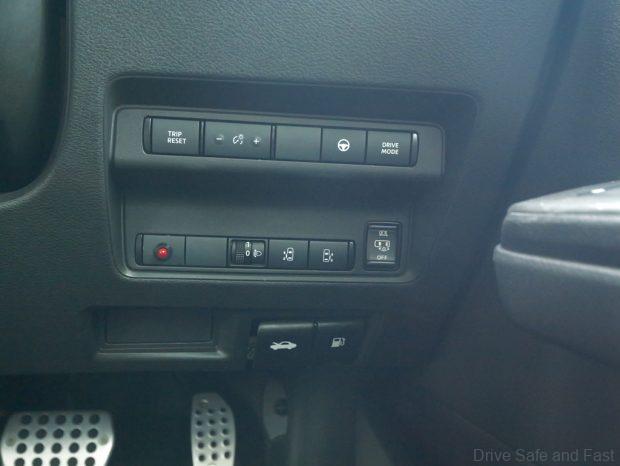
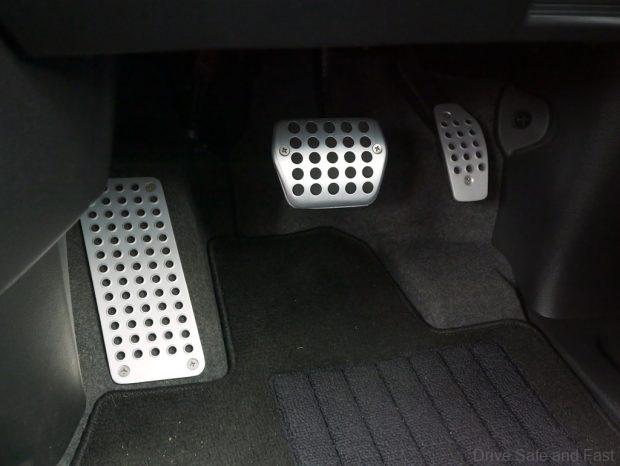
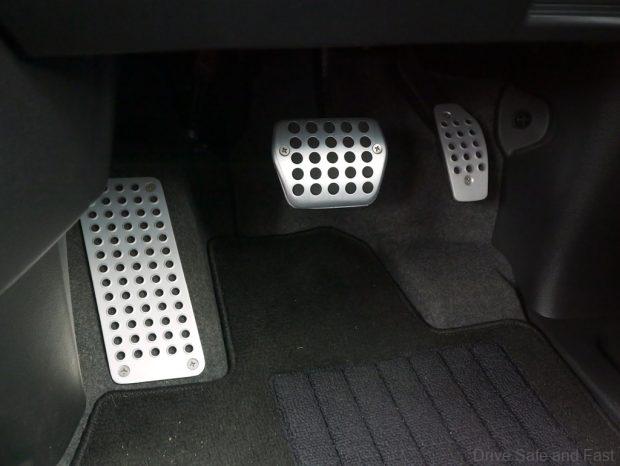
I’m not the biggest fan of buttons for gear selection, but they’re not bad here. There are visual improvements dotted throughout, such as the metal finished pedals and the leather soft touch points with real contrast stitching.
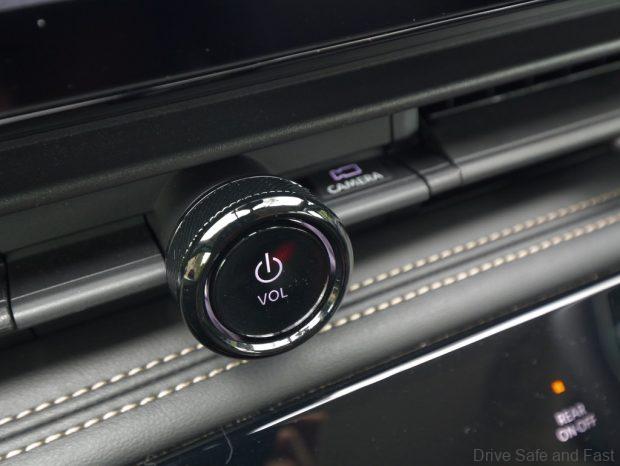
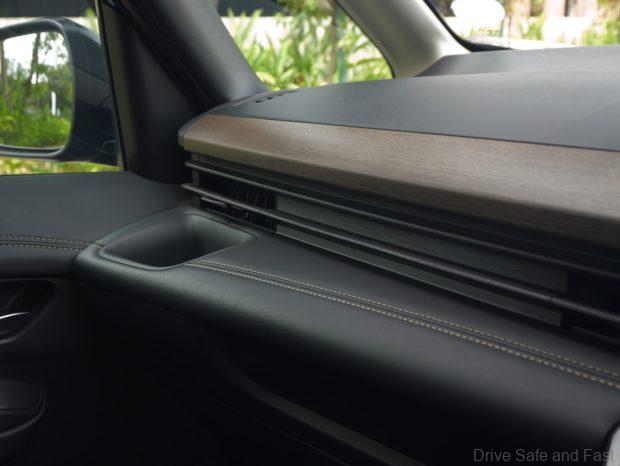
The biggest objective upgrade here comes in the form of the wood accents and the high quality flat-bottom steering wheel. This is an improvement over the already flat-bottomed steering wheel on the outgoing model.
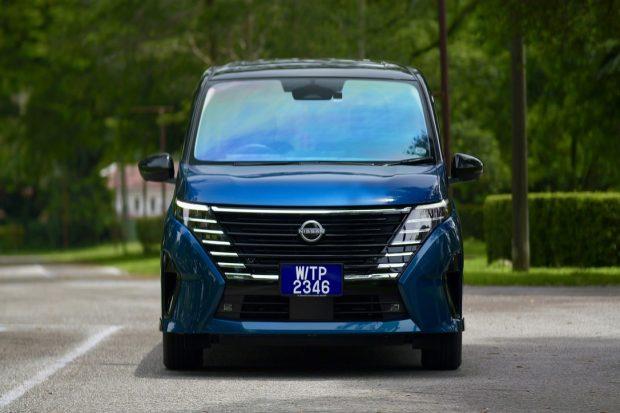
All-in-all, this is noticable step up over the C27 Nissan Serena e-POWER. This Premium Highway Star variant sits directly below the full-spec Shiro Premium Highway Star variant, which brings a white leather interior but really the only major missing equipment piece here is a powered tailgate. For RM175K, this is a perfectly well-equipped specification and probably the one most buyers should set their sights on. It out-MPVs the Innova Zenix and out-electrifies that model’s Hybrid variant as well for a significantly lower price.
How does it drive? Well it’s an MPV so you may not expect dynamics. However, thanks to expert tuning and low placement of heavy hybrid components, the Serena actually behaves really well in the corners and it has immediate power to get you moving at a brisk pace. I actually really enjoyed my time in the car – whether it was chucking it around alone or when ferrying friends around.
2025 Nissan Serena e-Power Premium Highway Star Specifications
Engine: 1.4L 4-cylinder e-POWER system with electric motor for propulsion
Displacement: 1433cc
Transmission: Automatic single gear reduction
Max power: 163hp (electric)
Max torque: 315Nm (electric)
Price: RM174,800.00

