


Apology marketing is as cringe as it gets. Especially when it comes from certain car brands.
In the ever-churning digital mill of viral marketing, a particularly tiresome trend has emerged from India and is now attempting its global takeover: ‘Apology Marketing’. This is a new form of transparently cheeky, self-congratulatory marketing gimmick masquerading as a formal statement.
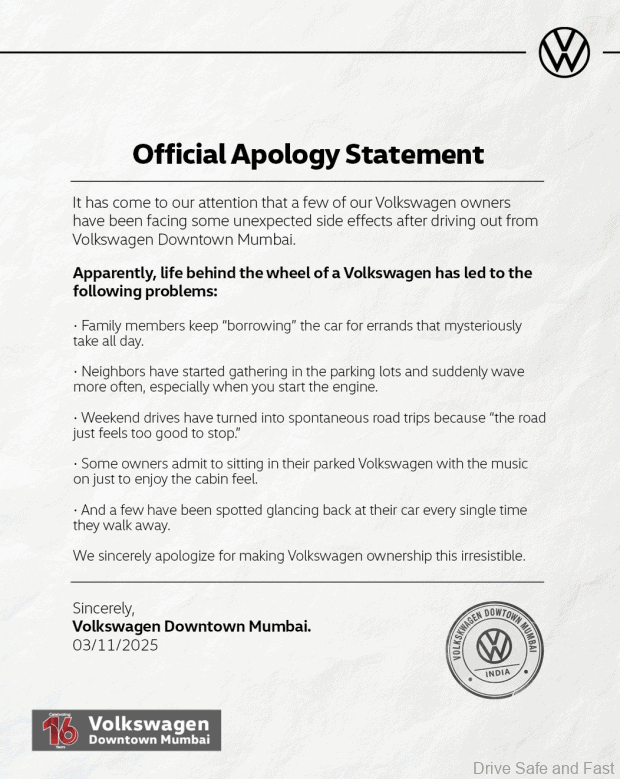
The template is now painfully familiar: an “Official Apology” letterhead, formal fonts, and bullet points detailing the “unforeseen side effects” of owning their product, which, upon inspection, are simply the company’s intended selling points. It’s the ultimate corporate humblebrag, and it’s spreading faster than an ill-advised tweet.
The Indian Auto Industry’s Latest Stunt
The car industry in India has enthusiastically embraced this new low in subtlety. Manufacturers like Volkswagen, Škoda, and BYD have flooded social media with their faux apologies.
- Volkswagen Downtown Mumbai “sincerely apologised for making Volkswagen ownership this irresistible,” listing “problems” like family members “borrowing” the car and owners “glancing back at their car every single time they walk away.”
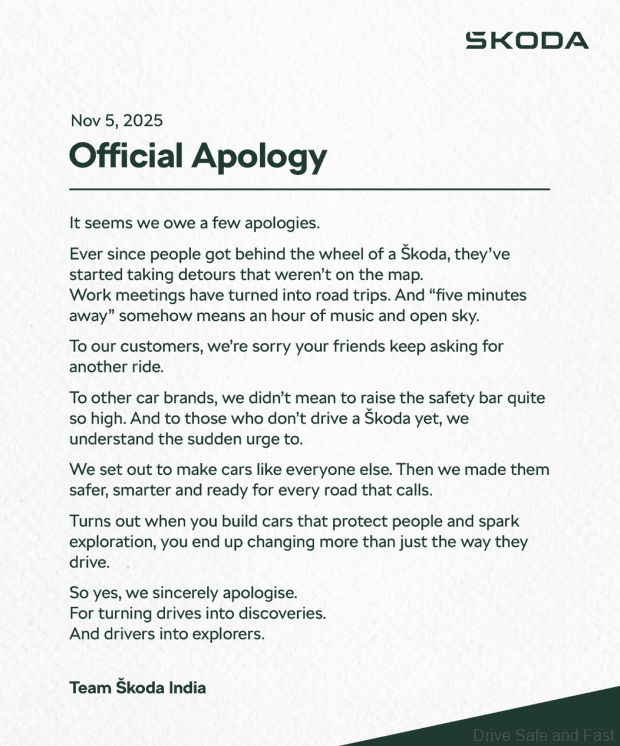
- Škoda India followed suit, “apologising” for turning drivers into “explorers” and making friends “keep asking for another ride.”
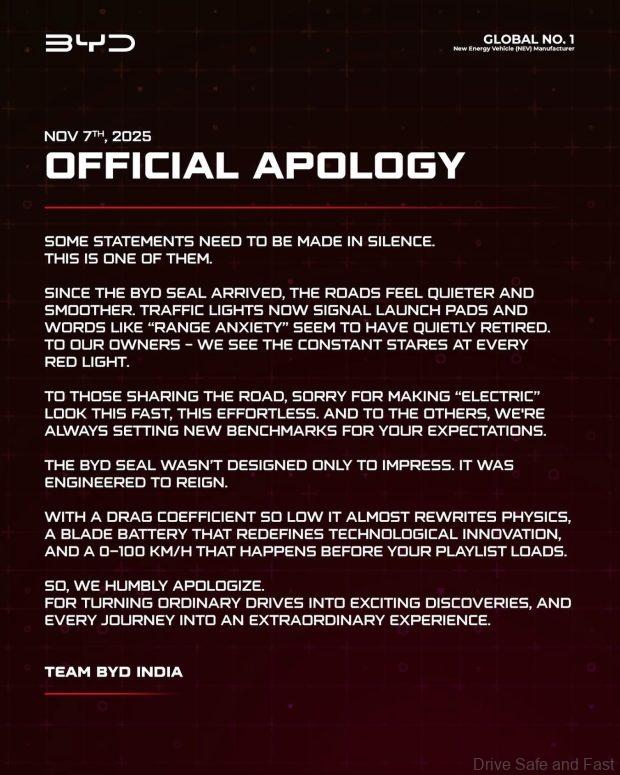
- BYD India, whose “Official Apology” has been circulating in Malaysia, “humbly apologised” for making “electric look this fast, this effortless” and for causing “constant stares at every red light.”
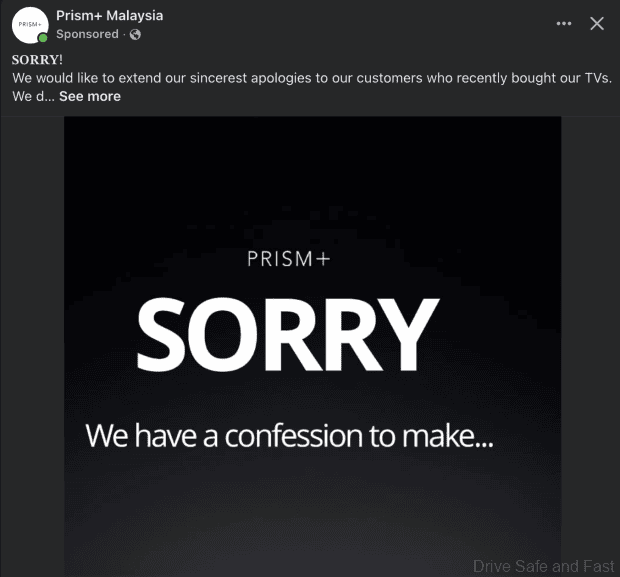
The trend, which reportedly started gaining traction in the Philippines last year before exploding in India, has quickly moved beyond the automotive sector, with brands like electronics retailer Prism+ Malaysia issuing a similarly smug “SORRY!” post about customers who “recently bought our TVs.”
Commentary: The True Cost of ‘Sorry, Not Sorry’
While marketers are no doubt patting themselves on the back for the viral engagement these posts generate—the ultimate vanity metric—there’s an inherent dismissiveness to this strategy, especially coming from the automotive sector.
The whole ‘apology’ structure works by co-opting the language of genuine corporate accountability. It aims for a quirky, self-aware vibe that says, “We’re so good, we’re almost causing problems!” But what this cynical tactic entirely misses is the weight and significance of a real apology.
Frankly, car manufacturers, in particular, should probably sit this one out. For brands like Volkswagen, the idea of issuing a tongue-in-cheek “Official Apology” is particularly jarring. One might recall the infamous ‘Dieselgate’ emissions scandal, which saw the company admit to rigging millions of vehicles to cheat pollution tests globally after repeat attempts to mislead regulators. That apology, which cost billions in fines and settlements and led to criminal charges, was anything but a joke and the company has yet to even recover from the scandal.
Similarly, other major global car groups have had to issue apologies for issues ranging from massive safety recalls to testing fraud. Ultimately, Apology Marketing is a short-term and low-effort attention grab. It may have been creative in its early iterations, but when co-opted by mega cooperation with actual histories of malpractice, it rubs the wrong way.

