


Even after 3 years of Electric Car sales growth you still see selfish drivers in Malaysia
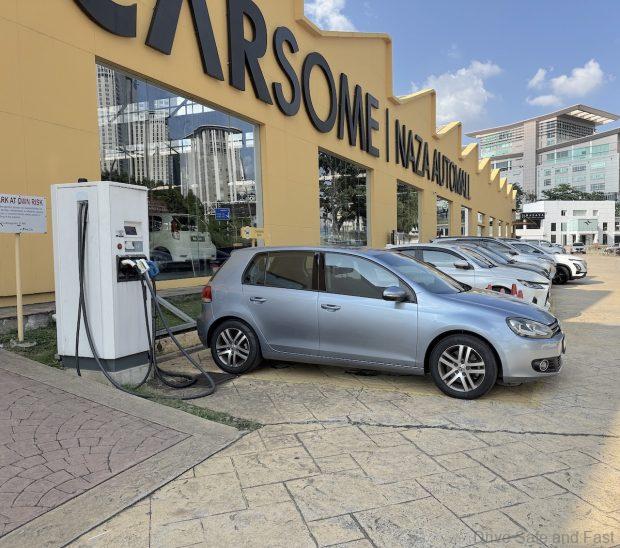
You can still see electric car drivers “hogging” charging points in our city daily (like the Tesla owner in the picture here). You can also see petrol or diesel car owners parking their cars at EV charging bays, because it is convenient (its just like seeing healthy drivers parking at a disabled parking spot).
This attitude is not changing very soon and its one of the reasons why buying an electric car might be delayed for some Malaysians.
VIP driver or not, this is just selfish nature and must be shamed and fined.
So, why do some EV drivers hog charging points, especially in shopping malls? Well, it could be due to a combination of factors like “destination charging,” where they leave their cars to charge while they attend to other activities or they want to find fast easy parking.
Lack of clear communication about when charging is complete, a lack of specific rules, and sometimes a sense of entitlement or past wait times are also reasons for the behavior.
Reasons for hogging chargers
Destination charging: Some drivers leave their cars to charge at their destination, such as work or a shopping centre, even after the car is fully charged. They may assume the car will be moved soon, but it can sit there for hours, blocking the spot for others.
Long-distance planning: Drivers on long trips may charge to 100% at a fast charger because they know there may be limited charging options ahead. While charging to 100% is not the most efficient way to charge, it can be a necessity for those with limited range or who are traveling through remote areas.
Lack of clear rules: There are often no explicit rules or legal standards for how long a car can be parked at a charging point after it is finished charging. This can lead to confusion and a lack of accountability among drivers.
Lack of real-time information: It can be difficult to know when a charger is actually busy, especially if the pricing and usage information is not clearly displayed. This can make it challenging for drivers to know when they should be mindful of other drivers.
Lack of costly penalties: Some drivers may not be motivated to move their cars because there are no penalties or incentives for overstaying. For example, some providers are starting to implement fines or “idle fees” to encourage people to be more considerate.
Past experiences: Some drivers may be more likely to “hog” a charger if they have had to wait a long time for a spot themselves. This can create a cycle of “I waited, so now it’s my turn” behavior.
Possible solutions
Implement fees and fines: Charging providers can implement fines for drivers who overstay their welcome at a charging point.
Increase public awareness: Educational campaigns can raise awareness about the importance of moving your car once it is fully charged. But this will probably NOT work with entitled VIP’s.
Charge at off-peak hours: Encourage drivers to charge their cars at off-peak hours, when demand is lower.
Communicate with other drivers: If you see a car parked at a charging station that is no longer charging, try to communicate with the owner to let them know. If you can’t reach them, you can contact the charging provider for assistance.

