

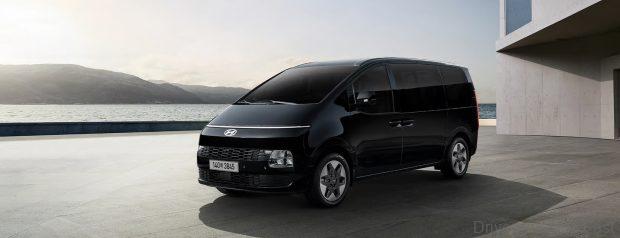
The Hyundai Staria facelift model is out the same year the pre-facelift model arrives in Malaysia in CKD form.
While the futuristic Hyundai Staria has recently made headlines in Malaysia following a minor product update and the commencement of local assembly (CKD), the Korean domestic market is already preparing for a much more significant evolution. Hyundai has officially pulled the wraps off the 2026 Staria facelift, a comprehensive mid-cycle refresh that brings substantial mechanical and aesthetic upgrades to the “space-age” MPV.
The most notable change for the Korean market is the powertrain overhaul. Hyundai has effectively retired the long-serving 2.2-litre turbodiesel in favor of a new 1.6-litre Turbo Hybrid and a 3.5-litre LPG option. The hybrid variant is the star of the show, delivering a combined system output of 235 PS and 367 Nm of torque through a six-speed automatic transmission. This electrified heart doesn’t just offer smoother performance but also impressive efficiency, with Hyundai touting a maximum fuel economy of 13.1 km/l.
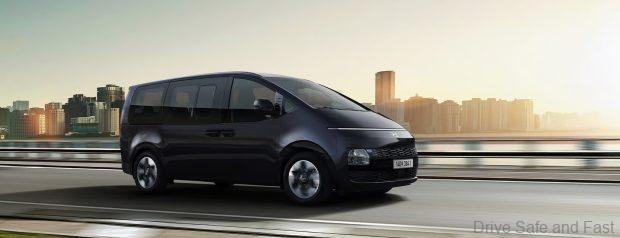
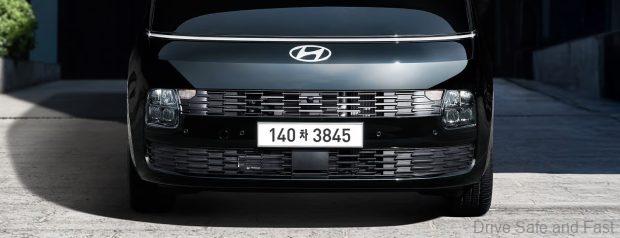
On the outside, the Staria retains its iconic “spaceship” silhouette but refines the details. The signature horizontal Daytime Running Light (DRL) strip is now a single, continuous line across all variants, with “STARIA” subtly engraved on its sides. The front end also features a new grille design; the premium Lounge variant receives a chromed, rectangular grille, while the more utilitarian Tourer and Cargo models feature unchromed, rounded alternatives.
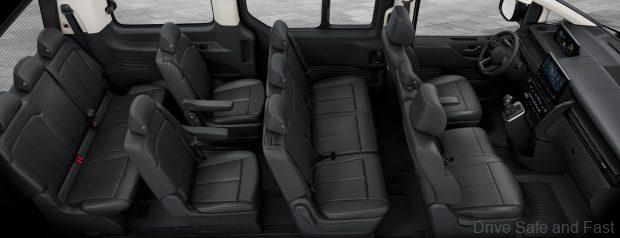
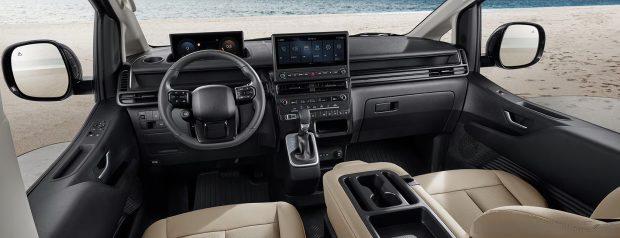
The interior has undergone a complete redesign. Stepping inside, drivers are greeted by a more horizontal dashboard housing dual 12.3-inch screens—a significant jump from the previous 10.25-inch units. In a nod to ergonomics, Hyundai has replaced several touch-sensitive panels with physical buttons and relocated the center air vents to a unified position beneath the screen. The Lounge variant further modernizes the cockpit by adopting the Ioniq-style column-twist gear selector, replacing the old push-button setup. A new “boarding assist” steering wheel also debuts, which retreats into the dash to facilitate easier entry and exit.
Refinement has also been a priority for this facelift. To improve NVH (Noise, Vibration, and Harshness) levels, Hyundai added thicker insulation to the bulkhead and more sound-absorbing materials to the underbody. The Lounge model goes a step further with rear hydro bushings to soften road shocks, while the Cargo variant receives improved damper valves for better stability.