


Porsche global sales shrank last year by 10% with no growth in any of its markets.
Porsche’s global sales performance in 2025 painted a challenging picture for the Stuttgart-based automaker, as the brand navigated a complex landscape of regulatory shifts and cooling demand. While the official narrative emphasizes a “balanced sales structure” and strategic repositioning, the raw data reveals a significant contraction, with Porsche delivering 279,449 vehicles worldwide—a 10% decline from the 310,718 units moved in 2024.

Global Sales: A Uniform Decline
The reality of 2025 was a rare year where Porsche faced a downward trend in every major reporting region. The brand’s home market of Germany saw the sharpest drop among Western markets, with deliveries falling 16% to 29,968 units. Similarly, Europe (excluding Germany) recorded a 13% decline, totaling 66,340 cars.
The most severe impact, however, remains in China, where Porsche’s struggle with intense competition and a softening luxury segment led to a staggering 26% drop in deliveries (41,938 units). Even North America, which remained the brand’s largest single sales region, could only manage to hold steady with 86,229 deliveries, effectively flat compared to the previous year. Overseas and Emerging Markets also slipped slightly by 1% to 54,974 units.

Model Performance: Winners and Losers
Despite the overall slump, the iconic Porsche 911 continues to defy gravity, setting a new delivery record with 51,583 units (+1%). The Macan also remained a high-volume pillar with 84,328 deliveries, buoyed by the successful rollout of its fully electric version, which accounted for more than half of its sales.

Conversely, other staple models faced double-digit declines:
- Cayenne: Fell 21% to 80,886 units, though Porsche hopes the late-2025 launch of the Cayenne Electric will reverse this trend.
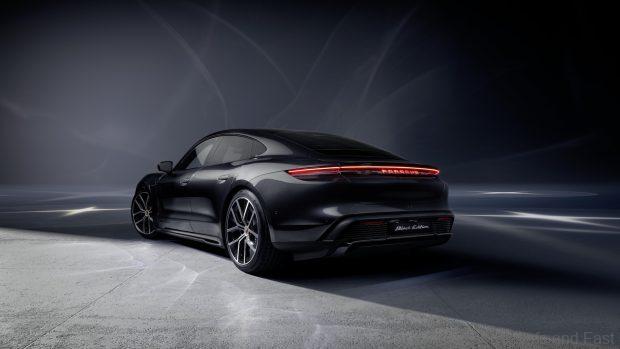
- Taycan: Dropped 22% to 16,339 units, reflecting a broader global slowdown in EV adoption.
- 718 Boxster/Cayman: Slumped 21% as production officially ended in October 2025.
Strategic Pivot: Electrification Over Volume
Porsche is framing these results as a deliberate “value-oriented” supply management strategy. The brand successfully increased its electrification share, with 34.4% of all deliveries being either fully electric or plug-in hybrids. In Europe, electrified models actually outsold pure combustion engines for the first time, making up 57.9% of the mix.

As the brand moves into 2026, the focus remains on its “value over volume” mantra. With the phase-out of combustion-engined 718 and Macan models in major markets like the EU due to cybersecurity regulations, Porsche is doubling down on its three-pronged powertrain strategy—combustion, hybrid, and electric—to navigate what appears to be a permanent shift in the luxury automotive landscape.


