


BMW Group is finding out if the only thing more precise and efficient than German workers are humanoid robots.
BMW Group is officially bringing “Physical AI” to Europe, launching a pilot project at its Leipzig plant to integrate learning-capable humanoid robots into the production of vehicles and high-voltage batteries. As energy and labour costs have spiked over the years in Europe, moves such as these are required to keep German premium vehicles competitive in the market.
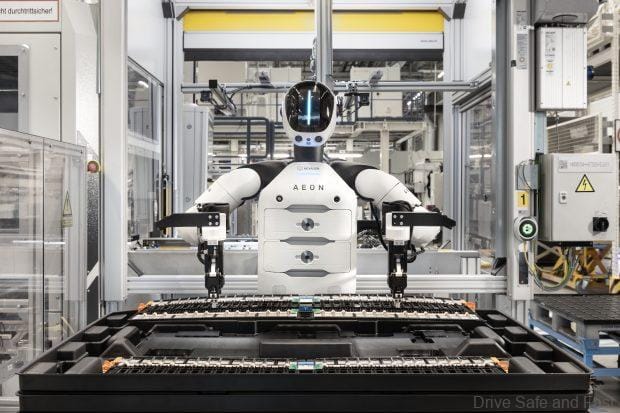
The Leap to European Production
The first pilot project for humanoid robotics in Europe is now underway at BMW Group Plant Leipzig. In partnership with Hexagon Robotics, the plant is testing the multifunctional AEON robot. Introduced in June 2025, AEON features a human-like body that can be equipped with various grippers or scanning tools and moves dynamically on wheels.

Following successful laboratory tests and initial deployments in late 2025, a secondary test phase is scheduled for April 2026. This will lead to a full pilot phase starting in summer 2026, where the robots will support the assembly of high-voltage batteries and component manufacturing.

Proven Success: The Spartanburg Experience
The European expansion is built on the rigorous insights gained at the Spartanburg plant in the U.S. during 2025. In collaboration with Figure AI, a humanoid robot named Figure 02 was integrated into the body shop to support the production of the BMW X3.

The results were statistically significant:
- Production Volume: The robot supported the manufacture of over 30,000 vehicles.
- Workload: Operating in 10-hour shifts, Figure 02 moved more than 90,000 sheet metal components.
- Precision: The robot achieved millimetre-level accuracy in positioning parts for the welding process, a task traditionally considered physically exhausting for humans.
- Mobility: Figure 02 covered approximately 1.2 million steps over 1,250 operating hours.
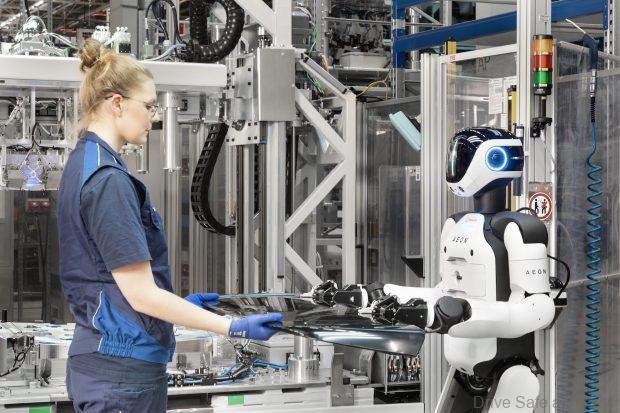
The strategic goal is to utilize Physical AI for monotonous, ergonomically demanding, or safety-critical tasks. By delegating these “dull, dirty, and dangerous” jobs to robots, BMW aims to relieve employees and significantly improve working conditions on the shop floor. That is of course the narrative that is being fed to us. It is almost an inevitability that if successful, some human jobs will be lost as humanoid automation takes over more roles. There are already many ‘dark factories’ in China where no human operators are even required for vehicle production. It would be poor form for BMW Group to be left behind in this Physical AI race.


