

The Toyota Fortuner VR-Z is soldiering on in 2025 with new rivals showing up.
At the end of 2021, I asked to try out the Fortuner, and Toyota gave me their latest iteration, the VR-Z. This initial review came right around the time of the major floods around the Klang area. I took the Fortuner on a drive down to Johor Bahru amidst intense rainstorms and with family members who were both much younger and much older than I was. The Fortuner delivered pretty well, and I was convinced that with more extreme weather phenomena on the horizon, it would become the only kind of vehicle most would consider viable. Nearly 4 years on, I asked to sample their latest take on the Fortuner, only to realise the vehicle hadn’t been updated much. Sure, there’s a new optional GR body kit and some new equipment but the price was up by a huge margin. Regardless, I asked for a car to try out, and what I got was the exact same test car I found myself in all those years ago.
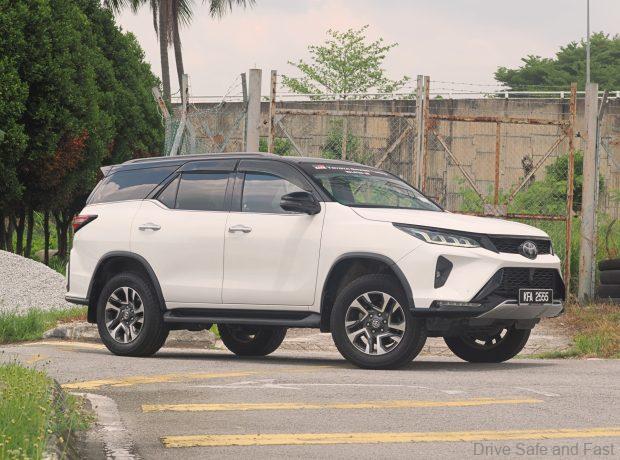
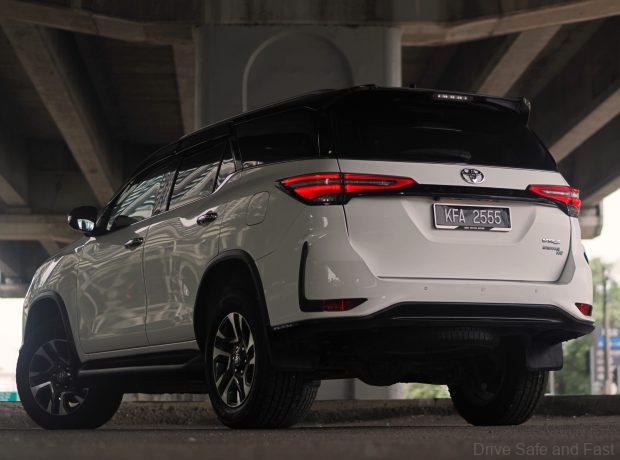
I don’t mean it was the same make and model. I mean it had the same plate number. So, here’s a second look at the same exact car – the Toyota Fortuner VR-Z. So, have my thoughts on the Fortuner changed in that time? Well, to find out, I took it down to JB once again. This time, the weather was much fairer, but that wasn’t the only thing that was different. The entire automotive market has changed so drastically in the span of 3 years that it almost feels like we’re in a different era. It’s not just that relatively affordable electric vehicles are now widely available; it’s also that relatively inexpensive but well-made and well-specced Chinese ICE vehicles are now common too.
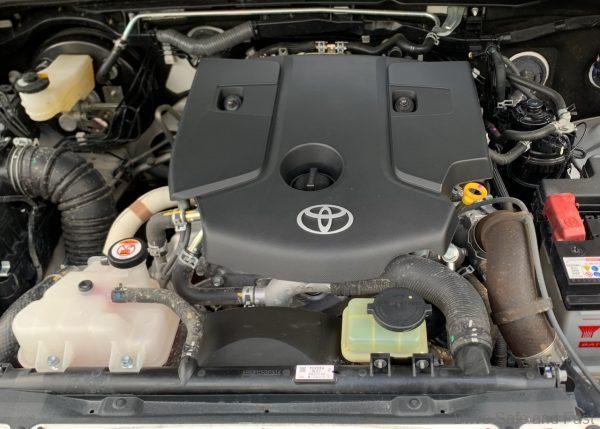
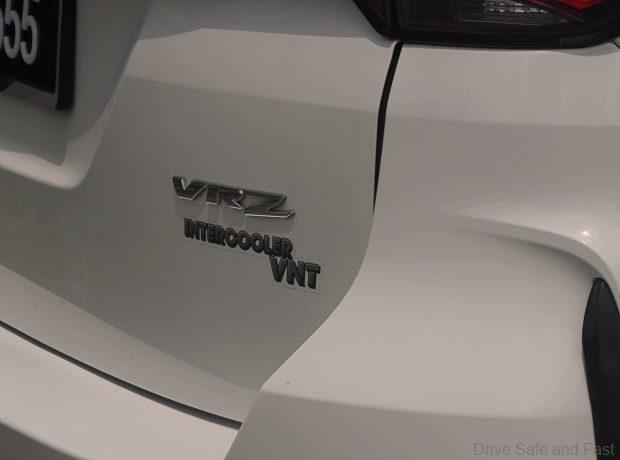
Before we get into the meat and potatoes of this article, let’s talk about the specs and equipment. The Fortuner VR-Z is powered by a 2,755cc 4-cylinder turbo diesel engine from the GD family of engines. It has a variable nozzle turbocharger and is tuned to produce 202 horsepower and 500Nm of torque, which is quite high. This engine is EXTREMELY impressive, and the fact that it’s in the Fortuner VR-Z model specifically signals that it’s not just a trim level, but an entirely separate product from the rest of the Fortuner stack. That’s because this ‘1GD’ engine design is the foundation of the powerplants found in the current Land Cruiser products, which are flagship-level Toyota vehicles.
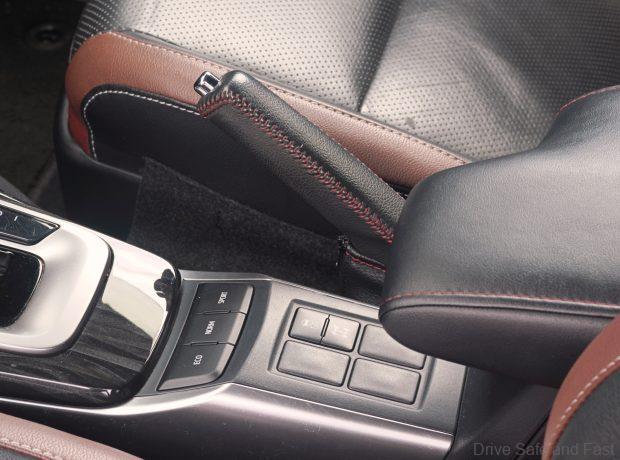
Power is sent to all four wheels via a 6-speed automatic gearbox, which is sufficiently spaced out for highway use, but should have the rugged qualities expected for heavy off-road use too. There are plenty of standout features in this generation, and Toyota has periodically updated the model with equipment such as quad LED headlamps, sequential LED turn signals, USB ports for all rows, as well as expanded ADAS features. That’s right, the current Fortuner VR-Z has features such as Dynamic Radar Cruise Control, Pre-Collision System, and Lane Departure. We also got a larger 9” unit with Android Auto and Apple CarPlay support, a parking view monitor, powered tailgate, blind spot monitor, and a telematic system too.
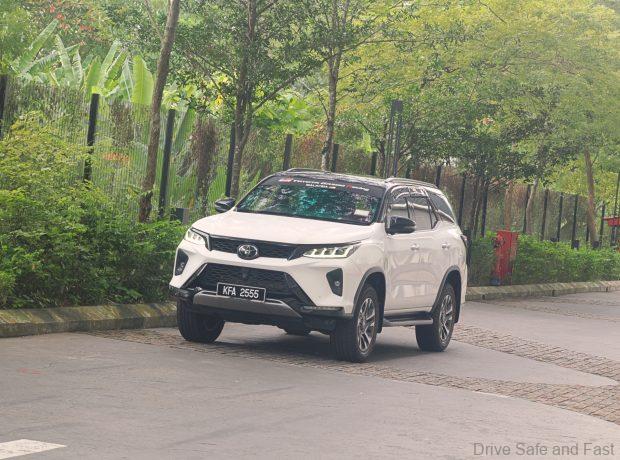
So the Fortuner has more boxes ticked than ever, but despite the loads of equipment, the fundamental character of the vehicle has always felt a little basic. There’s a reason why vehicles such as these aren’t the most popular in developed markets. Often, the Fortuner isn’t even sold outside of developing nations. That’s because it shares genetic similarities with the most workmanlike of vehicles, the Toyota Hilux. While it would be a mistake to call the Fortuner a Hilux for people moving, the reality is that it isn’t that far removed. That was part of its success in the beginning, but our market has changed a lot since then.
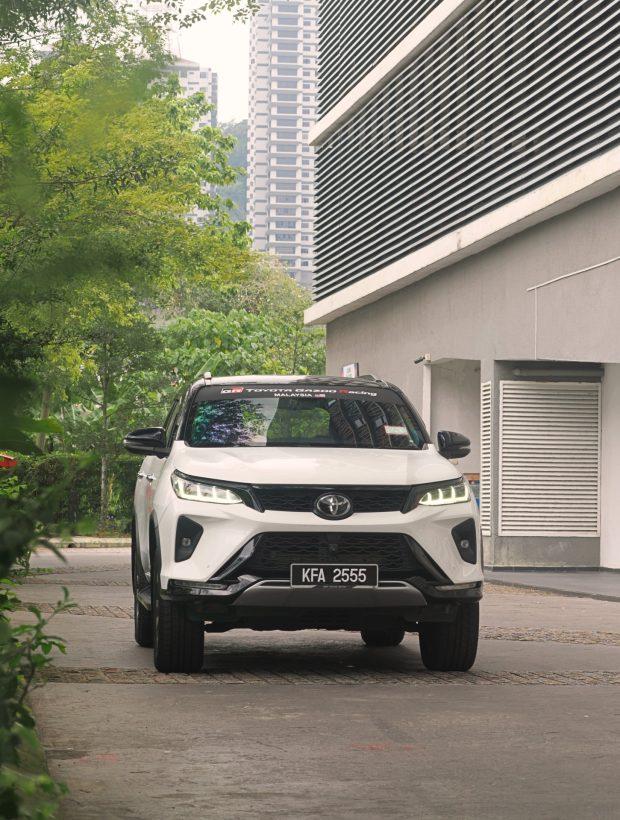
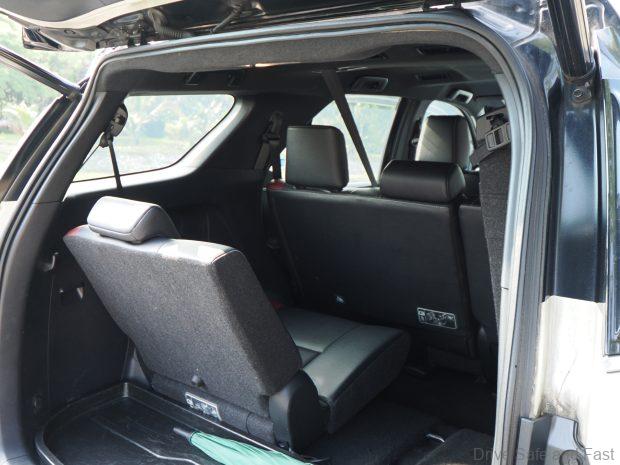
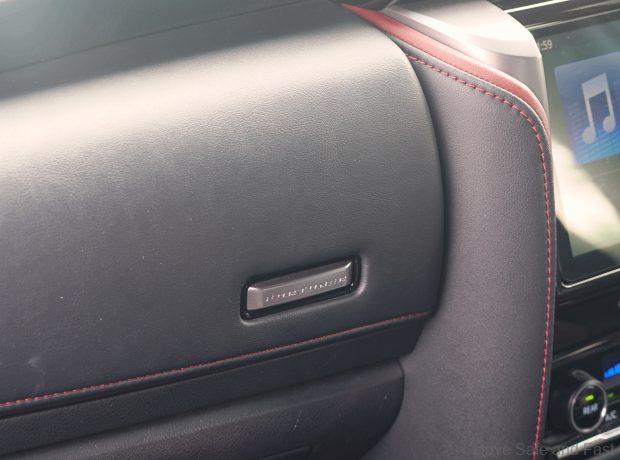
I remember one of the key takeaways of my initial review of this Fortuner was that they’d dressed it up as much as could be expected for its class. It was a high-quality tool wrapped in some decent leather and with the right amount of garnish to look quite presentable. NVH had been thoroughly improved: highway speed handling, design appointments, interior trimmings, equipment, and ADAS had elevated it from its commercial vehicle roots. However, it still felt more like a dressed-up Hilux than a ‘Land Cruiser Lite’.
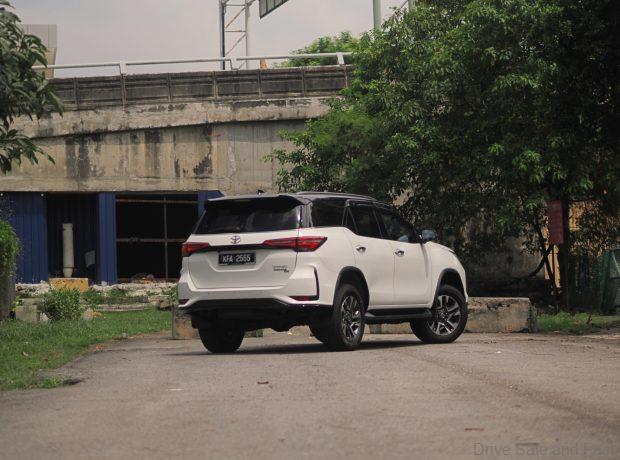
It’s more apparent now in 2025 that the Fortuner feels a little bit out of place. We live in an age where Chinese car brands seem to introduce, update, discount, and discontinue models seemingly every other month. In this age, Toyota has stood out for taking the opposite approach with vehicles like the Fortuner. Here you have essentially the same thing sold 4 years on with just small updates to the equipment.
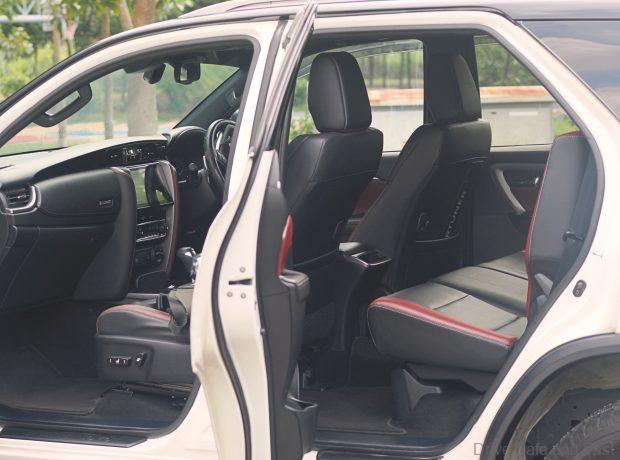
Society will always need the option of a vehicle like the Fortuner, and it’ll always need a no-nonsense brand like Toyota to fall back on. I think Toyota knows that too. But there is a real danger for the Fortuner VR-Z in particular. Earlier, we singled it out from the other Fortuner models as being a little bit special. It has the heart of a Land Cruiser after all, and at a quarter of a million Ringgit, it certainly isn’t cheap. However, it doesn’t feel particularly ambitious, luxurious, or high-tech in 2025. If you compare it to its direct segment rival, it only has the Ford Everest to worry about, and in that sense, it’s doing quite well. There are 50,000 Fortuners on the road, and only 3,000 Everests.
But if you’re willing to expand the scope of potential customers to potential Land Cruiser and Land Cruiser Prado customers, then the picture changes quite a bit. These customers exist and usually buy from parallel importers. I suspect this dressed-up VR-Z model is aimed at catering to them. Nowadays, though, those same customers have alternatives from China. If you want something off-road ready and rugged, the GWM Tank 300 might be an option. If you prefer something a bit more ambitious and authoritative, there’s the Tank 500. Those looking for a touch of luxury and tech might even go for a Jaecoo J8, still capable of light off-roading, still capable of carrying 6-7 occupants, but costing some RM50,000 less than the Fortuner VR-Z.
Before you dismiss this notion of potential VR-Z buyers going for something Chinese, let’s look at the sales data. The first impact was on monthly sales. It wasn’t uncommon for the Fortuner to make over 300 sales a month before, but since the introduction of the Tank 300, this has not happened once. Breaking the 200-unit mark is now the ceiling for the Fortuner. The second impact came with the launch of the Jaecoo J8 and Tank 500. If we just look at August 2025 numbers, the GWM Tank 300 and Tank 500 are making up HALF of what Toyota’s Fortuner sells. That’s 90+ GWM Tanks on the road for 180+ Fortuners. What about the Jaecoo J8? Well, in its first month, it outsold the Fortuner by 100 units, but this is likely just the shock factor of a new launch, and we’ll have to see if Jaecoo sustains this performance.
The theory is that all these Chinese carmakers are only here for a temporary disruption in the market. Soon, customers will recognise that the Toyota way of doing things was indeed correct and that there’s durability, spare parts availability, and plain old resale value that just can’t be beat overnight. My suspicion is that this will be true for the lower trim levels of the Fortuner, but perhaps not with the VR-Z.
There will always be government departments, MNCs, plantations, farms, and SMEs that will always need Fortuners and will only ever buy Fortuners. However, these are not the customers that the special VR-Z aims to entice. Those customers will recognise that the vehicle in showrooms today feels like the same car you could buy 4 years ago, and the car you could buy 4 years ago feels a lot like the one you could buy 8 years ago.
In summary, Toyota really needs to do something to address the lack of a viable ASEAN Land Cruiser in their line-up. The Fortuner VR-Z was a decent effort in the early 2020s, but right now it’s on shaky ground. Whether the answer lies in an ASEAN-assembled and ASEAN-specced Land Cruiser or a new Fortuner chassis remains to be seen. Whatever the case may be, RM240,000 for a Fortuner VR-Z in 2025 is finally up against some alternatives, and potential customers know it.
That being said, it’s not all bad. The Fortuner is still the number one car in its specific niche for a reason and the VR-Z is simply there to give you a substantial upgrade over the basic versions. Our initial thoughts on the car still hold true – it’s dressed up as much as can be expected from the standard model – but with the minor updates over the years it’s now a much more expensive car and in a very different market.
Engine: Inline-4, 16-Valve, DOHC, Variable Geometry Turbo Diesel
Capacity: 2755cc
Gearbox: 6-speed Conventional Automatic With Sequential Shifter
Max power: 202hp @ 6,500rpm
Max torque: 500Nm @ 1,600rpm
Price: RM241,880

