


Car in cabin wireless charging remains mostly slow and a waste of time
We know by now that it is slow due to the inherent inefficiency of wireless power transfer, low wattage of built-in chargers, heat generation and our uneven roads that causes smartphones to throttle their charging speeds.
So, why do car manufacturers …… all of them …… proudly claim fast, efficient wireless pads are provided? Well, it’s a selling feature that has been taken for granted.
We test many new vehicles, from China, Korea, Europe, Japan and Malaysia every year and even till today, we have not had a wireless charger in a new car cabin that works without a hitch. Even more irritating is the constant ‘ping’ when charging stops over every single pothole and speed bump as we drive on our ‘superbly maintained smooth sixty roads’!
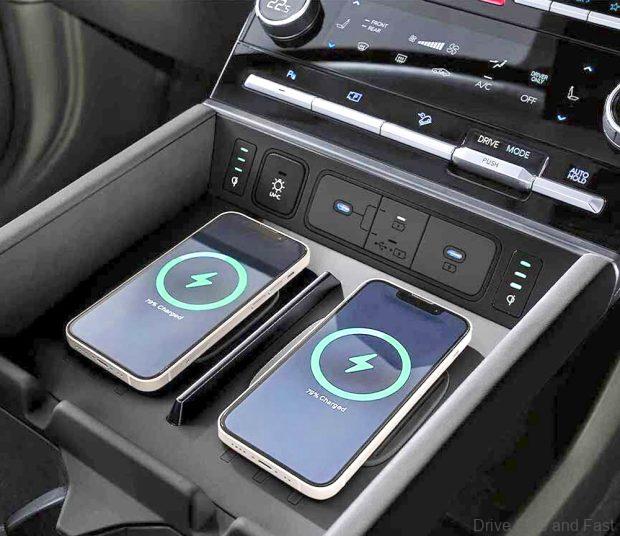
Core Reasons for Slow Wireless Car Cabin Charging
Inherent Efficiency Losses: Wireless charging uses electromagnetic induction, transferring power through an air gap rather than a direct wired connection. This process is less efficient, with some energy inevitably lost as heat during transfer, which reduces the actual power delivered to the phone’s battery.
Low Power Output (Low Wattage): Many built-in car wireless chargers, especially in older models, were designed with lower power outputs (e.g., 5W or 10W) that are insufficient for modern smartphones with larger batteries and high power demands. In many cases, the phone uses power faster than the charger can provide it, especially if you are running power-hungry apps like navigation.
Heat Management/Throttling: The enclosed, often unventilated car cabin environment and the charging process itself generate heat. To protect the battery from damage, phones and chargers are designed to reduce (throttle) the charging speed when they get too warm. This results in significantly slower charging, and in some cases, charging may stop altogether.
Coil Misalignment and Physical Obstructions: The phone’s receiving coil must be properly aligned with the charger’s transmitting coil for efficient power transfer. Minor bumps, car vibrations, or the presence of thick or metal phone cases can cause misalignment, interfere with the electromagnetic field, and drastically slow down the charging speed.
High Power Consumption Activities: Using power-intensive features like wireless Android Auto or Apple CarPlay, streaming music, and using GPS navigation all at once draws significant power from the phone. The slow trickle charge from the wireless pad often cannot keep up with this consumption, resulting in the battery level either staying the same or even decreasing.
How to Potentially Improve In-Car Charging If You STILL Want To Use The Wireless Pad
Use a Wired Connection: For the fastest and most reliable charging, use a high-quality USB cable and a powerful 12V adapter (cigarette lighter socket). Look for an adapter that delivers at least 18W (30W or more is better) and supports your phone’s fast-charging protocol, such as USB Power Delivery (PD) or Qualcomm Quick Charge (QC).
Ensure Proper Phone Placement: If you must use the wireless pad, ensure your phone is positioned correctly on the charging sweet spot and doesn’t slide around.
Manage Heat: Remove your phone case, if possible, during charging to aid heat dissipation. Ensure the charging area has good ventilation or, if possible, direct an AC vent toward the phone to keep it cool.
Optimize Phone Settings: Close unnecessary background apps or enable “Low Power Mode” / “Power Saving Mode” to reduce the phone’s power consumption while charging.
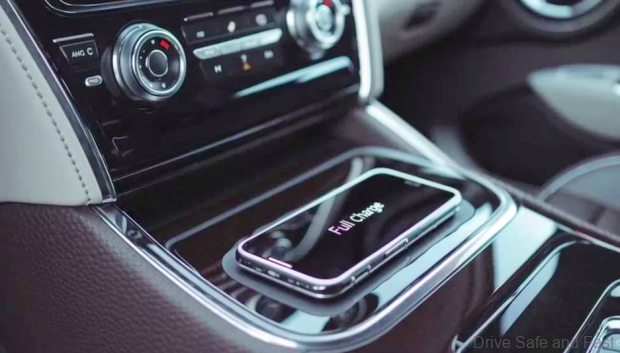
So, can we get a car manufacturer to really look at making a wireless charging pad that holds the smartphone in ‘place’ firmly and a cooling system that does more than just blow a ‘whisper’ of cool air?

