


Last week, we sat down with engineers from Proton and Geely to learn more about the Global Modular Architecture (GMA) which underpins both the e.MAS 7 and e.MAS 7 PHEV. Here are some of our findings.
As Malaysia steps into a new era of sustainable mobility, the Proton e.MAS 7 and e.MAS 7 PHEV are leading the charge. But the real magic isn’t just in the sleek design or the Proton badge—it lies beneath the surface. Both models are built on the Global Modular Architecture (GMA). We checked with Proton and yes, the GMA is essentially just a localised marketing name for what the rest of the world calls the Global Intelligent New Energy Architecture (GEA) from Geely. There is no functional difference between the GEA and GMA.
While it’s a little unorthodox and unnecessary to rebrand a platform, the GMA itself is a very impressive platform. Geely and Proton boast a number of firsts and segment bests with this architecture. And if you’re wondering why they developed a new platform rather than just sticking to the existing Sustainable Experience Architecture (SEA) found on other Geely-made NEVs, the reason is mostly tied to use case and cost. The SEA underpins some very high-performance models with high-output motors. GMA is tailor made for mass market applications and is not quite as ‘overbuilt’ in that regard.
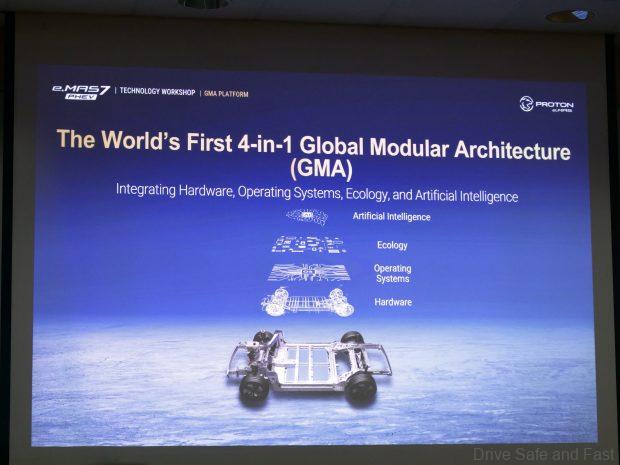
A World-First 4-in-1 Integration
The GMA platform is the world’s first architecture to achieve a 4-in-1 integration of Hardware, Operating Systems, Ecology, and Artificial Intelligence.
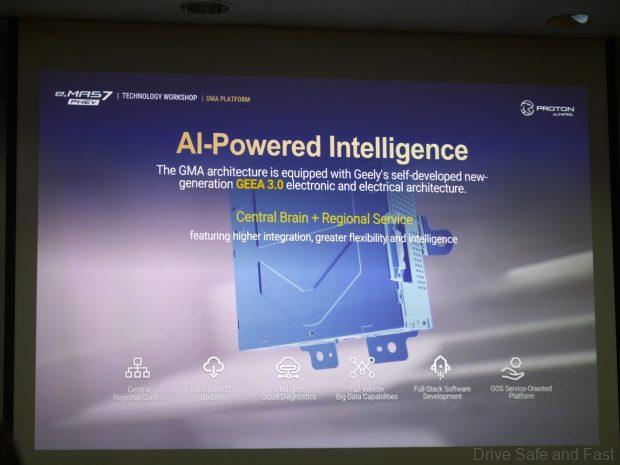
At its core is the GEEA 3.0 electronic architecture. By utilizing a “Central Brain + Regional Service” model, the vehicle functions like a high-powered computer on wheels. This enables:
- Intelligent OTA Updates: Your car stays fresh with the latest software improvements.
- Cloud Diagnostics: Real-time monitoring to catch issues before they become problems.
- GOS Service-Oriented Platform: Seamlessly connecting your digital life with your driving experience.
The AEGIS Battery System: Safety Without Compromise
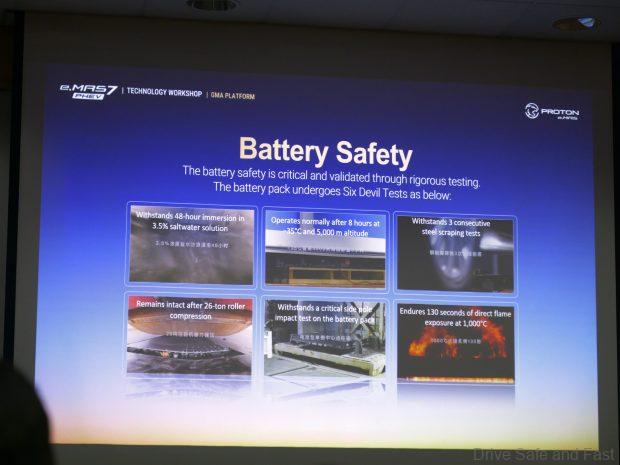
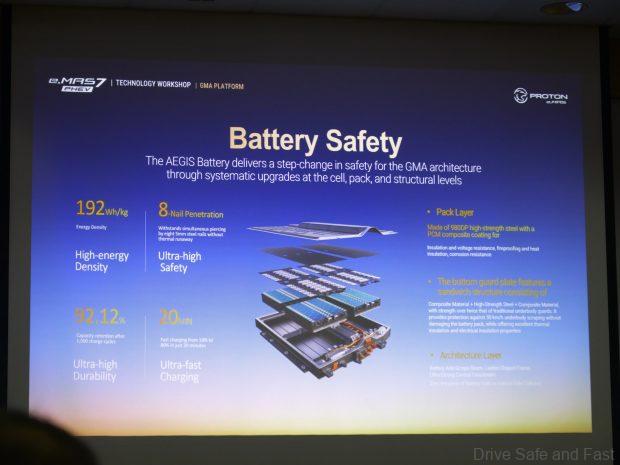
For many buyers, battery safety is a top priority. The GMA platform introduces the AEGIS Battery System made by Geely, which has undergone what Proton calls the “Six Devil Tests.” These include 48-hour saltwater immersion, exposure to 1,000°C direct flames for 130 seconds, and even a 26-ton roller compression test. Proton was not keen on making durability claims on behalf of CATL, who supply the lower tier battery for the base model e.MAS 7 PHEV.
Beyond extreme durability of AEGIS batteries, the performance metrics are equally impressive:
- Ultra-Fast Charging: Go from 10% to 80% in just 20 minutes.
- High Energy Density: 192 Wh/kg for optimized range.
- Long-Term Reliability: Boasting a 92.12% capacity retention even after 1,500 charge cycles.
Native Innovation for PHEV Safety
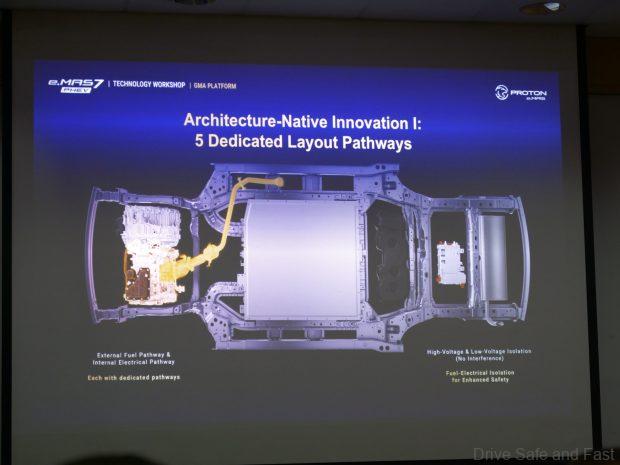
The e.MAS 7 PHEV benefits from architecture-native innovations specifically designed for hybrid layouts. To prevent interference between fuel and electrical systems, the GMA platform uses 5 Dedicated Layout Pathways.
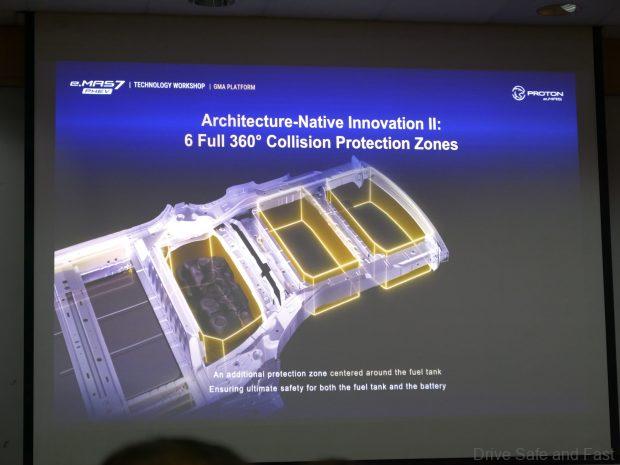
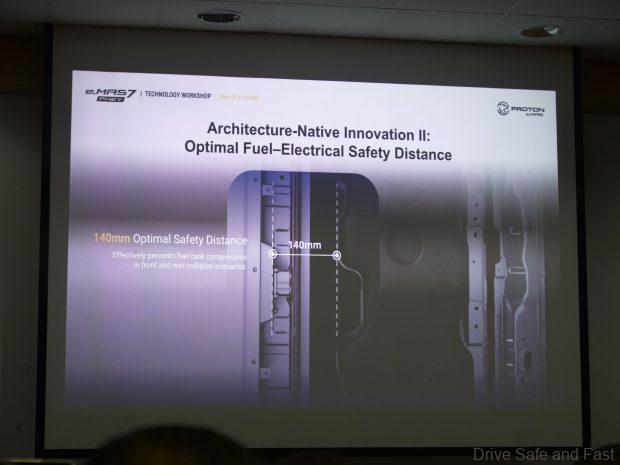
Furthermore, a specialized 140mm safety distance is maintained between fuel and electrical components to prevent compression during collisions.
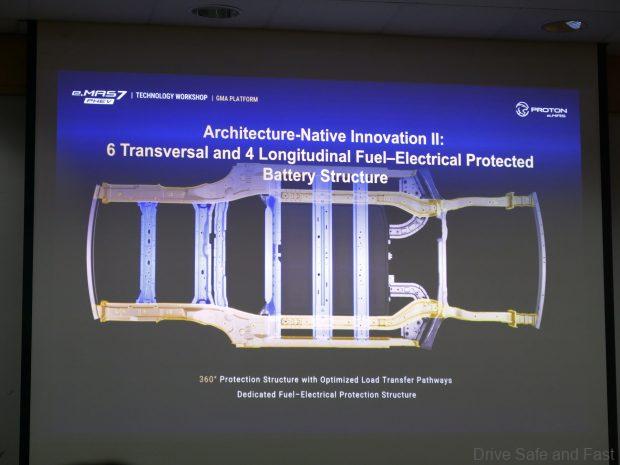
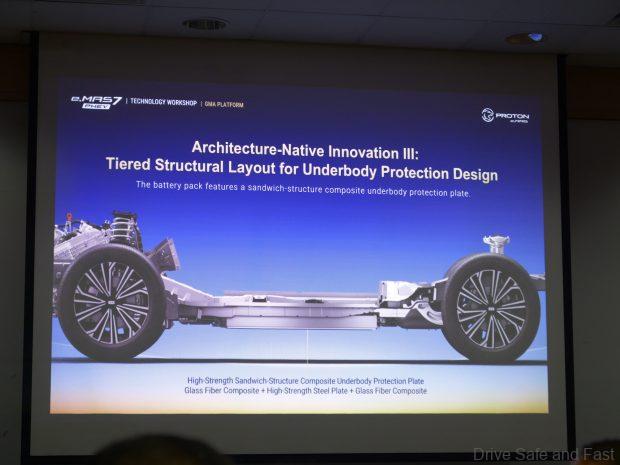
The underbody is shielded by a high-strength sandwich-structure composite plate, ensuring that both the high-pressure fuel tank and the battery pack remain untouched by road debris or impacts.
Driving Experience: AI-Powered Precision
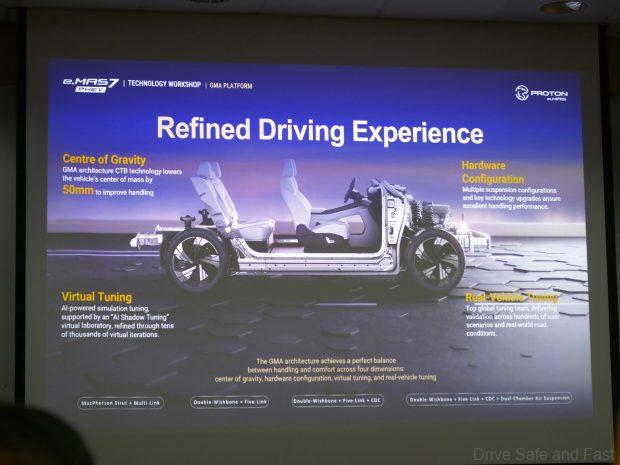
The GMA platform transforms the e.MAS 7 into a driver’s car. By utilizing Cell-to-Body (CTB) technology, engineers lowered the center of gravity by 50mm, significantly improving handling.
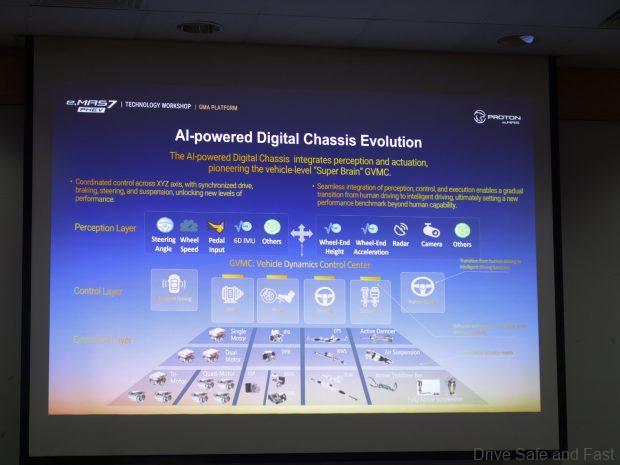
Safety maneuvers are handled with ease, as evidenced by an Elk Test speed of 83 km/h—a figure that leads its class. This agility is supported by the GVMC (Vehicle Dynamics Control Center), a “Super Brain” that coordinates driving, braking, and steering.
Space Efficiency and Comfort
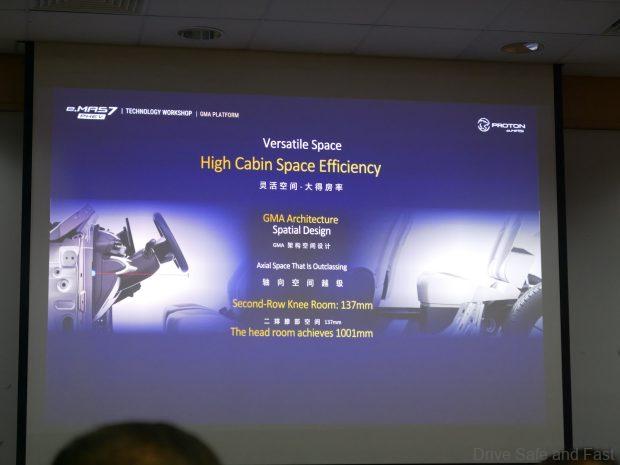
Inside, the GMA platform “outclasses” its rivals in axial space. Despite its compact footprint, the architecture provides:
- 137mm of Second-Row Knee Room for adult-sized comfort.
- 1001mm of Headroom, creating an airy, spacious cabin feel.
Proton has also focused on refinement. The rear subframe uses compliant bushings that are 53% larger than competitors, filtering out road vibrations. Combined with a low steering ratio of 14.5, the e.MAS 7 offers a steering response that is far more agile than the industry average.
We also learnt about the flexibility of the e.MAS 7 PHEV as a dual-energy vehicle. If fuel prices are getting too high, you can charge up at home and drive the vehicle as an EV almost entirely. The fuel tank is pressurized, which lowers the risk of fuel going bad through oxidation, evaporation and moisture absorption. That being said, owners are still advised to refuel at least every 6 months to avoid pushing the limits, but Proton stopped short of saying it would void the warranty to never change out the fuel.
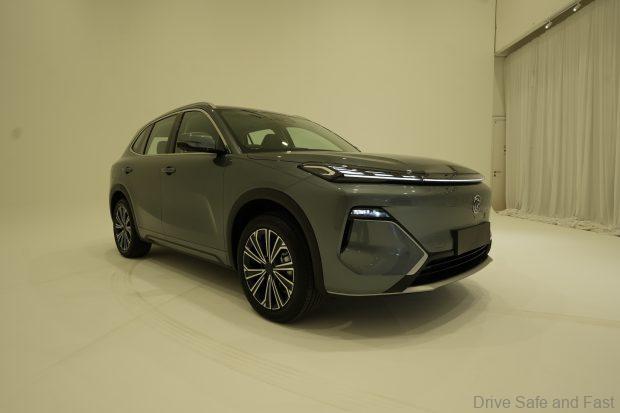
Conversely, you can run the vehicle without charging it at all. The manual does advise charging it to 100% every week to calibrate the battery management system (BMS). However, not charging it does not void the warranty. The way it was explained to us was thusly: the LFP chemistry of the battery in the e.MAS 7 PHEV gives a 400V read out only when at 100%. The BMS uses this 400V readout to understand that the battery is at 100%, every other state of charge before 0% is a guessing game for the BMS. The PHEV system is designed to not let the battery’s state of charge to dip down below a certain threshold. It’s also designed with multiple charging and discharging strategies. So, charging it to 100% periodically is encouraged for an accurate battery read out and optimal efficiency, but the system can manage without it. Even if you don’t charge it up at all, the battery warranty is still valid.

