

As competition in the Chinese domestic car market heats up, China’s government steps in.
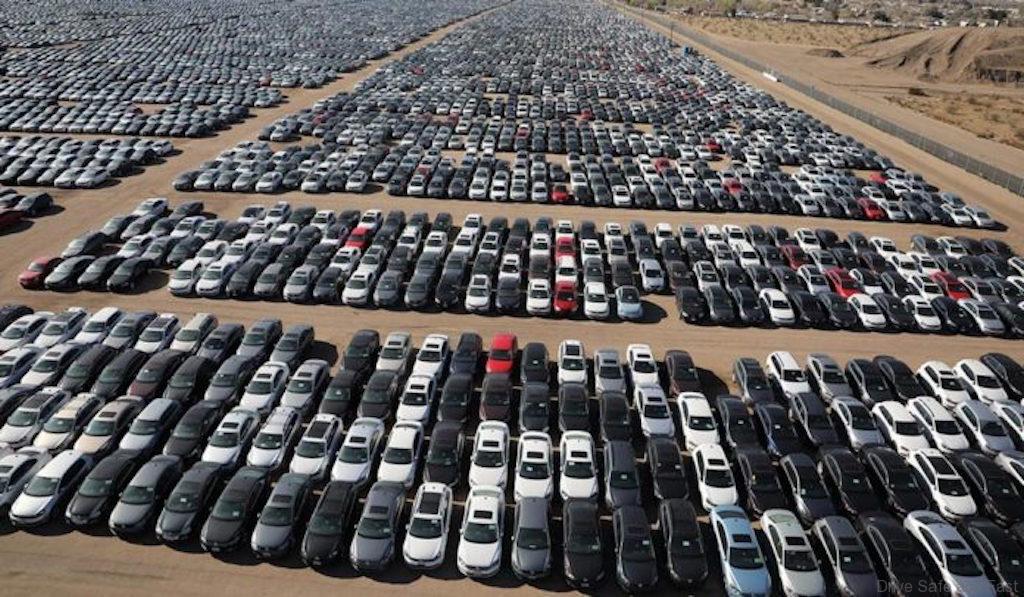
Last week, the major news story coming out of the Chinese automotive industry was centred around the business practice of ‘zero km used cars‘. These are cars that are essentially dealer-registered in order to be sold below market price to customers. It’s a form of price war that’s difficult for authorities to monitor and control, but the Chinese government is having none of that.

After the zero km used car controversy spilled over into public discussion, China’s Ministry of Commerce held a meeting involving some key industry players to crack down on the practice. Though it’s unclear what legal measures were and will be taken, what’s clear is that the Chinese government is now getting involved in order to protect the industry as a whole as well as consumers.

According to CNEVPost.com, the China Association of Automobile Manufacturers (CAAM) has issued the following guidelines:
- all enterprises must strictly adhere to to the principle of fair competition and conduct business operations in accordance with laws and regulations
- leading companies should not monopolize the market, squeeze out other players, or harm the legitimate rights and interest of other industry players
- when companies legally reduce prices to clear inventory, they should not sell goods below costs. They should not engage in false advertising that mislead consumers, disrupt market order, or harm the fundamental interest of the industry and consumers
- all companies should conduct self-inspections and rectifications in accordance with relevant national laws and regulations.
While it’s not aimed at any particular brand, it’s clear that some Chinese brands are particularly ‘guilty’ of price slashing practices and ‘channel stuffing’, which is the act of dealing with excess inventory by moving the stock through distribution networks.

Points 1 and 4 concede the limitations of government and regulatory bodies. It’s really up to the companies themselves to self-regulate and not go to extremes in order to ‘kill off their competition’ by selling below their cost just because they have a tighter control over the supply chain or they have a larger financial buffer. This is an area where the individual companies may have their own methods of calculating costs and profit, and it may not be practical for external parties to intervene.
Points 2 and 3 are the ‘guidelines’ that the government wants these car companies to pay attention to. They are asking the industry players to be nicer to each other, as competition in China has heated up to an unhealthy level. While not outlawing price wars, the guidelines are saying that price wars should not devolve into a war of attrition.

Part of the reason why all this is happening in China is because brands there are intensively relying on domestic demand. Sure, Chinese car exports are aggressively expanding – we see that first hand in Malaysia. However, in terms of pure numbers, it’s the domestic market that makes up a majority of sales for the companies. The aim is perhaps one day to becoming export-oriented with the EU and the US targeted. However, the way things are set-up now, local competition within China is weeding out the weaker players.
That being said, it’s probably for the best that some rules are put in place lest things get uglier than they already are.

