

The Perodua Traz H could have been a home run for the company if not for a few frustrating spec choices and a relatively high price.
In theory, the Traz should have been the easiest vehicles for Perodua to get right. This was the logical upgrade path for any first generation Axia or third generation Myvi buyer looking for a conservative crossover. In some ways, Perodua managed to get things right. In other ways, they made some poor choices. The Traz has elements of a new Perodua to it, one under direct Toyota supervision and all the pros and cons that entails. Here’s our quick review of one of Malaysia’s last car launches of 2025 and undoubtably one of Perodua’s most consequential models in recent memory.
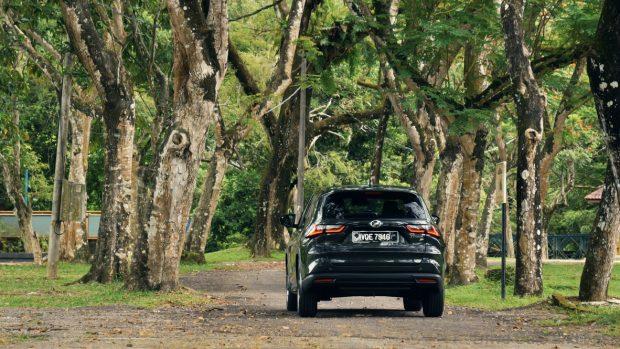
The Traz is a crossover that combines the modern chassis DNA of the Ativa with the smooth powertrain of the Myvi and it was developed from the developing market’s Toyota Yaris Cross (AC200), which is also slated for a Malaysian launch. This Traz is a product that arrives amidst a backdrop of great change.
Regionally, Daihatsu’s safety scandal has meant that Toyota has had to step in for ASEAN-developed vehicles. Locally, Sime Motors acquisition of UMW may have shifted things up in the background. And in terms of the product market, Malaysians now have access to sub-RM100K 4-cylinder turbo crossovers like the Proton X50 facelift and Chery Tiggo Cross, plus Chery offers a hybrid variant of the same.
Each of these developments have had a hand in shaping the Traz in its own way. We’re sure it would have arrived about a year earlier amidst a less crowded and less spoiled market had things the waters been less choppy. Without a Yaris Cross waiting in the wings, the Traz may even have arrived more competitively specified for current conditions. But all of this is conjecture, we have to deal with the here and now of the product itself, so here’s the evaluation.

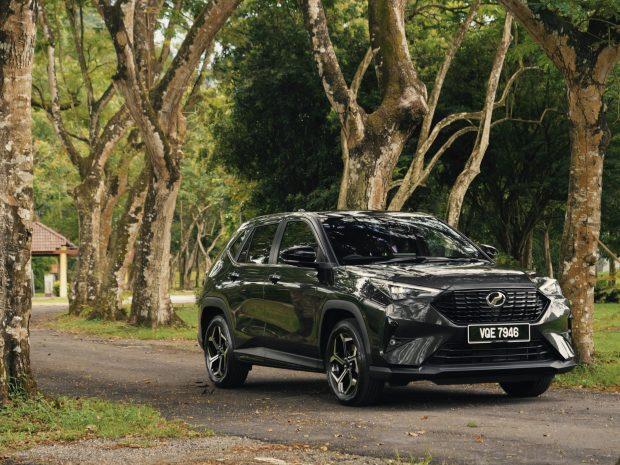
Starting with the way the car looks, it’s definitely one of the most handsome Perodua designs to come of late. It doesn’t quite have the rugged characterfulness of the Ativa, but it’s certainly well proportioned, conservatively styled and almost elegant in its curves and lines. The variant we have here is the Traz H, the more expensive of just two available at launch. There is a GearUp accessory pack you could add, but this just looks garish in our eyes and the consensus seems to be the same for most.
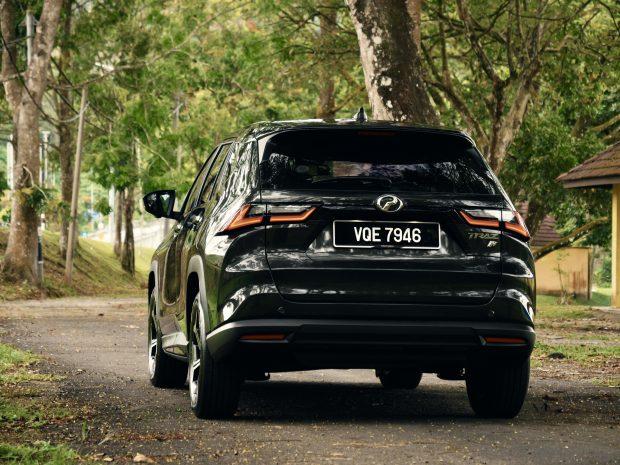
Without the GearUp package though it’s tough to find an angle of the Traz that doesn’t impress.

The details reveal some attention to detail, such as with the possibly Lexus-inspired taillight graphics and bumper shape.

Elsewhere, the conservatism in design is dominant. The non-offensive hexagonal grille looks like it could work with any car brand’s badge on it.

The only complaint one might have is that it doesn’t look particularly futuristic or overtly characterful. However, as the ‘Myvi of Crossovers’, a design that blends in is much more successful than one that sticks out. I think the designers have done a mighty fine job with the Traz.

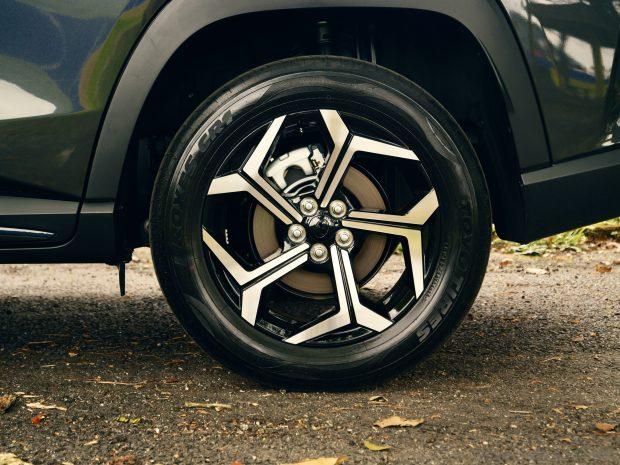
In fact, I think the designers did the right thing by choosing such an ‘out-of-the-box’ rim design. It adds some flavour to the Traz’s exterior and if you’re not a big fan of how it looks, you could always swap the rims out yourself later on, though this may affect your warranty.

On the topic of the rims, these are 17″ in diameter. They’re not going to be as cheap and cheerful to replace as your typical Perodua 15″ or 16″ tyres, so high mileage users should be aware. Plus, all Traz variants come with rims of the same diameter.
On the topic of the rims, let’s look in the boot where you’ll find a space saver spare tyre, a nice surprise.

The surprises continue as the boot itself is probably the best ever deployed in a Perodua. It’s tough to express just how much of a step-up this has been versus any other Perodua model in recent history. We’re not kidding when we say that it feels like the boot of the Traz feels like it was done by a completely different company than that of the Ativa, Alza or Myvi. Here’s why.

First, there’s the obvious reason – it’s finally a powered trunk lid. That alone would have been enough for many fans to celebrate. It’s a feature that only 20 years ago was reserved for the ultra elite. I remember watching an episode of The O.C. in 2005 and seeing a 7 Series with a powered boot and thinking how cool that was.

That’s only the first layer of surprises. The tonneau cover supplied in the Traz is genuinely high grade. It’s contoured to perfectly match the shape of the boot’s interior panels where they could have easily found a more generic shape that left gaps in the corners. It’s also a retractable piece with solid construction, completely unlike the flimsy fabric-in-a-frame design you see on the Ativa. This is a real step up. Our only complaint is that it’s mounted maybe an inch lower than we expected, but that could just be due to the shape of the rear pillar.

Beyond the tonneau cover, you also have another set of first for Perodua – a matched set of removable floor panels. All three panels feel and look properly finished to a very high standard. The large floor panel in the centre had cut outs to prop it up temporarily, revealing a hidden storage compartment below. The two panels on either side are also removable for additional hidden storage bins.

At this point you may be thinking, this is all too much. But wait, there’s more. You could make use of the expanded storage by lowering the boot floor to the lower level or you could leave it up there and fold the rear seats down for a large cargo compartment with a flat floor with no gap.
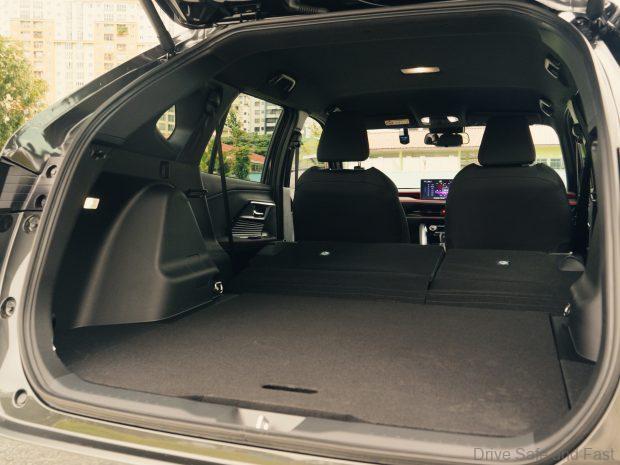
It’s really excellent stuff. I give the boot 5/5. Unfortunately, it’s all a bit downhill from there, but there are still plenty of highlights. Stepping into the rear seats of the Traz, you’ll find thick padded and wide seats. They’re not the most supportive in the world, but the rear seats are a nice place to be. They give me a first generation Myvi feel when I’m sitting there. It’s just large and expansive.

Plus now you get a few rare-for-Perodua amenities such as a centre armrest…

Rear air cond vents…

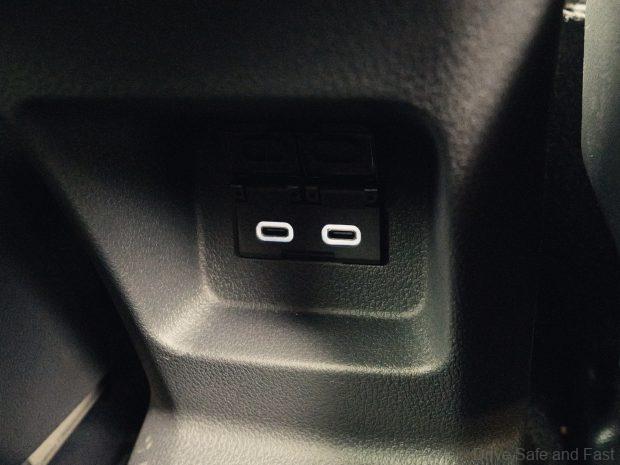
Twin USB-C ports with illuminated rings…
White LED cabin lighting against a black headliner…

And just look at that rear door card. Contrast stitching, soft touch elbow rests, multiple materials and trim pieces, contours, angles. This is clearly not the typical Perodua standard.

To be honest, the only downside to this interior so far is the use of fabric instead of leather. In fact, there is no standard leather option for the Traz at all. You’ll need to get leather by paying extra for the GearUp option. And we can’t speak to the quality of the leather used there, but from our past experiences with GearUp accessories, we don’t expect anything great. Happy to be proven wrong though.

Up front we start to see where the real problems are though. At first glance, it just looks like someone in the Perodua design studio might have gotten too excited with the red marker pen, but there are some other nits to pick here. I mean there’s the sheer number of different red materials and hues of the shade throughout the cabin. The stitching, plastic trim, centre fabric strip, door handle grip and storage tray all seem to have slightly different versions of the colour.

The 9″ head unit here is functional and responsive enough and has wired Apple CarPlay and Android Auto support. On paper this is all you could realistically ask for. It also sounds decent. Wireless Apple CarPlay and Android Auto support would have been welcomed but at this price point, it’s not expected.

The only value complaint is that the head unit’s default look and feel falls closer to Perodua than Toyota in the Traz. Sure, that’s fine, but if you were expecting something better after experiencing the revelation that was the boot of the Traz, you’re in for disappointment. It’s also one of those ‘floating’ head units that isn’t quite floating, which comes across as poorly executed from certain angles. It’s clear that just behind that display some massive hardware that needs to fit in a number of other models too.

Another minor disappointment comes in the instrument cluster. Actually, objectively speaking we liked the analogue dials here. Nothing was wrong with them. Unfortunately, we’ve seen that Perodua has moved toward a more modern mostly digital instrument cluster on just about all their other models. This is clearly a downgrade from that.

There are still elements to that system that persists here, such as the 3 turn signal noises, and the choice of a digital or analogue clock face. That is the extent of it though, none of the cool animations and digital tachometer options that you find in older and more affordable options.

There’s plenty I’m neutral about in this cabin. I touched on the fabric upholstery earlier. This sports a rather generic and semi-sporty design that doesn’t quite fit the image of the Traz but there’s nothing wrong with it. I believe most buyers would expect something a step higher than this though and I anticipate 3rd party upholsterers will have to step in to do the market’s work.

What’s definitely impossible to run away from is the use of full manual controls for both the driver and front passenger seats. Again, maybe the typical Perodua driver isn’t expecting any better so it’s hard to find fault here.

I’m also fairly neutral on the centre console. The storage box isn’t particularly deep and there’s no wireless charger by default (it’s a GearUp add-on). The highlight is this cupholder system that collapses away to reveal a slightly larger cupholder… Instinctively one would expect a more generic and unimpeded storage space to be revealed underneath the cupholders and not more of the same thing but perhaps these were designed for bottles of differing girths.
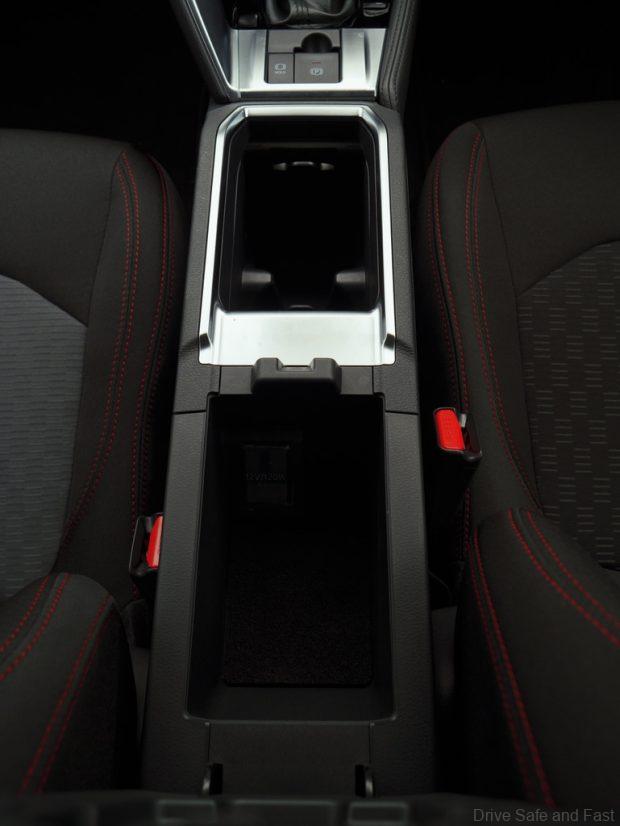

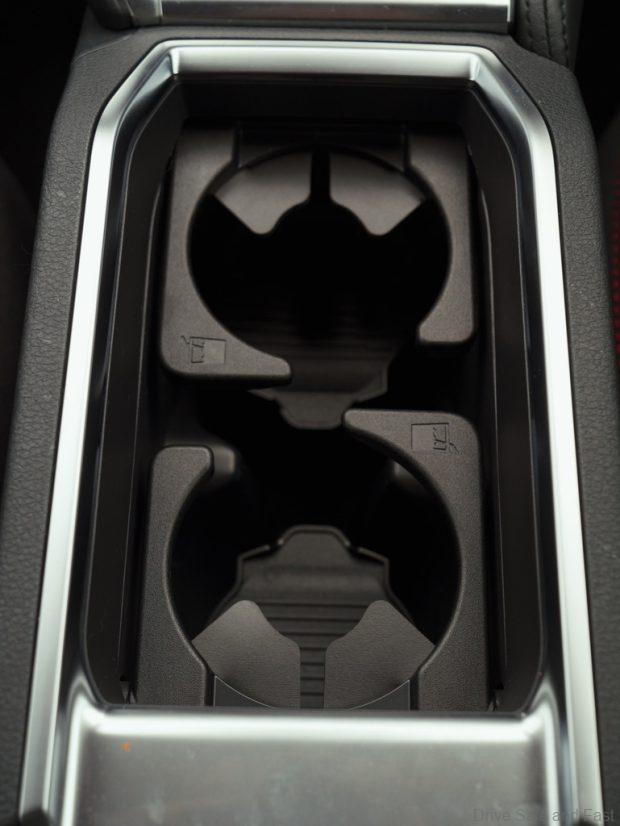
I’m also not entirely sure where I stand on the new air cond system. It’s clearly a step away from the Perodua-developed system found on most modern models which isn’t automatic but has a couple of memory slots for fan speed and temperature.
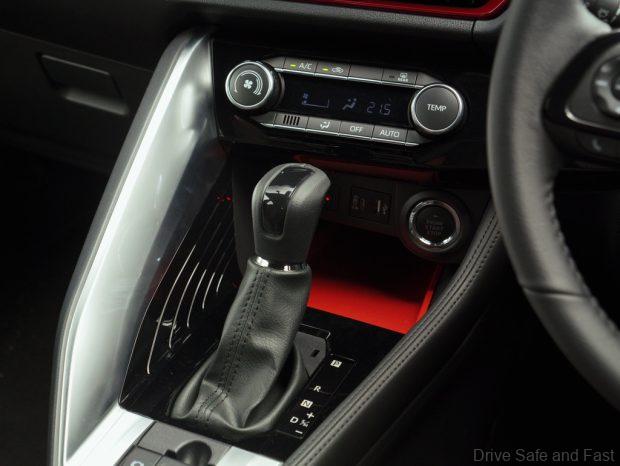
These parts look Toyota-developed, which is the start of another topic: the tiering strategy done for the benefit of the upcoming Yaris Cross. Many have noted that the Traz doesn’t have an AV specification, which is traditionally the highest trim variant offered by Perodua. It’s also quite clear that the Traz H is missing a bunch of stuff already offered on cheaper and older models such as the Ativa and Alza.
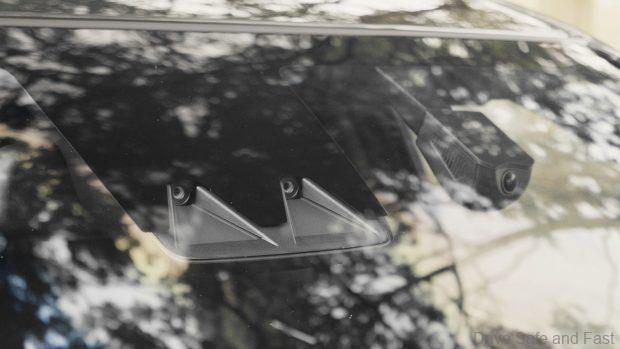
Of all places to cut back, Perodua chose the active cruise control well it seems a little strange considering the system piggy backs on the same hardware as the rest of the ADAS – the stereo cameras.

It feels as if Toyota has asked Perodua to offer a higher degree of separation from the upcoming Yaris Cross in order to justify an inevitably higher price. At least you still get most of the ADAS features.

For context, the Perodua Alza and Toyota Veloz didn’t have much separating them beyond steering telescoping adjustment and wireless Apple CarPlay.

Deliberate segmentation aside, it’s also strange that Perodua hasn’t pushed forward other aspects of their hardware, such as the power windows. After decades and decades of evolution we’re still stuck with only Auto Down functionality for the driver’s windows. It may not be a ‘problem area’, but the rest of the industry seems to have moved forward here.

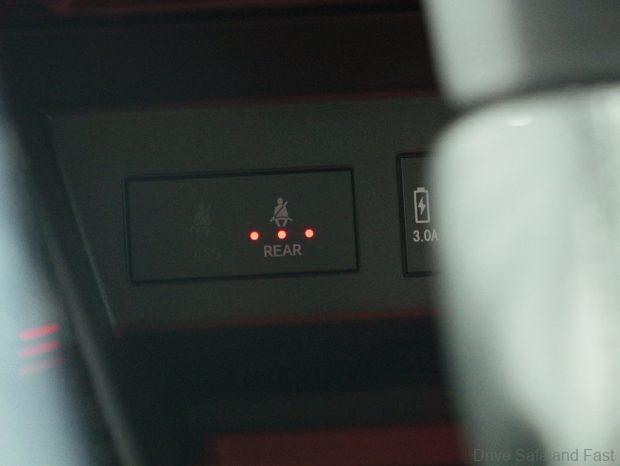

Well, if you are a Traz H owner you don’t have to feel too shortchanged. Perodua have included here some other interesting and useful features such as an electric parking brake, seatbelt reminders for all seats and a front DVR neatly packaged into the windscreen.
You also get a 360-degree parking camera though the resolution feels like it’s based on cameras designed two decades ago.


I think that’s all I have to say about the interior and equipment. Overall it’s definitely a step forward in a lot of departments. You can see the Toyota touch in a lot of aspects. The boot, LED cabin lighting, black headliner, air cond controls are all more advanced than we’ve ever seen Perodua deliver.

Unfortunately there are also some steps back in terms of ASA features, upholstery, and well the red trim in the cabin is just plain out of place. In short, if you thought Perodua had a set formula with the Ativa and Alza, the Traz proves that they’ve had to go back to the drawing board. Is it because Daihatsu had to take a step back after the safety scandal? Is it because Toyota needs a sub-RM100K volume player to go up against the new Chinese offerings? I’m not entirely sure. Maybe it’s a bit of both.

In terms of drive, I have to say there’s nothing but positives to report, at least from my perspective. I mentioned early on that the Traz was more of a Myvi Crossover than the Ativa ever was. That to me is down to the 4-cylinder engine. Sure, you lose out on the Ativa’s turbocharger, but I honestly never liked the character and NVH qualities delivered by the 1.0L three cylinder engine that turbo was attached to. I’d much rather take the more natural torque delivery out of this larger engine.

While I’ve never been a fan of the way the D-CVT forces whatever engine it’s attached to to rev up beyond 2,000 rpm with the slightest throttle input, I’d say the tuning is a little more reserved here in the Traz. As annoying as that character can be in heavy traffic, it makes for a very efficient and low revving cruiser once the vehicle gets in motion.
Once you’re at the speed you want to be at, you’ll hardly hear or feel the engine. It’s commendably tuned overall, I just personally prefer a more natural creep up to speed that older CVT and conventional automatics were able to deliver. This powertrain also comes with a couple of drive modes that don’t really advertise themselves. To be honest, just leave it in its default drive mode and let the system figure out what’s best for you.


At RM81,100 this is hardly your typical affordable Perodua option. In fact, it arrives amidst a very crowded sub-RM100K market with rivals more desperate for market share than ever before. We’re sure the Traz will sell well and not just because it’s a Perodua. We would even find it easier to recommend over the Ativa thanks to the smoother, quieter engine and the nice boot.

Unfortunately the areas for improvement are way too clear on the Traz H than we’d like. Again, it would have been simple for Perodua to get this right and they’re so close to getting it right that it frustrates. Add active cruise control, add a decent leather option from the factory, remove the red trim and match the improvements in the boot packaging to elements of the cabin plastics and the parking cameras. Perodua would have had a world beater on their hands with just a few changes. Instead upgraders may genuinely start asking if they wouldn’t feel more substantial improvements to their lives if they explored outside this brand for a change.

2025 Perodua Traz H Specifications
Engine: Inline-4, 16-Valve, DOHC, Petrol
Capacity: 1496cc
Gearbox: D-CVT
Max power: 106hp @ 6,000rpm
Max torque: 138Nm @ 4,200rpm
Price: RM81,100

