Electric car owners will be saying ‘hey we do not need to warm up our engines to get maximum acceleration!’
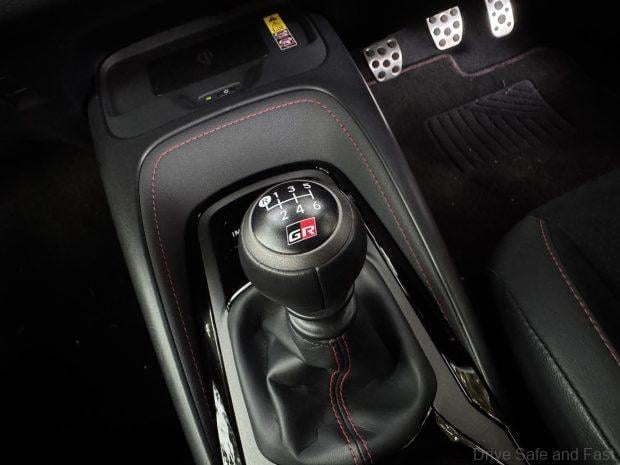
Warming up a Toyota GR Corolla before pushing it hard isn’t an old-school myth, instead it is a critical mechanical requirement for its high-strung, highly stressed power-train which delivers smiles for every mile when warmed up.
Does this apply to other high power power-trains from other legacy car manufacturers? Well, we think it applies to almost all petrol powered cars that have a turbocharger or even a supercharger. A short warm up (1 minute) or a slowish momentum from cold for about 1-2 kilometers is always best.
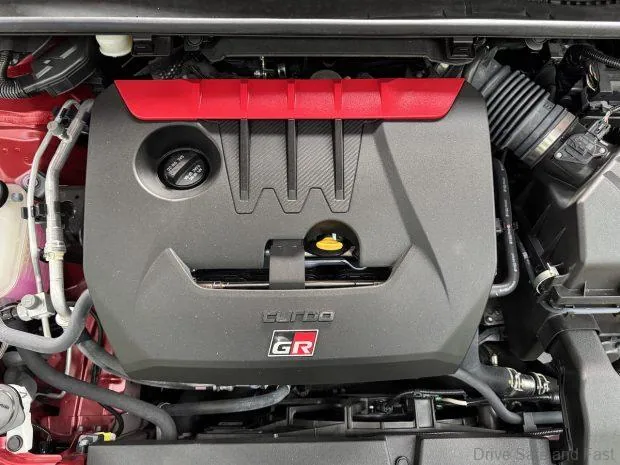

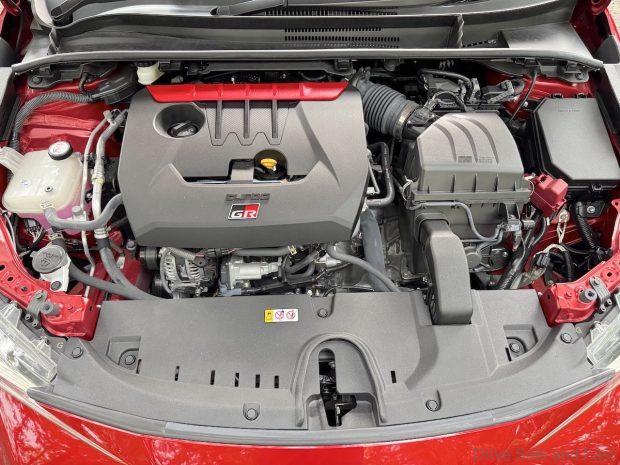
Meanwhile, the heart of the GR Corolla is the G16E-GTS which is a 1.6-liter, turbocharged 3-cylinder engine squeezing out an impressive 300hp and up to 400Nm of torque. Generating nearly 200hp per liter from a small capacity engine creates immense thermal and physical stress.
Here below we share why letting the engine reach proper operating temperatures before hard acceleration is essential.
1. Oil Viscosity & Bearing Protection
Cold engine oil is thick and viscous. Under cold start conditions, oil flows slowly through the engine’s tight bearing clearances, oil channels, and variable valve timing mechanisms.
The Risk: Applying full throttle or high RPMs under heavy boost while the oil is cold starves critical components (like rod and main bearings) of essential lubrication, causing metal-on-metal contact and rapid wear.
The Goal: You need to wait until the engine oil reaches at least 70°C to 80°C so it flows freely and builds stable oil pressure to protect the bearings under high load.

2. Turbocharger Bearing & Seal Longevity
The G16E-GTS uses a single-scroll turbocharger pushing up to 25.2 psi of boost. The turbo’s internal shaft spins at well over 150,000RPM.
The Risk: Turbo bearings rely on engine oil for both lubrication and cooling. Cold oil cannot flow fast enough to cushion a turbo spinning at extreme speeds under full boost, which leads to premature shaft play, blown oil seals, or total turbo failure.

3. Thermal Expansion & Clearance Tolerances
Engines are built out of different metals that expand at different rates when heated. The aluminum block, forged pistons, and steel cylinder liners heat up and expand at uneven speeds.
The Risk: If you slam the accelerator while parts are cold, the pistons expand faster than the cylinder walls. This localized “thermal shock” can lead to ring land failure, scored cylinder walls, or blown head gaskets.
4. ECU Soft Safety Limits
Toyota’s engineers programmed ECU protections directly into the car. When the engine coolant and oil temperatures are cold, the ECU intentionally limits maximum boost pressure and revs to prevent driver-induced damage. Attempting hard acceleration on a cold engine often results in flat performance because the car actively limits power output.
What is the Proper Warm-Up Routine?
As a rule of thumb do not idle sitting still for 10 minutes, why, because that actually delays engine warm-up. Instead ignite the engine (30–60 Seconds) and all you need to do is wait for the high initial cold-start RPMs to drop down to a normal idle. This gives the oil pump time to pressurize and distribute oil through the engine block and turbo.
Drive off immediately but gently for 1 to 2km keeping shifts under 3,000 RPM and staying out of heavy boost. Driving light-to-moderate loads warms up the engine, transmission and differential fluid far faster and more evenly than idling.
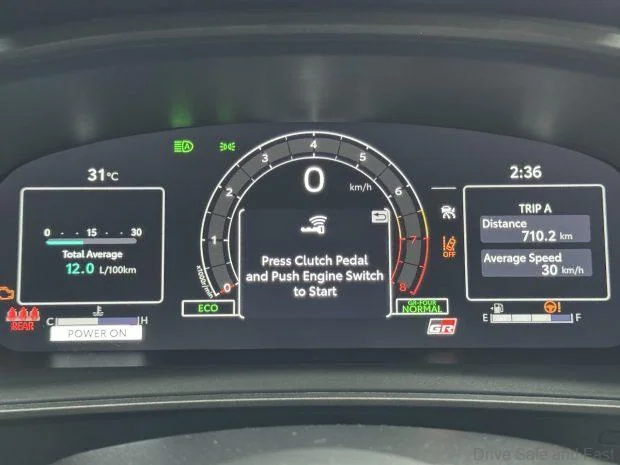
Keep an eye on your multi-information display (MID) oil temperature gauge. Only launch, track, or push full throttle once your oil temperature reaches ~80°C (175°F).