


Many auto industry players and car buyers ask the question why Chinese EV brands who are from the technology sector cannot get the same BEV Global Leaders Initiative treatment as Tesla got from MITI?
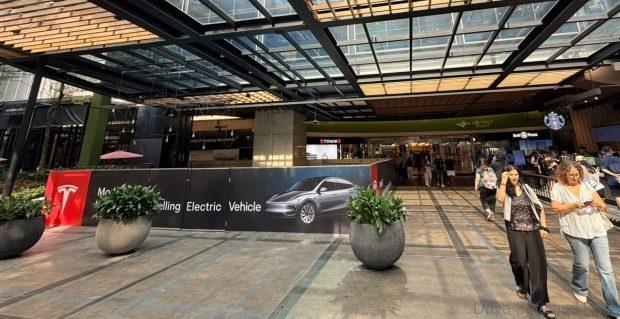
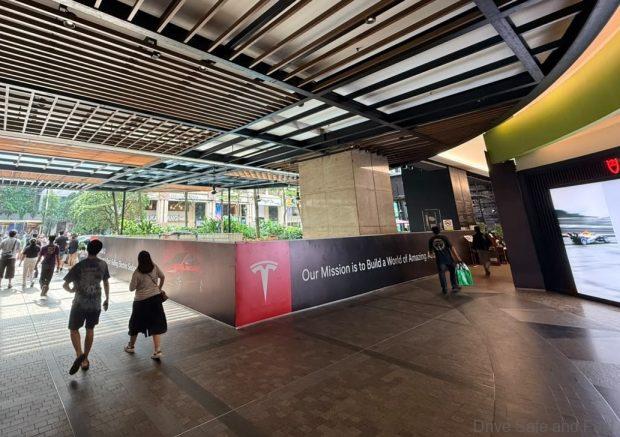
Many others will say it comes down to Tesla’s timing, specific policy objectives and a shift toward local assembly (CKD). But Tesla does not assembly any vehicles in Malaysia and only opens showrooms (like this soon to launch showroom in MidValley pictured below).
So why? Meanwhile, here in the following paragraphs are some information for your to digest.
1. The BEV Global Leaders Initiative Was a One-Off Pioneer Framework
Introduced by the Ministry of Investment, Trade and Industry (MITI) in early 2023, the BEV Global Leaders Initiative was designed specifically to attract top-tier global EV pioneers to jumpstart Malaysia’s EV infrastructure. Tesla was the primary applicant.
In exchange for an Approved Permit (AP) waiver which allows Tesla to sell CBU (Completely Built-Up) imported cars directly without a traditional local AP partner, Tesla agreed to stringently binding local commitments:
Building a direct regional HQ, service network, and experience centres.
Deploying ultra-fast charging networks (Superchargers) with at least 30% open to non-Tesla EVs.
Maintaining an 80%+ local workforce and partnering with local TVET/universities for tech transfer.
Engaging with MIDA on potential local supply chain and manufacturing activities.
(we are quite sure all 4 requirements above can be met by many other EV brands)
2. Standard Chinese Brands Use Franchise APs & Local Distributors
Chinese EV brands (like BYD, Chery, Xpeng and GWM) entered the market through traditional Franchise AP holders and local distributor partnerships (e.g., Sime Darby Motors for BYD) rather than direct OEM import waivers. Because they operate under standard commercial import frameworks, they do not qualify for bespoke direct-import initiative exemptions.
3. Shift from CBU Import Incentives to Local Assembly (CKD)
The Malaysian government’s policy goal has shifted from stimulating early EV adoption via cheap CBU imports to forcing local industrialisation and investment. Early duty exemptions for CBU imports were time-limited to encourage initial market entry. MITI tightened CBU import rules (including higher CIF floor prices and minimum power output thresholds) specifically to prevent the domestic market from being flooded with cheap imported CBU EVs.
Chinese automakers looking for long-term growth in Malaysia are now expected to set up CKD (Completely Knocked Down) local assembly plants or collaborate with existing local manufacturing hubs, ensuring value addition, job creation, and parts sourcing inside Malaysia.
So, looks like Tesla’s arrangement was a specific, conditions-heavy policy tool to bring a global pioneer’s infrastructure direct-to-consumer. For new entrants today, MITI’s regulatory door for direct CBU privileges has closed in favor of local manufacturing and assembly commitments.
Sounds a little convenient ……. right?

