


Bean counters in the automotive industry across ASEAN nations are seeing a slowdown in exports of legacy car brands due to the high influx of spanking new high technology Chinese auto brands that are stimulating purchase decision like never before.
Even with their new factories and acquisition of legacy auto brand factories in the region, the movement of newly assembled vehicles in the ASEAN region has slowed down.
News just in from our northern neighbour, Thailand shows that the automotive industry faces pressure from the global transition towards new vehicle technologies. Passenger car exports contracted by 42.4% in the second quarter of 2026, partly because of declining demand for ICE vehicles as several trading partners introduced stricter environmental requirements, including tighter carbon standards and measures to reduce greenhouse-gas emissions.
The global vehicle market is also facing increased competition from EVs, which are taking market share from conventional passenger cars. Overall automotive production in Thailand fell by 7.2% in the second quarter, while capacity utilisation declined to 57.47%, as manufacturers adjust to EVs and stricter environmental standards.
The one-ton pick-up truck segment, however, expanded by 50%. Thailand is a major global production base for pick-up trucks, supported by a component-manufacturing network and industrial ecosystem developed over several decades. The segment remains part of Thailand’s automotive manufacturing base as the country moves towards new automotive technologies.
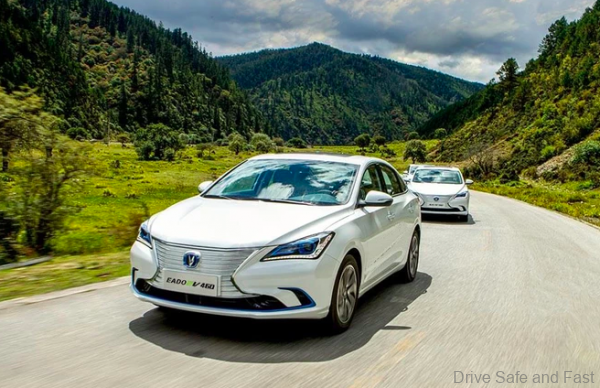
EV incentives linked to local production
Meanwhile, Thailand’s EV promotion measures require companies receiving incentives to establish manufacturing facilities in the country to compensate for vehicles initially imported under the schemes. The mechanism is intended to ensure that support for EV imports during the early stages of market development results in domestic production capacity.
Thailand’s efforts to retain its automotive manufacturing base therefore extend beyond existing ICE factories to developing an ecosystem covering EVs, batteries, electronics, emerging technologies and next-generation automotive components. The supply chain built over more than 30 years will need to adapt to changes in the global automotive industry while continuing to support domestic production.
Source: The Nation

