


Chinese auto manufacturers are accelerating investment across Europe through new factories, production partnerships and acquisitions as regulatory changes drive localisation.
We have already seen this in Malaysia and ASEAN nations and it is now happening at an accelerated rate in Europe.
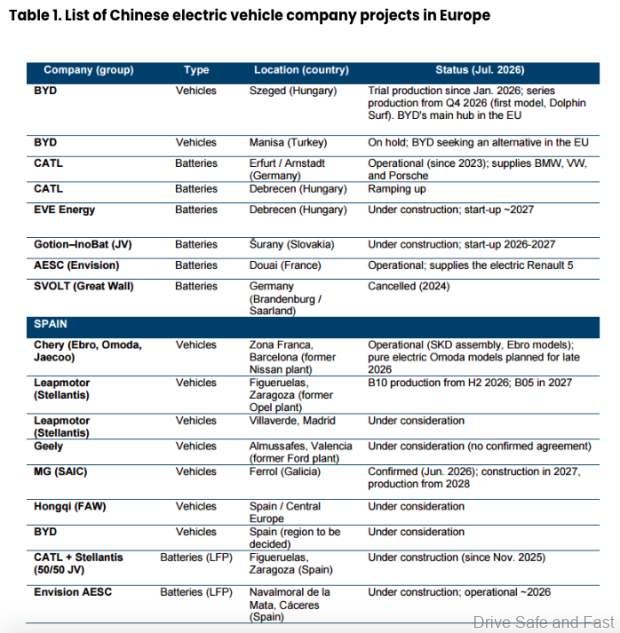
Chinese auto manufacturers are just months away from transforming Europe’s vehicle manufacturing sector. Collectively, they are building new factories, taking over unwanted and loss making current factories from legacy car manufacturers, using spare capacity in some legacy car factories and will do more of each of these in the coming years.
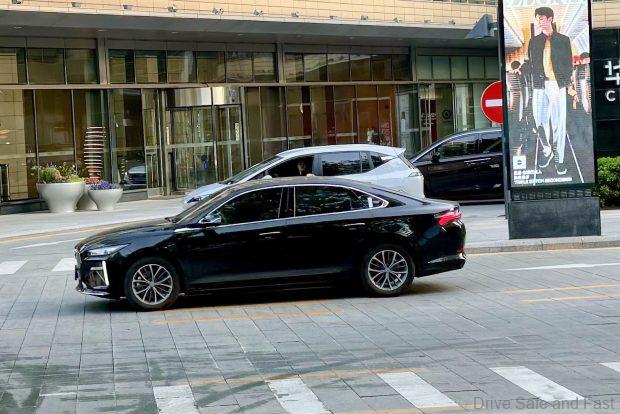
There are many drivers behind this move but changing EU policy, notably the supplementary tariffs on Chinese-made EVs announced in late 2024, and now by the incoming Industry Accelerator Act (IAA). Together these are encouraging Chinese companies to accelerate plans to make vehicles in the EU and, potentially, the UK as well.
For now, Turkey, which had been expected to be a recipient of Chinese investment, appears to have lost out: BYD has cancelled plans to build a factory there, much to the annoyance of the Turkish authorities.
Why Europe’s local content push may also fall short
The importance of the auto sector, as a major employer, a key driver of R&D, a significant investor, and an important contributor to the EU’s trade surplus, helps explain why the European Commission launched a major case against Chinese EV brands recently.
Yet two years later, the view is that these traditional trade tools have been ineffective and highly motivated. The Commission has therefore shifted toward more protectionist and broader industrial policy response.
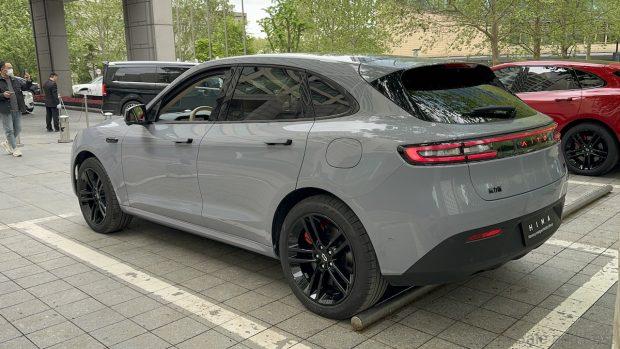
The Industrial Accelerator Act (IAA) proposal published in March 2026 under the leadership of EU Commissioner Stéphane Séjourné, is proposing local content measures for a range of sectors including autos. The idea is to tie public financial support for vehicle purchases to “Made in Europe” (MiEU) criteria. Certain “trusted partners,” such as the US, UK, Korea, or Japan, would be included for parts of this framework. China, however, would clearly fall outside it.
Beyond putting Chinese-made vehicles at a disadvantage in Europe, the local content approach is also intended to address a second concern: the growing use of Chinese components in European vehicle production. As Europe transitions to electric vehicles and struggles to build a competitive battery industry, European carmakers are increasingly sourcing inputs from China. This includes not only batteries and powertrains but also a wide range of lower-value components.
Renault, for example, plans to produce its new E-Twingo in Slovenia using a Chinese battery and powertrain, and likely additional electronics sourced from China. Chinese manufacturers producing in Europe, such as BYD, would also likely operate with relatively low EU value-added if left to their own devices, after all this is what their competitive advantage is built on. More than finished vehicle imports, this gradual increase in Chinese component sourcing poses a structural risk to Europe’s supplier base.
Even Chinese OEMs producing within the EU would face serious hurdles. BYD, for example, has not announced plans to localize battery cell production in Europe and would likely fail to meet the battery threshold. Chery’s operations in Barcelona and Xpeng and GAC’s assembly work in Graz would similarly struggle to comply. Importantly, many non-Chinese OEMs would also find it difficult to meet these thresholds—an issue that risks undermining the entire framework.
Beyond defining content thresholds and determining who qualifies as part of the EU club, the central challenge is how these requirements would actually be applied in the automotive sector. This is not straightforward.
Cars are predominantly purchased by private consumers, and the EU cannot easily prevent them from buying non-compliant but cheaper vehicles if they are available for purchase.

