

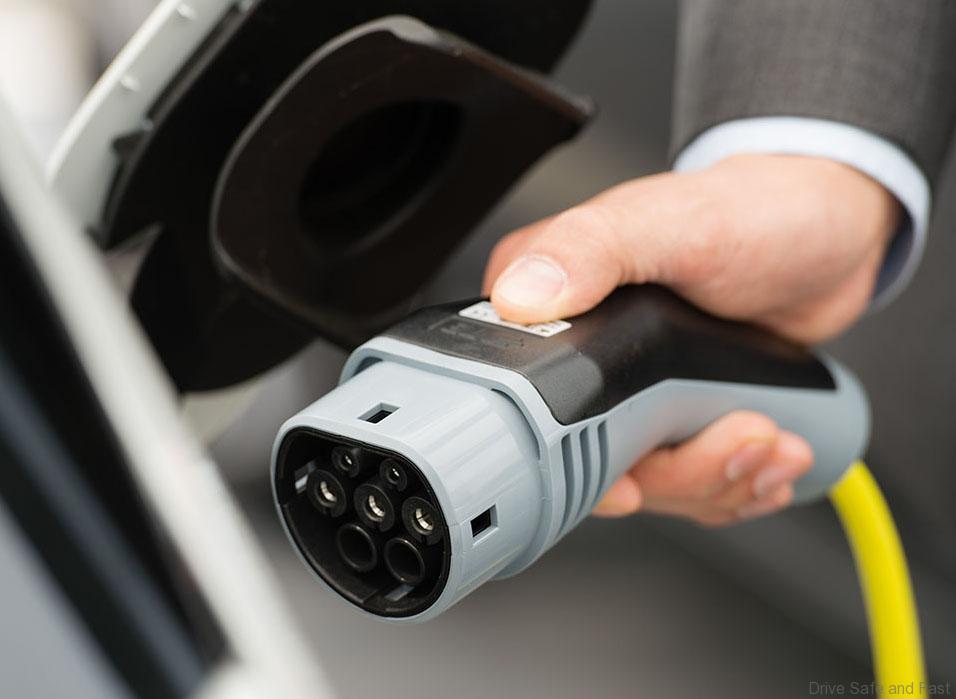
Here’s a guide that has been researched and written by the experts at EvGuru for Malaysians wondering about the cost of home charging for EVs and PHEVs.
Most Malaysians researching a home charger get two numbers thrown at them: the price of the charger, and a vague “installation from RM1,xxx”. Neither tells you what you will actually pay, and neither warns you about the thing that quietly changes your electricity bill the month after your car arrives.

Here is the full picture, based on residential installations across Peninsular Malaysia.
1. What you are actually paying for
A home charging setup has three separate costs. Quotes that bundle them into one figure are hiding where the money goes.
The ranges below are drawn from EvGuru installation records across Peninsular Malaysia, not from list prices.
| Component | Typical Range | What Drives It |
| Charger unit | RM1,500 – RM4,500 | Power rating, smart features, app and OCPP support, brand warranty |
| Installation | RM1,400 – RM2,200 | Cable distance, single or three phase, DB work, protection devices |
| Extras (not always needed) | RM0 – RM4,000+ | Phase upgrade, DB replacement, trunking beyond the included run, TNB meter change |
The third row is where quotes diverge. A 5-metre run in a semi-D with a modern DB is a different job from a 25-metre run in a 1990s terrace with a full board.
Realistic all-in for a straightforward landed installation: RM3,000 – RM6,500.
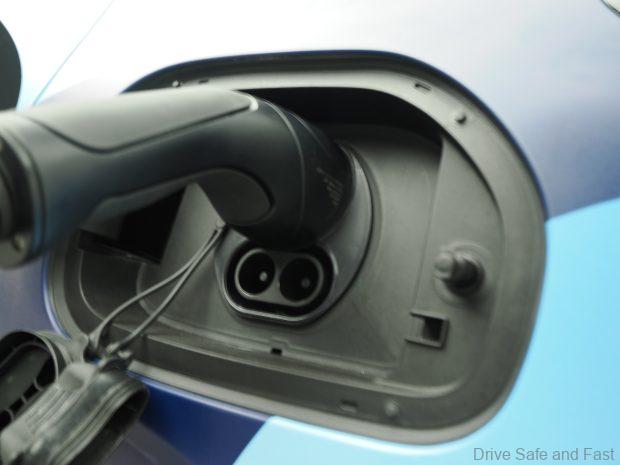
2. Single phase or three phase
This is the first real decision, and it is decided by your car and your house, not by your budget.
| Single phase | Three phase | |
| Typical Charger Output | 7.4 kW | 11 kW or 22 kW |
| Supply Needed | Standard domestic single-phase | Three-phase supply at the property |
| Suits | Most Malaysian homes and most EVs sold here | Larger battery EVs, homes with existing three-phase, two-EV households |
| Installation cost | Lower | Slightly higher |
| Upgrade cost if you do not have it | — | RM3,000 – RM8,000+ via TNB, plus working time (EVGuru job records) |
The point most people miss: your car has an onboard AC charger with a fixed maximum. If your EV accepts 7 kW AC, an 11 kW or 22 kW wallbox will still only deliver 7 kW. You have paid for capacity the car cannot use.

Check your vehicle’s onboard AC charging capacity before choosing a charger. Not the DC fast-charging figure that appears in the brochure — that is a different system entirely.
3. How long a charge actually takes
Simple arithmetic: battery size divided by charger output, plus roughly 10% for conversion losses.
| Battery | 3.6 kW (portable) | 7.4 kW (single phase) | 11 kW (three phase) | 22 kW (three phase) |
| 40 kWh | ~12 hrs | ~6 hrs | ~4 hrs | ~2 hrs* |
| 60 kWh | ~18 hrs | ~9 hrs | ~6 hrs | ~3 hrs* |
| 80 kWh | ~24 hrs | ~12 hrs | ~8 hrs | ~4 hrs* |
For daily use, 7.4 kW is enough for the overwhelming majority of Malaysian drivers. A typical 50 km daily commute needs roughly 90 minutes of charging. You are asleep for far longer than that.
4. Running cost, and the tariff trap
This is where 2026 differs from every guide written before July 2025.
The old tiered blocks are gone. Since 1 July 2025, domestic bills are built from separate components:
| Component | Rate (usage 1,500 kWh/month or below) |
| Energy | 27.03 sen/kWh |
| Capacity | 4.55 sen/kWh |
| Network | 12.85 sen/kWh |
| Effective rate | 44.43 sen/kWh |
On top of that sits the monthly AFA adjustment (a surcharge or rebate of up to 3 sen/kWh), and a RM10 retail charge that is waived below 600 kWh per month.
What an EV adds
| Monthly driving | Energy used | Added cost at 44.43 sen |
| 1,000 km | ~160 kWh | ~RM71 |
| 1,500 km | ~240 kWh | ~RM107 |
| 2,000 km | ~320 kWh | ~RM142 |
Against roughly RM300 – RM450 a month in petrol for the same distance in a comparable car, the saving is real.
The part that catches people out
Across EvGuru customer feedback, an EV typically adds 150 – 350 kWh a month to a household. That is enough to push many homes across two thresholds at once:
- Past 600 kWh — the RM10 retail charge kicks in, and service tax begins applying to consumption above that level
- Past 1,000 kWh — you lose the Energy Efficiency Incentive rebate entirely
So the first bill after the car arrives can rise by noticeably more than the charging cost alone. Nothing has gone wrong. You have simply moved out of the band that was shielding you.

Time of Use is the answer, and it is now open to homes
Domestic customers can opt into a Time of Use (ToU) tariff, which offers a lower rate during off-peak hours. For an EV owner who charges overnight, this is the single most effective thing you can do about the bill.
Most smart chargers can be scheduled to start automatically at the off-peak hour. Set it once and forget it.
Worth checking before you switch: ToU has a higher peak rate. If your household uses a lot of electricity during the day — someone working from home, daytime air conditioning — run the numbers on your own usage pattern first. It is not automatically better for everyone.
5. What three real installations looked like
Averages hide the thing that actually moves the price: distance, and the state of the existing board. These are anonymised jobs from EvGuru installation records, chosen because they sit at three different points on that scale.
A. Terrace house, Petaling Jaya — the straightforward case
| Detail | |
| Vehicle | Compact EV, 7 kW onboard AC limit |
| DB to parking bay | 6 metres, surface trunking along the porch wall |
| Existing board | Modern, spare way available |
| Installed | 7.4 kW single phase, dedicated circuit, Type A RCD (charger has 6 mA DC detection) |
| Time on site | Just under 3 hours |
| Total paid | Charger + installation, no extras |
This is the majority of jobs. Nothing needed upgrading, the run was short, and the charger had built-in DC leakage detection so a Type B RCD was not required.
B. Semi-detached, Selangor — the long-run case
| Detail | |
| Vehicle | Mid-size EV, 11 kW onboard AC limit |
| DB to parking bay | 22 metres, concealed conduit through a side passage |
| Existing board | Three-phase already present, spare capacity confirmed at survey |
| Installed | 11 kW three phase, dedicated circuit |
| Time on site | Most of a working day |
| What pushed the price up | The extra 7 metres beyond the standard run, plus conduit rather than trunking |
The lesson here is that the quote for job B is legitimately higher than job A, and any installer quoting both at the same price has not looked at the property.
C. Condominium, Kuala Lumpur — the approval case
| Detail | |
| Vehicle | Compact EV, private allocated bay |
| Supply route | Sub-meter in the car park, not the owner’s unit board |
| Approval | Written JMB consent required before any work |
| Elapsed time | Several weeks, almost all of it waiting on the management committee |
| Time on site | One day once approved |
| The real variable | Approval, not the electrical work |
For strata properties, the electrical job is rarely the hard part. Budget for the approval timeline, and get the proposal in front of the committee before their next scheduled meeting rather than after it.
6. What should be in the quote
Ask for these as separate lines. If a quote is a single number, ask for the breakdown.
The list below is what EvGuru includes as standard, offered here as a benchmark to compare any quote against.
| Item | Should be included | Watch for |
| Site assessment | Yes, before quoting | A quote given without seeing your DB is a guess |
| Dedicated circuit from DB | Yes | Sharing an existing circuit is not acceptable |
| MCB sized to the charger | Yes | — |
| RCD protection | Yes | See below — this is the one people get wrong |
| Cable and trunking | Usually up to 15 m | Ask the cost per metre beyond that |
| ST registration | Yes | Not optional. See section 7 |
| Commissioning and handover test | Yes | Ask for the test result in writing |
| DB upgrade | Only if needed | Should be identified at survey, not discovered mid-job |
The RCD question worth asking
EV charging can produce smooth DC residual current, which a standard Type AC RCD will not detect. The installation must handle this, and there are two legitimate ways to do it:
- The charger has built-in 6 mA DC fault detection, in which case a Type A RCD is acceptable
- The charger does not, in which case a Type B RCD is required
A Type B RCD costs meaningfully more than a Type A. Some installers quote the cheaper device without confirming the charger has the built-in detection to justify it.
Ask your installer directly: does this charger have integrated 6 mA DC leakage detection, and which RCD type are you fitting? A competent installer will answer immediately. Hesitation tells you something.
7. Compliance is not optional
Under the Electricity Supply Act, electrical installation work must be carried out by competent, registered persons, and EV charging installations must be registered with Suruhanjaya Tenaga (ST).
The current reference is the ST Guidelines for Electric Vehicle Charging Systems, which set out requirements for protection, earthing and installation practice.
| Question to ask | Why |
| Will this installation be registered with ST? | An unregistered installation can affect insurance and property sale |
| Who is the competent person doing the work? | Not the salesperson. The person holding the licence |
| What materials are you using? | SIRIM-certified cable and protective devices |
| What exactly does the warranty cover, and for how long? | Charger and cabling are often covered differently, and installation-only jobs usually carry a much shorter warranty than charger-plus-installation |
That last row matters. “Two-year warranty” can mean the charger only, the charger and the cabling, or the installation workmanship. Get it in writing.
8. Tax relief
Individual tax relief has been available for the purchase and installation of EV charging facilities for personal use, subject to conditions and claimable in the relevant year of assessment.
Keep the invoice and the installation documentation. Confirm current eligibility and the claimable amount with LHDN or your tax agent before relying on it — the relief has been extended and revised more than once, and the conditions matter.
9. Five mistakes that cost money
| Mistake | What it costs |
| Buying a 22 kW charger for a car that accepts 7 kW | RM1,000+ on capacity the car cannot use |
| Accepting a quote given over the phone | The real number appears mid-job, after you have committed |
| Not asking about the RCD type | Either an unsafe installation, or paying Type B prices for Type A protection |
| Assuming a portable charger is enough | 12+ hours for a full charge, and no dedicated circuit protection |
| Ignoring the tariff bands | A bill increase you did not budget for, when ToU would have solved it |
The short version
For most Malaysian homes, a 7.4 kW single-phase charger on a dedicated, ST-registered circuit is the correct answer. Budget RM3,000 – RM6,500 all in, expect RM70 – RM150 a month in electricity for normal usage, and look seriously at ToU if you charge overnight.
Get the site surveyed before you accept a price. Ask about the RCD. Get the ST registration confirmed in writing.
Issac Neng runs EvGuru, an EV charger supplier and installer operating across Peninsular Malaysia since 2021. All EvGuru installations are carried out by licensed electricians and registered with Suruhanjaya Tenaga. More at evguru.com.my.

