


Nissan’s first-quarter turnaround highlights the contrast between internal restructuring success and mounting external headwinds in key overseas markets.
Nissan swung back to profitability with a net income of ¥3.8 billion ($24 million) and an operating profit of ¥77.9 billion ($495 million), reversing massive losses from the prior-year period.
Profits were driven by aggressive fixed-cost reductions under its “Re:Nissan” turnaround strategy and favorable foreign exchange rates (yen weakness against the U.S. dollar).
Despite returning to black ink, Nissan trimmed its full-year global sales target from 3.3 million to 3.15 million vehicles.
Sales in China plunged 32% during the quarter. Nissan slashed its full-year China sales outlook by over 18% (down to 580,000 units) as local EV price wars and a market-wide shift to New Energy Vehicles (NEVs) hit petrol-heavy legacy lineups.
Geopolitical tensions and shipping constraints in West Asia are squeezing deliveries and driving up logistics costs, with projected impacts swelling to ¥20 billion.
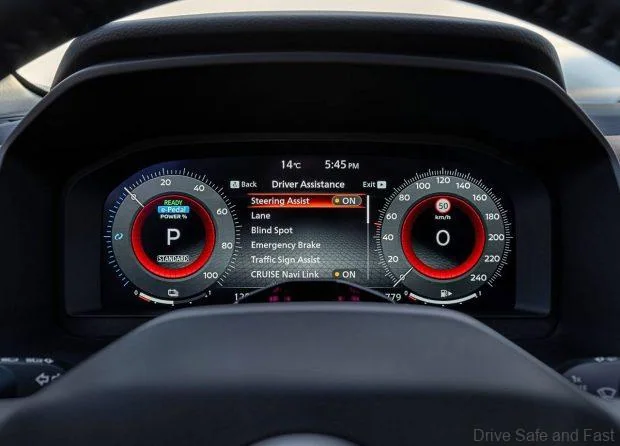
Strategic Importance of the U.S. Rogue e-Power Launch
With China bleeding market share and Middle East routes strained, North America has become Nissan’s primary profit engine—making the upcoming Rogue e-Power hybrid launch vital to its recovery.
The Rogue is Nissan’s best-selling model in North America (~217,000 units annually). Converting a portion of these sales to high-margin hybrid variants is crucial to stabilizing U.S. dealer inventory and unit profitability.
Nissan lost ground in the U.S. as Toyota (RAV4 Hybrid) and Honda (CR-V Hybrid) captured the boom in petrol-electric demand. The Rogue e-Power is Nissan’s direct bid to reclaim compact crossover share.
Nissan’s e-Power is a pure series hybrid. A 1.5-liter turbocharged petrol engine acts strictly as an onboard generator to power electric motors where the engine never directly turns the wheels. This offers EV-like drive dynamics without range anxiety.

