


The Perodua QV-E was relaunched with a new price and rebate. We got to drive it for a week.
The Perodua QV-E had its debut at the end of 2025 where it was launched with a peculiar ownership proposition: buy the car for RM80,000 but lease the battery for 9 years via Perodua for RM297 a month. Needless to say, the mandatory battery-as-a-service scheme was not well received, as well-intentioned as it may have been, it would have driven the overall ownership cost to RM112,000, putting it within a hair of more mature Chinese engineered EVs a whole segment larger.
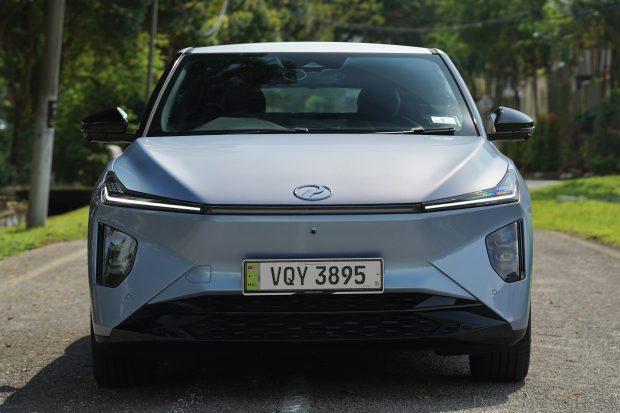
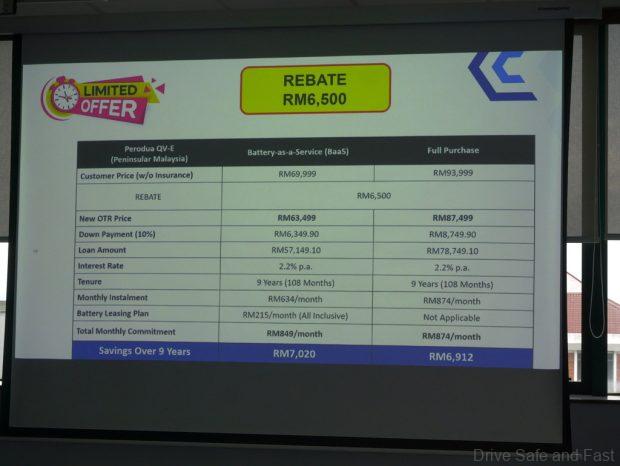
Half a year after its initial introduction, the Perodua QV-E was given a soft relaunch. Now you can purchase it outright for under RM90,000 or if you prefer Perodua’s Battery-As-A-Service model, the car itself is just RM60,000 with monthly payments of RM215 for the next 9 years tied to a separate contract. More importantly, the Perodua was ready to loan units out to the media for feedback and evaluation. Here’s what we found after spending a week with the company’s first ever electric vehicle. I’ll go through some of the positives first and end with some of the negatives.
Why Does The QV-E Exist?
Perodua’s ‘Quest For Visionary Electric Vehicle’ is a first for the company. The Malaysian company has never developed any car from the ground up let alone a battery electric vehicle. The Malaysian government essentially gave them a mandate to do so when the tax holiday for EVs began and set a hard deadline for them to adhere to: a local EV had to be ready before 2026 when the CBU EV tax holiday was set to expire.
It’s a little odd for a government to be giving a non government linked company orders like that but then again Perodua’s sub RM50,000 market is completely protected from non-national players, so perhaps there’s a bit of quid pro quo here. It’s also worth noting that Sime UMW holds a 38% stake in Perodua, and Sime IS a GLC. Plus, we certainly see the importance for at least one Malaysian entity to possess the intellectual property and the technical know how to build electric vehicles going forward. The world’s in a very tense place right now and we’ve seen what the effects of a pandemic and a semiconductor shortage can do to the car industry. Should shipping or trade break down in the coming decades we at least have some blueprints to fall back on for basic emissions-free transportation.
Let’s Appreciate The Effort & The Result
I appreciate that a company like Perodua has no real incentive to take on a project like this. They’re not in the loss making business. They could have easily gone the route of rebadging an existing product and calling it a day, which is essentially what Proton did with the e.MAS 5. These days there are tonnes of options, a handful even from outside of China. So I have to salute the effort of the engineers, designers, coders and other Malaysian talent involved in producing the QV-E.
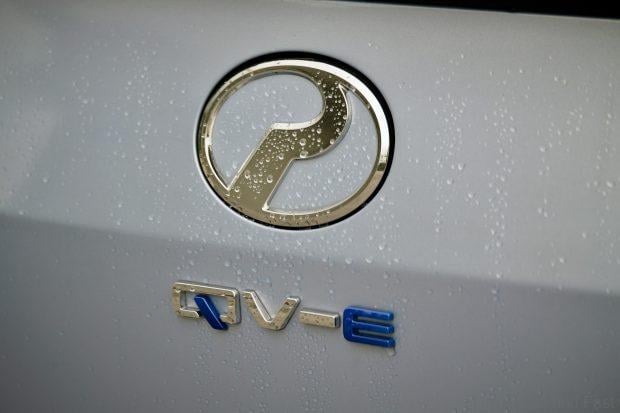
I’m also impressed that there were no major technical issues in my time with the vehicle. I’ve heard that some Malaysian engineered products with original powertrains have presented bad symptoms upon launch in the past. With the QV-E, I was pushing the vehicle hard every day for a whole week and even trying out some of its unique features without failures. In fact, I don’t think I encountered a single outright hardware or software error with the vehicle, so, good job engineering team. In fact, it doesn’t feel like the team phoned it in. It feels like they had a vision and they put in a lot of effort into achieving their goals. Of course, that doesn’t make the product itself excellent, but it does have some pros.
Exterior Design Shines: Handsome & High-Tech Looks
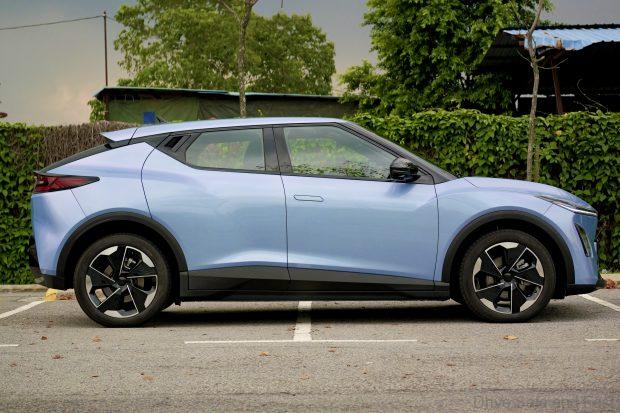
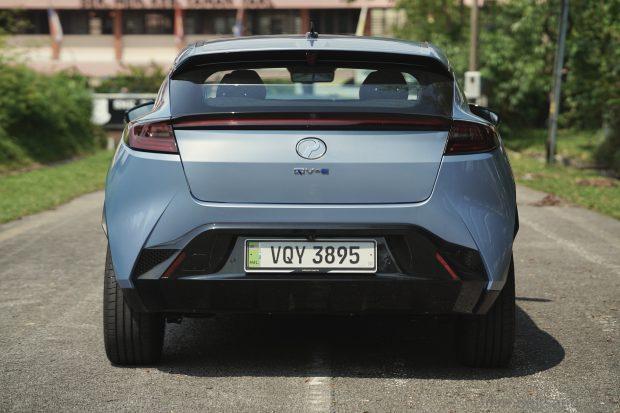
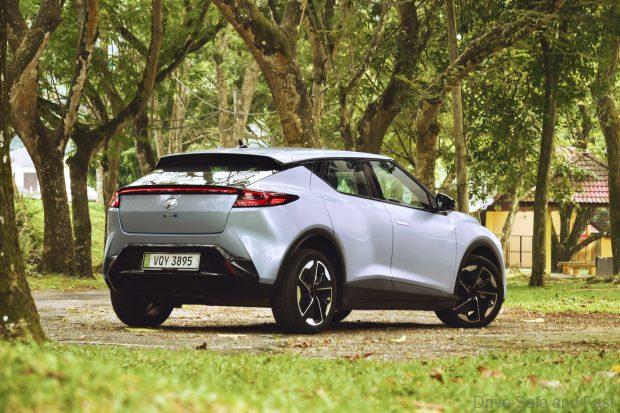
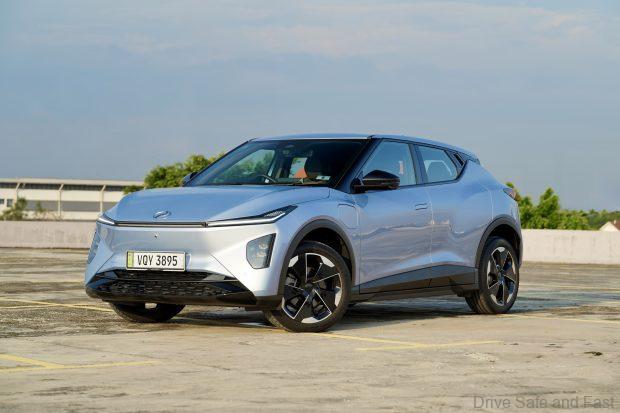
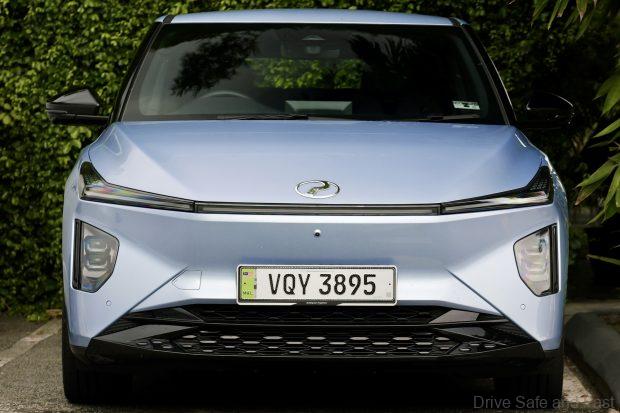
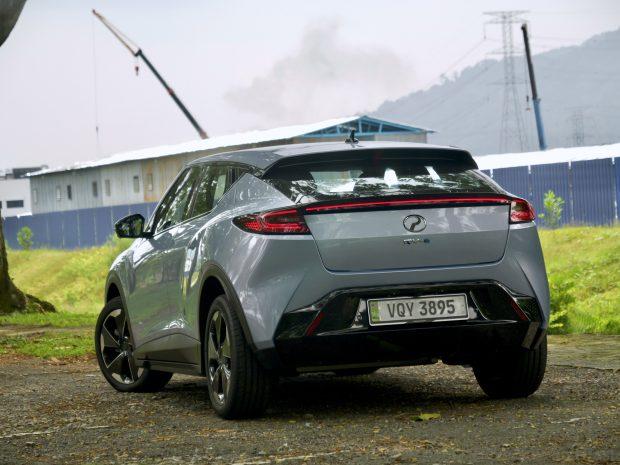
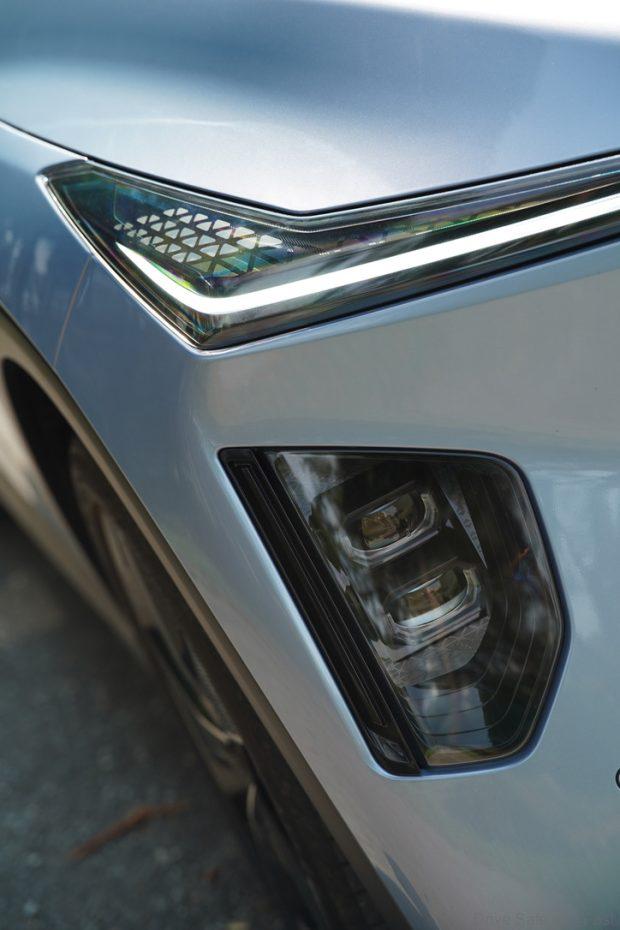
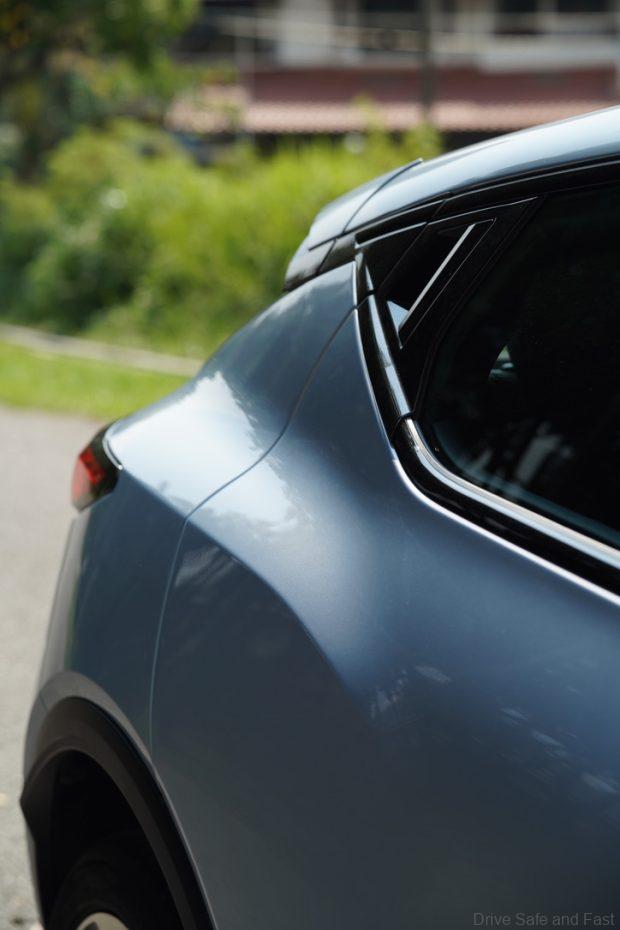
Undeniably this is a very good looking vehicle from the outside. It has some elements borrowed from the Toyota C-HR (namely the side silhouette and rear door handle placement), but it’s hardly a derivative design. Generic, maybe, but I can’t say that the QV-E looks like a copy-cat product. In fact, I’d go as far as to say I like that Perodua did some bold things with the design instead of playing it safe. The roofline slopes down dramatically at the rear, the tailgate doubles as a brakelight, the headlights are mounted on the bumper, the door handles are all hidden and the whole car eschews chrome in favour of black trim pieces. The result is an undeniably striking vehicle. It turns heads like no other original Malaysian designed vehicle ever has. For a first effort, it’s clear the Perodua design team executed on a very mature looking concept. Looks are subjective, but I’d venture to say that the QV-E at under RM90,000 looks as professionally designed and perhaps more futuristic as any other hatchback from Germany or Japan sold in Malaysia today.
Interior Doesn’t Feel Like A Typical Perodua Product
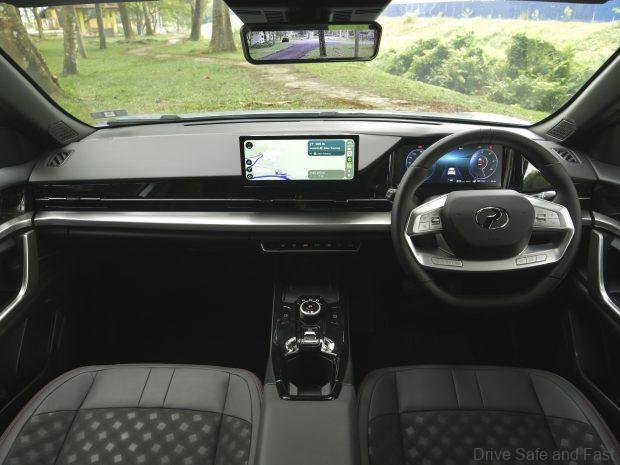
A black headliner, no garrish red accents, wireless Apple CarPlay, a wireless Qi charging pad, dual digital screens, a digital rearview mirror, multi-colour ambient lighting, soft touch materials on all four door cards, tilt & telescopic steering column adjustment, a well-balanced sound system, solid NVH qualities, and a shift-by-wire gear selection… This is not your typical Perodua cabin. On first glance it looks like it’s out of some conceptual hot hatch wit many of these touches being outside the realm of your typical Japanese-engineered econobox. There are some really good ideas here, but the implementation could be a lot better.
Top Grade Handling And Commendable Ride
The biggest strength of the QV-E is that it drives with the confidence of a European hot hatch. On paper, there’s nothing to suggest that Perodua’s first effort at an electric vehicle would end up being one of the best handling vehicles not just in its price bracket, but even among much more expensive alternatives. The QV-E, sports a torsion beam at the rear and has its motor under the hood driving the front wheels. Despite these limitations and the company’s history in making pretty average driving vehicles, the QV-E’s headline selling point has ended up being its drive character. The vehicle is a delight to push hard though I would advise on upgrading the tyres to something more capable if you plan to push it hard and often. It’s also fairly decent over our rough Malaysian roads. Not the best, but certainly above average for the price and size. You have to also remember that the first few German EVs had pretty terrible ride & handling characteristics, so this was a pleasant surprise.
Proportionate Price Delta Objectively Speaking
Comparisons to the e.MAS 5 are unavoidable particularly in terms of its capabilities as an EV. On that front, the QV-E actually offers a slightly larger battery at the expense of a slightly slower DC charging speeds. Going from 10-80% state of charge is faster by about 9 minutes on the e.MAS 5, but the QV-E should deliver better range if you wait those additional 9 minutes. With the QV-E, you’re getting a 25% larger battery capacity, 16% slower DC charging speed, and you’re paying 22.5% more for the Perodua. I would say objectively speaking the Perodua QV-E’s higher price is justified from a supplier’s point of view, but buyers will have other considerations.
Proven Product Versus Local Experiment
One of the biggest hurdles faced by the QV-E faces is that it’s a complete unknown going up against the e.MAS 5, which is based one of the world’s the best-selling compact EVs, the Geely EX2. Sure, Perodua’s brand equity is there. They’ve build a reputation up for over 30 years for highly reliable and simple to repair machines. However, with an EV that’s based entirely on new blueprints, all of that reputation has no objective bearing on the product itself. There’s no proven tech here, it’s all stuff put together in the last 2-3 years and based on engineering and know-how of external contractors.
This is the reverse of what happened when the Proton Savvy launched to take on the Perodua Myvi back in 2005. The Savvy was an original Proton-engineered chassis with powertrain parts taken from Renault and Magnetti Marelli, while the Myvi was entirely a rebadged Daihatsu. Now we have Proton with the rebadged donor car and Perodua with the in-house design.
That’s not to say the QV-E will share the same fate as the Savvy. Electric vehicles are a lot less complicated than ICE vehicles, mechanically-speaking. There are far fewer failure points and the technology is mature enough for most teething issues to have been ironed out long ago. That being said, should things go wrong, you can’t hope for the ‘bawah pokok’ to give you a quick remedy. The only solution will be a call to your insurance company to tow the car back to a service centre for a warranty claim.
BAAS-As-A-Saviour? Not Quite.
This is probably where the battery-as-a-service (BAAS) model comes in.
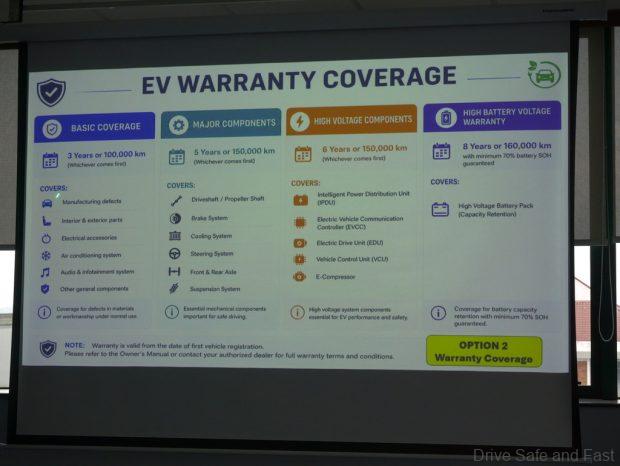
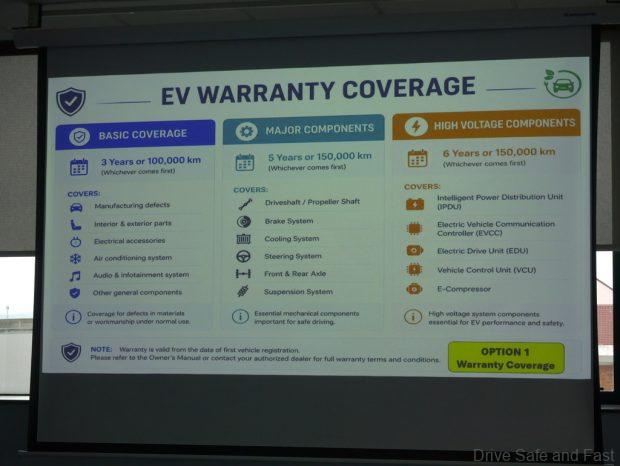
Perodua are currently the only brand offering this as an option. Opting for it DOES NOT save you a significant amount of money over purchasing the car outright with the battery. By Perodua’s own calculations, you’re only saving about RM30+ a month with all other factors kept equal, or around RM3000 over 9 years. The other benefit is that in your 9th year of hire purchase, BAAS guarantees the battery’s health where an outright purchaser of the vehicle would be out of warranty after his or her 8th year of ownership. After your 9th year, the contract needs to be renegotiated with Perodua. If you’re lucky, the price of a BAAS will be much lower after 9 years as battery prices are usually on a downward trajectory. You may even have other options on the table to keep using the vehicle. Unfortunately, nothing is guaranteed or promised by Perodua beyond the 9 year point. So, in some ways, you’re still gambling.
The biggest way BAAS would benefit a customer is if you plan to use the QV-E as a ride hailing vehicle, which is unfortunately prohibited. The standard 8-year/160,000km battery warranty follows the industry standard. Batteries, particularly LFP ones from CATL as found here on the QV-E are pretty much proven to last beyond those figures in normal use. However, ride hailing full time would require multiple charge ups per day on DC and the battery will be charging and discharging at a much higher rate than normal. Ride hailing operators aren’t very accustomed to big ticket items failing. On a basic ICE vehicle, the engine and transmission are the two biggest worries and even those can be done under RM5K a pop with a half-cut. A battery is often 3-4 times as expensive and half-cuts are NOT expected to be an option for EV batteries.
BAAS would give this class of user a huge degree of financial protection SHOULD fuel prices be floated. However, under prevailing conditions, it’s completely prohibited by Perodua to take the BAAS route and use the QV-E for ride hailing. It’s also not going to save any Grab driver any money under the current BUDI95 scheme to opt for a QV-E over a much cheaper Bezza.
Perodua needs to reconsider the value proposition of BAAS as there are significant drawbacks for very few benefits. First of all, like we just mentioned, anyone opting for BAAS is giving up the opportunity to do ride hailing with their vehicle for QV-E. Literally every other mass market passenger vehicle you can buy today comes with that financial safety net, doubling as a workhorse and a source of income should you lose your job. The QV-E is the exception here, and it locks you out of ride-hailing for a good 9 years.
Secondly, Perodua say that BAAS is there to protect resale value, but realistically there are a couple of things standing in the way there. Perodua become the only party you can sell the car back to at the end of your BAAS contract, and being the only buyer on the market, they’re the ones who will dictate the price. They haven’t set guaranteed future values for the QV-E, so nothing can be relied on for resale value at the moment. It’s also hard to see how the QV-E could be worth much after 9 years. At that point, buying the vehicle used would mean a no more than a 6 year loan and interest is naturally higher on a used vehicle. Perodua would have to price the used QV-E much lower to offset the monthly BAAS commitment of the next buyer too, otherwise it would make more sense just to buy new.
Other Unique Selling Points
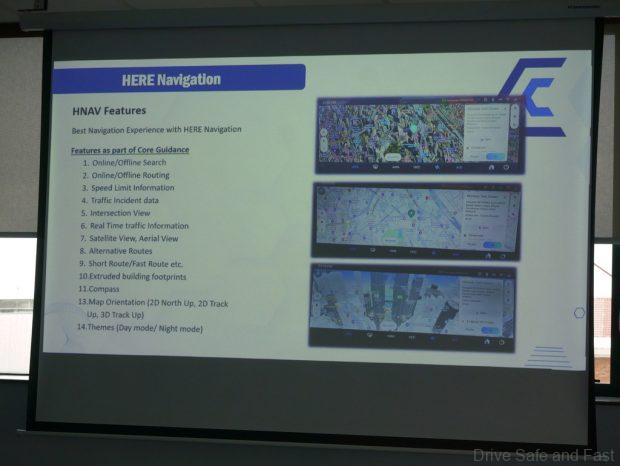
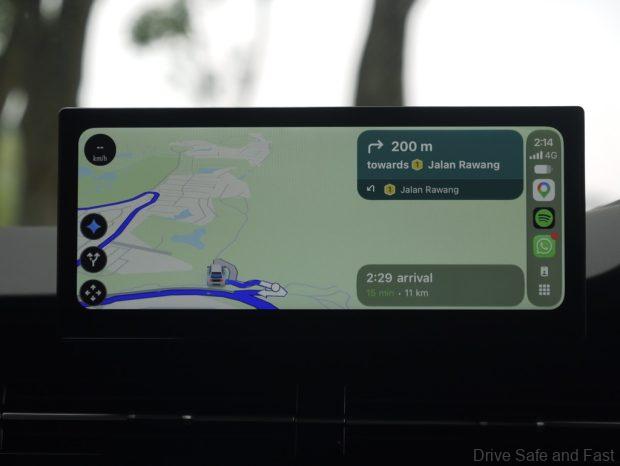
The QV-E, like many electric vehicles, is connected to the internet. As such, Perodua have been able to offer some new unique features and services. A limited data package is bundled free to customers, but Perodua may choose to limit how many years this data package is available for. It’s used for over-the-air software and firmware updates. It’s also used for the vehicle in-car navigation (provided by Here). We tried the in-car navigation. It technically works and it does give you an estimation of your battery percentage upon arrival, and it can recommend charging stations along your route. Unfortunately, these on-paper advantages are over-ridden by a very choppy interface, sub-par routing, and somewhat inaccurate battery estimations. I honestly don’t see anyone using this over Google Maps or Waze on Apple Carplay/Android Auto.
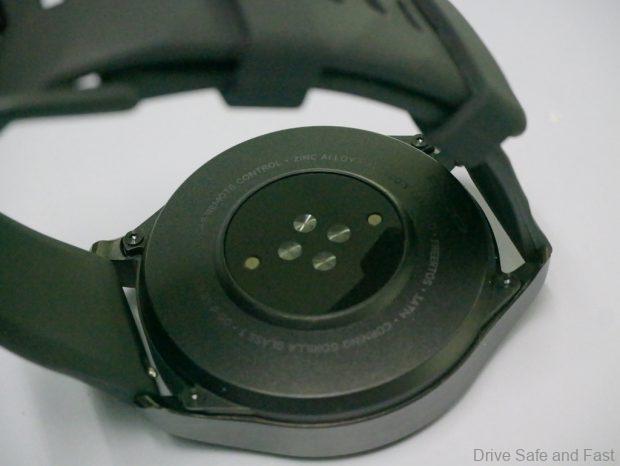
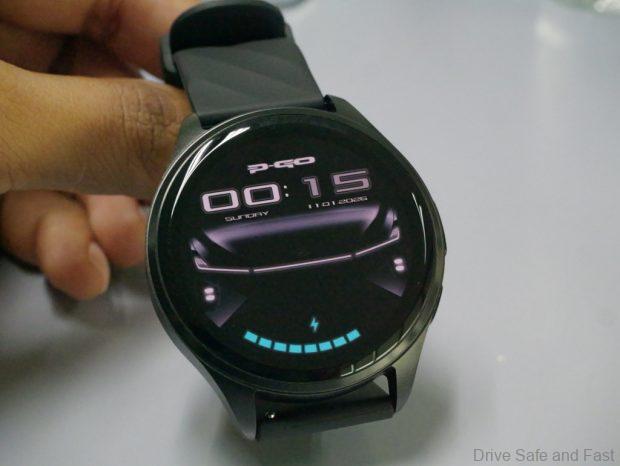
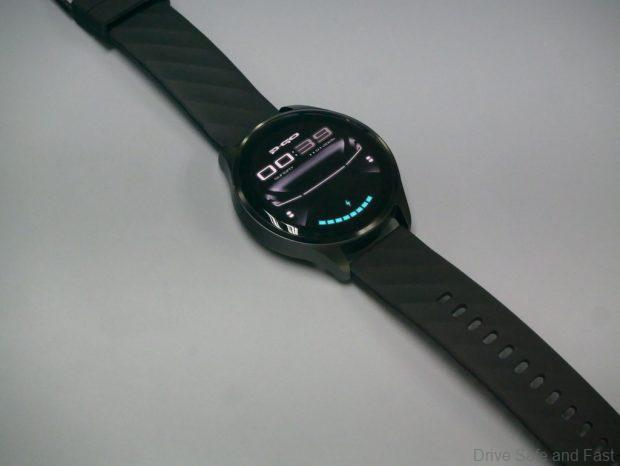
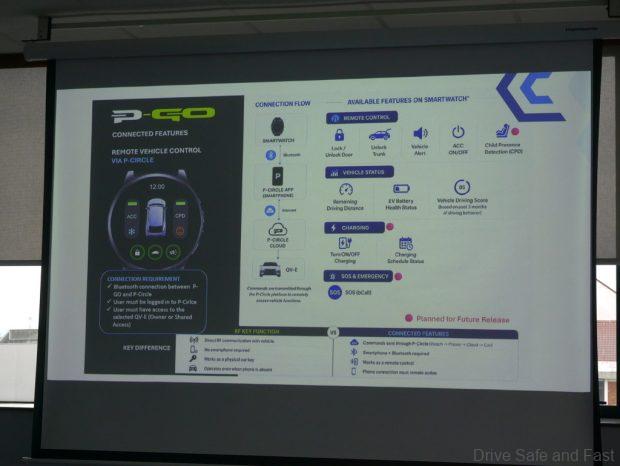
They’ve also prepared a smart watch called the ‘P-Go’. This is a decently put together product with a circular OLED screen and it acts as an activity monitor and activity key for the QV-E. If you’re someone who goes running, you can leave your key fob at home and just head out with the P-GO on your wrist. It’s all you need to lock/unlock your car and get it started. Battery life is solid. It lasted the entire week without needing a recharge and Perodua says there’s enough residual battery life even when the watch is completely dead to still work as a key for a few more days. It does cost RM950, though and it’s no where near the polish of even a Huawei smart watch from 2023. Not too bad if you’ve never owned a smart watch before though.
A First Attempt With Many Flaws
Now it’s time to address the complaints we had with the car itself. Again, we say this with all the respect the company is owed for attempting something in earnest. It doesn’t feel like a half-baked product, but it’s definitely rough around the edges and could use attention in certain areas. The first area would be the ‘easy’ software fixes. These are things that Perodua could conceivably fix with an over-the-air update.
Easy Software Fixes: Stuff that can be done without physical changes
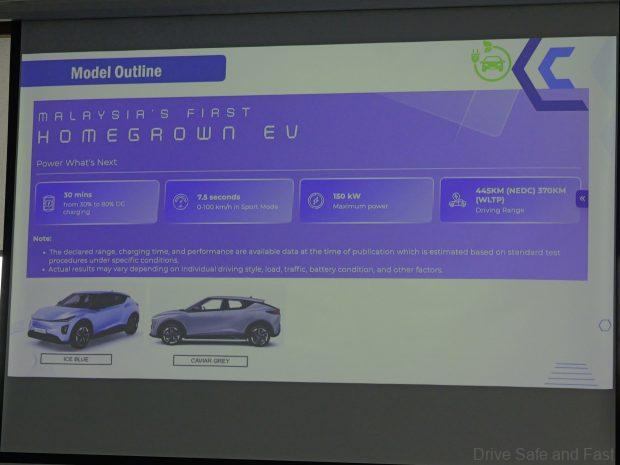
Strange Range: The range readout for the Perodua QV-E assumes that the battery will return its 445KM NEDC range when charged to 100% and will display a remaining range estimate based on this as the battery drains. So whether you’re light footed with the AC off or lead footed with the AC blasting and the windows down, when you hit 50% battery, the remaining range displayed is around 222KM. Which is not the way any other EV company calculates remaining range.
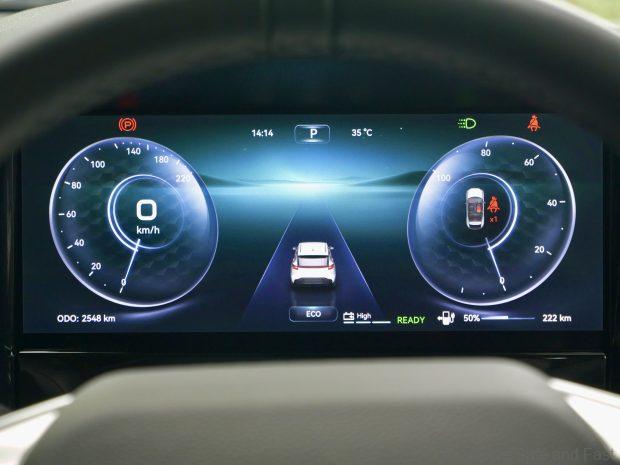
This isn’t an easy problem for Perodua to solve. LFP batteries range estimates are ALWAYS estimations. However, most mature EV companies have developed a way to accurately estimate remaining range based on the electron flow out of the battery through the energy management system. Perodua needs to work on this, as it’s key to a functional EV. As it stands, the QV-E can mislead drivers and leave them stranded. Fortunately, once a solution is created, it OUGHT to be as simple as pushing the update remotely.
Tyre Pressure Monitoring System: As it stands, the TPMS on the QV-E reads the tyre pressure out in percentage form… This isn’t a critical fix, but certainly weird enough for it to need some remedy. It’s unclear if a tyre with lower pressure would trigger an accurate reading here. This should be a simpler fix than the range thing, but it’s also less important.
Improve the voice assistant: I don’t find voice assistants to be particularly useful. However, I will admit that they have gotten better over time. So, in a pinch I will, from time to time, rely on some commands on newer Chinese EVs when I can’t find a certain function. The Perodua QV-E’s voice assistant feels at least a decade behind what’s available on the rest of the market today. I struggled for find a command that I would conceivably use in this car. Still, there are off the market solutions out there. The fact that Malaysian companies and chief rival Proton themselves see BM voice assistant packages are a good area to invest R&D in shows that this is an are that Perodua can try to tackle. Still, in the grand scheme of things, a better voice assistant is small potatoes.
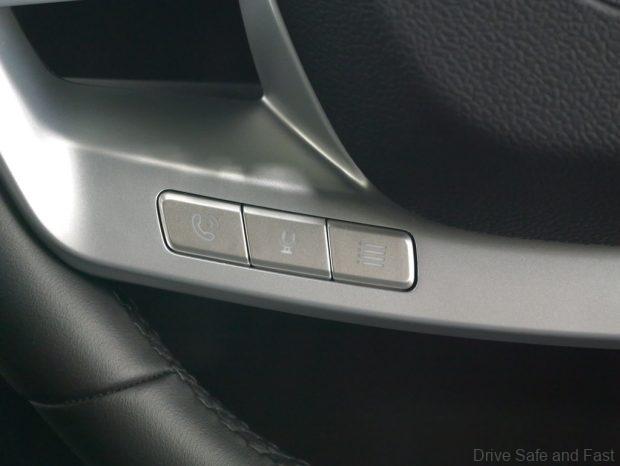
Option for Turn signal activated camera to not reduce media volume: This is a very specific quirk that I found annoying. I liked that the side monitors turn on when the turn signal was activated at lower speeds. I found that quite useful in the wide and low slung QV-E. What I did not like was that the media volume was automatically reduced close to zero when this happened. There was no obvious way to over-ride this behaviour so I just disabled the turn signal activated cameras all together. There is a manual work-around, which is to push the camera button on the steering wheel when it’s needed, but I feel there’s room for a software update here to separate media volume reduction from the automatic camera activation feature.
Reverse camera crop: Speaking of the parking cameras, isolating just the reverse camera reveals a rather tight crop. It needs to be taller and the only thing stopping that seems to be software related. The fact that the app gives you an uncropped feed from the camera mounted near the number plate shows that this is indeed possible.
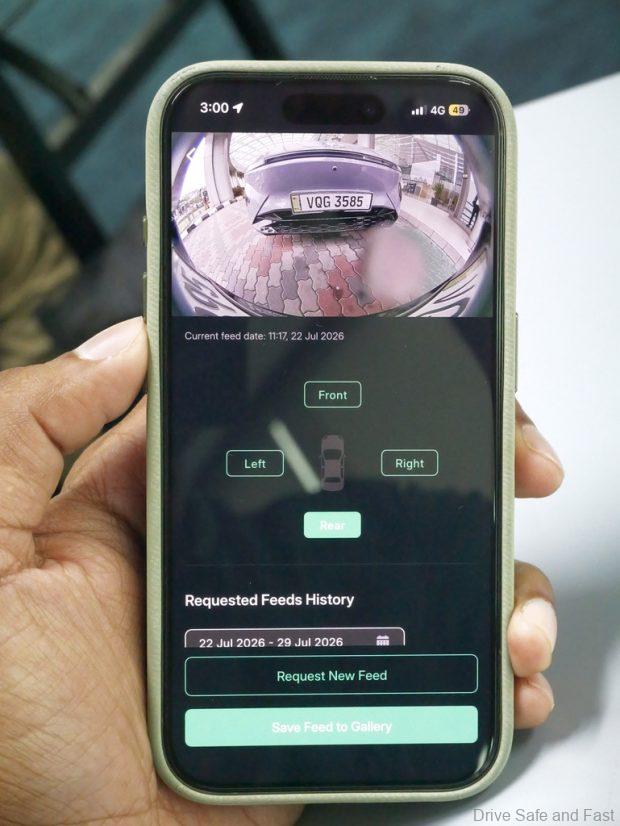
Revise the app: Perodua came up with a new app in conjunction with the QV-E. It can be used to connect to the vehicle. The app doesn’t let you start the car like the P-Go watch does. However, it does let you check the camera feed and lock/unlock the doors. Unfortunately, these car-related features are buggy and poorly executed on the app. The camera feed is a still photo instead of a life stream and thus its use is limited at best. I couldn’t get the feed to update automatically OR manually in some instances. The app also has a LOT of other different features but it’s a bit all over the place. I feel like the smart thing to do would be to get the basics done right first. So a refocus on the core vehicle related functionalities would be nice before jumping into all these other things.
Fixes For The Facelift: These Need Some Changes At The Factory Or From Suppliers
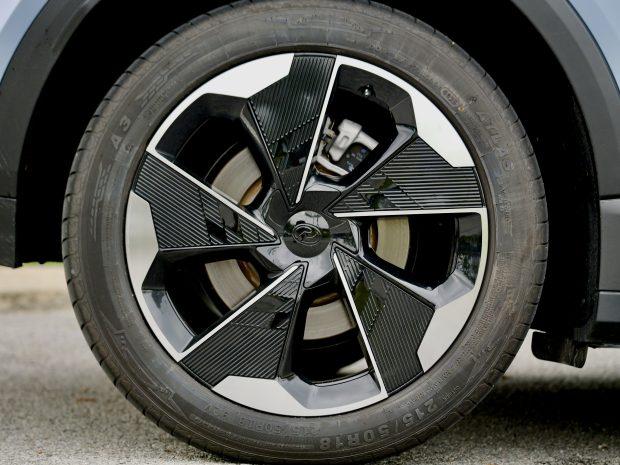
Upgraded Tyres: The Atlas tyres fitted on the QV-E are really not bordering on not-fit-for-purpose. In the dry, you’ll often lose a little traction upon heavy acceleration. In the wet, it’s possible to lose grip even without any acceleration. The traction control system does a decent job of cutting power back in time, but it feels like a 2000s solution to something done more elegantly in modern EVs.
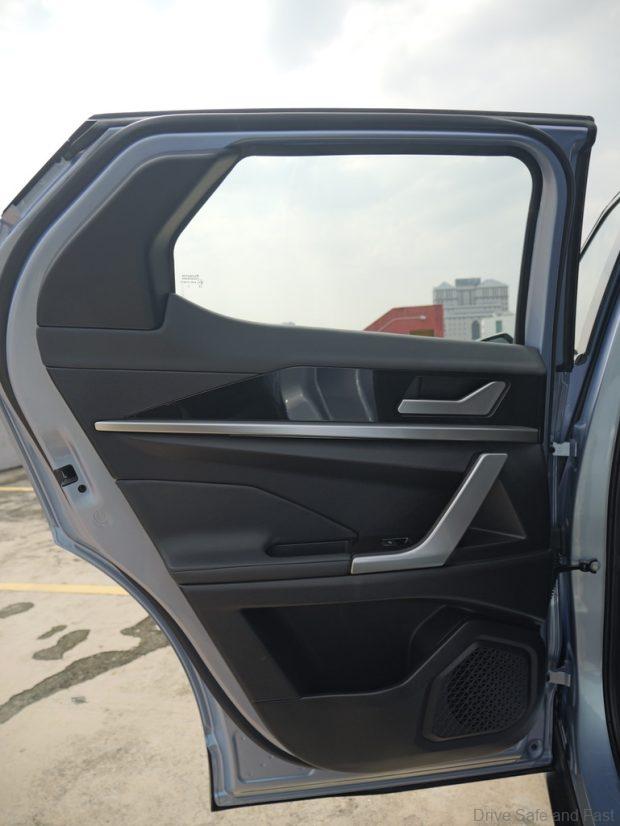
Door rubbers and fitment: Perodua cabin fitment and panel gaps have never been an issue as far as I can tell. In fact, the uniform and dependable quality of their vehicles has been a major selling point. Sadly the QV-E’s fitment is nowhere near as good as their ICE vehicles have been.
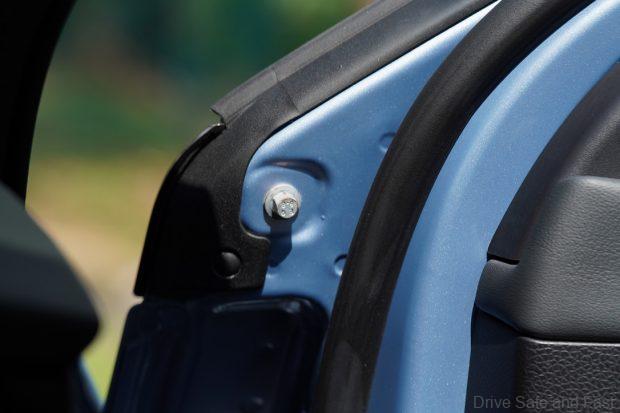
Door rubbers on my test unit were not fitted properly and after manually aligning them, the doors still required a lot of force to shut. The rubbers also seemed to jut out in places instead of being nicely trimmed to the shape of the doors. Certain panel gaps were uneven.
Interior plastics: In some ways the switchgear in here feels more European than Japanese, which is normally a good thing. Unfortunately, it’s not all good.
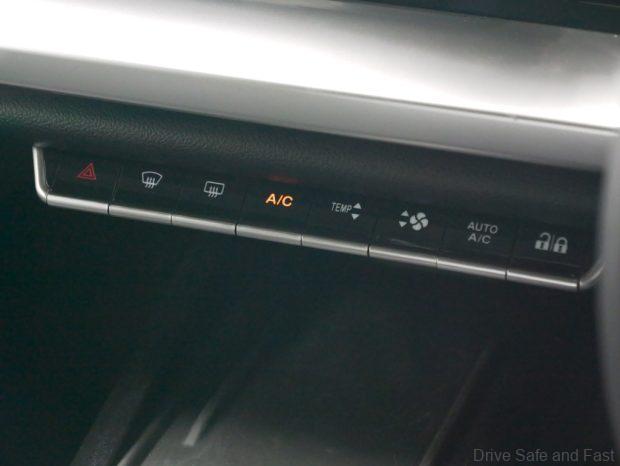
Sure, the power window switches feel a little nicer, but the door handles, air cond vents and temperature controls both feel a little too flimsy. In other places, the older budget Japanese car tricks are still being employed, such as gloss black painted interior parts with visible orange peel.
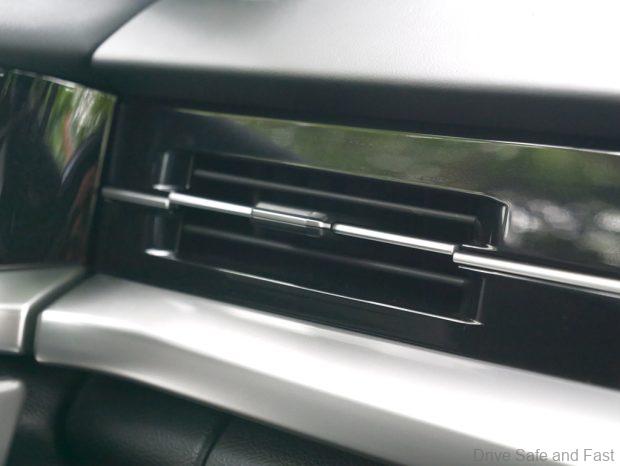
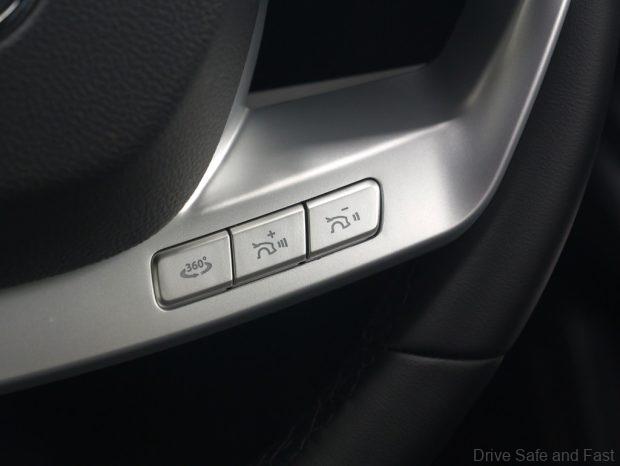
It would be nice if the cabin felt more satisfying than this, given the asking price. What’s more, there are plastic edges that haven’t been finished properly either. The silver painted plastic around the steering wheel and door card are two parts that need to be filed and sanded off better.
Steering wheel redesign: I have big hands and I felt the QV-E’s steering wheel was too chunky to hold comfortably. I also am acustomed to holding the wheel at 3 and 9 o’clock, as is recommended for modern airbag systems. Generally, it’s better for control over the wheel too. However, this steering wheel design is more condusive to 2 and 10 o’clock hand holding positions. It feels a little out of date generally not very ergonomic. The steering wheel should be a main area of concern for the facelift.
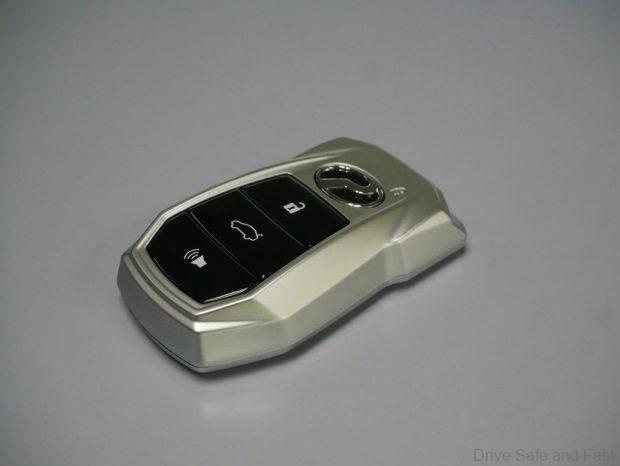
Powered Tailgate: The key fob hints at the possibility of a powered tailgate. While I normally wouldn’t say that one is expected at this price point, the fact that the cheaper e.MAS 5 offers one shows that market expectation has indeed changed in the last few years.
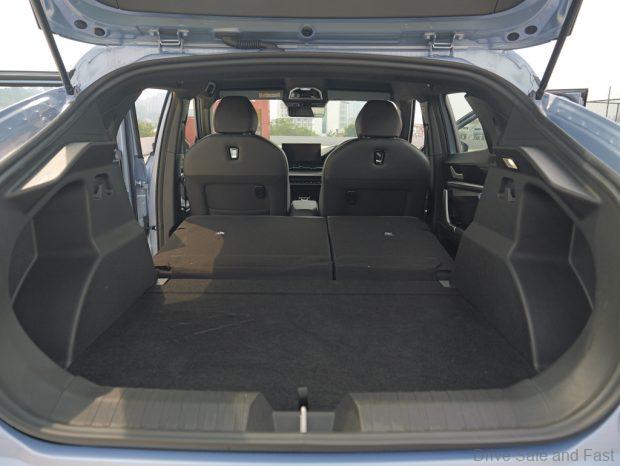
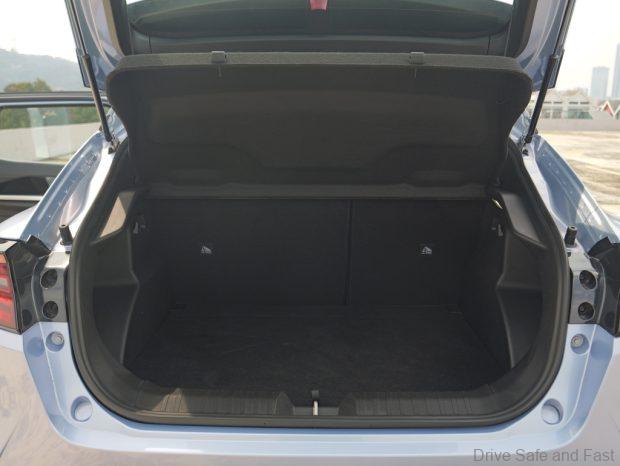
Increased tailgate height: The latch of the QV-E juts out quite bit and is a heavy metal piece. In addition, the tailgate itself doesn’t quite get high enough for my 6-foot tall self. I bumped my head on the latch at least once (may have been more, but my memory is a little hazy after that first bump). The tailgate is a hazard at this height, it needs to open higher up.
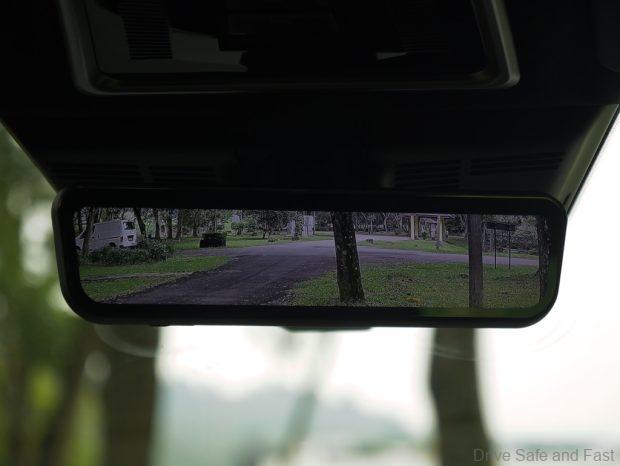
Lower brightness for digital rearview mirror: The QV-E, like the e.MAS 5, lacks a rear wiper. On top of that, the QV-E’s rear window is rather small. Perodua’s dual solution is a digital rear view mirror. It works ok when the sun is out. Unfortunately it’s pretty bright at night. It should be updated with ambient light sensing. It would also be nice if turning it off didn’t require holding the off button down for 5 seconds.
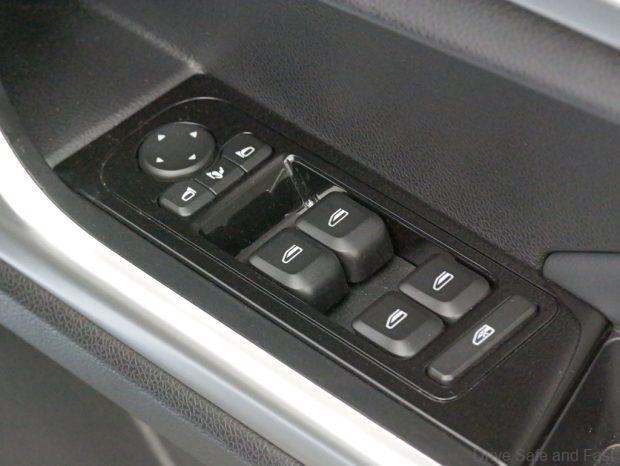
Window controls: Only the driver’s window button is illuminated and only that one has auto up and down functionality. It feels like there’s room for improvement here.
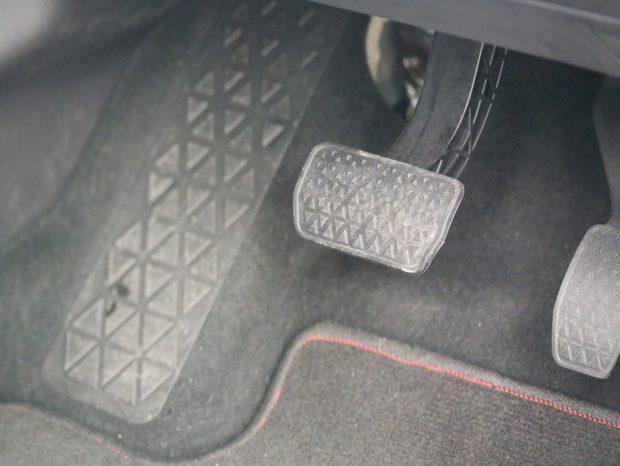
Increased friction for pedals: This is a minor complaint but I got the feeling like the friction I was getting on the pedals was less than I was accustomed to. A more rubberized finish may be beneficial here.
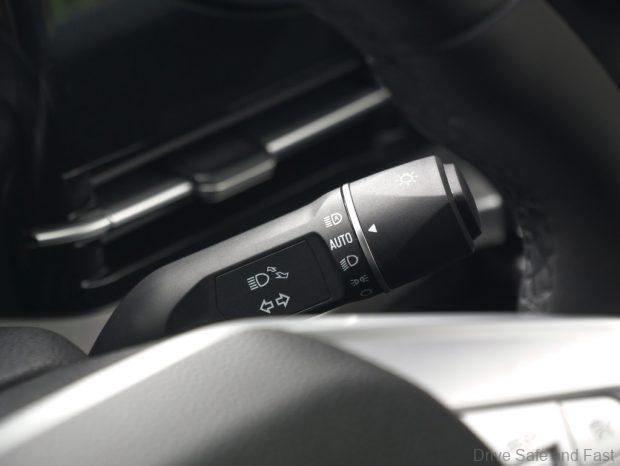
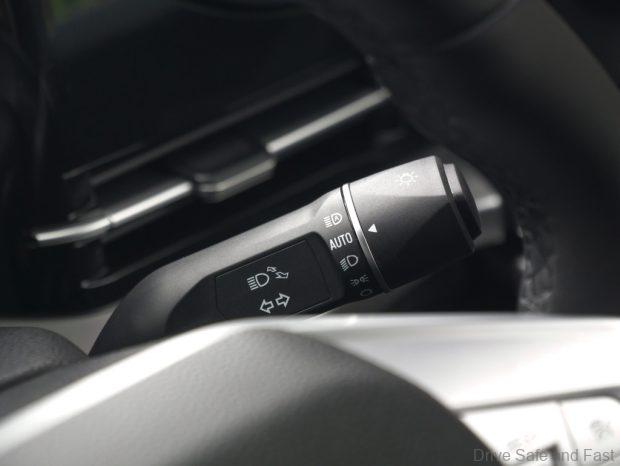
Light switch switchgear improvement: Sometimes triggering the turn signal cause the light switch on that same stalk to be turned by accident. Perhaps the switchgear can be improved there.
Smoother transition from regen braking to brake pads: The QV-E relies on regenerative braking to begin the vehicle’s descent in velocity, but then switches to brake pads to bring the car to a stop unless hard braking is asked for. So, in day-to-day driving, the system is using a bit of both and the transition is pretty jarring. After a couple of days, I had managed to train my foot to ease off the pedal before coming to a stop. I had to train myself to use the chauffer stop just to get the QV-E to brake more naturally. The engineering team needs to make the transition towards a stop feel more natural.
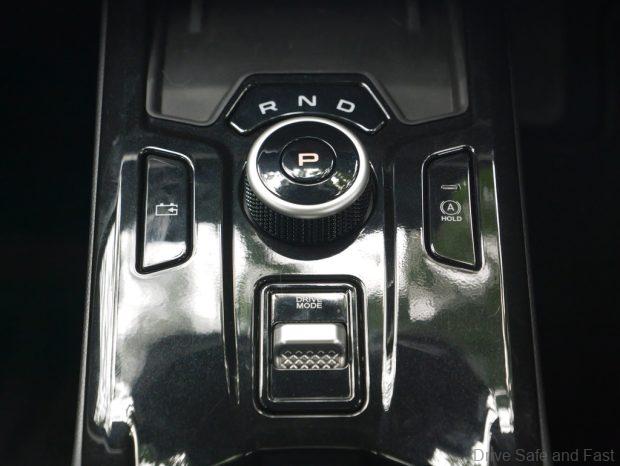
More granular control over regen braking level: While I do like that we have a brake regen button right there in the centre, I do feel like there should be more levels of regen control. The default 3 are pretty jarring in their contrast. Having 5 levels may have been better as it’s just too extreme at the moment. It would also be nice if the regen controls were paddle shifters.
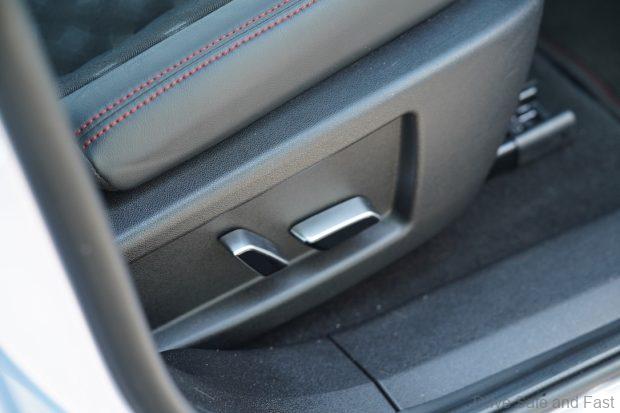
Seating Upgrades: Every seat in the QV-E could use some modification. The driver’s could use a little more lateral support but more crucially, lumbar support is missing.
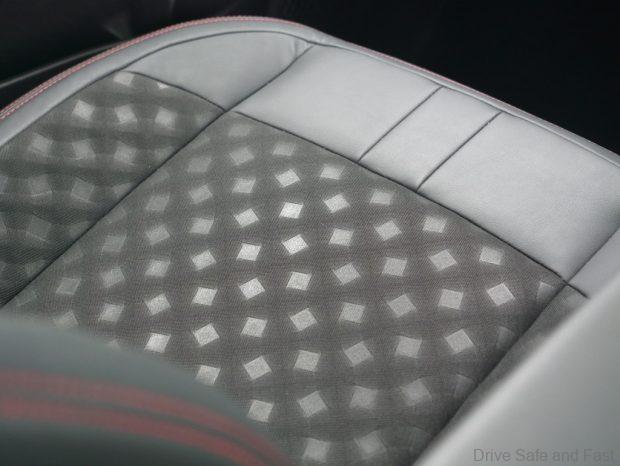
For longer drives, I certainly felt the car become progressively more uncomfortable to be in. Similar changes to ergonomics would be nice for the front passenger, power adjustability would be nice to have at this price too, but it’s not necessary.
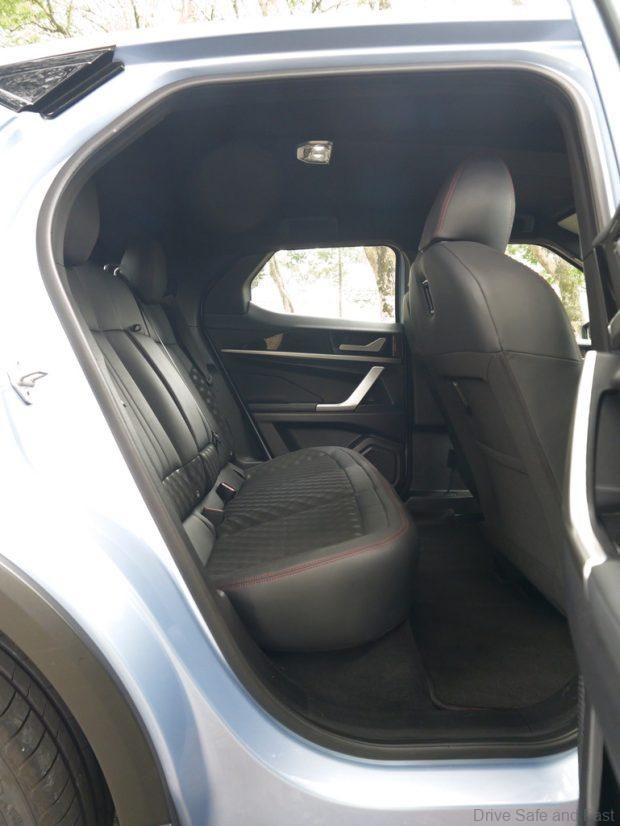
Larger passengers did feel a little oversized in this seat as it lacks the height adjustment found on the driver’s side but I don’t think height adjustment for the front passenger is common in most mass market vehicles.
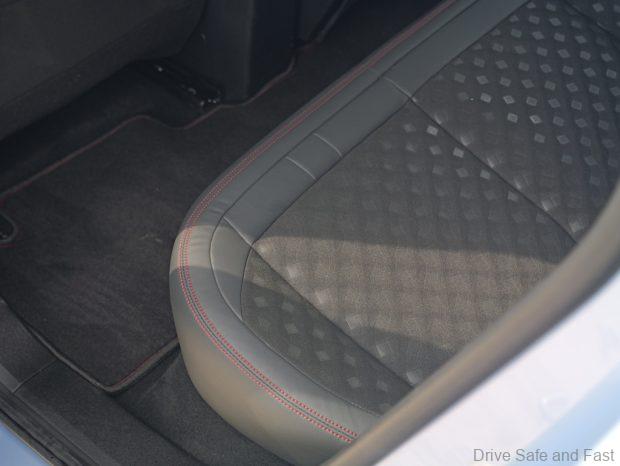
The rear bench needs to be a little more supportive with better thigh support. There’s no helping the lack of headroom with this design, but we’re sure there’s more that can be done to the seat design to improve comfort.
Overcoming A Safety Issue: The C-pillar design of the QV-E is such that visibility for passengers in the rear is severely hampered. When seated in the rear it’s nearly impossible to check for traffic coming from behind the vehicle. Since redesigning the body would be too costly at this point, some form of ‘Safe Exit Alert’ could be a possible work-around. We see this ADAS feature being implemented on vehicles with non-mechanical door latches, where the door doesn’t unlatch if a passing vehicle is detected (Lexus RX), but it’s possible to just have the audio alert go off when there’s danger since the QV-E’s latches are all mechanical.
Fix On Next EV
Fundamentally, the QV-E’s probably not the right kind of EV product for our market right now. Perhaps when the project started, EVs were being adopted by the more affluent. Thus Perodua decided to set loftier design and performance goals for their first product in the segment. Unfortunately, in 2026 we’re now approaching mass market acceptance of electric vehicles. Unfortunately in the EV’s ‘Myvi moment’, something that feels a little too niche.
For the next model, something more practical and less expensive should be the goal. The same platform with a higher roof and floor and a larger door opening like the Aion Y Plus would be great. Adding another row of +2 seating in the rear would also go a long way in differentiating the QV-E from its competitors.
BAAS should also be opened up specifically to ride hailing customers. They’re the only ones that really benefit from it given the repeated daily fast charging, higher cycle rate and continued use for this class of buyer.
Perodua QV-E Specifications
Battery Capacity: 52.5kWh
Range: 445km (NEDC), 370km (WLTP)
Max power: 150kW
Max torque: 285Nm
Top Speed: 160km/h
0-100 km/h: 7.5 seconds
Selling Price: RM93,999 (Full purchase) OR RM69,999 + RM215/month for 9 years (BAAS)
Relaunch Rebate: RM6,500

