

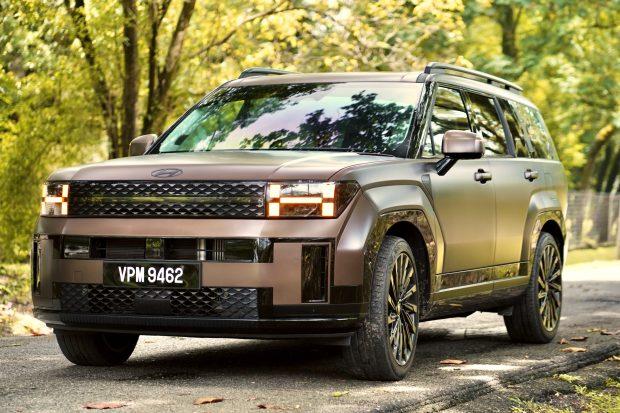
The new Hyundai Santa Fe 2.5T Calligraphy is the new top-tier South Korean SUV entry and it looks… different.
The Hyundai Santa Fe has been on my radar for many years now. Across many generations, this product has married together all the elements that make for a really solid 1-car garage.
It seats 7 in a pinch, it’s put together really well, there’s usually an advanced economical diesel powertrain to counterbalance the car’s massive weight and size, and the pricing has always been reasonable in Malaysia.
In short, the Santa Fe has always delivered what the Japanese makes could not or would not for our market and they’ve done so without pricing the product like a premium European make would. This is part of the reason why the Santa Fe has repeatedly won at our VOTY awards across the years, it’s an unassuming but very solid choice.
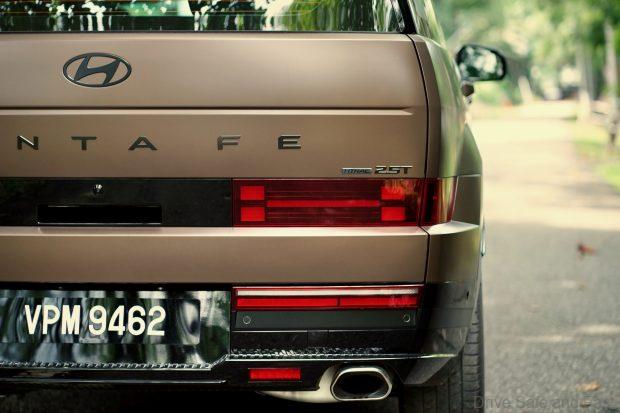
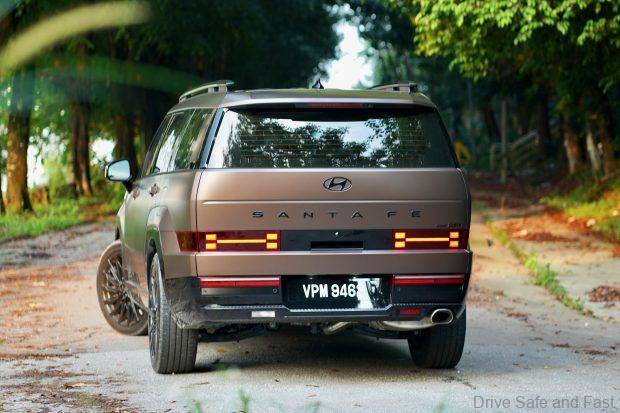
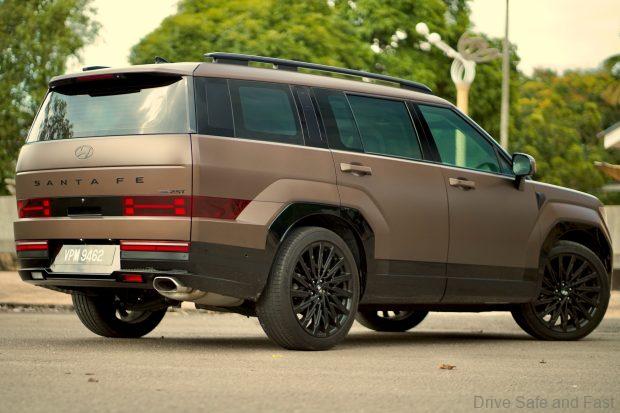
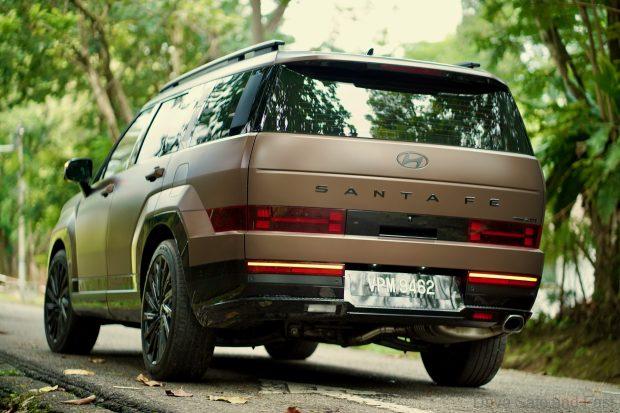
In this generation, the Santa Fe’s design and powertrain direction takes a full 180. In terms of looks, they’ve taken the model to very unfamiliar territory. The exterior now follows a boxy, off-roader inspired look with an emphasis on angular details and hard edges. While the front and side profiles are quite handsome, the treatment to the rear is bound to raise eyebrows.
As for the powertrain, they’ve gone with a turbocharged petrol hybrid motor on the entry and mid level models, and a full blown high-powered turbocharged petrol model on the full-spec Calligraphy specification. We took this flagship variant out for a test drive to see just how much the Santa Fe had changed.
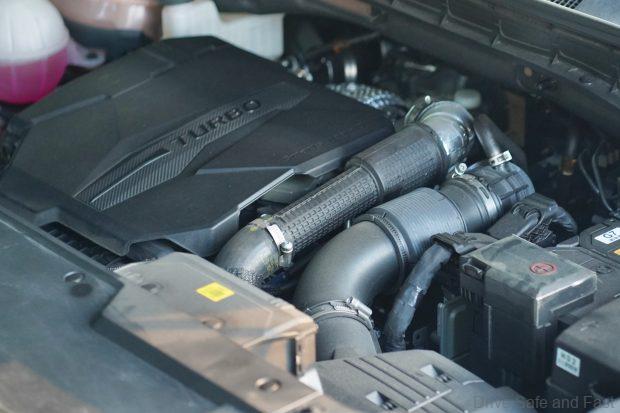
Let’s start with the powertrain. This 2.5L 4-cylinder turbocharged engine is from the Smartstream line and it combines both direct injection and multi port injection to reap the benefits of both – high pressure efficiency without the long-term carbon build up. It’s an extremely powerful motor, pumping out 281 metric horsepower and 422Nm of torque across a wide band.
Power is sent to all four wheels via an 8-speed dual clutch automatic transmission. This is an all-new engine for Hyundai and it’s impressive how they’ve managed to make it both buttery smooth in daily use yet relentless in delivery when pushed hard. In my test drive I didn’t find it to be particularly thirsty, which was a pleasant surprise given the weight of the vehicle, the presence of all-wheel drive and the high output.
Sure, it’s no fuel-sipper, but it’s certainly punching above its weight in terms of efficiency. It also drives with a lot of dignity.
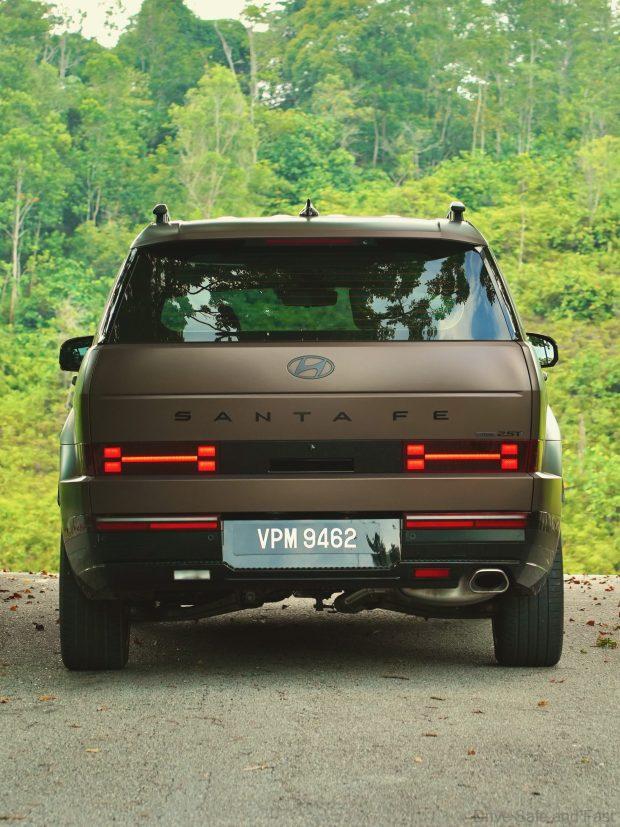
That’s something about this N3 chassis that seems to carry through no matter what model Hyundai (or Kia) build on it. The thing floats over speed humps and glides over potholes without needing air suspension.
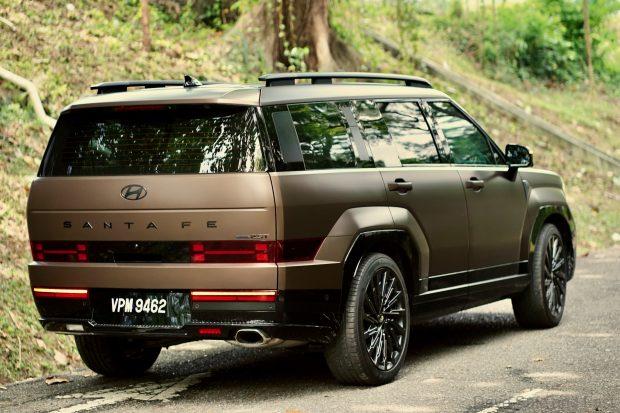
It corners respectably too, the weight is not an issue until you’re at the extremes. However, this isn’t a sporty SUV, so it’s unreasonable to expect very sporty behaviour out of this vehicle. All you really need to know is that it’s a suitable car to chauffeur one’s parents around in.
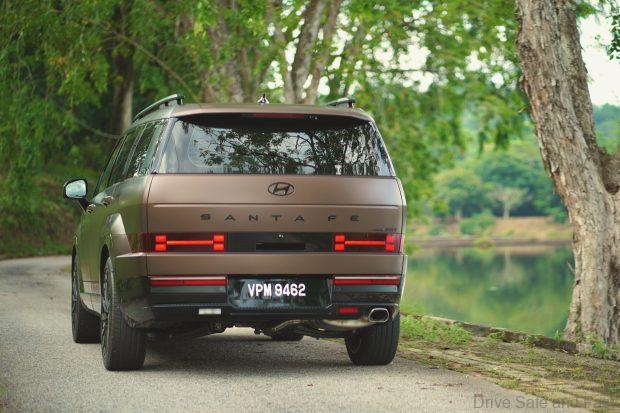
Now on to the looks. There’s plenty of good here and just one controversial angle – the rear. While there is something Range Rover esque about the way the new Santa Fe looks on the outside, I think they had to purposefully create a strange looking rear end in order to break away from even a hint of plagiarism. I mean, it’s a mature design – even the rear end, as uncomfortable as it is to look at, looks like the work of a respectable design team.
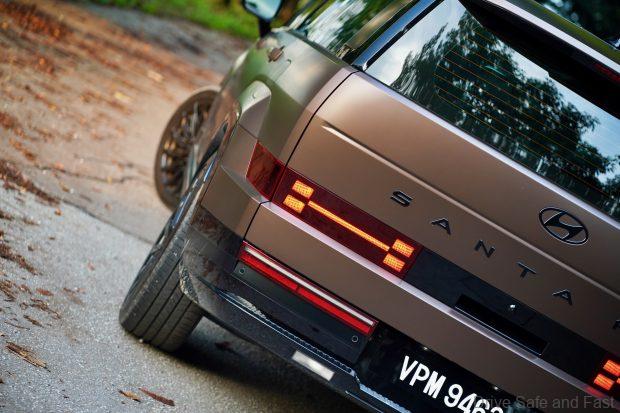
This is the first and only Hyundai model to feature such a distinct design and we’re not entirely convinced that they’ll stay down this path. Besides how it looks like from behind, there’s a lot to love about the way the Santa Fe looks now.
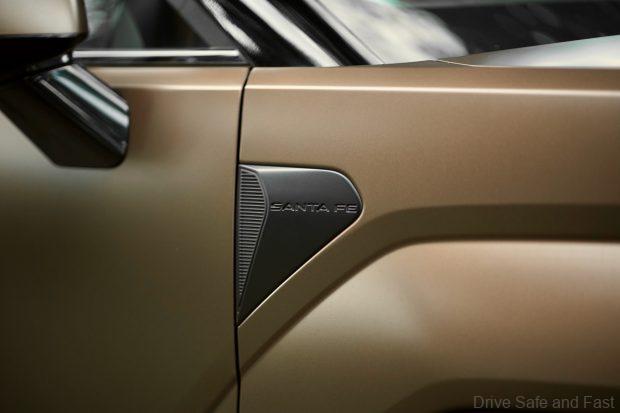
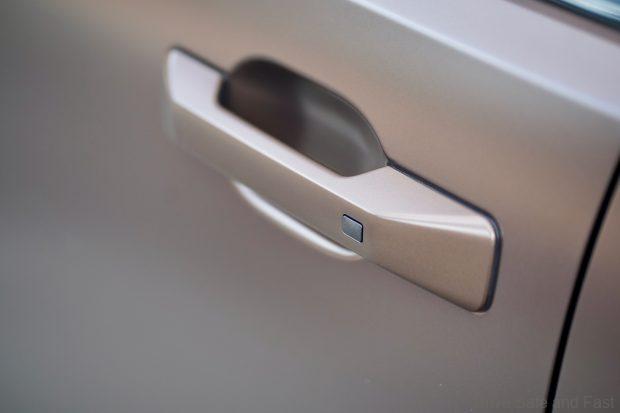
The paint work, ‘Earthy Brass Matte’ is reserved for this variant and comes across like a really upmarket wrap. It looks expensive and it wasn’t long ago when you’d have to spend over half a million Ringgit on a car to even get the option for such a nice looking paint finish.
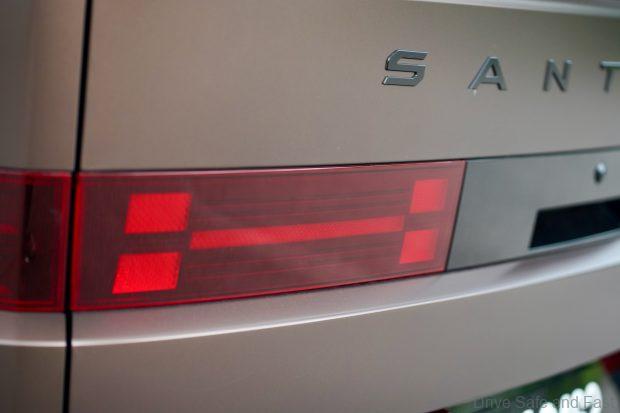
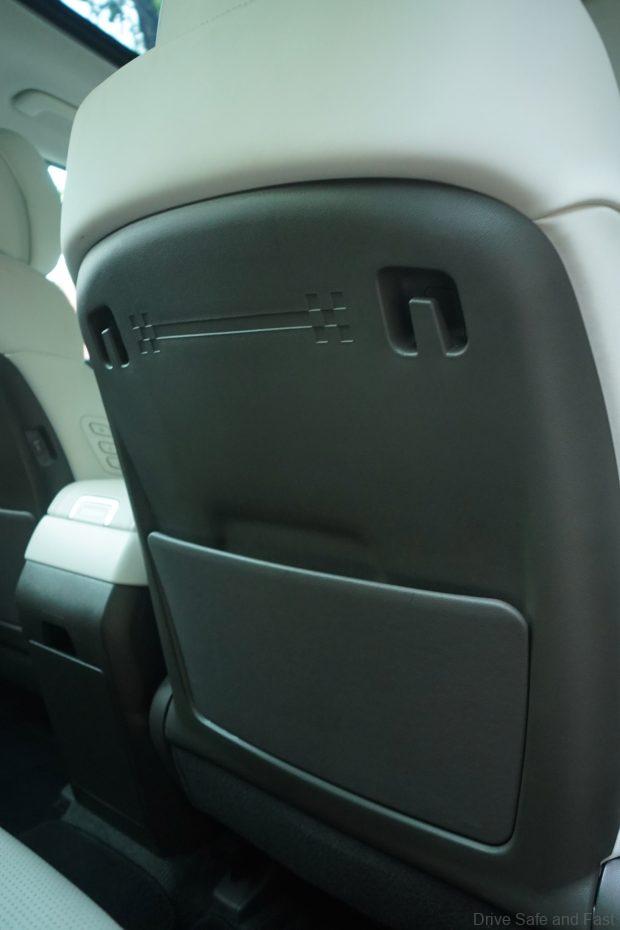
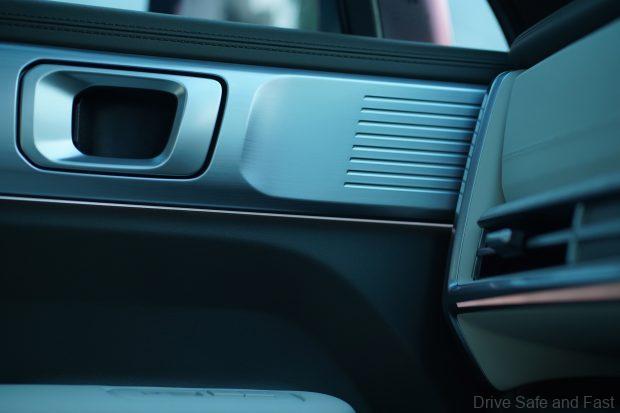
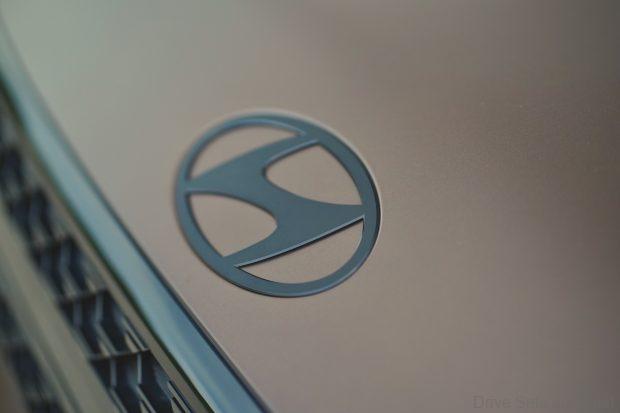
Hyundai also took the time to hide a bunch ‘H’ logos throughout the design, both inside and out, and they’ve done so in a way that doesn’t exactly come across as tacky, so, good on them for finding that playful balance.
Plus, I think there’s a lot to appreciate with regards to the other elements of the exterior design.
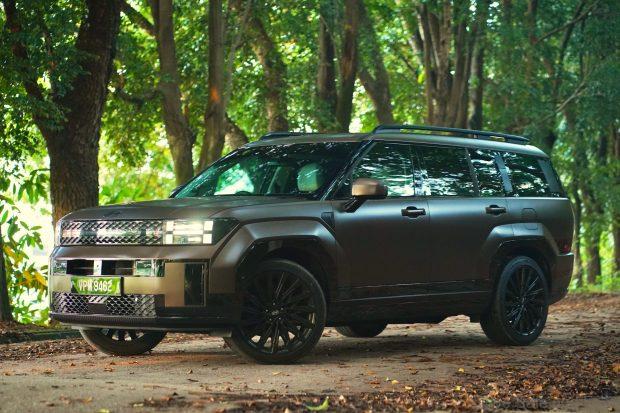
The silhouette from the side profile looks exceptionally sleek for an SUV of this size and class – almost wagon like, you could say.
From the front, as mentioned before, they’ve gone for a Range Rover inspired look, but it could easily just be seens as an off-roader inspired look, which is indeed in vogue these days.
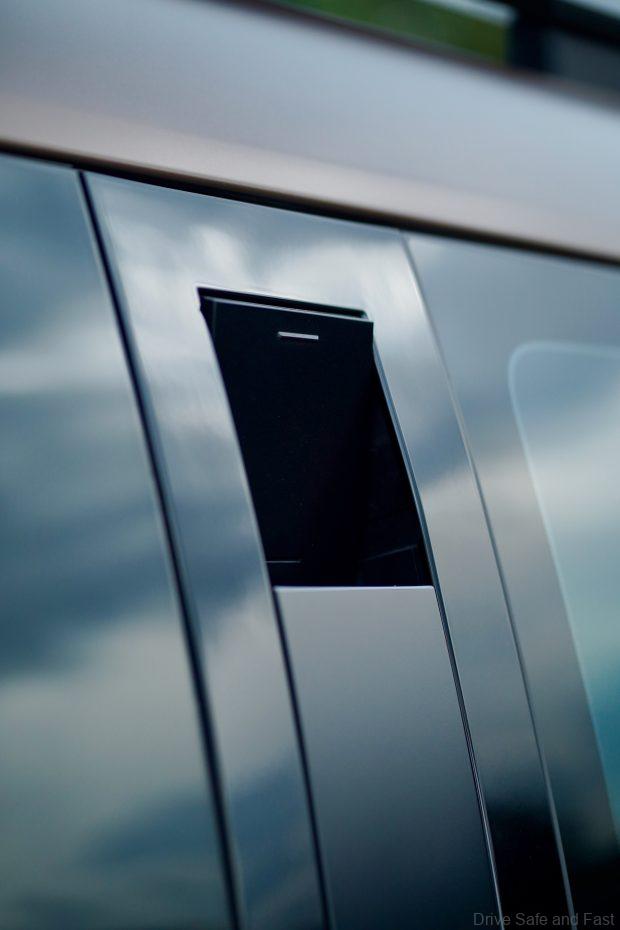
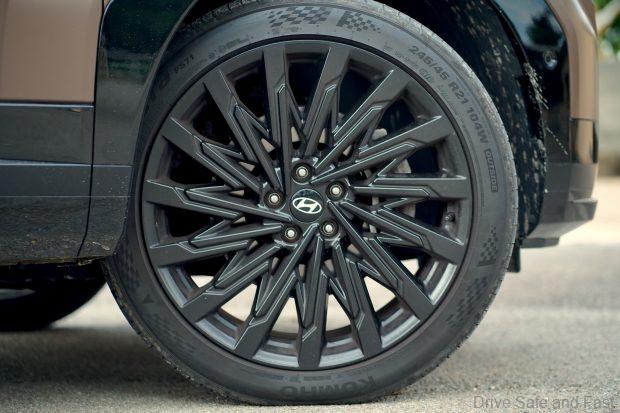
There’s also a handy collapsible grab handle built into the C-pillar, and the 21” alloy wheels on this variant look particularly nice.
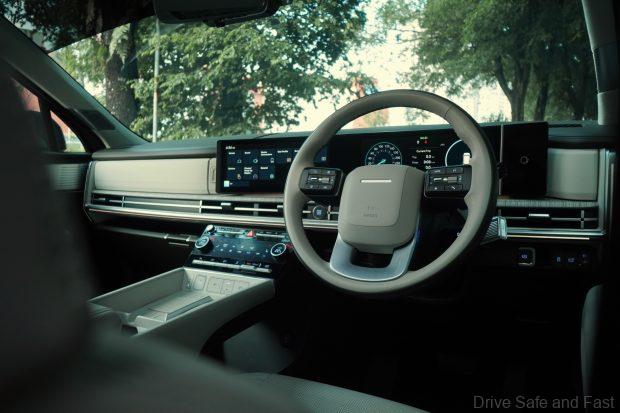
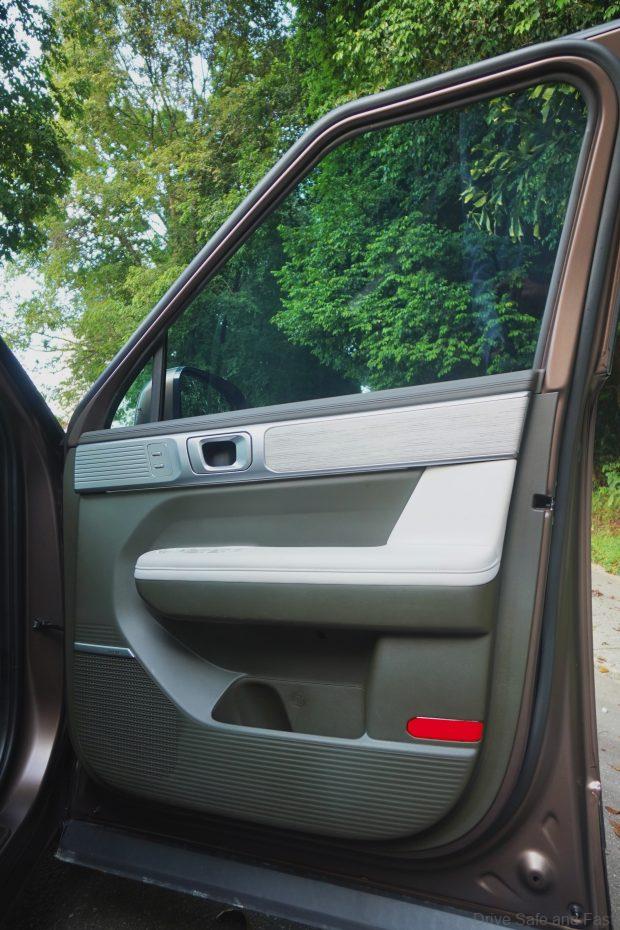
I think the interior is fantastic for the most part. Our unit came with white Nappa leather against a forest green primary interior colour with ‘Eucalyptus stripe’ light garnish pieces.
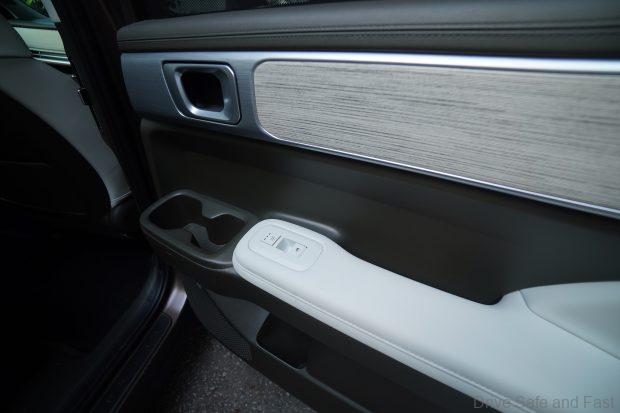
It’s a very upmarket cabin and one that is unique in the market, reserved only for this Calligraphy specification.
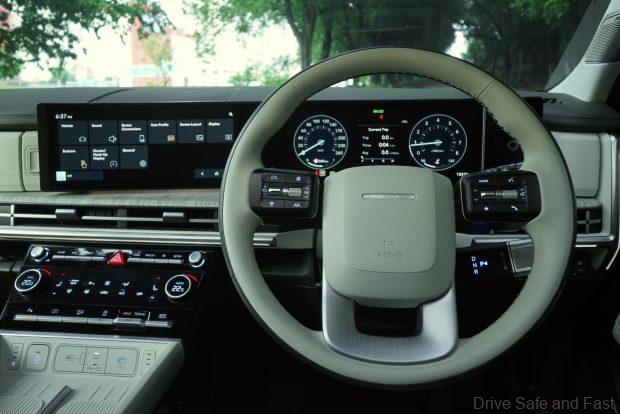
There’s also a more conservative Black interior option, but I feel most buyers will gravitate toward the Pecan Brown interior for its balance of sophistication and ease of maintenance.
Colour choice aside, this interior gives us way too much to talk about.
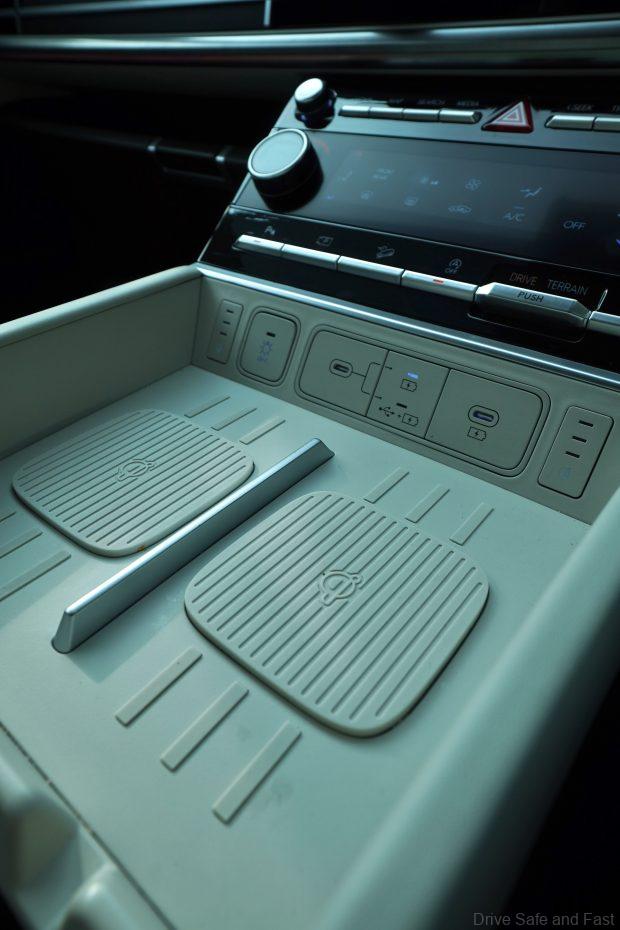
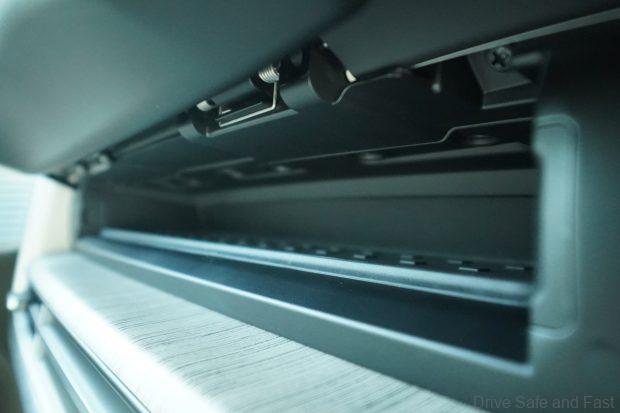
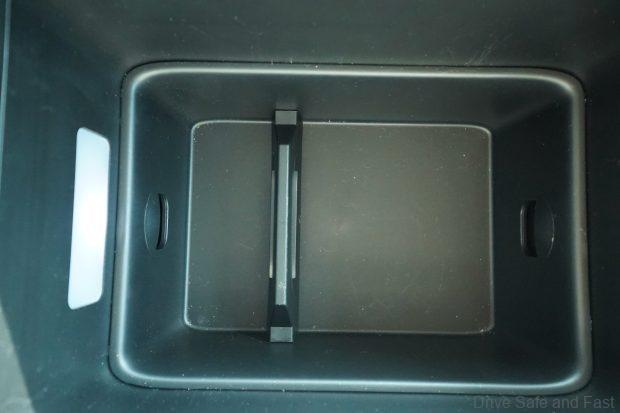
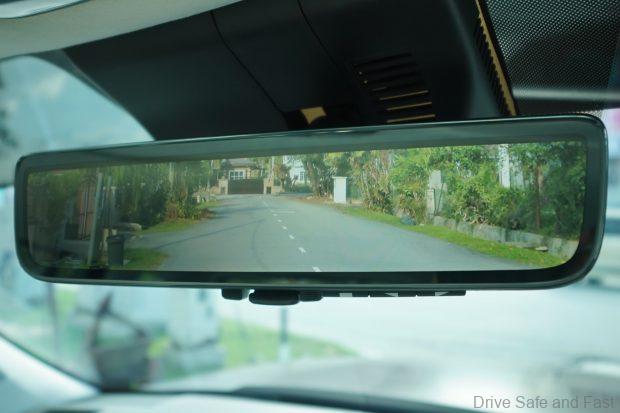
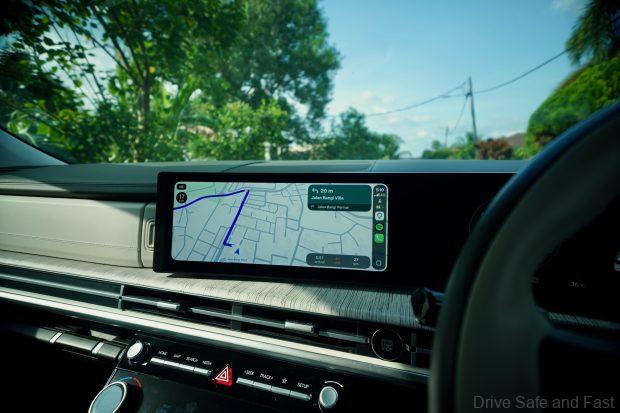
You get dual curved displays measuring 12.3” across, dual wireless Qi charging pads, a UV sterilization chamber for your phone, a centre storage box that’s dual hinged, so it opens for both front and rear passengers.
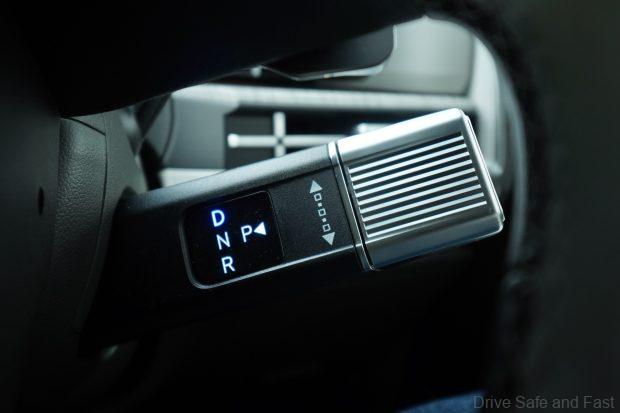
You also get a column shifter with a weird twist mechanism that takes some getting used to. The Hyundai logo on the horn pad has been replaced with four dots meant to represent the letter ‘H’ in morse code.
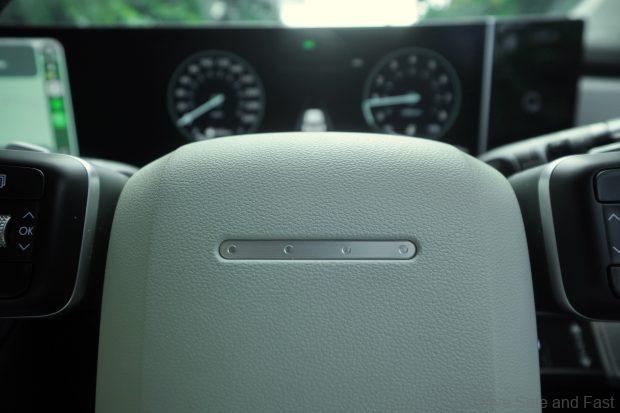
The dashboard looks and feels like it belongs on a much more expensive vehicle than this, so hats off to the designers. I also appreciate that they’ve tried new things here without coming across as too avantgarde for most car buyers.
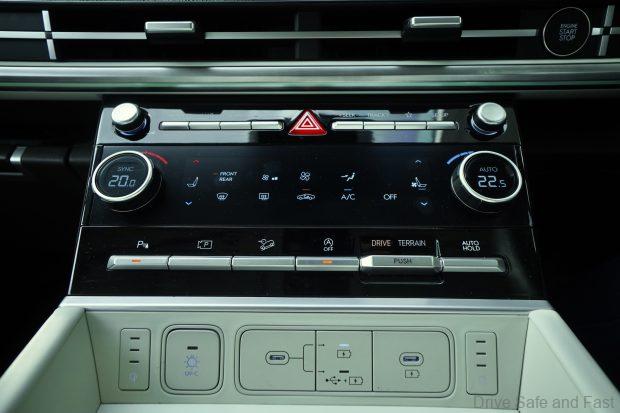
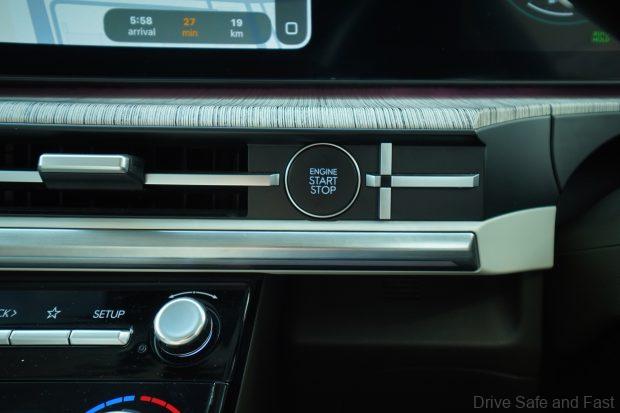
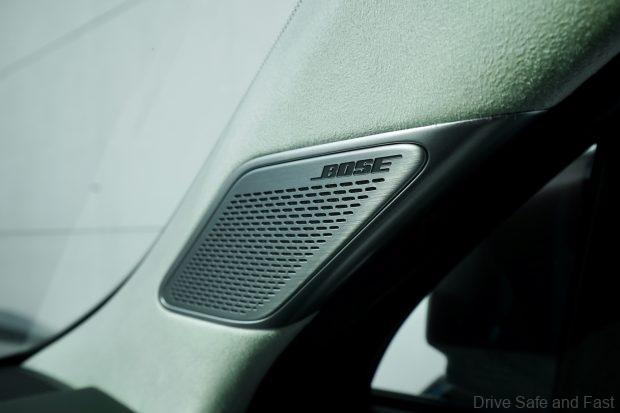
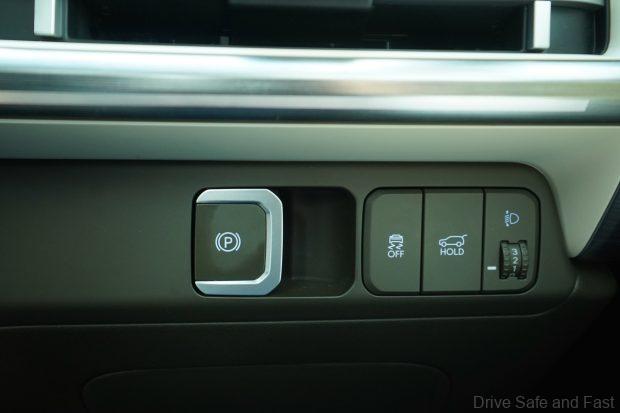
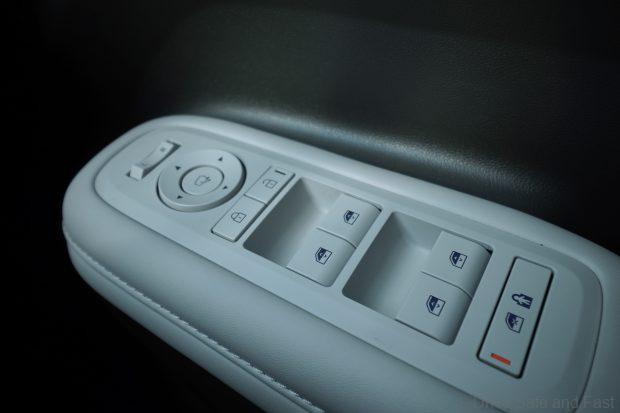
If anything, the large number of physical buttons will attract conservative buyers, though there are a few persistent capacitive touch controls too. 12 Bose speakers provide a lovely audio experience for all passengers – a little strange that Hyundai didn’t go for a South Korean owned sound brand from Harman, but these speakers sound great, so there’s little to complain about.
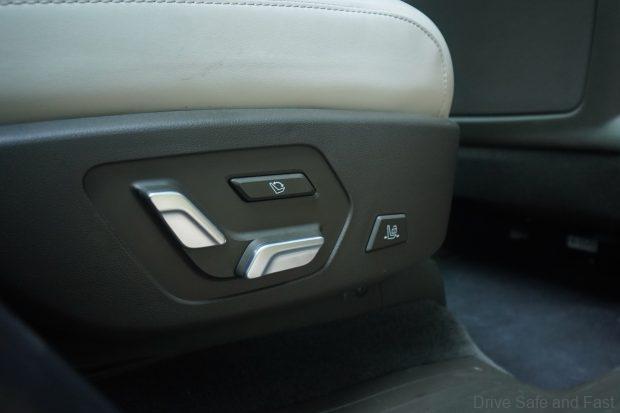
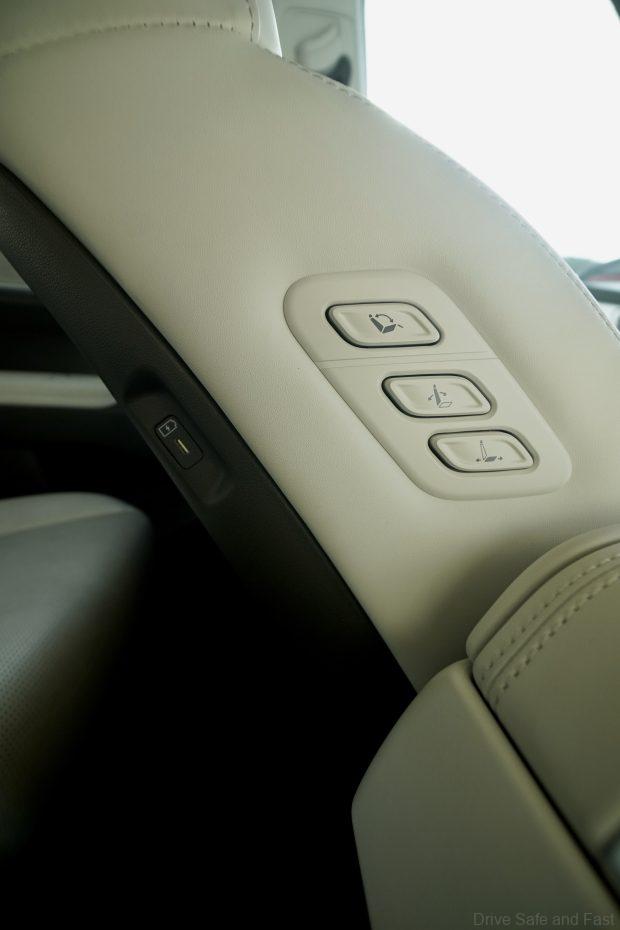
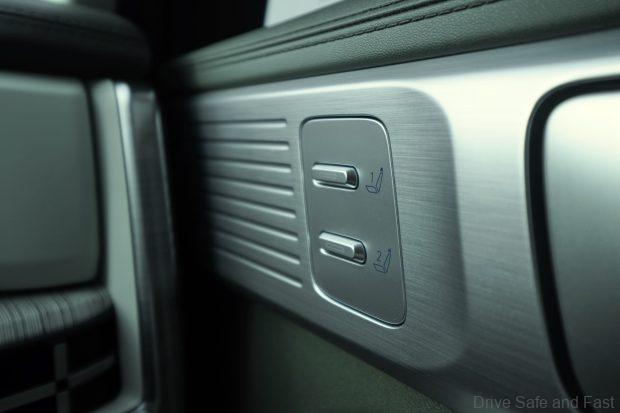
This variant of the Santa Fe is configured with two Individual Power Captain Chairs with adjustable armrests while Hybrid models come with a bench in the middle row. It’s worth noting that these individual seats here are able to fold flat, which is actually quite exceptional, as most do not.
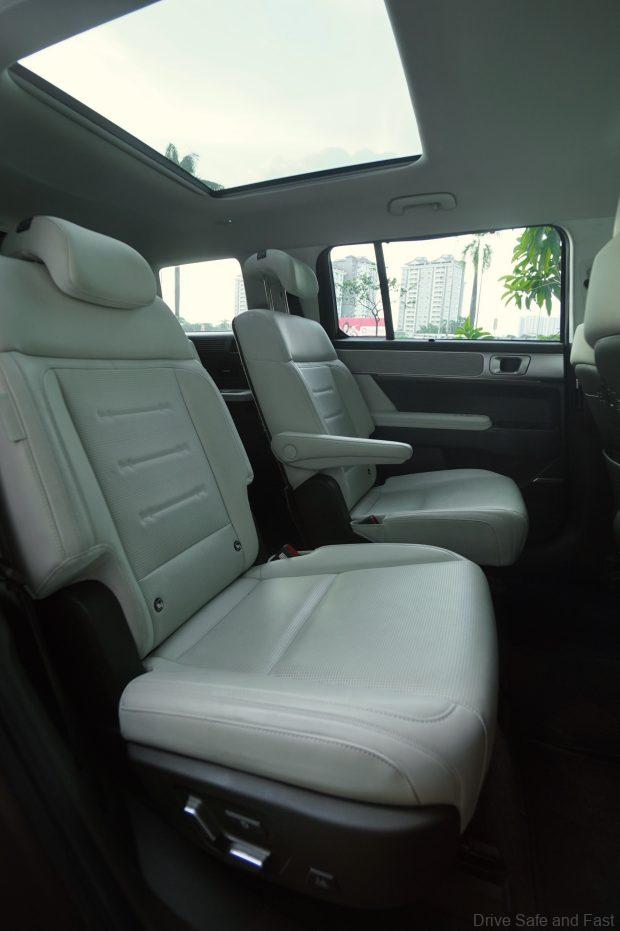
Even MPVs like the Toyota Innova Zenix fail to provide this flexibility for cargo carrying. Conversely, in use, these are NOT the largest, not the most plush, nor the most supportive captain seats you can get. However for an SUV, they’re respectable. Would I choose to sit in the second row of the Santa Fe or the CX-80?
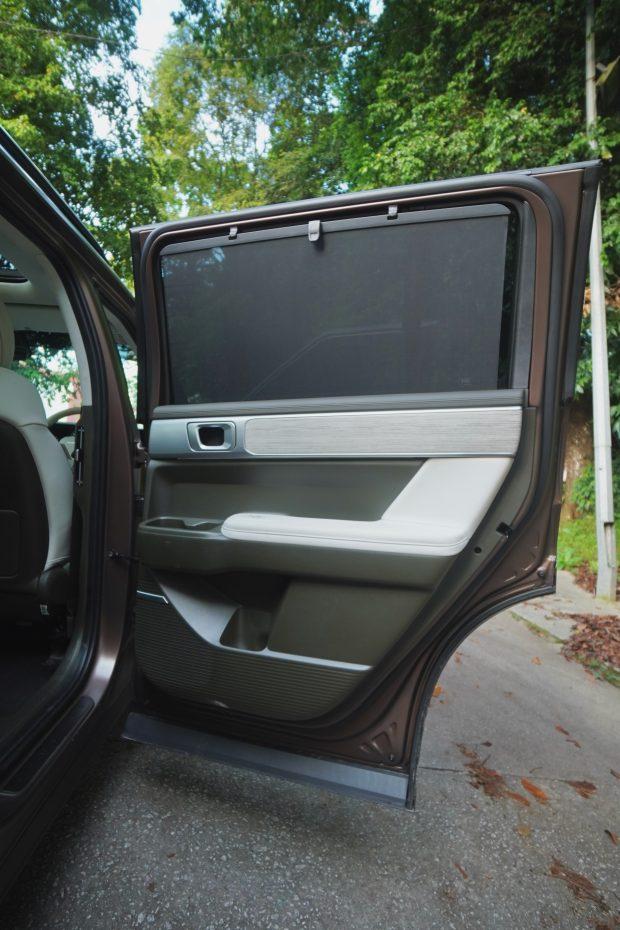
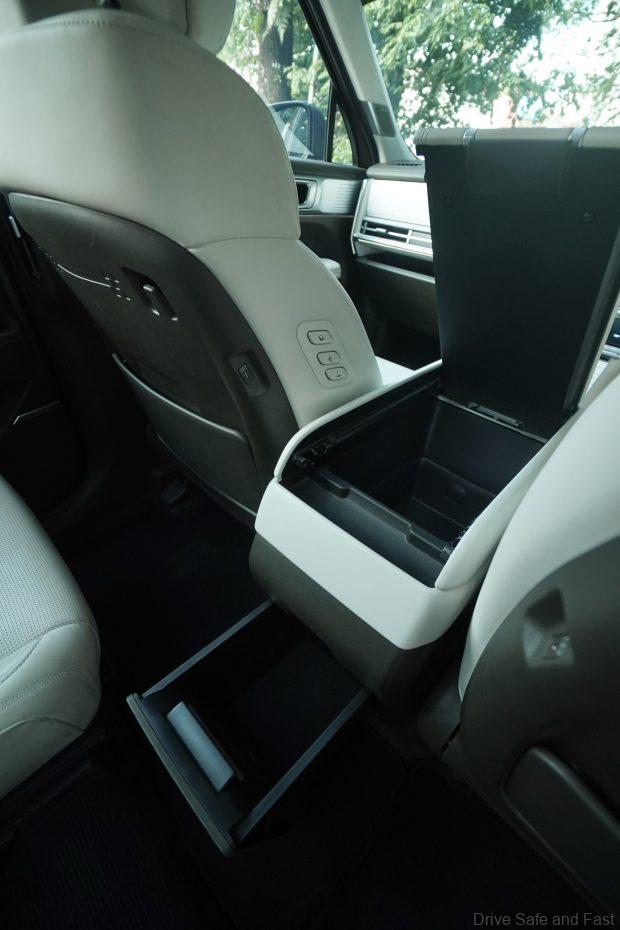
I’d say the Hyundai feels less constricted and more airy. The Mazda does have a certain vibe to it though, and that centre armrest is pretty functional in the CX-80. Here, the Santa Fe gives you an interesting storage option that’s partially shared with the front occupants.
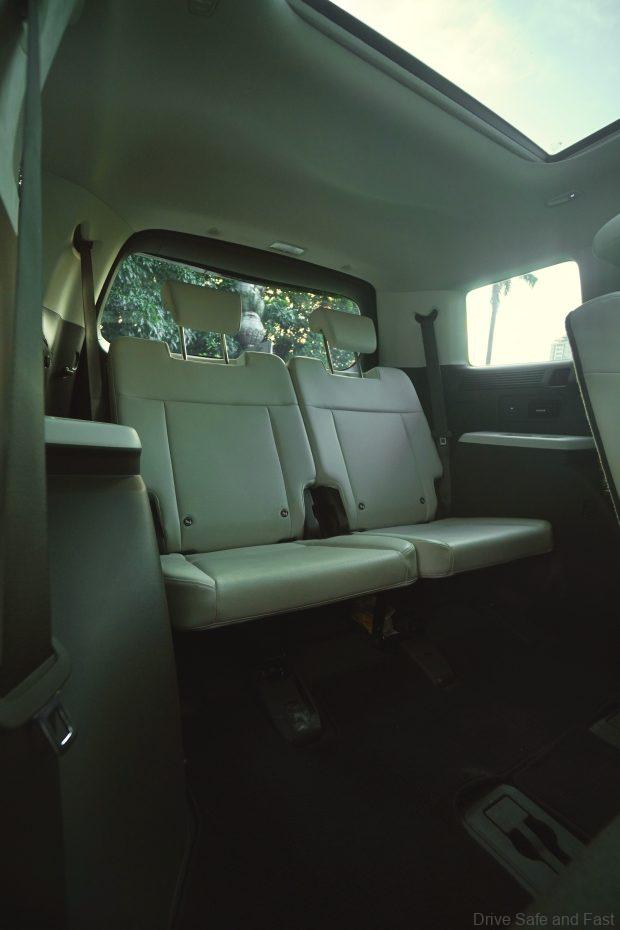
The third row is respectable in the Santa Fe. Two adults can sit with some dignity here for a lengthy journey.
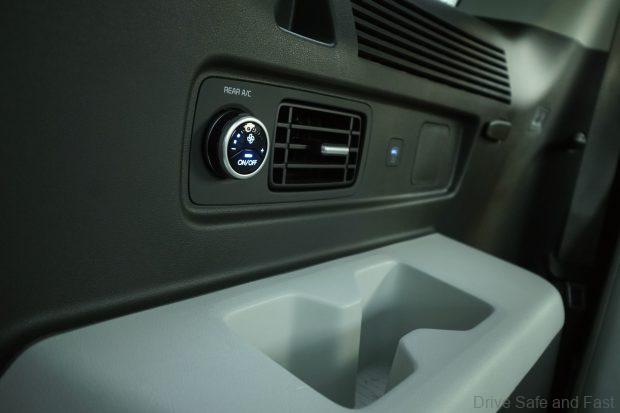
There are multiple cup holders, USB ports and fan controls here.
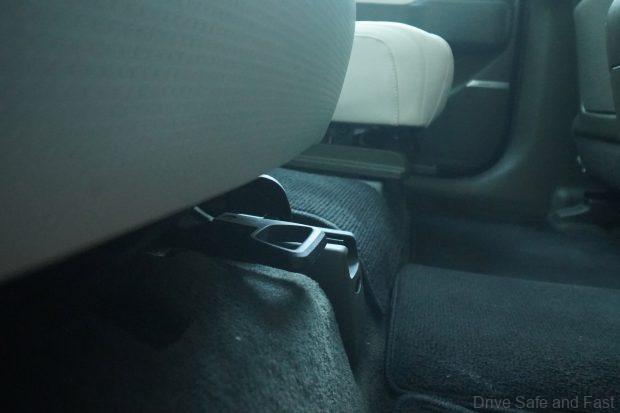
Its a decent place to be and accessible too through the middle of the two centre seats or by collapsing (powered) and sliding (mechanical) one of the middle row seats forward.
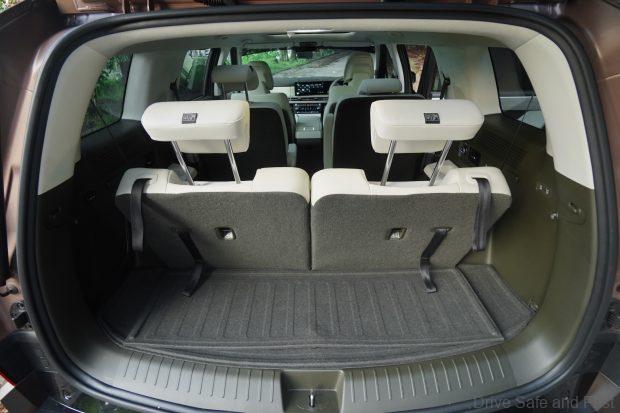
Overall, the Hyundai Santa Fe 2.5T Calligraphy builds on the fundamentally great package that we’ve always admired, but now packages it in clothes that will turn heads. Perhaps this is what has always been missing from this product.
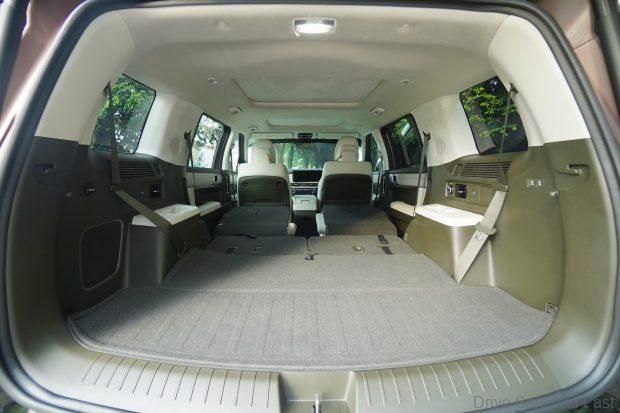
The older generation models always played things a little safe and now is the time for some bold moves. We’re already starting to see quite a number on the road and it’s unsurprising. Initial pricing was a LITTLE high with this top spec model coming in at RM270,000. Now though, with local assembly and a few promos, the pricing is much more reasonable. Do check out the Hyundai Malaysia website for the latest promo details or visit your dealership for a test drive.

Hyundai Santa Fe 2.5T Calligraphy Specifications
Engine: Inline-4, 16-Valve, DOHC, ‘Smartstream’ Turbocharged Petrol
Capacity: 2199cc
Gearbox: 8-speed Conventional Automatic
Max power: 197hp @ 3,800rpm
Max torque: 440Nm @ 1,750rpm
Price: RM328,888

