


Battery swapping is a massive, proven success in China, largely driven by industry pioneers like Nio and EV battery manufacturers such as CATL.
China believes battery swapping could boost EV adoption by tackling range anxiety, allowing empty batteries to be swapped for charged ones in minutes. Through top-down standardisation and infrastructure investment, it aims to turn battery swapping from a niche into mainstream technology that is available in parallel to charging.
So, is this why Perodua wants to pursue this format for its QV-E?
Will Perodua be using Gotion batteries for their BaaS?
The technology has evolved from a niche alternative to a dominant EV energy delivery method, eliminating range anxiety and saving drivers millions in operational costs.
Nio reached its 100 millionth battery swap milestone. Yes, Nio recorded a massive high of 146,649 battery swaps in a single day, highlighting scaled adoption.
Other Chinese automakers are also getting involved. Geely, one of China’s largest car manufacturers, has launched Caocao Mobility to integrate battery swapping into its ride-hailing services.
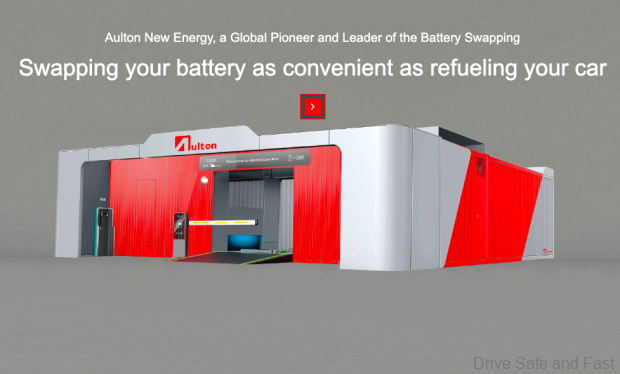
Similarly, BAIC is working with Aulton New Energy, a company specialising in swapping solutions, to build a network of stations for commercial vehicles, particularly taxis. Did you know that Aulton’s drive-through battery swapping system uses hydraulic lifts + robotic arms to swap EV batteries from underneath a vehicle in 20-30 seconds while the driver stays in the car.
Cost for taxis: subscription or per-swap (often ~0.1 RMB/km equivalent), far cheaper than fuel/charging. The system serves 30+ models from 16 OEMs (incl. SAIC/Roewe taxis, BAIC, Changan) across Shanghai & other cities. Aulton has over 160k batteries in network.
CATL, the world’s largest EV battery maker, has introduced its own battery-swapping system called EVOGO. This modular solution allows users to swap individual battery blocks, giving them flexibility based on their driving needs. CATL is also targeting 10,000 battery swapping stations by 2030.
Battery swap networks can deliver up to 16% of all EV energy in the country over peak periods, underlining the scale of its infrastructure.
Robotic swap stations complete a full battery exchange in an average of 3 minutes for consumer vehicles and just 2 to 5 minutes for commercial logistics trucks.
Compared to conventional charging, the swap network has saved users over 83.41 million hours of waiting. Users have saved over RMB26.3 billion in overall energy costs which is averaging over RMB 27,000 per user, by bypassing battery-purchase costs through “Battery as a Service” (BaaS) subscriptions.
Nio operates thousands of battery-swapping stations across the country, featuring a heavily traveled 9-vertical, 9-horizontal highway swap network that covers hundreds of cities. The model is not just for consumers. It is highly successful across Chinese ride-hailing networks (like DiDi) and heavy-duty logistics fleets.
Would you like to explore how battery-swapping business models (like Battery-as-a-Service) compare to traditional EV fast-charging infrastructure, talk to us at www.dsf.my as we know the providers and solutions.

