


The Vios HEV is the most affordable Toyota has to offer, but is it affordable enough?
Early this year, Toyota expanded their ‘electrified’ lineup to include the Vios. This was a significant step for the brand, as it represented the first locally-assembled B-segment hybrid ever to be offered. Toyota has been on the electrification journey for 30 years and this is the closest they’ve come to bringing something electric to the mass market. There’s plenty of positives to the product, but also some valid criticisms too.
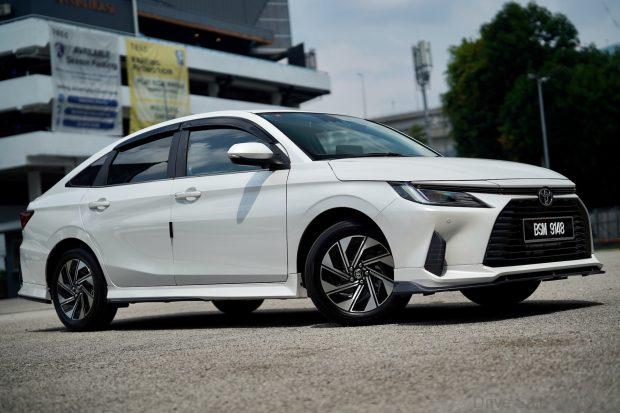
The best thing one can say about the Vios HEV is that it brings a massive improvement in its in-traffic behaviour over the petrol model. Needless to say, efficiency is impressive. 3.6L per 100km is what you can expect in ideal conditions, but even on bad days, 4L per 100km is easy to achieve. Beyond fuel efficiency, the HEV model improves the driving character of the Vios drastically.
The standard petrol model suffered (and continues to suffer) from an overly eager throttle tune. It feels as if the petrol Vios always wants to get to cruising speed as soon as possible, which leads to some unnecessary spikes in the engine speed even in stop-go traffic. I suspect it’s the Daihatsu-engineered D-CVT that’s at the heart of this issue, as this tendency for the engine to enthusiastically rev up beyond 2,000 rpm in stop-and-go traffic is absent on the previous generation Vios with a regular CVT.

The Vios HEV solves this behavioural issue by using a Toyota-developed e-CVT, which works as a power split device, connecting the petrol engine, the wheels and two electric motors. The first electric motor starts the engine, recuperates energy, and controls the drive ratio. The second electric motor drives the wheels directly at low speed and assists the engine during acceleration. The e-CVT solves the rough start-up of the standard Vios by moving the car purely on electric power when taking off.
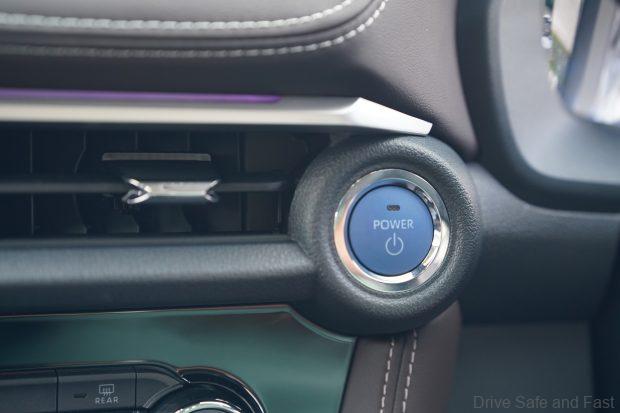
Once at speed, the e-CVT’s planetary gears blend power from the petrol engine and second electric motor to drive the wheel. Because the lithium-ion battery in the Vios HEV is so small (0.7kWh), the first electric motor is almost always acting as a dynamo when the petrol engine is running. What’s interesting is that there is no mechanical reverse gear in this system, the second electric motor has its polarity reversed when you switch to ‘R’.
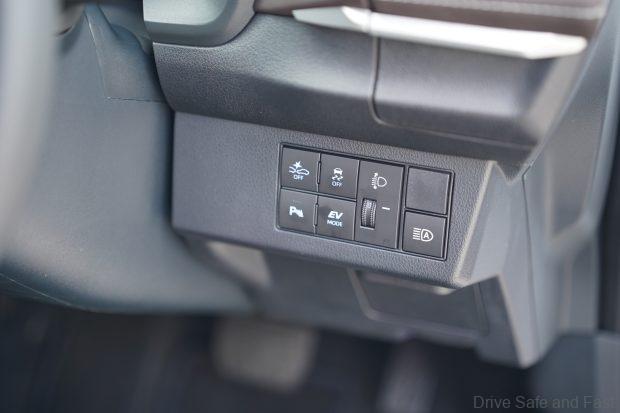
The system in the Toyota Vios HEV is a little more ‘ICE’ centric than, let’s say Nissan’s e-Power system in the Kicks or Honda’s e:HEV/i-MMD system in the City. That being said, it still offers similar day-to-day advantages to the customer – a simpler transmission with little-to-no maintenance needs, sufficient and immediate torque, and zero range anxiety as there is no need to plug anything in to charge. Toyota lets you ‘force’ the Vios into EV mode, but it’s honestly not possible to keep it in this mode very long at reasonable speeds. The best one can hope to use this for is to minimise exhaust fumes in one’s car park or when driving past a school – otherwise the function really has no realistic use-case. You can also shift to ‘B’ on the shifter to simulate more aggressive engine braking and maximize regeneration.
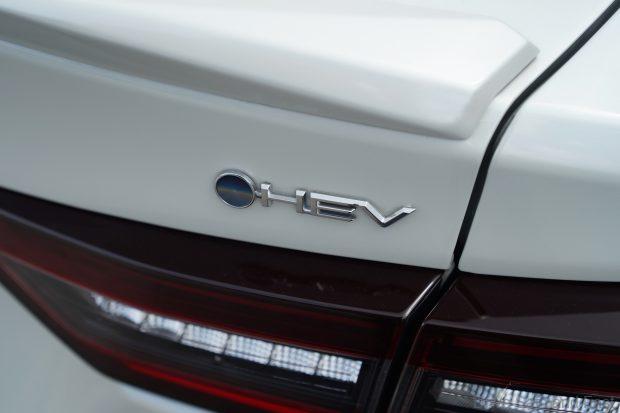
The biggest advantages of the fourth generation Toyota Hybrid System is that it’s a power-split system, which enables a variable mix of power between electric and petrol. The Nissan system is always electric, which has higher losses at highway speeds due to energy conversion. The Honda system either has the engine clutched in or out, and Toyota claims slightly better thermal efficiency as a result, though it’s really hard to measure if this results in better fuel efficiency overall.
What is measurable and certainly perceivable even without instruments, is the lack of power in comparison to rival hybrid systems. Both Nissan and Honda hybrids feel much faster than the Vios HEV, and these are just the conservative Japanese hybrid systems that we’re talking about. If you’re willing to open your options up to the Chinese hybrid options, the Chery Tiggo Cross Hybrid and the Proton e.MAS 7 PHEV in particular offer much greater levels of electrification with the Chery offering loads more power and the Proton offering a large, user-chargeable battery that allows the vehicle to be driven large distances on pure electric power.

Now, the reason why it’s important to bring up all of these competitors is because the Vios HEV was launched into an extremely crowded ‘affordable’ hybrid market. Despite Toyota’s long and storied history with hybrid technology, this locally-assembled B-segment hybrid comes not 1, not 2, not 3, not 4, but more than FIVE years after Honda introduced the City e:HEV in CKD form. If you’re willing to count the Honda City Sport Hybrid models using i-DCD hybrid tech, then Honda Malaysia’s lead in introducing affordable locally-assembled hybrids extends to 8.5 years. Even Nissan, with its financial difficulties, brought the Kicks e-Power in a year ahead of Toyota.
If you held out for Toyota’s version of affordable electrification, I think the biggest advantage you’re getting is a much better powertrain for this generation of the Vios, but not a powertrain with massive advantages over other hybrids in this price segment. The best reason to buy the Vios HEV is that it’s the better Vios, and not that it’s the better hybrid. Toyota Malaysia has made sure of that beyond just the powertrain improvement, they’ve added a bunch of features too.
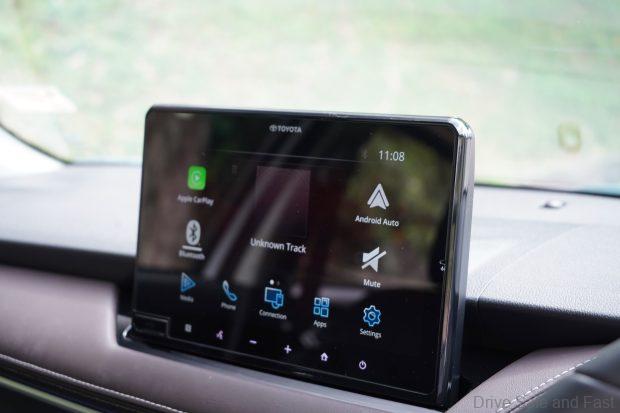
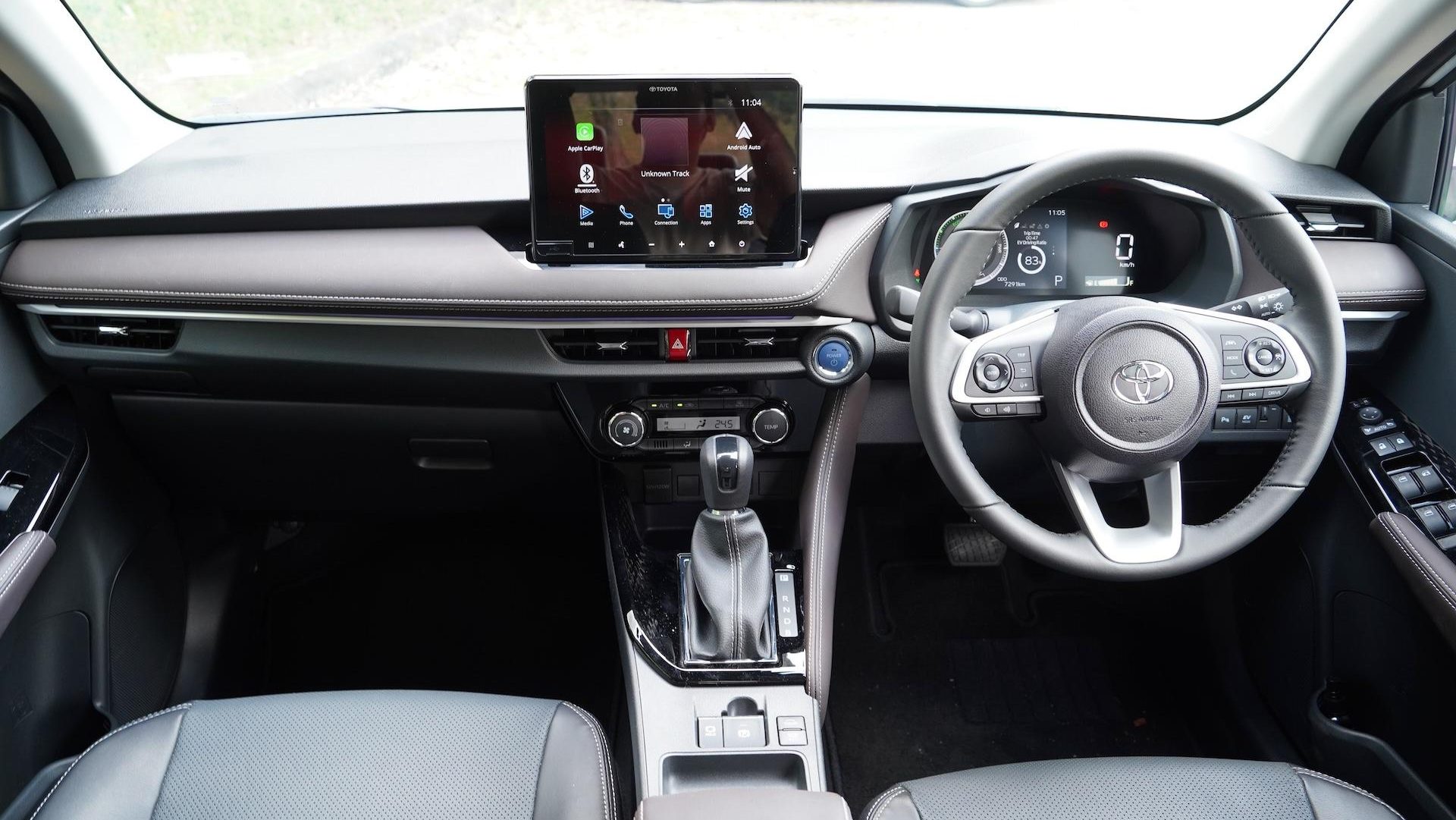
The most prominent is the 10.1” infotainment unit, which includes Apple Carplay and Android Auto support in a glossy touch-enabled display. The display is asymmetrically-mounted and is in a semi-‘free-standing’ housing. There’s also a 7” digital driver meter, similar to what you find in other Daihatsu New Global Architecture (DNGA) vehicles like the Perodua Ativa. Here, there are Toyota-specific hybrid displays that show you real-time power output and regen braking info as well as power-split information.

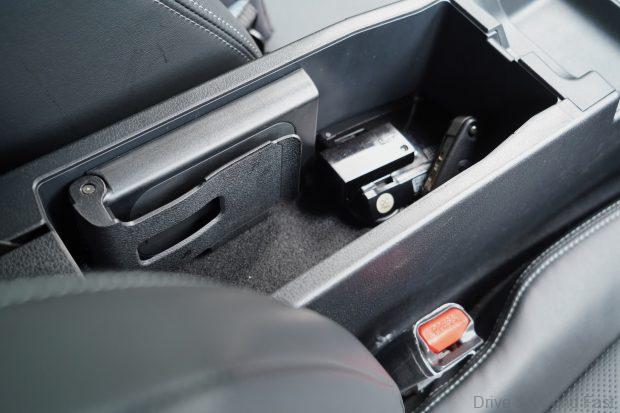
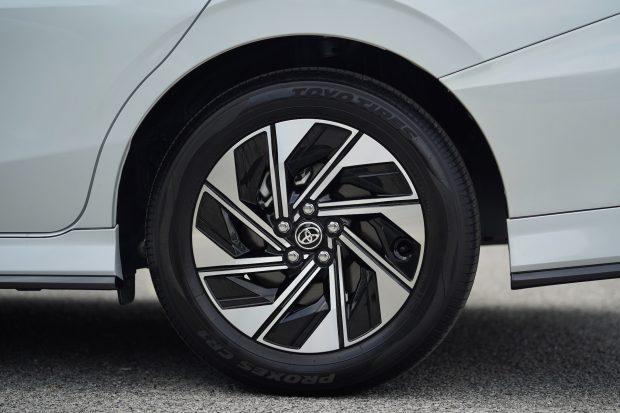
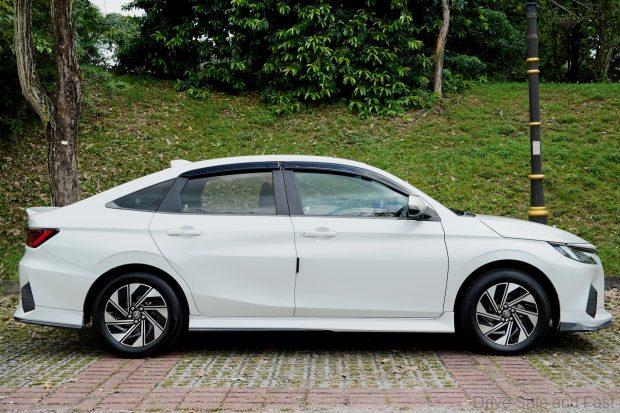
Beyond those additions, you also get a set of 64-colour ambient lighting strips on the dashboard and door cards with a colour toggle switch – a little old school, given most carmakers integrate colour control within the infotainment these days. There’s also a wireless charging pad in the centre box. The exterior gets some upgrades as well – dark chrome on the front grille and smaller 16” wheels with 5-studs wrapped in low-rolling-resistance tyres.
The interior has some degree of practicality built in with rear air cond vents and two USB-C charging ports below for those behind. In front, you get the standard Vios integrated cupholders for the front passenger and driver. There’s also an integrated seat belt reminder for all seats as well as an integrated dashcam as standard, with a rear dashcam available as an option. From my understanding of Toyota add-ons, they’re sometimes not covered by the same 5-year warranty as the rest of the warranty. I know this because my wife’s Vios has a 360-degree camera that failed within 5 years of its purchase date and the dealer pointed out that accessories (even official ones sold with the car) are covered by a separate 3-year warranty policy. We had to pay for that one out of pocket. I suppose not every part of a Toyota is bulletproof.
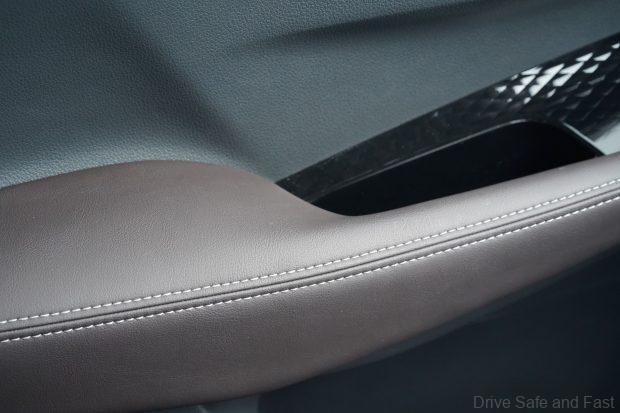
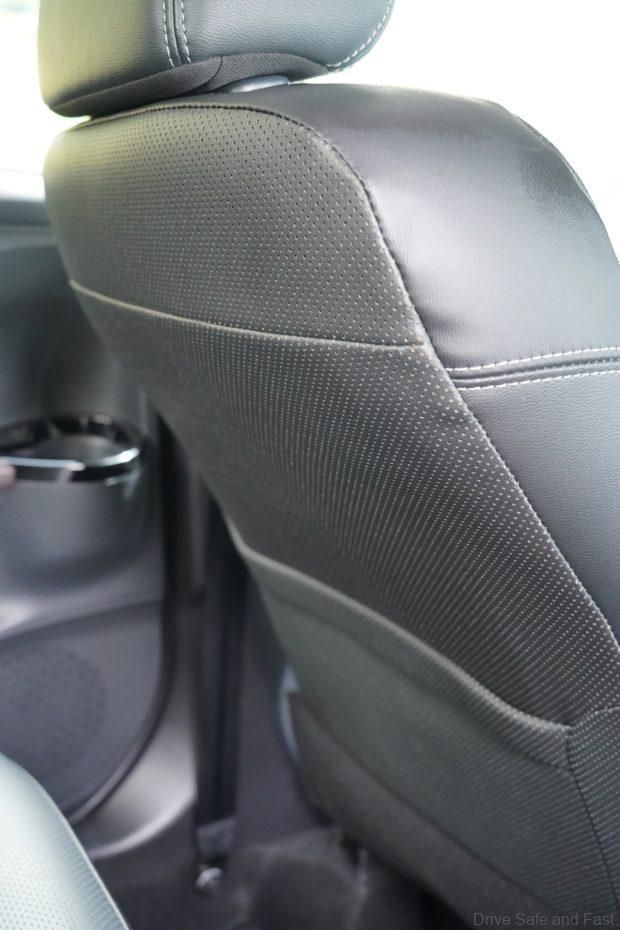
Upholstery is interesting. Brown faux leather makes up the majority of the elbow and knee touchpoints and this the colour and contrast stitching make it come across as a little luxury-aspirant. Then on the seats you have black perforated faux leather and this comes across as a touch sporty. Strangest of all is the perforated leather extends to the seat backs, which I haven’t seen before on any motor vehicle. Typically, perforation is done to improve breathability and ventilation, so putting it on a seatback shows either a lack of attention to detail or some degree of creative expression, I just don’t know what it is.
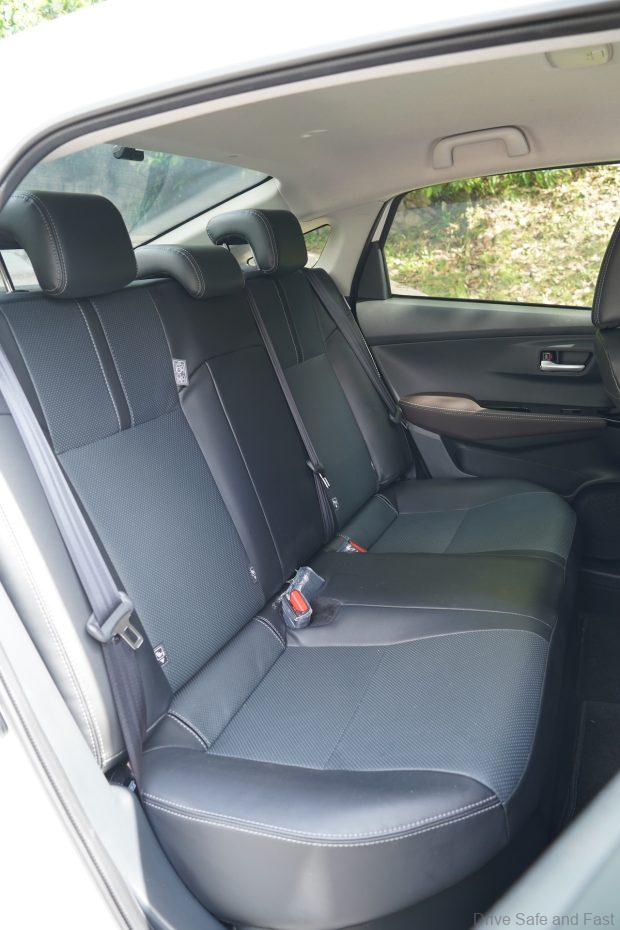
Unfortunately, while the Vios HEV ups the equipment in some places, it is also severely lacking in other places. There’s no 60:40 rear seat folding. In fact, there’s no seat folding mechanism at all, which is present on even smaller sedans costing less than half as much such as the Proton Saga. The rear seats also lack a centre armrest, something Honda has equipped the City with for some time now. Only the driver’s window has a one-touch function, which also makes the vehicle feel dated. I think worst of all is the manual seat adjustments for the driver and front passenger.

The complaints don’t stop there, unfortunately. The slope of the roofline genuinely hurts headroom at the rear. Someone of my height (6”) will have some discomfort sitting around back for extended periods. The ergonomic compromises don’t end there. Rear door cards feature a protruding cupholder and this can come up against your knee, particularly uncomfortable when the door is slammed shut. I also have to point out that the new large screen is another ergonomic challenge as it blocks off a chunk of visibility for the driver, as it sticks up and above the dashboard.
Finally, there’s the pricing. My generation grew up with the Vios, which was imagined as a car for this part of the world. A way for the ASEAN every man to get into the Toyota brand without breaking the bank. Unfortunately, in recent years the Vios has undergone something of a shift in its image. This generation received a majority of its engineering not from Toyota but from Daihatsu. Parts commonality, particularly with regard to switchgear, with Perodua vehicles is undeniable. While this ‘elevates’ the Perodua experience, I don’t know if it does the same thing for the Toyota experience. I can’t help but feel like some of the nicer stuff, like the digital instrument cluster, is essentially the same hardware one can find in the Perodua Axia.
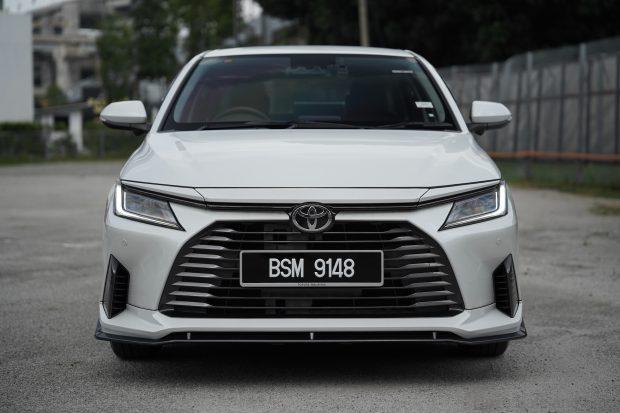
The other shift that has happened with the Vios in this generation is the pricing has gone up. This was once a nameplate that started in the RM7X,XXXs. Now, you need to spend between RM103,900 and RM109,900 for a Vios HEV. Even accounting for inflation, it feels unacceptable. That’s because of another shift that has happened outside of Toyota’s control, and that is competition. At this price point, you can get larger hybrids from China and I have to say these alternatives are not inferior products in any meaningful way.
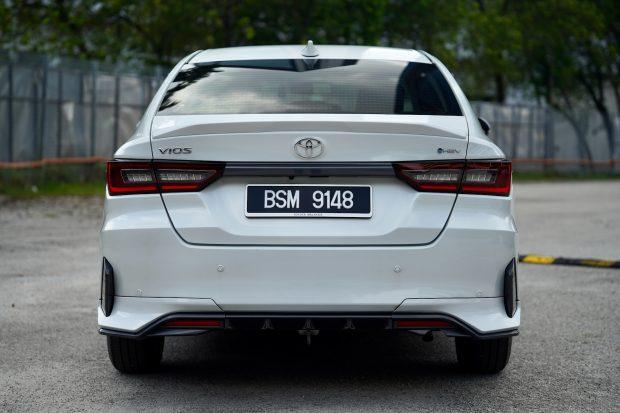
There are some reasons to go for the Vios HEV over other hybrids, but they’re more related to the brand than the product itself. Toyota has an earned reputation for durability and a hybrid system that has proved reliable over long periods in our climate. Toyota has a large aftersales network and they make genuine parts available to workshops outside their network (something many Chinese brands have held off on). Toyota’s reputation also feeds the resale value argument, which can help you quickly liquidate your vehicle should finances become an issue or should you choose to upgrade down the line. There’s also a familiarity to the way the vehicle comes together and drives where many modern alternatives can over-complicate the experience.
I think these are all fair reasons to consider the Toyota Vios HEV over some other electrified alternatives. However, if you’re asking me if there’s anything in particular this hybrid does better than its segment peers or even its price peers (all of which I’ve mentioned in this article), I would hesitate. Perhaps it’s a touch more efficient across many driving scenarios versus its Japanese peers. Perhaps it’s a touch better in the handling department than its Chinese rivals. Overall though, it’s not a car that screams exceptional value.
2026 Toyota Vios HEV Specifications
Engine: Inline-4, 16V, DOHC, Petrol Hybrid
Capacity: 1,496cc
Gearbox: e-CVT automatic
Max Power: 90hp (petrol), 79hp (electric)
Max Torque: 121Nm (petrol), 141Nm (electric)
Price: RM103,900

