


Why Did Malaysian Government Impose A Minimum Price and Power Requirements For ONLY The Imported EV Starting July 2026.
By now most of you will know that the Ministry of Investment, Trade and Industry (MITI) has implemented new regulations for imported fully built-up (CBU) electric vehicles, requiring the declared cost, insurance, and freight (CIF) price to be no less than MYR200,000 and the motor power to be at least 180 kW. Since the final retail price must include additional taxes, operating costs, and profit margins on top of the CIF price, the actual selling price will be significantly higher than MYR200,000 (approximately RMB330,000).
This policy curbs the price competitiveness of value-oriented EV models, potentially weakening the market position of affected electric vehicle automakers in Malaysia, increasing vehicle purchase costs for consumers, and consequently slowing the adoption of high quality Chinese made electric vehicles in the country.
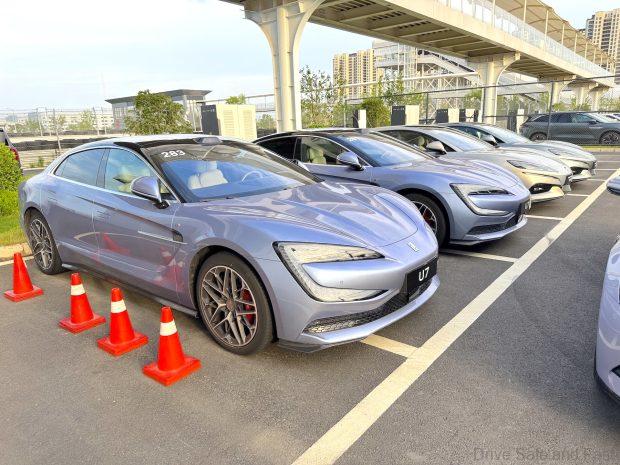
The above policy aims to protect the local automotive industry, prevent Malaysia from becoming a dumping ground for cheaper global EVs, and force Chinese automakers to shift to local assembly (CKD).
Meanwhile, vehicles already in Malaysia, at local shipping ports, or in transit on a Ro-Ro before July 1 2026 can still be sold under the old framework until the stock runs out. A check with BYD, the top selling foreign EV brand, suggested prices would hold and existing inventory should last until October or November 2026.
Incidentally, ONE electric vehicle brand is exempted from this tough ruling. Tesla avoided the Ministry of Investment, Trade and Industry’s (MITI) July 1 2026 CBU (Completely Built-Up) EV ruling because it operates as the sole member of the government’s BEV Global Leaders Programme. In exchange for investing in local headquarters, a Supercharger network, and national operations, Tesla received a special exemption from the traditional franchise Approved Permit (AP) rules that restricted other automakers.

