


The smart #2 compact 2-seater EV prepares for its European debut with some global testing.
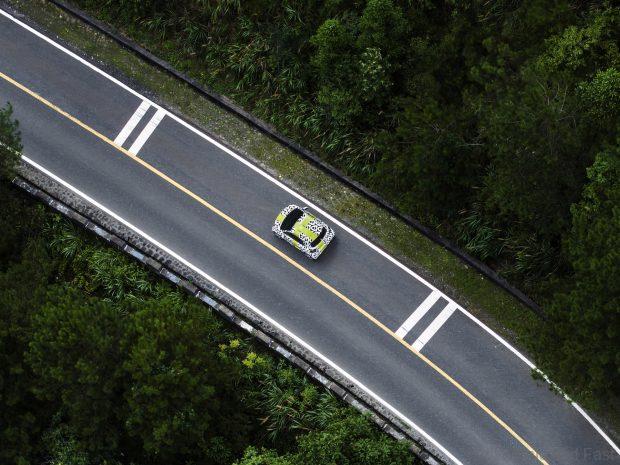
The reinvention of the world’s most iconic two-seater city car is officially gathering global momentum. Smart has confirmed that prototype test mules of the all-electric smart #2 have taken to public roads and proving grounds in a bespoke black-and-white camouflage livery styled by the Mercedes-Benz Global Design Team.
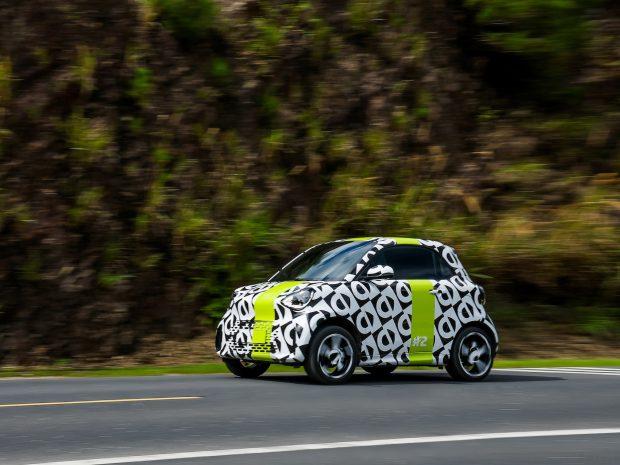
The compact EV is currently undergoing an intensive global validation and testing program ahead of its official world premiere scheduled for the Paris Motor Show in October 2026.
Developed through a high-level joint engineering initiative between the Mercedes-Benz Global Design Team and the smart Global R&D Team, the smart #2 aims to deliver class-leading safety, driving stability, whisper-quiet refinement, and unmatched urban agility.
Classic Stance Meets Modern Chassis Calibration
As a pure-electric two-seater, the smart #2 is engineered specifically to tackle tight urban infrastructure. The vehicle retains the brand’s signature “wheels-at-the-corners” stance—a space-maximizing geometric hallmark that has defined the smart fortwo lineage since its first generation.
To ensure maximum stability and responsiveness in unpredictable city traffic, engineers have subjected the prototype to rigorous dynamic maneuvers, including simulated emergency lane changes, unexpected obstacle avoidance, and low-grip wet surface handling.
Key physical parameters—including chassis hard points, steering ratios, rack travel, and suspension travel—have been continuously calibrated to yield an agile yet planted ride quality.
Elevated Cabin NVH and Structural Safety Architecture
Beyond maneuverability, the testing protocol places heavy emphasis on delivering a serene, high-end cabin experience. The vehicle’s Noise, Vibration, and Harshness (NVH) properties are being validated across a wide array of simulation environments, including:
- Acoustic Wind Tunnels: Fine-tuning aerodynamic profiles to eliminate high-speed wind turbulence.
- Temperature-Controlled 4-Post Rigs: Testing structural durability, squeaks, and rattles under extreme thermal flux.
- Surface-Specific Tire Selection: Evaluating rubber compounds on rough asphalt, grooved concrete, and high-speed straights to achieve low rolling resistance while dampening road noise.
- Impact Testing: Simulating harsh real-world urban impacts, such as striking deep potholes or mounting steep concrete curbs.

Crucially, occupant protection centers around the next generation of the brand’s legendary tridion safety cell. The ultra-rigid structural cage combines compact exterior proportions with high-strength material reinforcement to meet modern global crash protection standards.
Part of smart’s “Year of Opening New Frontiers”
The rollout of the smart #2 forms part of a broader global offensive for the joint venture established between Mercedes-Benz AG and Zhejiang Geely Holding Group.
Having expanded its international footprint across more than 40 countries and regions, smart has designated 2026 as its “Year of Opening New Frontiers”. Alongside upgrading its localized customer service systems, the brand is preparing to launch two pivotal strategic vehicles this year: the smart #2 two-seater and the larger smart #6.
Full production specifications, battery range metrics, and market availability for the smart #2 will be formally disclosed during its Parisian debut this October.

