


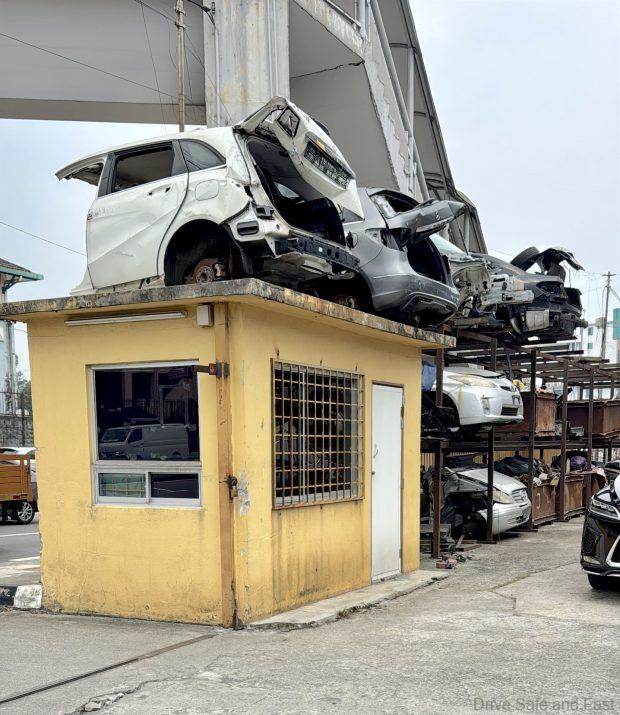
We were recently looking for used parts for our classic JDM sedan and after visiting a few scrap yards we realised that scrap Japanese car parts are getting scarce and European car parts have become a priority for junk yard business owners in Klang Valley.
In major auto-recycling yards across the Klang Valley, we were from Taman Klang Utama and Segambut to Puchong and Kepong.
While “kedai potong” (scrap and half-cut yards) traditionally built their businesses around high-volume Japanese and national vehicle components, auto scrap yards today are heavily re-stocking their space and inventory toward European vehicles like BMW, Mercedes-Benz, Audi, Volkswagen and Volvo.
Here are 5 reasons why this is happening!
1. The Boom in Urban Second-Hand European Car Ownership
Over the past decade, second-hand European luxury cars have become highly accessible to middle-class Malaysian drivers. Depreciation brings models like the BMW 3 Series (F30), Mercedes-Benz C-Class (W204/W205), Porsche Cayenne and Volkswagen Golf (Mk6/Mk7) down to prices comparable to brand-new B-segment Japanese or even Chinese cars.
However, while buying a used European car has become affordable, maintaining one with brand-new original parts from authorized service outlets remains very costly.
As hundreds of thousands of these ageing Continental vehicles reach the 7-to-15-year mark, demand for affordable, functional replacement parts in the Klang Valley has surged. Car scrap yards have stepped in to fill this gap.
2. Skyrocketing Costs Of New OEM Parts
Global supply chain shifts and currency fluctuations have pushed the price of new original equipment manufacturer (OEM) European car parts out of reach for many daily drivers.
There are 60% to 80% cost savings with reconditioned or used European parts such as a ZF 8-speed transmission, ABS module, or steering rack which will typically cost a fraction of a brand-new unit from an authorised dealership.
European cars feature complex electronic architecture (ECUs, SAM modules, mechatronics). When these components fail, vehicle owners frequently turn to local car scrap yards today for tested original replacements.
3. Higher Profit Margins For Junkyard Operators
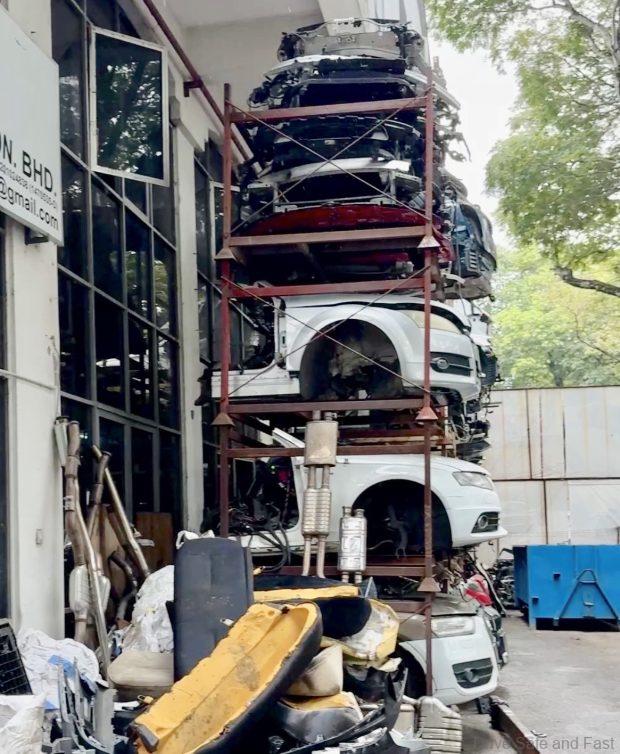
For scrap yard operators, dealing in European auto parts offers substantially better profit margins when compared to Japanese or national brand parts in recent years. A single dismantled European front cut (engine, gearbox, wiring loom and front body panels) can get higher overall returns than multiple Japanese half-cuts.
4. Quality Supply Pipelines Via Japan Imports
A major factor supporting this trend is where Klang Valley recyclers source their inventory. Japan remains one of the largest source markets for high-quality used European car parts as their consumption of European brands keep rising.
Japanese drivers often trade in or scrap European vehicles at low mileages due to strict local inspection standards (Shaken). Klang Valley importers source these low-mileage “Japan-spec” European half-cuts, giving Malaysian buyers access to well-maintained components with minimal wear and tear.
5. The Expansion of Independent Continental Workshops
The growth of independent European auto specialists across Glenmarie, Sunway, Subang, and Segambut has created a reliable local B2B customer base for scrap yards.
Unlike authorized service centers that only install brand-new factory parts, independent workshops actively partner with local half-cut yards to source tested used components for their customers. This provides scrap yards with consistent, repeat business from mechanics throughout Selangor and Kuala Lumpur.
The transition of Klang Valley scrap yards toward European inventory reflects a practical response to market demand. As more drivers choose pre-owned Continental vehicles, automotive recyclers are playing a crucial role in keeping these cars running affordably. By prioritizing high-margin, high-demand European parts, scrap operators have built a sustainable business model that serves workshop mechanics and car owners alike.
So, now you know why there are many older (8-12 year old) European luxury vehicles running smoothly along Klang Valley roads with not so wealthy drivers behind the steering wheel.

