


Record exports for Chinese automakers lead to high revenues but profit margins are pressured due to rising costs.
Financial disclosures for the first half of 2026 reveal a clear divergence across China’s automotive landscape: while topline revenue and global vehicle export shipments reached historic highs, escalating raw material expenses, semiconductor supply bottlenecks, and volatile currency swings placed severe pressure on net profitability.
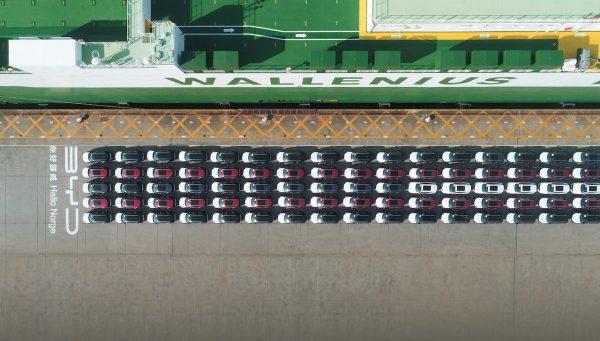
Across eight major A-share listed passenger vehicle manufacturers—SAIC Motor, BYD, Great Wall Motor, Changan Automobile, Seres, GAC Group, BAIC BluePark, and Haima Automobile—combined revenue totaled RMB 923.063 billion.
At the top of the revenue table, BYD led the entire industry with RMB 344.815 billion, followed by SAIC Motor at RMB 294.987 billion and Great Wall Motor at RMB 102.101 billion. Among the three industry leaders exceeding the RMB 100 billion threshold, Great Wall Motor was the sole carmaker to maintain year-over-year revenue expansion, advancing 10.58% YoY.
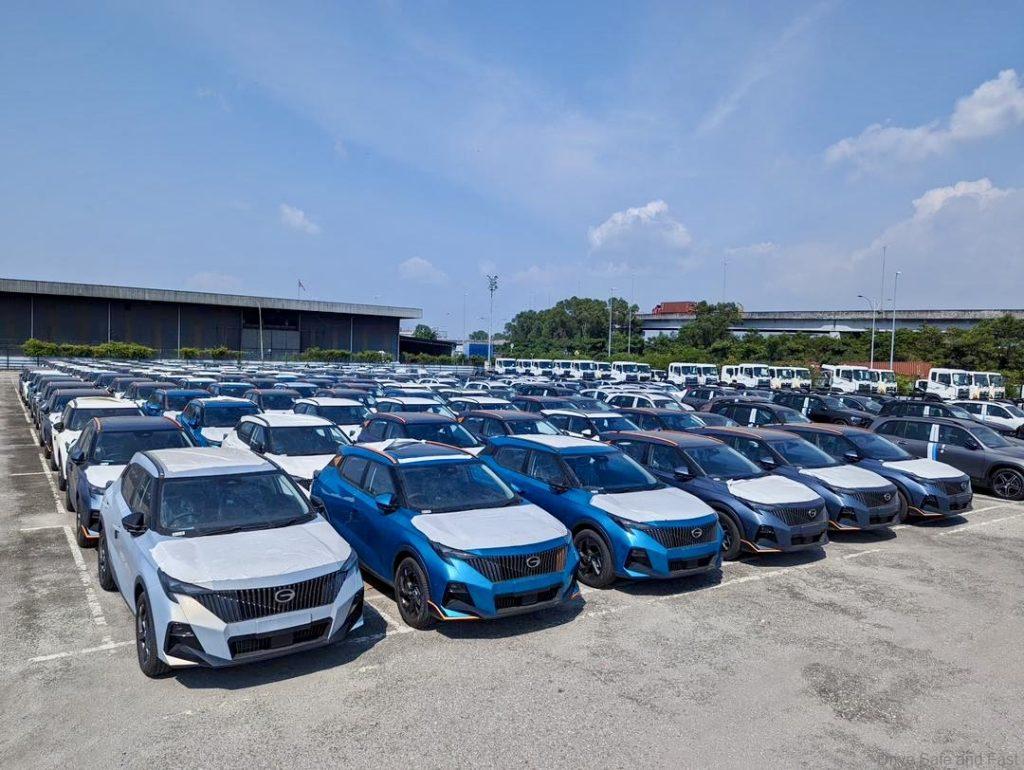
Further down the spectrum, BAIC BluePark posted revenue of RMB 11.597 billion (up 21.86% YoY), while GAC Group logged RMB 46.121 billion (up 9.38% YoY).
Profit Margins Compress Across the Board
Despite substantial sales volume, bottom-line earnings showed sharp margin compression. Only four of the eight automakers managed to post positive net profit attributable to shareholders during the six-month period, with every profitable carmaker recording a year-over-year earnings drop:
- BYD: Maintained the highest net profit in the sector at RMB 12.325 billion, though compressed compared to the previous year.
- SAIC Motor: Generated RMB 5.152 billion in net profit.
- Great Wall Motor: Recorded RMB 2.465 billion, representing a 61.11% YoY decline.
- Changan Automobile: Posted RMB 0.817 billion, falling 64.32% YoY.
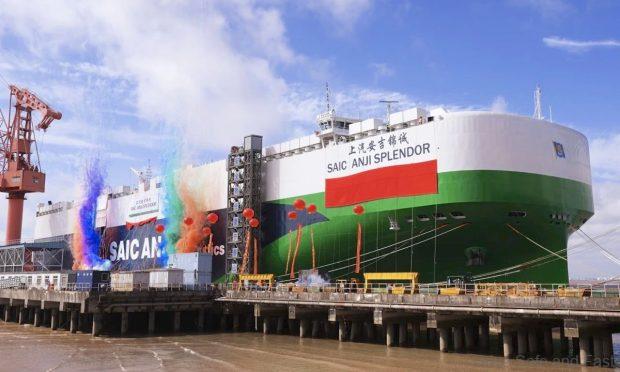
The remainder of the group faced red ink. Seres swung from a profitable position back into net loss territory. GAC Group and Haima Automobile saw their net losses widen substantially compared to the previous year. BAIC BluePark recorded a net loss of RMB 1.938 billion, though it succeeded in narrowing its negative margins relative to H1 2025.
Supply Chain Inflation and Domestic Market Contraction
Earnings across the Chinese passenger car manufacturing sector were squeezed by sharp cost inflation upstream:
- Battery Material Costs Spike: The average daily market price of battery-grade lithium carbonate jumped 132.2% YoY in the first half of 2026, significantly increasing the bill of materials for pure electric and plug-in hybrid packs.
- Component & Raw Material Headwinds: Ongoing structural shortages of automotive-grade silicon and microcontrollers drove up electronic subsystem procurement costs, compounded by elevated pricing for non-ferrous metals and specialized chemical feedstocks.
- Domestic Volume Drops: Official figures from China’s National Bureau of Statistics show that domestic vehicle output and sales contracted by 4.0% and 4.1% YoY, respectively. While nationwide automotive manufacturing revenue nudged up 1.8% YoY, total manufacturing costs climbed 2.8%, driving an overall 19.5% decline in industry-wide profits.
Global Vehicle Exports Surge 65% to Offset Domestic Headwinds
Confronted by cooling domestic retail volume, Chinese carmakers aggressively channeled manufacturing output toward international export corridors.
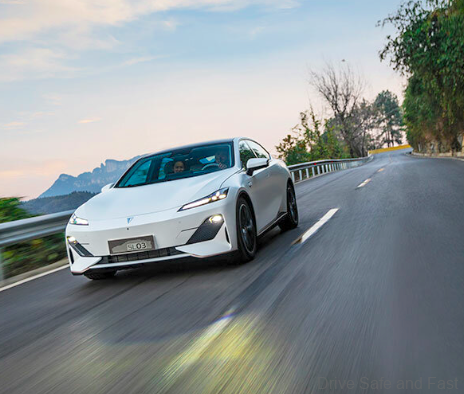
Total Chinese vehicle exports climbed to 5.096 million units in the first half of 2026, marking an extraordinary 65.3% YoY surge:
- BYD: Shipped 790,000 vehicles abroad, recording a 68% YoY jump in overseas deliveries.
- Changan Automobile: Sold 455,000 vehicles in overseas markets (up 51.9% YoY), bringing in foreign revenue of RMB 21.942 billion—a 78.77% surge.
- Great Wall Motor: Exported 289,000 vehicles (up 45.46% YoY), with foreign markets officially overtaking domestic sales to account for more than 50% of the brand’s total global volume.
- GAC Group: Recorded 121,500 units in self-branded vehicle exports, soaring 132% YoY.
Foreign Exchange Headwinds and Overseas Tax Dynamics
While the foreign export boom provided critical volume absorption, several automakers pointed out that global currency fluctuations and localized fiscal changes created distinct headwinds for reported bottom lines.
Great Wall Motor cited unexpected foreign exchange volatility alongside delays in overseas market tax subsidies as the primary drivers behind its steep net profit contraction. BYD confirmed that its baseline manufacturing operations remained fundamentally sound, with temporary foreign exchange adjustments creating short-term earnings drag.
Changan Automobile offered clear proof of this currency impact: after isolating the specific effects of foreign exchange gains and adjustments, the company’s underlying net profit attributable to shareholders actually grew by 12% year-over-year.
As Chinese original equipment manufacturers (OEMs) expand deeper into Southeast Asia, Europe, and Latin America through localized knock-down assembly and factory construction, managing geopolitical tariff shifts and cross-border currency hedging will be just as essential to long-term profitability as mastering battery chemistry and vehicle production scale.

