


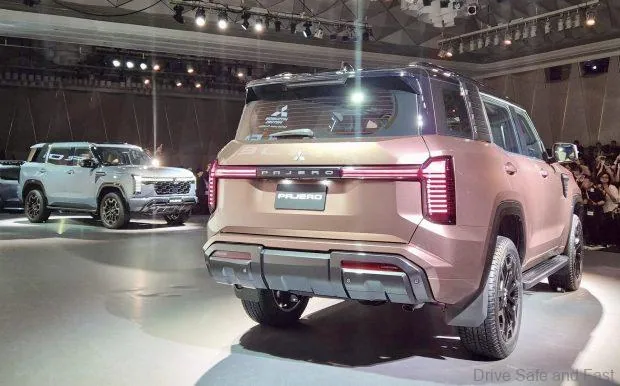
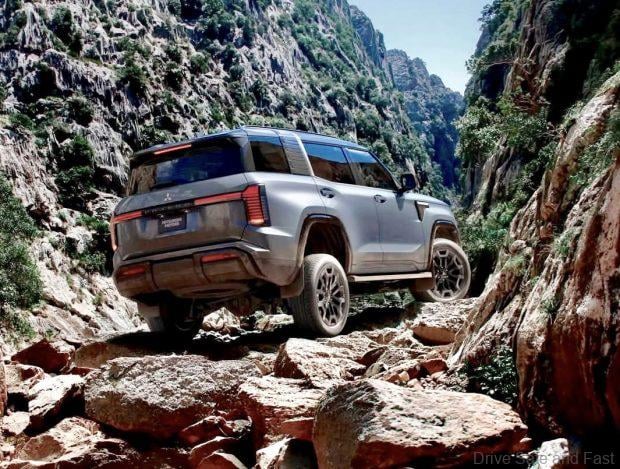
The all-new fifth-generation Mitsubishi Pajero returns as the brand’s flagship cross-country SUV, combining authentic body-on-frame off-road capability with luxury refinements.
Key Highlights & Features
Rigid Ladder-Frame Construction: Built on a heavily reinforced ladder-frame chassis adapted from the Triton platform, providing maximum rigidity, durability, and extreme off-road geometry (30.4° approach angle and 230 mm ground clearance).
Advanced Off-Road Drivetrain: Combines Mitsubishi’s Super Select 4WD-II system with Super All-Wheel Control (S-AWC). It features low-range gearing, a central locking differential, Active Yaw Control (AYC), and 7 selectable drive modes for surfaces like sand, rock, and snow.
Diesel Powertrain: Powered by a 2.4-liter turbo-diesel engine producing 480 Nm of peak torque, paired with an 8-speed automatic transmission.
Heritage-Inspired Design: Incorporates classic Pajero elements such as a boxy silhouette, T-shaped LED headlights, a first-generation-inspired C-pillar design, and a modern reinterpretation of the classic spare-tire rear motif.
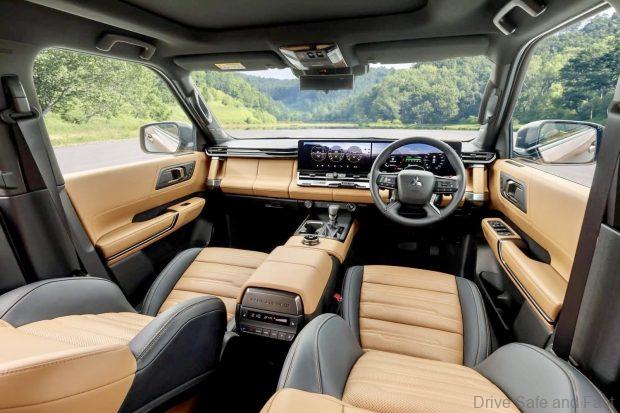
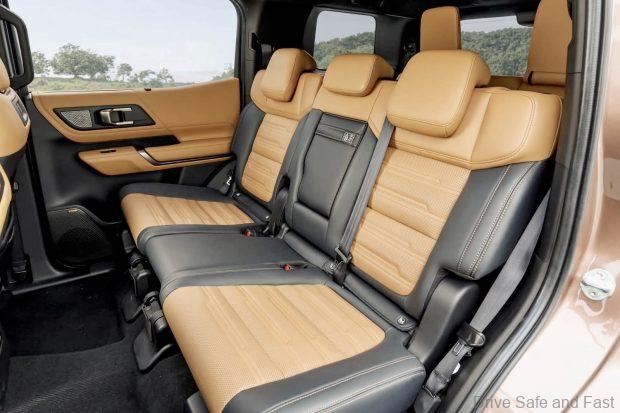
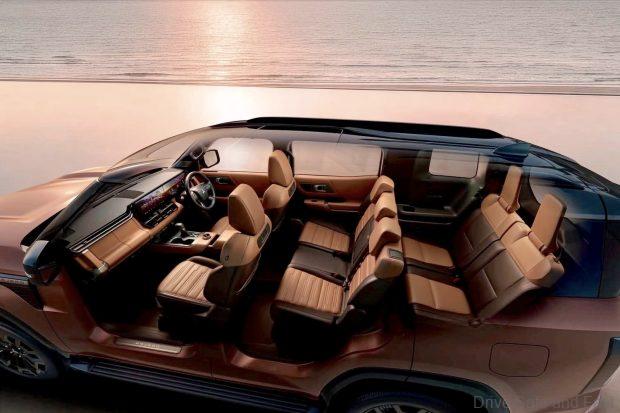
Upgraded 3-Row Interior: Offers a premium 7-seat cabin featuring dual 14.3-inch displays with a digital “Multi Meter” cluster, traditional Kimekomi-inspired soft-touch stitching, acoustic glass for highway quietness, and a custom Dynamic Sound Yamaha Ultimate sound system.
Both the fifth-generation Mitsubishi Pajero and the Toyota Land Cruiser 250 (Prado) are classic ladder-frame, 3-row off-roaders designed to balance daily driveability with heavy-duty trail capability.


Off-Road Hardware & Handling Comparison
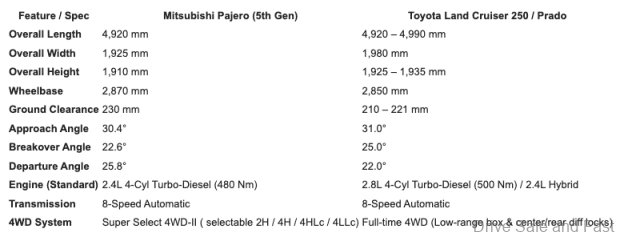
- Ground Clearance & Departure: The Pajero holds an advantage in ground clearance (230 mm) and rear departure angle (25.8°), reducing the risk of scraping the rear bumper on steep drop-offs.
- Approach & Breakover: The Land Cruiser 250 edges out slightly higher approach (31°) and breakover (25°) angles, making it a bit less prone to high-centering on sharp crests.
- 4WD Flexibility: The Pajero’s Super Select 4WD-II system allows driving in RWD (2H) on pavement for better fuel efficiency, or locking into full-time 4WD (4H) for high-speed rain/snow traction. The Land Cruiser 250 relies on a permanent full-time 4WD system.
- Suspension & Chassis: The Pajero utilizes independent double-wishbones up front paired with a newly developed 5-link rigid rear axle. The Land Cruiser uses double-wishbones up front with a solid rear axle, along with an electronic Stabilizer Disconnect Mechanism (SDM) for extra wheel articulation.

