

Logic dictates the Alfa Romeo Stelvio Veloce has no place in this market and yet it has undeniable allure.
The rise of the Chinese EV has completely obliterated the premium segment in just a matter of years. Suddenly we have not just one or two but about a dozen decent options from brands you’ve never heard of before taking away market share from the oldest, most desireable car brands. While the Germans, Swedes and Japanese scratch their heads and try in earnest to compete with the best, latest and most discounted offerings, in walks Alfa Romeo Malaysia with the Stelvio Veloce. They’re hopelessly late to the party, they’re not concerned with pricing and they don’t care. Oh, and apparently they’ve moved what units they brought in initially.
So what makes someone put down nearly half a million Ringgit on a relatively compact, and outdated 4-cylinder sports SUV? Well, we took the Alfa Romeo Stelvio Veloce to find out.
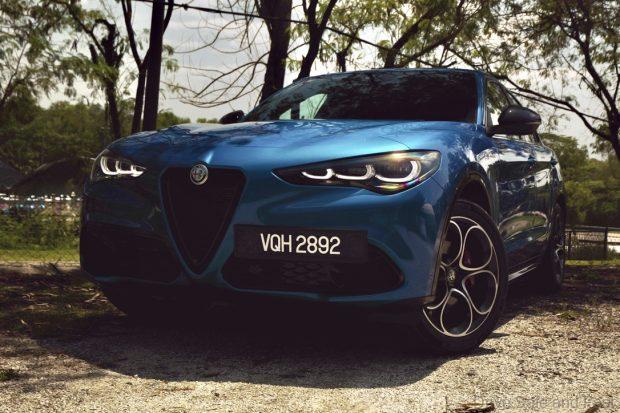
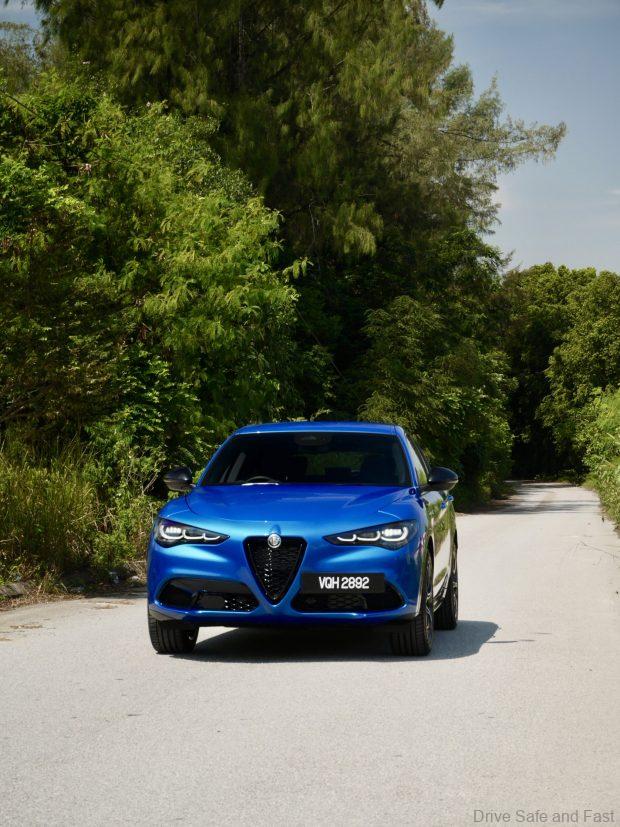
I was not a fan of the way the Stelvio looked until I saw it in real life in Misano Blue. The surface treatment and paint really help sell the shape of the vehicle. It’s a body that needs real light, reflections and stereoscopic vision to truly appreciate. The Stelvio Veloce has its angles, and it truly pops, turns heads and catches the eye. I was surprised at how nice it was to photograph, even in harsh lighting conditions. I found myself ‘getting’ what they were going for despite this era of Alfa design falling between the cracks for me. I personally think a very minor reshaping of the bumpers and lights would have taken both the Stelvio and Giulia designs into much more iconic territory. Check out The Sketch Monkey’s rendition to understand what I mean.
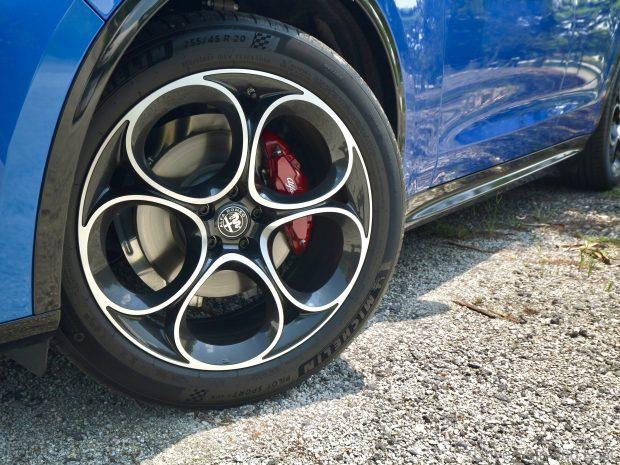
While it’s not my favourite Alfa Romeo design, almost all the ingredients of an Alfa Romeo design are there including the 20″ Teledial wheels. These are wrapped in Michelin Pilot Sport 4 SUV tyres.
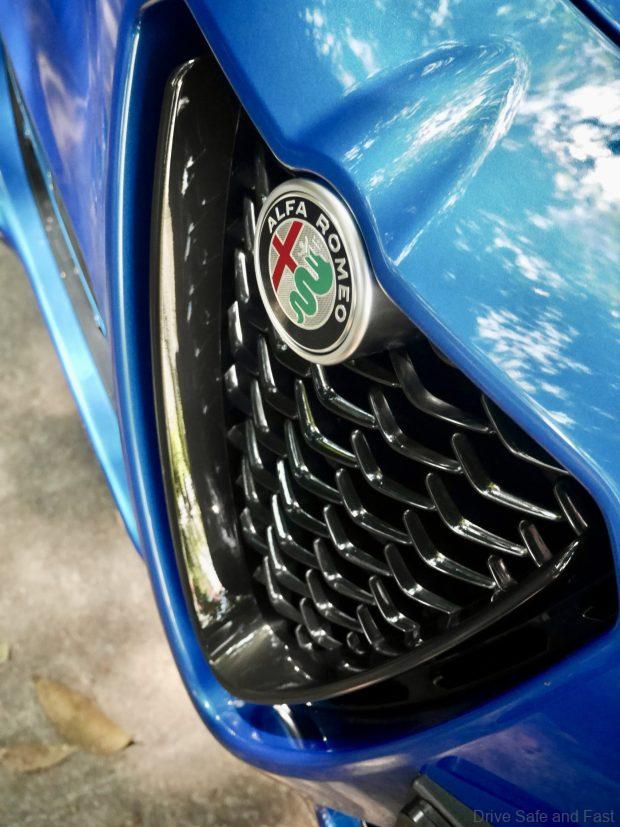
Other items on the design checklist are the Scudetto front grille, balanced by two lower intakes to form the Trilobe.
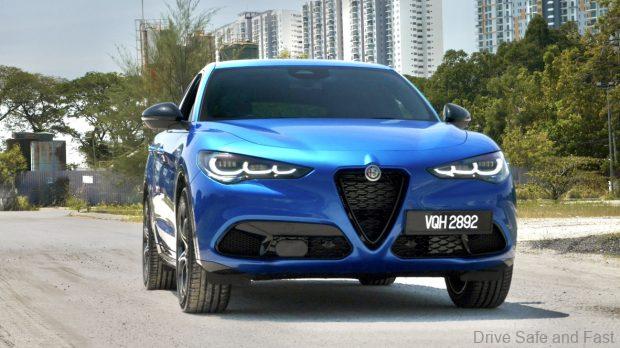
Alfa Romeo’s probably the only brand that can pull off asymmetry in design and we see them do it again perfectly here with the license plate on one side of the bumper and the ADAS radar sensor on the other.
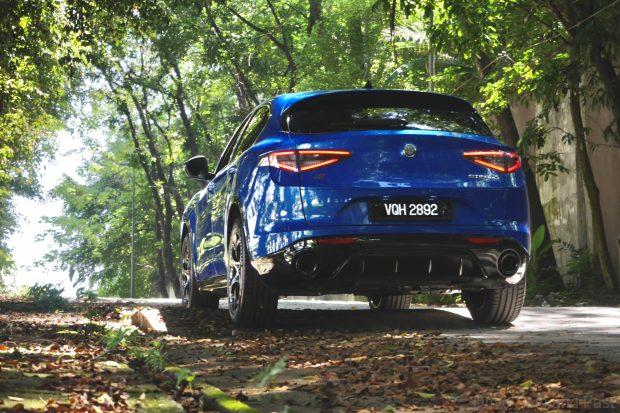
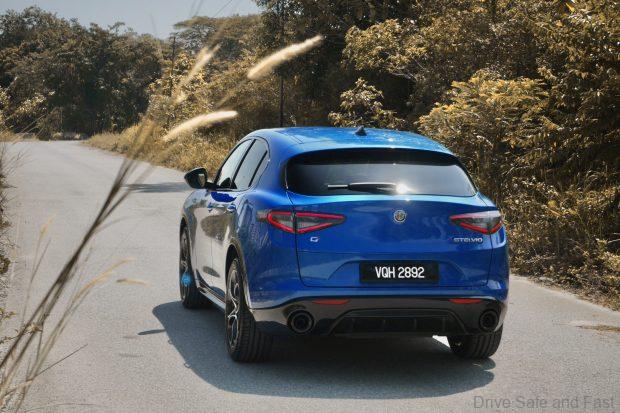
There are tonnes of details that go into the exterior design of the Stelvio that may escape a first impression. Take for instance the truncated Kamm-tail design that takes inspiration from the TZ and SZ race cars while functionally bringing the coefficient of drag.
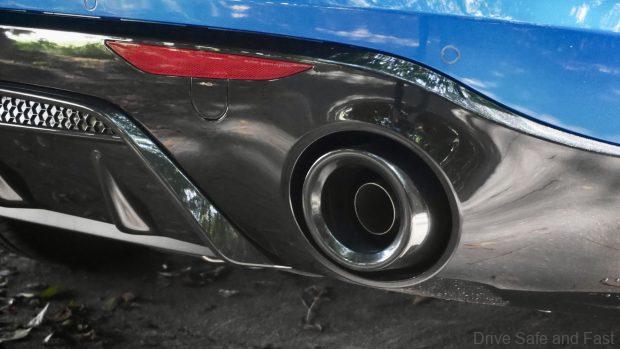
I also really love how they’ve integrated the tailpipes and diffuser into the glossy black lower bumper. It’s subtle, with just the right amount of sportiness – something missing in the age of fake exhaust tips from many modern performance and luxury brands.
However, as I’ve alluded to many times, this is not my personal favourite era of exterior design for Alfa Romeo. It’s mostly down to the treatment of the lights. Both front and back, the headlights lack the aggression of the 156, 159 and Brera designs and lack the graceful and elegant character found even budget models like the Mito and 147. It feels like a lost era in terms of Alfa design, one where they’ve allowed themselves to both fall behind of and get sidetracked by rivals in the space. That being said, there’s no denying the curves, lightplay, surfacing work and paint make this car stand out in the segment. I dare say it turns more heads than even more modern designs from Mercedes-Benz, BMW, Audi, Lexus and Volvo.
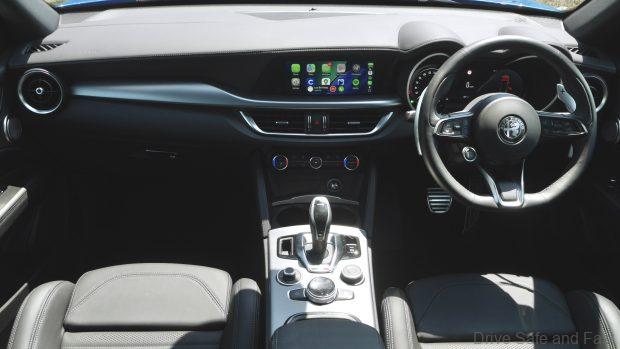
The interior is where the Stelvio Veloce gains some ground. Here is where the Alfa Romeo Stelvio’s simplicity works in its favour. The screen is small enough to not be distracting but large enough to be functional, plus it’s set into the dashboard quite nicely. The whole cabin has a touch of driver-centrality to it without leaning too hard in that direction. All the trim materials feel real (and ought to be real according to the press material), plus the leather feels, looks and smells great in here. This is a place you want to find yourself in at the end of a long day of work for sure.
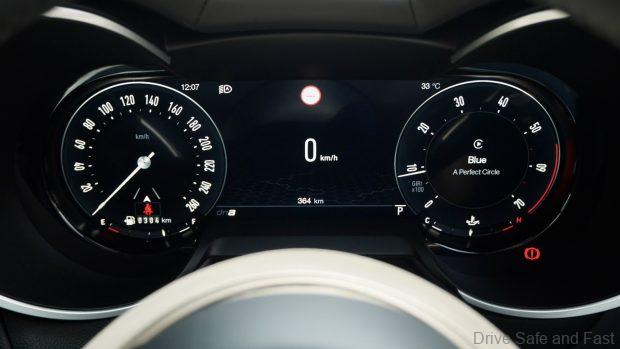
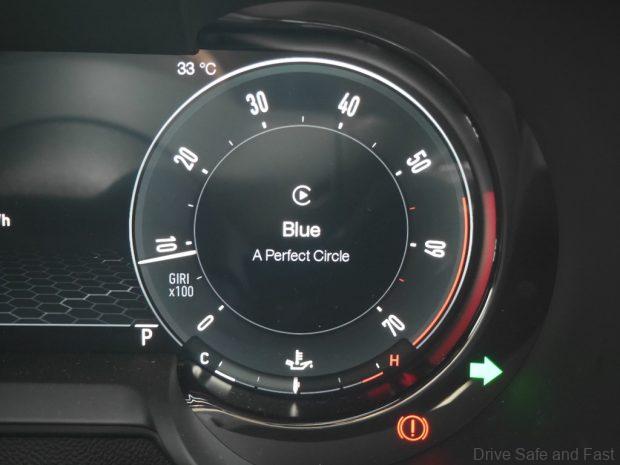
If you want a little Italian flavour to your interior, look no further than the way the digital dials are configured to look like classic Alfa dials. No other brand would go to the extent of flipping the numbers over at the extreme ends of the speedo and tacho just because that’s how they were laid out back in the day. There’s also a touch of skeomorphic design in the odometer’s look and a touch of flair with the RPM gauge using the Italian term ‘Giri’ for ‘revolutions’ or ‘turns’. Alfa Romeo ditched this translation in the 159 era but they did use it a generation prior to that with cars like the 147. Yes, this is present even on export models destined for non-Italian speaking markets.
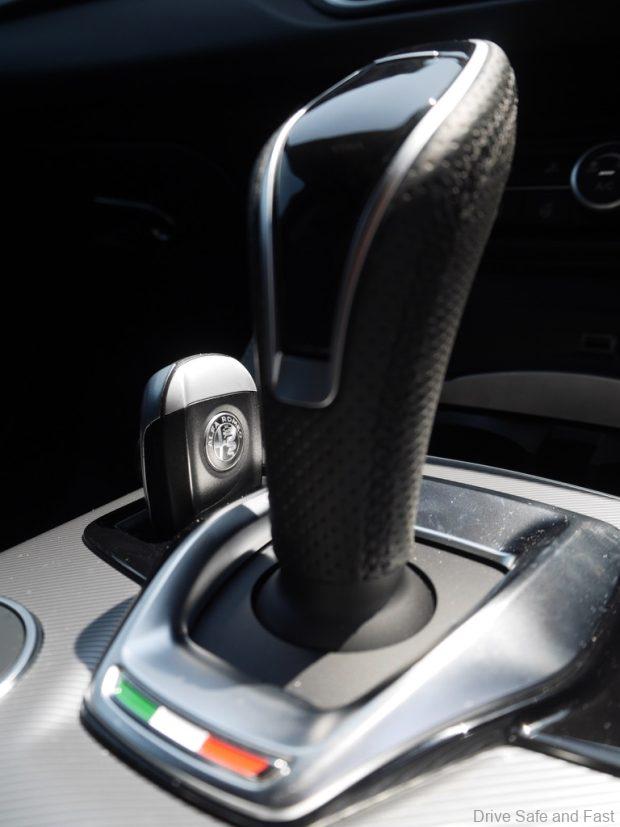
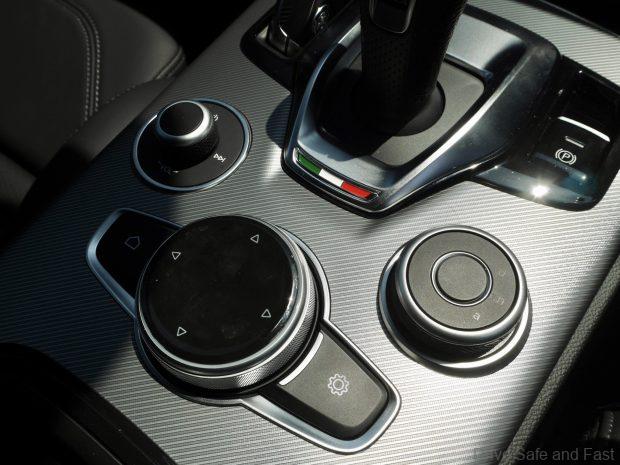
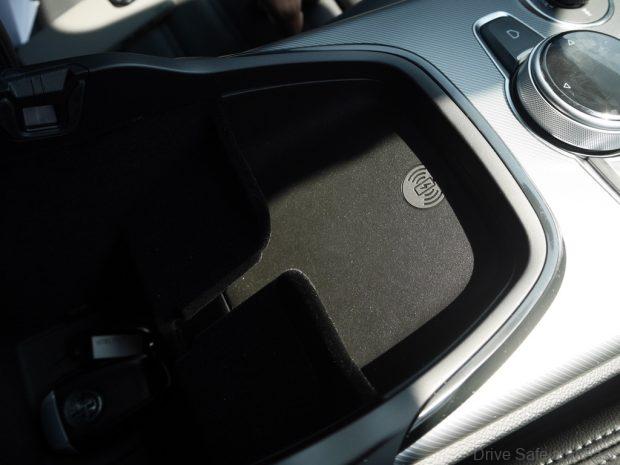
Alfa Romeo likes to do things their way and it really shows in here. There’s a little slot for your keyfob, so you can stand it upright next to the gear selector.
You also have access to some dials and knobs, one of which is dedicated to three driving modes denoted in lowercase ‘d’, ‘n’, ‘a’. None of this is labelled, not even digitally. So you’ll have to read the marketing materials to understand that ‘d’ stands for dynamic (sport mode), ‘n’ stands for ‘natural’ (comfort mode) and ‘a’ stands for ‘advanced efficiency’ (ECO mode), though in older models this was used for All-Weather terrain.
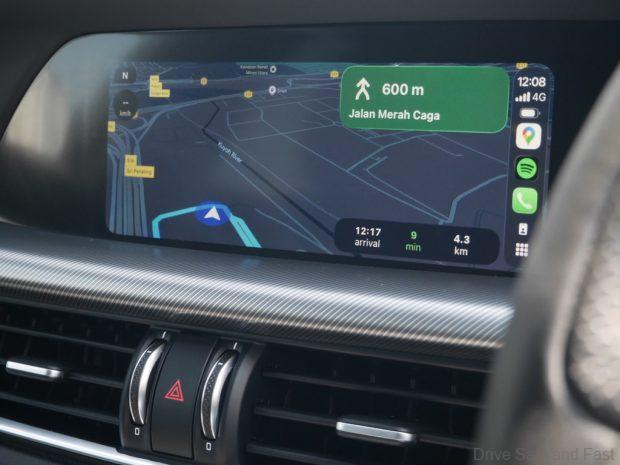
Wireless Apple Carplay is present, but don’t expect some of the cutting edge but slightly superflous digital experiences found on the latest BMW and Mercedes-Benz models.
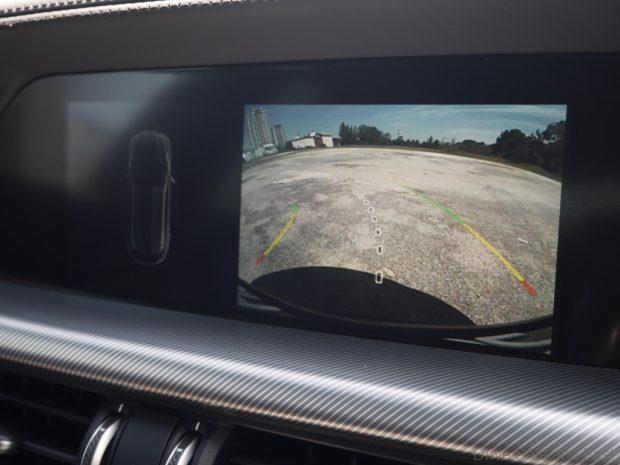
Unfortunately, simplicity also has a number of drawbacks to it. And when you’re spending close to half a million Ringgit on a car you might expect a 360-degree parking camera – you know, the kind you get on cars costing a tenth as much as the Stelvio Veloce. Instead, you’ll have to make do with a tiny reverse camera and your driving intuition for tougher parking maneuvers.
While I really like the positioning of the display, there’s no running away from the fact that it is really quite small and not quite as fluid and polished as what we’ve come to expect from many mass market brands. Functionally though, it does its job and maybe that will help it age gracefully as large display-laden cabins tend to look ‘of their era’ as they age.
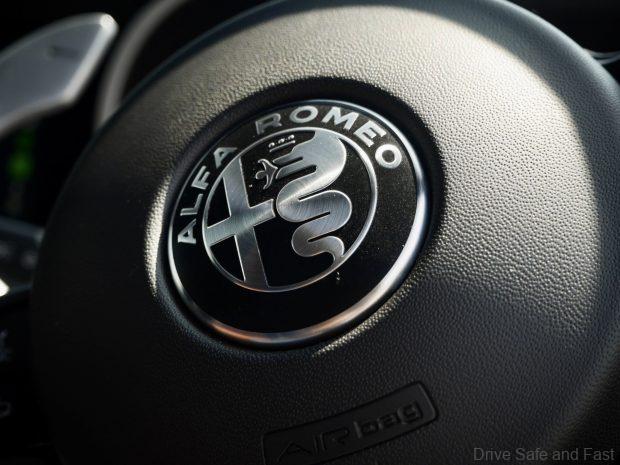
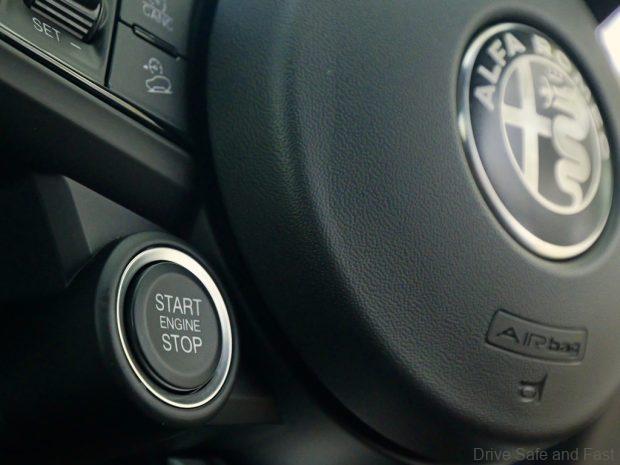
Alfa Romeo has one of the most seductive badges in the car industry. It’s a shame that only the ones on the front and rear are fully coloured. The ones on the rims, steering wheel and key fob are all in monochrome finish, perhaps to signify that this is the sportier variant of the Stelvio.
While the cabin as a whole is quite conventionally laid out, they did go out of their way to elevate the experience for the driver with a number of interesting touches. This includes a steering-mounted Start-Stop button.
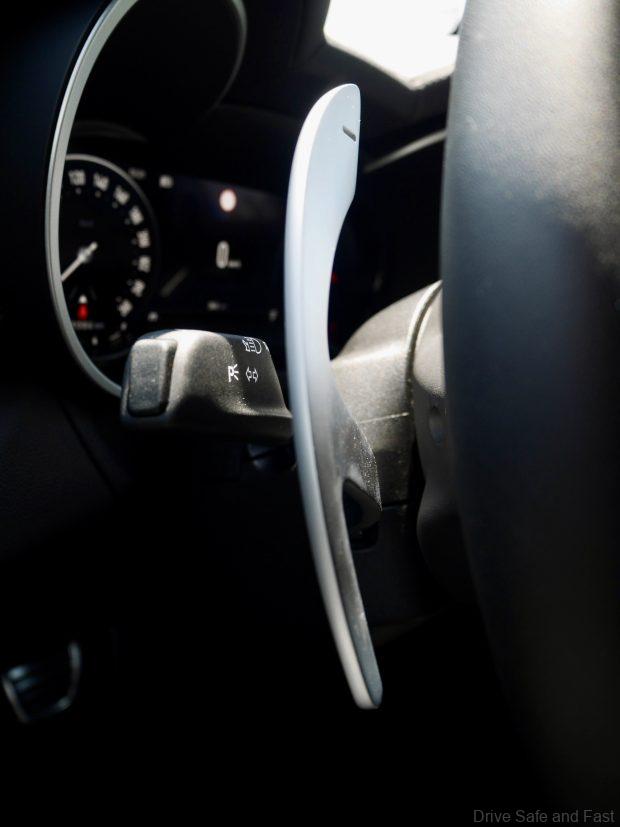
You’ll also find extremely massive steering colomn-mounted metal shift paddles and these are amongst the best I’ve experienced outside of those found in dedicated performance vehicles.
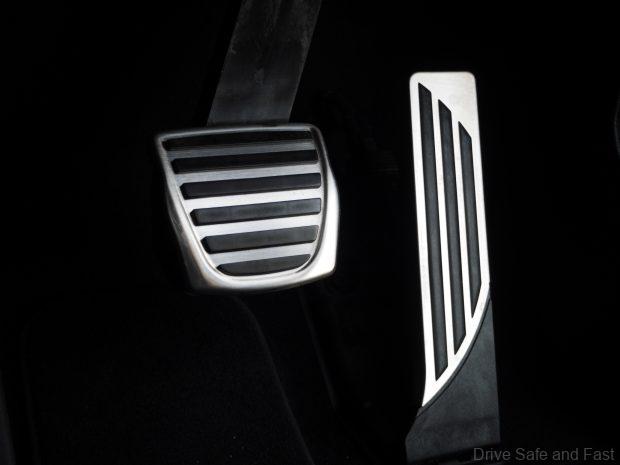
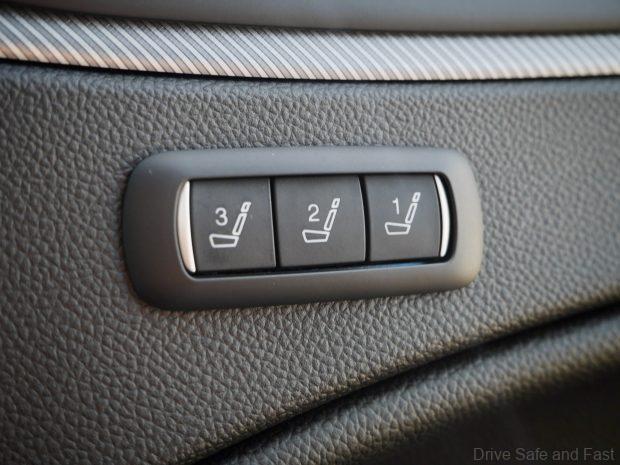
Elsewhere, all the expected touches for a car of this class are present.
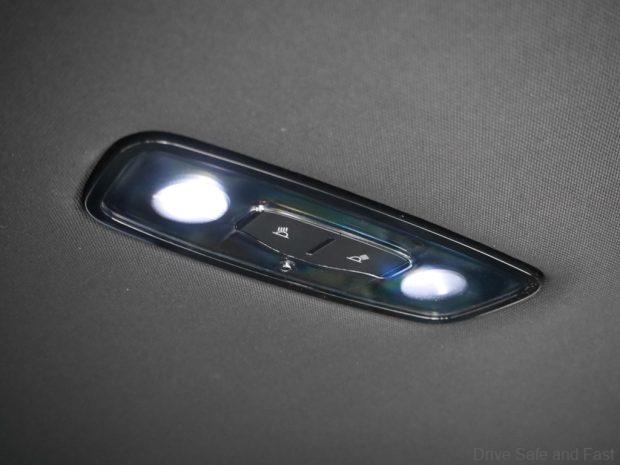
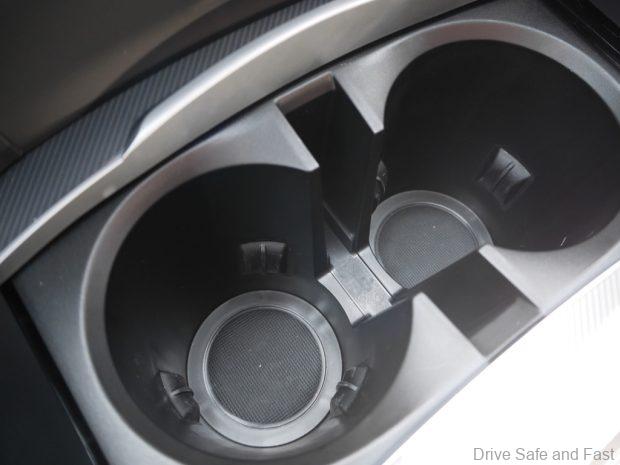
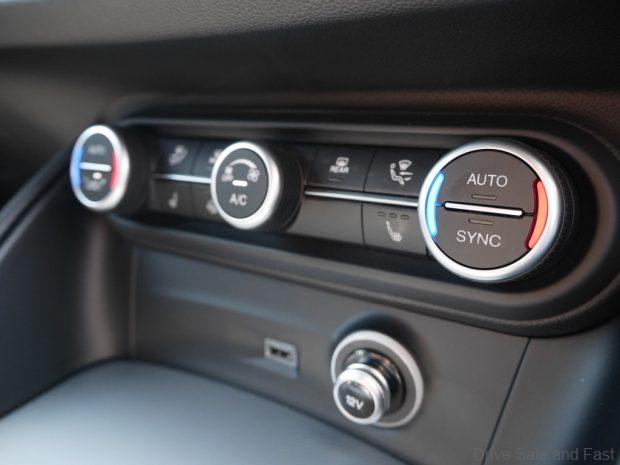
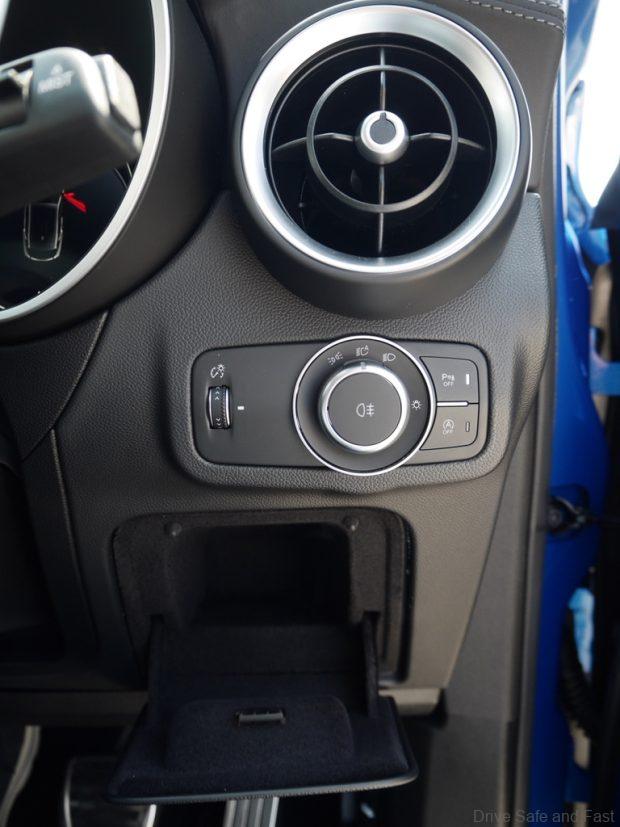
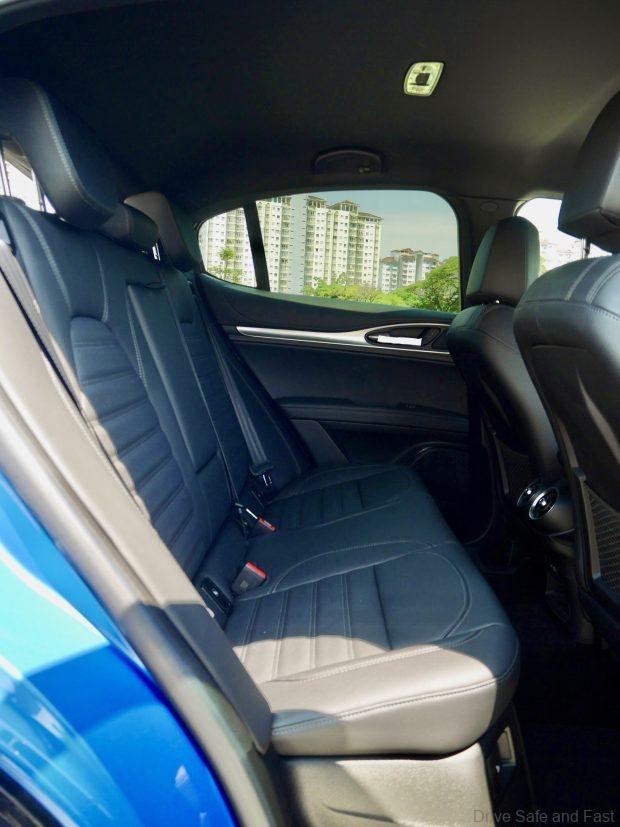
Unfortunately, it’s a little tight when it comes to rear passenger space and the cargo area also presents some limitations. A small family could certainly get away with a car like this, but once the kids start to become teenagers, it’ll get tight fast.
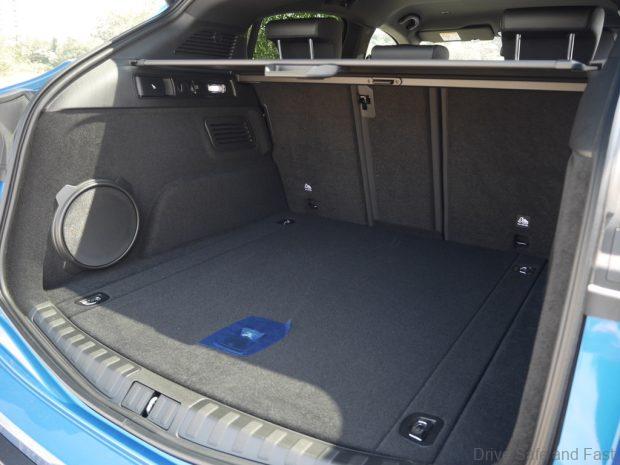
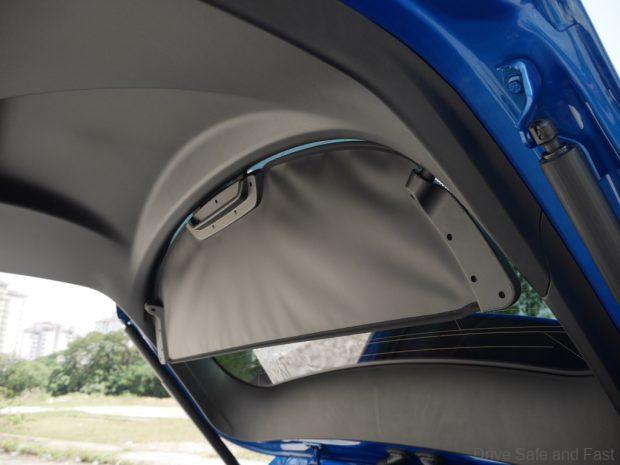
The boot isn’t bad either for a small family’s worth of luggage. It’s powered, comes with a dual tonneau cover design, and the seats can be folded flat for maximum cargo carrying capacity.
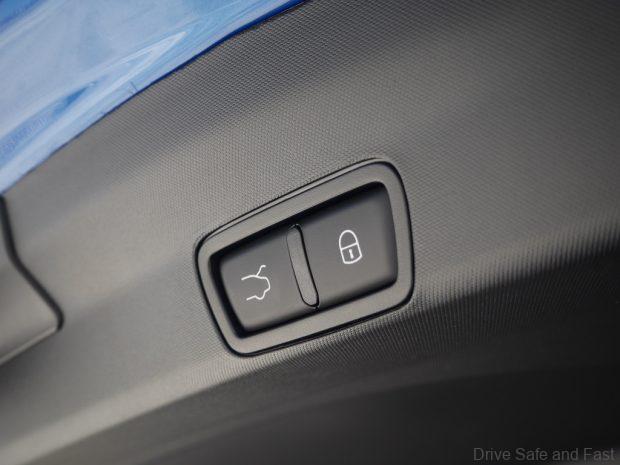
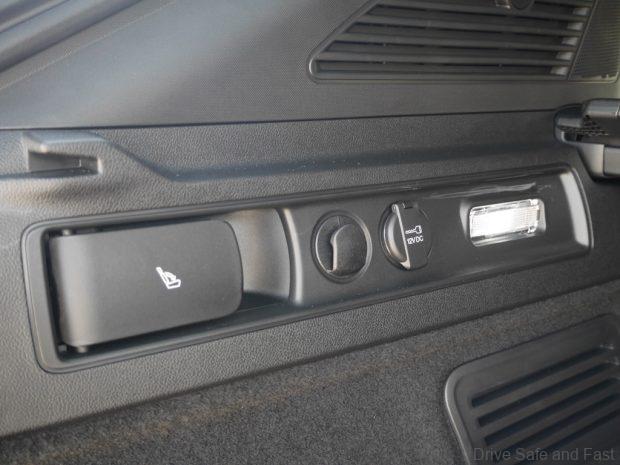
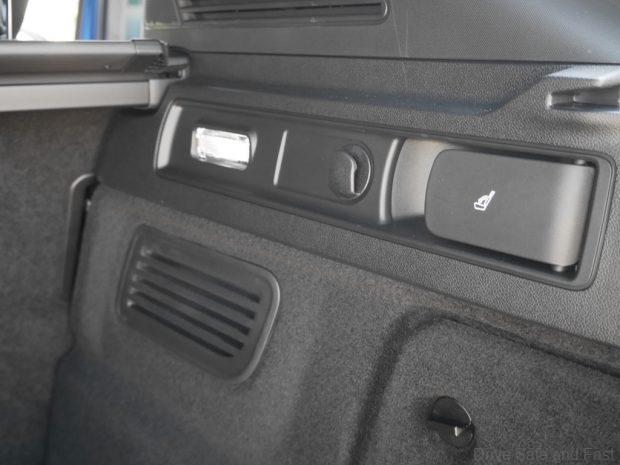
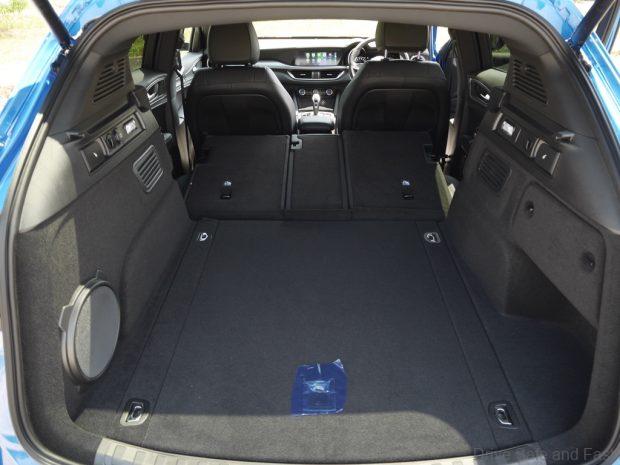
Finally, we need to address the most important aspect of the Alfa Romeo Stelvio Veloce – how does it drive? In a word – beautifully.
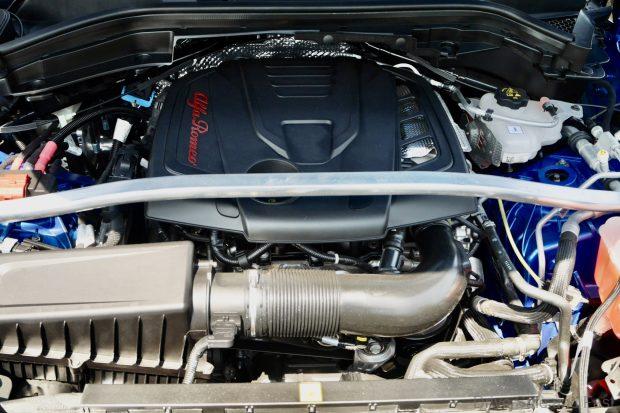
It’s a cliche but not without merit. There’s just something so unique about the way Alfa Romeo engineers their vehicles. It’s a little reckless steering feel without being dangerous, almost as if they purposefully left some gaps in the way it drives for you to fill with your own involvement. In an era of increasingly competent but uninvolving performance cars, the Stelvio Veloce stands out by making YOU feel like you’re a part of its driving brilliance. It may not be the fastest thing out there, but nothing else south of RM500,000 delivers this kind of magic.
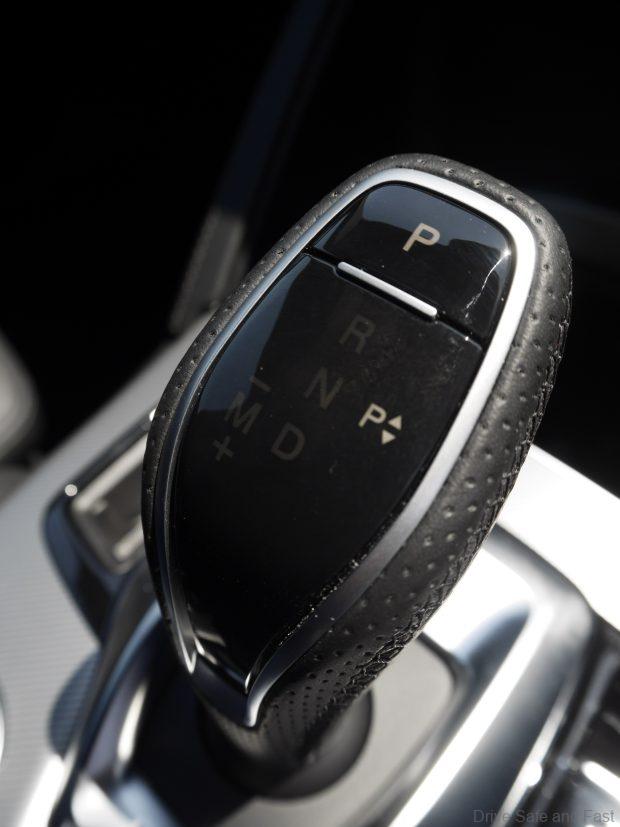
There are some complaints, of course. The main one being the engine’s red line isn’t particularly high. The 2.0L four cylinder turbo from Alfa Romeo is tuned to balance reliability, efficiency, emissions and performance. While it does deliver really well with the gearbox in automatic, manually shifting is discouraging given torque comes in pretty early on in the rev range and you’ll have to shift up around 6,000 rpm anyway. Waste of some seriously nice paddle shifters.
Obviously, it’s not for everyone. This nameplate is nearly a decade old. It feels and looks out of place in 2026. It’s priced to exclude 99% of potential customers. Yet at the same time, the Alfa Romeo Stelvio Veloce is just the kind of car this market needs. Something with a touch of soul that doesn’t concern itself with cold calculated logic. There are better options out there and this one makes no sense to buy. Buy it anyway.
2025 Alfa Romeo Stelvio Veloce Specifications
Engine: 4-cylinder 16V Turbocharged, Petrol
Transmission: 8-speed ZF Automatic with Q4 Intelligent AWD
Displacement: 1995cc
Max Power: 280hp @ 5,200rpm
Max Torque: 400Nm @ 2,250-4,500rpm
Top Speed: 230km/h
0-100km/h: 5.7 s
Price: RM478,800 OTR

