

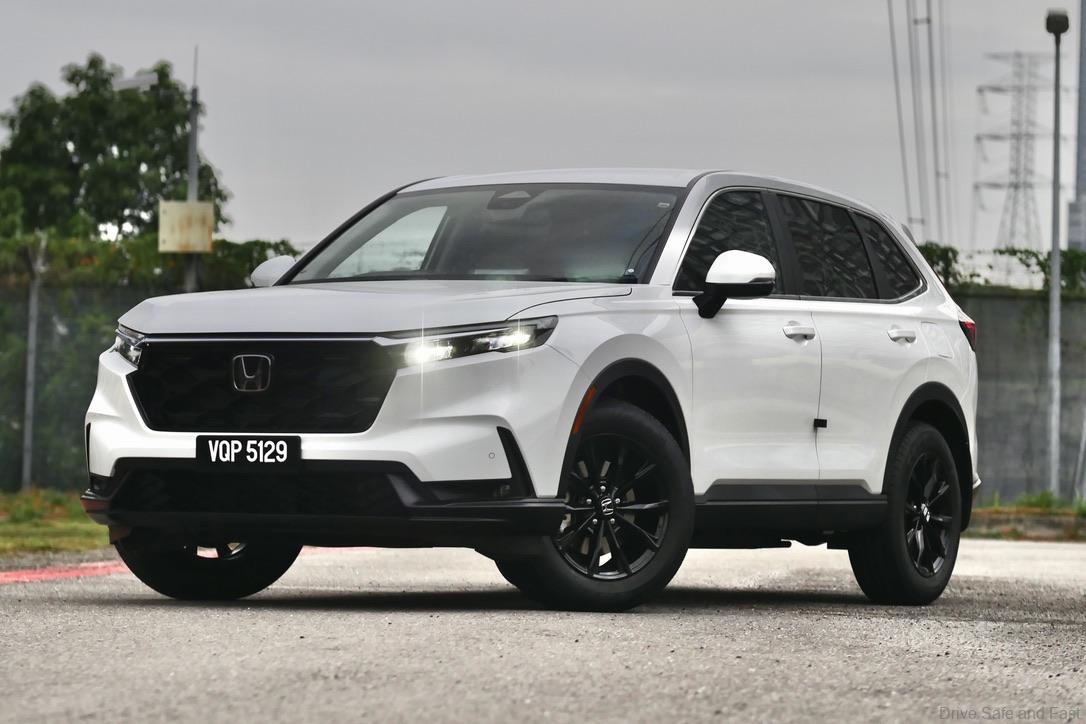
The Honda CR-V e:HEV E is a new variant aimed at bringing hybrid tech to a more affordable price point.
The SUV market in Malaysia is more competitive than ever, and the Honda CR-V e:HEV E arrives as a direct response to the rising tide of feature-packed rivals. By shifting the hybrid powertrain down to the “E” trim, Honda Malaysia is making its sophisticated electrified technology more accessible. But does this mid-spec variant offer enough substance to justify its price tag? Let’s dive into the details.
The e:HEV Powertrain: Efficiency Meets Performance
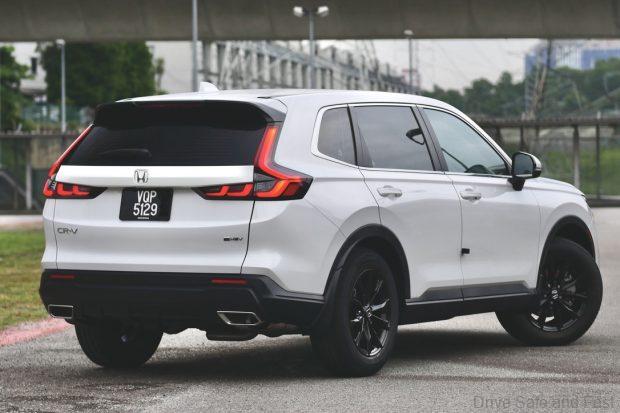
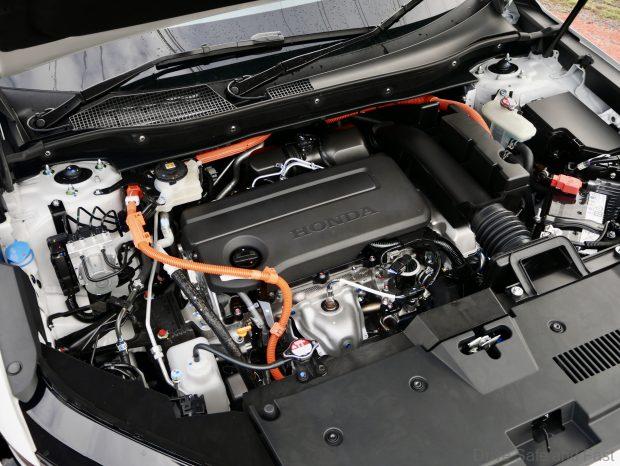
The standout feature of this updated CR-V is the 2.0L e:HEV hybrid system. Unlike traditional hybrids, Honda’s system operates primarily via the electric motor, with the engine acting as a generator. However, it can directly drive the wheels at highway speeds for maximum efficiency. On the road, the car feels surprisingly fast and engaging, masking its 1.7-ton weight with impressive agility. With a range exceeding 700-800km on a single tank, it remains the ultimate “fill-and-go” solution for those not ready for a plug-in hybrid or full EV transition.
While it lacks the ‘RS’ variant’s active noise cancelling and fun fake engine noises, the E variant is still the class leader when it comes to dynamics and engagement despite being a hybrid.
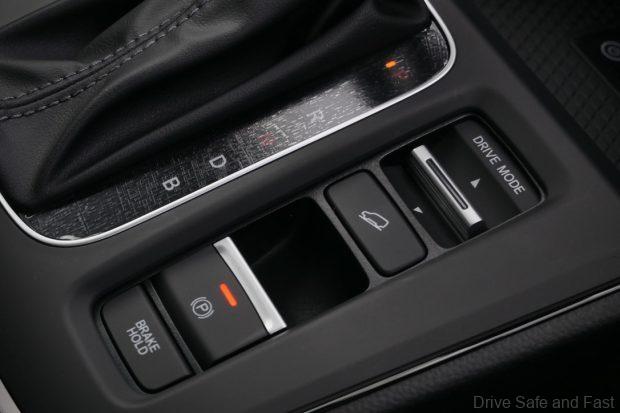
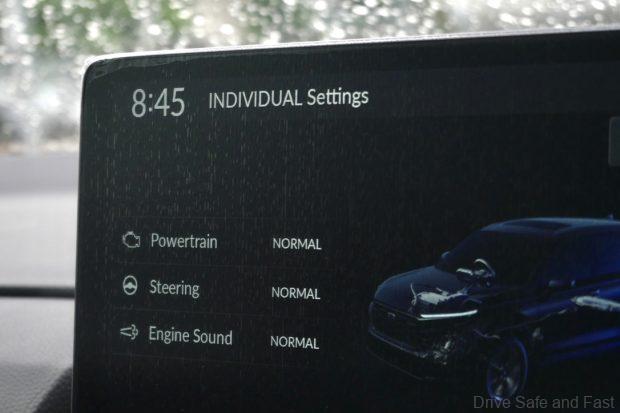
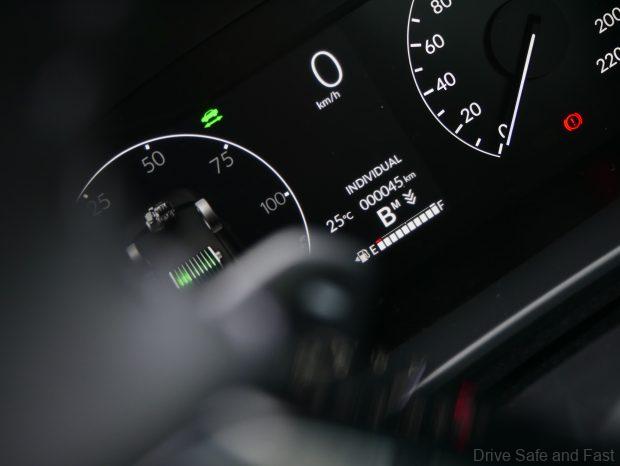
It’s a driver’s car through and through even though on paper it may appear to be just another front-wheel drive family SUV. You may even customize certain settings in the INDIVIDUAL drive mode.
It’s also worth remembering that none of the other Japanese makes out there have a direct rival in this space besides Mazda, whose CX-5 is due a generational update. Mitsubishi has long since discontinued the Outlander here. The Nissan X-Trail too is gone. Toyota tried selling a RAV4 here momentarily but gave up in favour of the smaller, cheaper to build Corolla Cross with a torsion beam rear suspension instead. The Honda CR-V is the one and only true Japanese SUV in its class and it has been made in Melaka since the company first established operations here more than 25 years ago.
That being said, there’s a reason this new specification exists – competition from outside of Japan. In the last year, Chinese makes such as Chery, Jaecoo, and Haval have all successfully stepped into the hybrid and plug-in hybrid electric segment. So has Proton with the Geely-derived e.MAS 7 PHEV. While these offerings don’t quite have the dynamism as the CR-V, they have massive pricing advantages and usually come in just one well-equipped specification.
Exterior and Interior: No Road Sailing, But Still Class-Leading
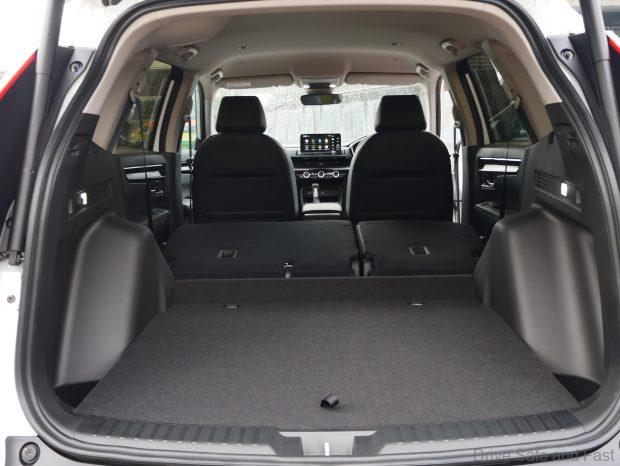
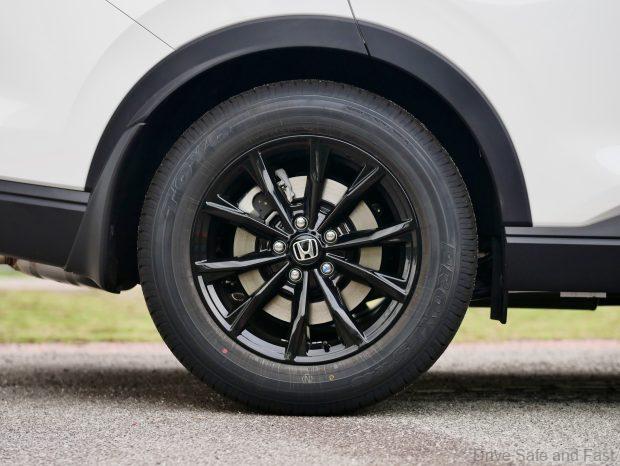
Visually, the “E” variant opts for a more elegant and subdued aesthetic compared to the aggressive RS body kit. Inside, Honda continues to dominate in “packaging.” The boot is cavernous with the ability to expand its use further by folding the seats down flat.
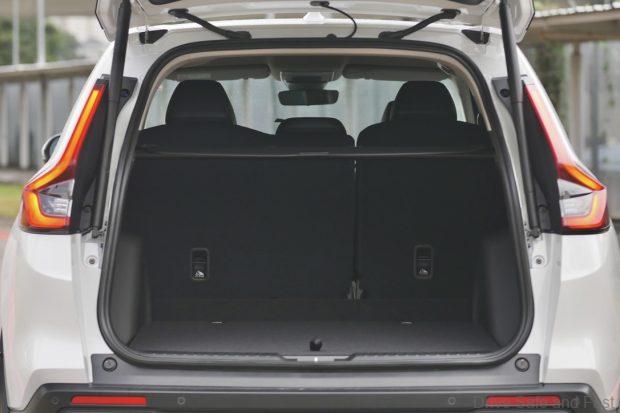
There is no spare tyre, just a tyre repair kit.
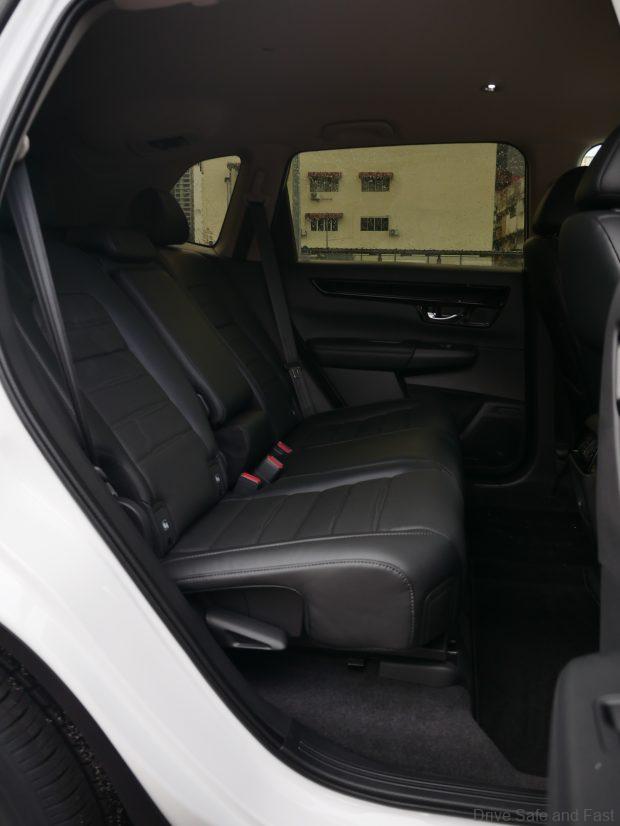
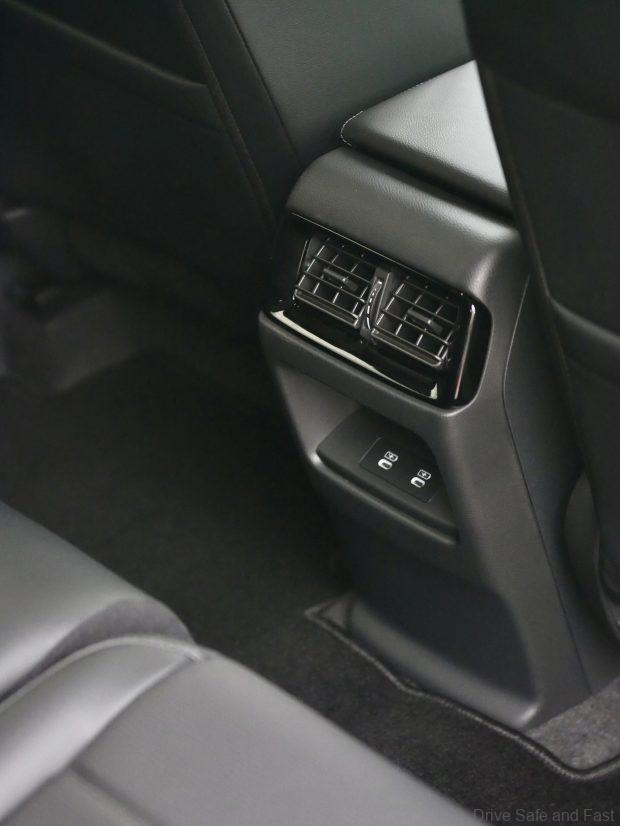
The rear legroom and thigh support remain best-in-class, comfortably accommodating taller passengers.
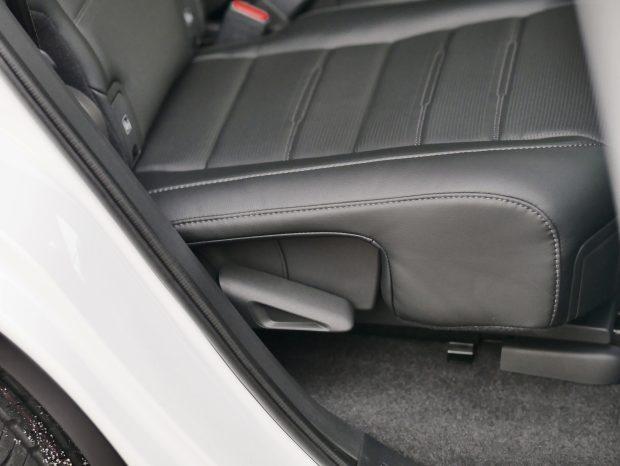
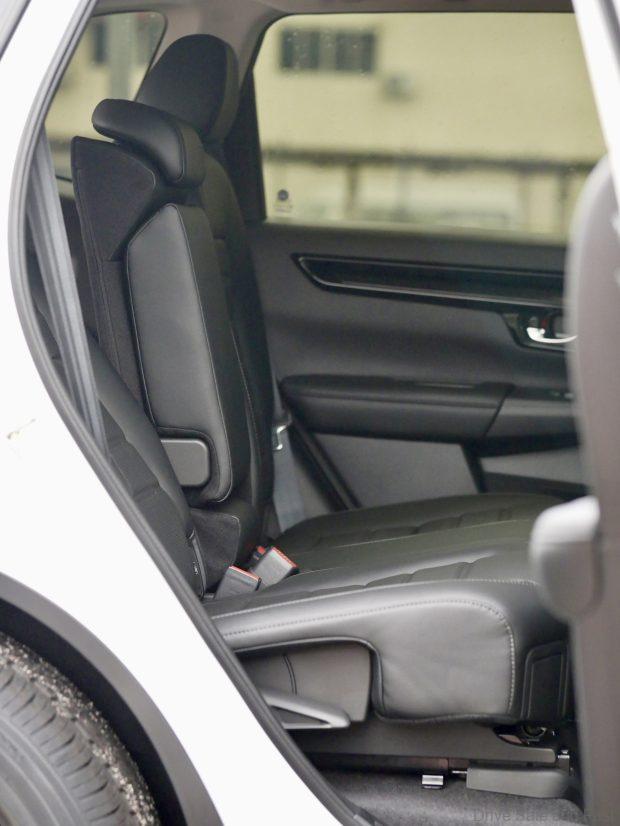
The seats can also be reclined by a large degree with a simple lever mechanism.
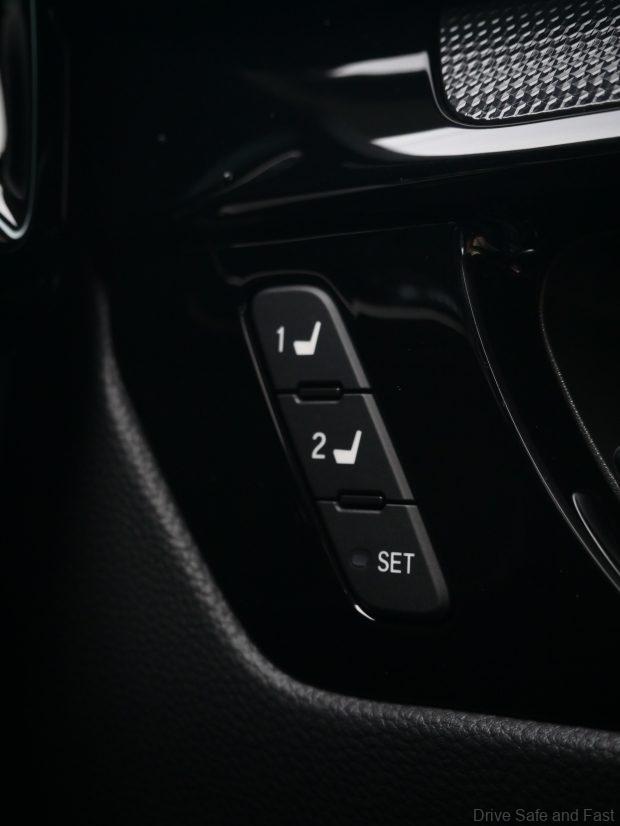
While you lose the Alcantara finishes of the flagship, you still get essential luxuries like a powered driver’s seat with memory, wireless charging, and a Google-integrated head unit.
The infotainment unit is high resolution and has smooth animations. Google Built-In isn’t particularly useful in a non-plug in hybrid vehicle.

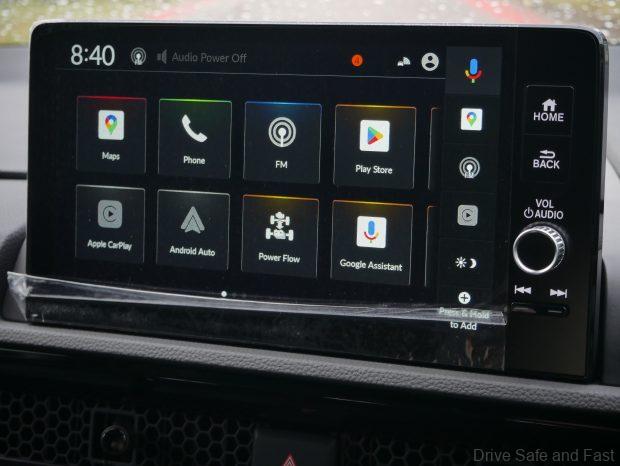
That being said, the integration between Honda software and the Google services are seamless. It’s also worth noting that this specification still has a powered front passenger seat, paddle shifters (for Regen Braking control), and all the windows have an auto up-down function.
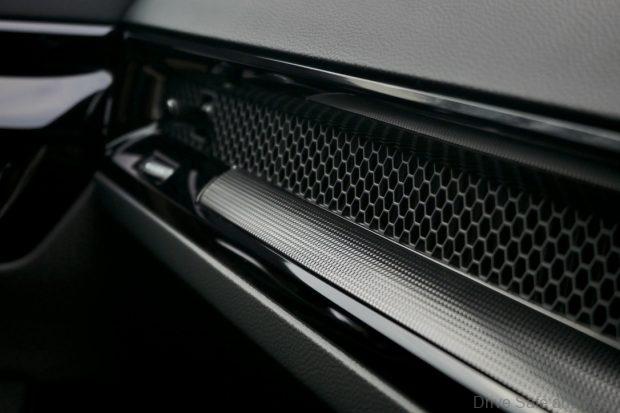
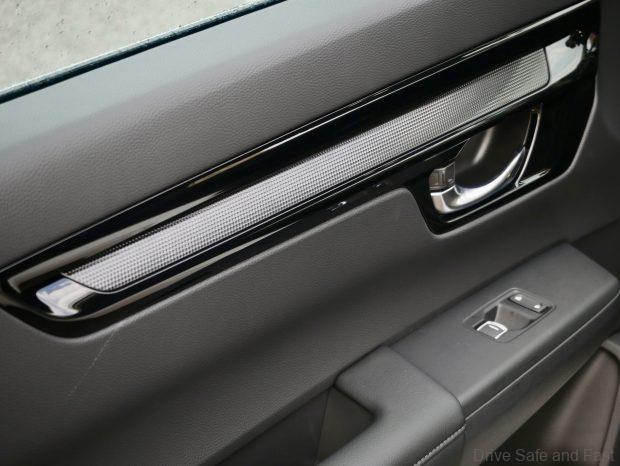
Another trade off is the trim pieces in the cabin. These are some generic dimpled plastic surface that somewhat match the knurling on the air cond knobs in texture.
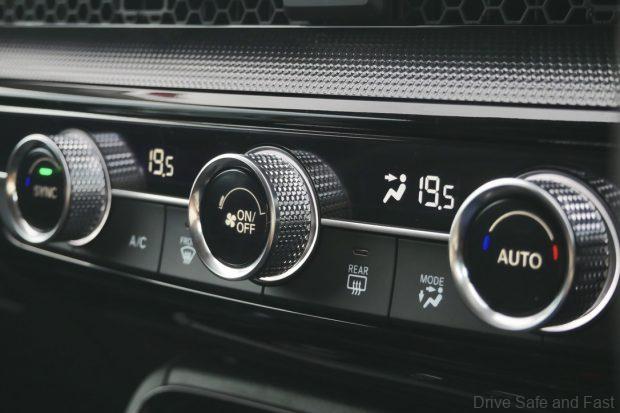
You’ll find this same trim on the door cards and across the dashboard.
The Tech Trade-Off & R.I.P. LaneWatch
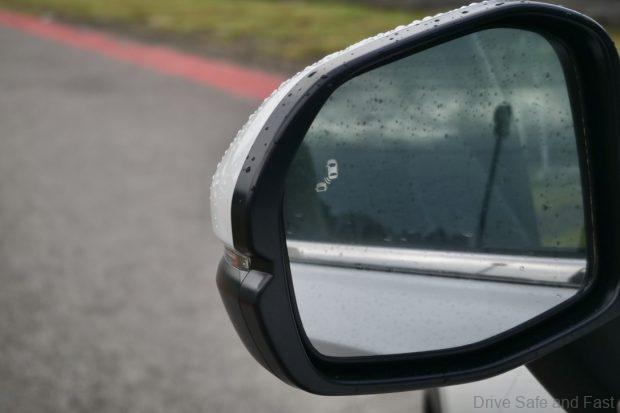
In a significant move, Honda has finally replaced the polarizing LaneWatch camera with a proper blind-spot monitoring system.
However, there is a glaring omission: the lack of a 360-degree parking camera.
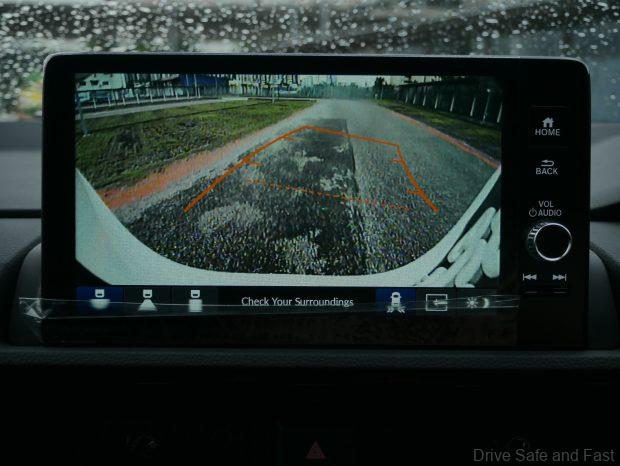
In a segment where Chinese manufacturers offer high-definition 360-degree views as standard, the CR-V’s basic reverse camera feels like a missed opportunity for a car in this price bracket.
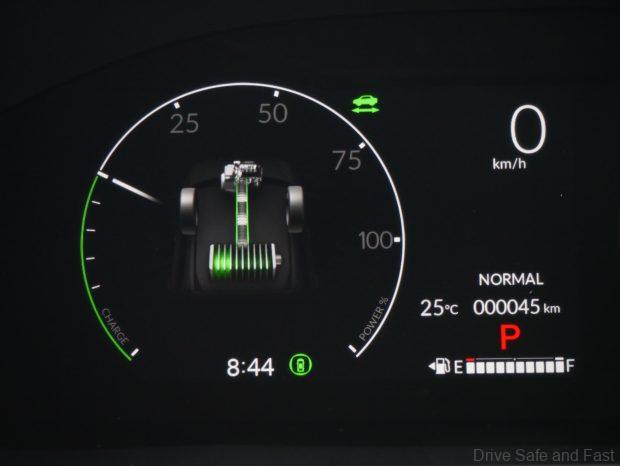
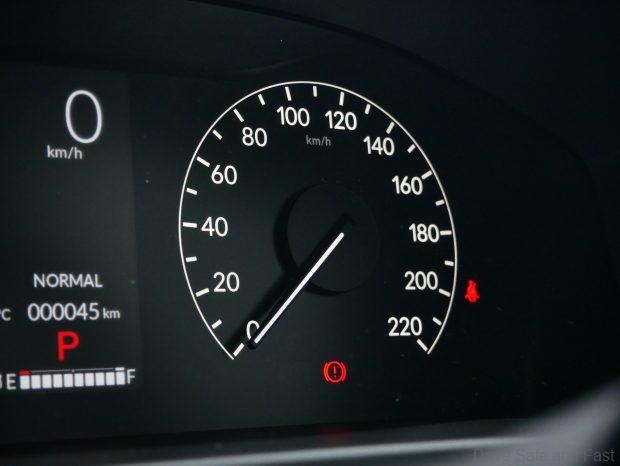
The instrument cluster is a semi-digital piece with deep blacks and smooth animations on one side and an analogue speedometer on the other side.
That being said, there are still pieces of equipment in here that make the car feel modern and practical in very small ways. USB-C ports, for instance, are everywhere.
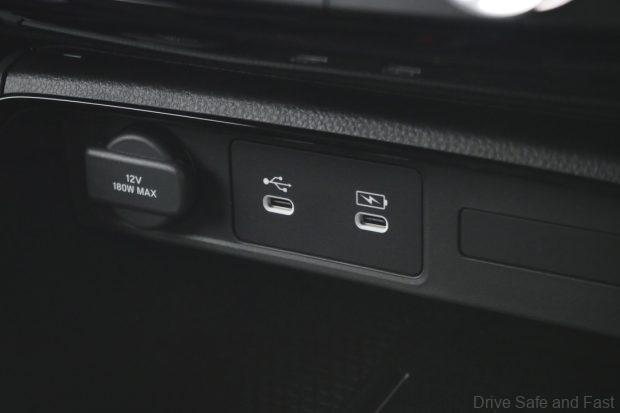
We counted at least 4.
The Verdict: Is it Good Value?
The Honda CR-V e:HEV E is a “top-tier A-grade driver’s car” disguised as a family SUV. While it faces stiff competition from brands like Chery and GWM on the equipment front, the CR-V wins on driving dynamics, interior space, and proven reliability.
For buyers seeking a refined, fuel-efficient highway cruiser that doesn’t require a charging plug, the new e:HEV E variant is a compelling, high-quality choice. However, at close to RM180,000, it’s going to keep the more value-minded buyer away and still thinking about much more affordable options that exist. Bear in mind that both Hyundai and Kia are aggressively marketing SUV options in this class as well and may start to chip away at the more conservative buying crowd. Still, we’ve driven just about everything in this class and the CR-V’s far and away the most enjoyable behind the wheel and the largest in the rear. Rivals have their work cut out for them
Read our review of the pre-2026 update specification Honda CR-V e:HEV RS model here.
2023 Honda CR-V e:HEV RS Specifications
Engine: 4 Cylinder, 16 Valve, DOHC (Atkinson Cycle)
Capacity: 1993cc
Gearbox: eCVT
Max power (petrol): 148PS @ 6100rpm
Max power (electric): 184PS @ 5000-8000rpm
Max torque (petrol): 190Nm @ 4500rpm
Max torque (electric): 335Nm @ 0-2000rpm
Top Speed: 187 km/h
0-100 km/h: 9.0 seconds
Price: RM178,200 (Retail Price without insurance)

