


Last year, Ford introduced the Ranger Super Duty to the Australian market. We were invited to test the vehicle out in Thailand and to learn more about it and the roles played by Ford Global Fleet Sales and RMA International in relation to this very important pick-up variant.
Love it or hate it, there’s no denying the Ford Ranger is one of the most fleshed-out pick-up truck models available in the region. There’s the XL variants if you’re just looking for a workhorse, the XLT and XLT+ variants for those looking for a few more amenities. Then there’s the Wildtrak with rugged cosmetic upgrades, and class-leading tech and equipment to satisfy the Urban Cowboy. Ford also offers a Baja-capable Ranger Raptor with the option of a 3.0L V6 petrol engine inspired by the work done on the F150 Raptor in the USA.
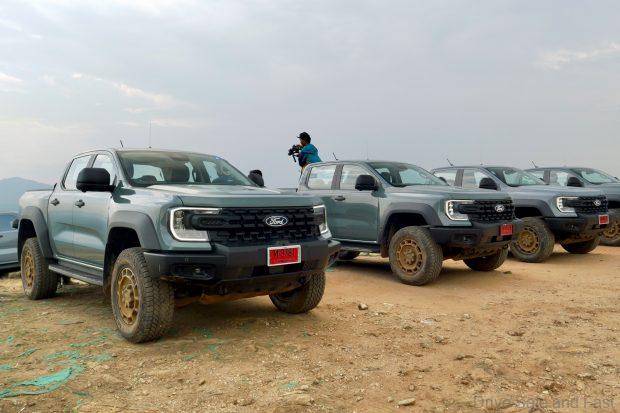
In a similar vein, they’ve now adapted the Super Duty class of F-Series work trucks to the smaller and more practically sized Ranger. So it’s helpful to think of the Ranger Super Duty as the ‘utility flagship’ of the Ranger line-up while the Ranger Raptor is offered as the ‘performance flagship’.
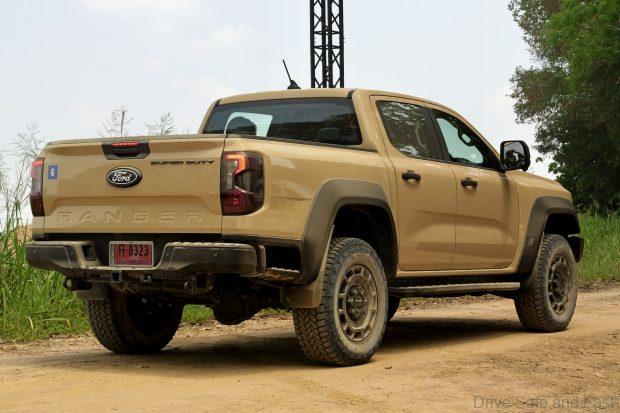
Headline features are:
- 850mm wading depth (just turn the AC off before entering water)
- 299mm ground clearance
- 4,500kg towing limit
- 4,500kg GVM (maximum weight vehicle can carry)
- 8,000kg GCM (maximum combined weight of vehicle and the trailer it’s towing)
- 1,800kg payload limit (double cab variant)
- 36.1-degree approach angle
- 28.6-degree departure angle
- 26.3-degree ramp breakover angle

What’s New With The Ford Ranger Super Duty?
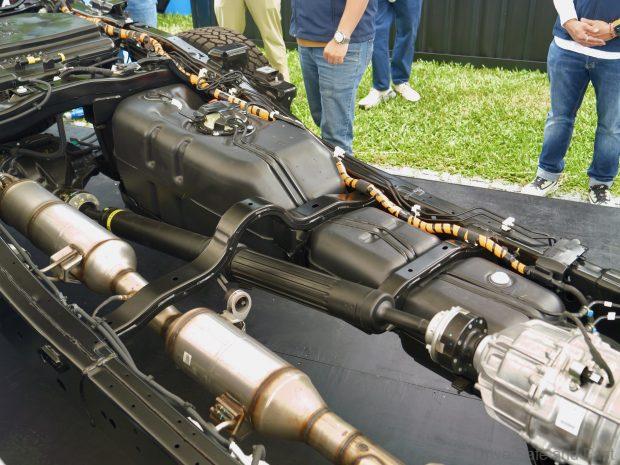
80% of the development cost of the Ranger Super Duty went into just the frame. The Super Duty spec comes with a lot of standard equipment, most of which is common to other Ranger variants.
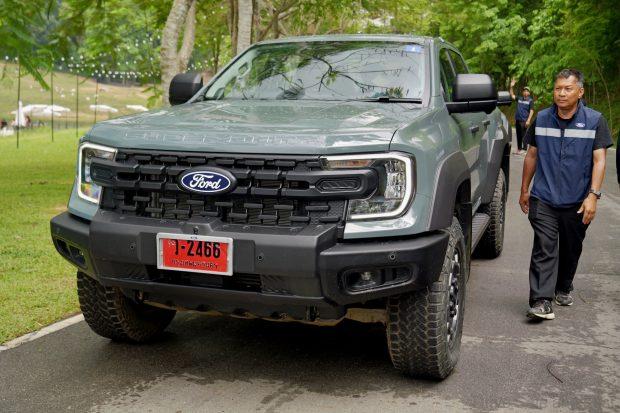
We’ll try to list only what’s unique to this variant below:
Chassis
- Reinforced and thickened frame
- Reinforced suspension mounts
- Frame-mounted steel bumpers (front and back)
- Heavy-duty suspension, control arms, steering components
- Heavy-duty recovery points (2X front, 2X back)
- Heavy-duty transfer case
- Heavy-duty axle with locking front and rear differentials
- Stronger driveshafts
- Armoured underbody (including a bash plate for the fuel tank)
- Widened stance, increased ride height
- Built-in mounting points for modifications, aftermarket accessories and specialized equipment
- 130L fuel tank
- Upgraded disc brakes all around
Under The Hood
- 3.0L V6 Diesel (similar block to the one available on the current Ranger Wildtrak)
- 207bhp, 600Nm of torque
- EU6.2 emissions (customisable for different fuel grade use including EUIV or even JP8 jet fuel and high sulfur fuel use)
- 10-speed AT with E-Shifter
- Upgraded cooling system
Exterior
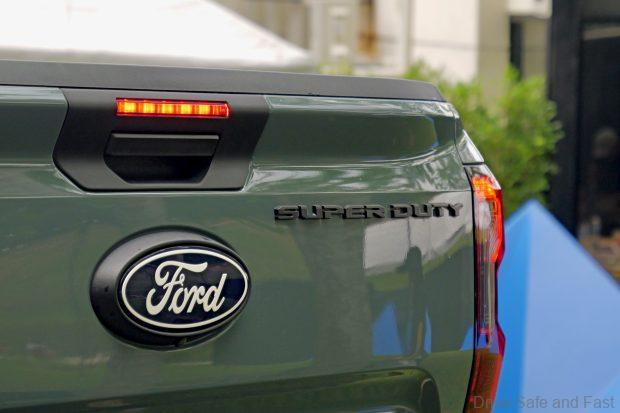
- ‘SUPER DUTY’ stamped on hood and engine cover
- Flared front fenders
- Modular steel bumpers
- Larger Side mirrors
- Front mud flaps and wheel arch liners
- Composite side steps (body-mounted)
- Optional snorkel/air intake
- 18″ steel (alloy optional) wheels with 8 stud pattern wrapped in all-terrain LT 275/70R18E BSW tyres

Interior & Functionality
- ‘SUPER DUTY’ embossed upper glove box
- Off road screen
- Trail Turn Assist functionality

The Ranger Super Duty will be equipped to order or according to distributor needs. Most readers will expect the dual cab variant, which is pretty well specified with standard equipment including:
- 12″ Ford Sync4a infotainment unit (portrait orientation)
- Dual zone auto A/C
- Keyless entry and push start
- Digital 8″ display
- Multimedia steering wheel
- Vinyl floor covering
- Tyre pressure monitoring system
- Integrated antenna
- 9X airbags
- Electronic parking brake
- Driver Assist Pack
- Collision system
- Post impact braking
- Speed limit device
- Adaptive Cruise Control (Stop & Go)
- Driver impairment monitoring
- Blind Spot Monitoring
- Lane change warning, aid and centering
- Front & rear parking aids
- Reverse brake assist
- 360-degree parking camera
- Auto high beam
- ADAS package

While it lacks the cosmetic enhancements of the Wildtrak or Raptor, the Super Duty comes across as a very high-spec pick-up with more than enough amenities to go toe-to-toe with full-spec rivals. You can also get the following Ford authorised accessories and options for the Super Duty:
- 2nd battery package
- DC charger
- Wiring harness
- Battery tray
- Battery shield
- Heavy Duty Side Step (ARB)
- Snorkel (Safari)
- Super Duty Premium Pack
- Leather Accented Trim, Steering and Seats
- Vinyl console
- Non Woven carpet
- Front all-weather floor mats
- Heated and ventilated front seats
- 10-way power adjustable driver’s seat with memory function
- 8-way power adjustable front passenger seat
- 18″x 8.5 Aluminum road and spare wheels

Ford After Sales Accessories
- Clear Headlamp Guards
- Hood Gas Strut
- Bull bar MKIl
- ARB Rock Sliders side steps
- Dash Camera (Fron & Rear)
- Offroad Performance Lighting Solis 9″ (Non-Bullbar)
- Offroad Performance Lighting Solis 9″ (ARB-Bullbar)
- Winch Warn 12,000lb Synthetic
- Winch Warn 12,000lb Steel
- Trailer Break Controller
- Integrated Device Mounting System (IDMS)
- Carpet floor mat With “Super duty”

Does the Ranger Super Duty Have Existing Rivals?
The Ranger Super Duty is actually rather unique in the segment. Nothing else like it exists in the OEM space. None of the major pick-up truck manufacturers in the region offer such a package. Its closest rival would be the Toyota 70 series pick-up truck, which has been around for over half a century, updated periodically to meet emissions standards. Apparently there’s an ongoing stop-order in Australia for the 70 series to upgrade it to meet Euro 6 emissions standards.

The timing couldn’t be better for Ford to introduce a more capable product like the Ranger Super Duty where the 70 Series would normally be the default option. Fundamentally though, some of its advantages over the equivalent Toyota may be seen as weaknesses. The Ranger platform is ultra modern with built-in high tech solutions – even the power steering unit is electric.

The 70 Series is a simple and mechanical beast of burden in contrast. Ford embraces these differences and further emphasizes the fact that the Ranger Super Duty has around 60% parts commonality with the standard variants. There are many specialized alternatives out there, but the commonality with the base model Ranger gives the Ranger Super Duty a massive advantage.

Bridging The Gap With Specialist Vehicles
From the point of view of a typical Malaysian off-road enthusiast, the Super Duty is exciting enough. The beefed up chassis and drivetrain components, improved capability, genuine rugged aesthetic and the reputation of the ‘Super Duty’ name are enough for some consumer attention. However, from a business point of view, the Ranger Super Duty makes a lot more sense for government and institutional use.

It’s for that reason our invitation to drive the vehicle in Thailand came not from Sime Darby Auto Connexion, but from Ford Global Fleet Sales and their sister company RMA Automotive. These two companies work hand in hand to deliver custom fleet solutions for government and large institution use such as the United Nations. There are also tonnes of private use cases for their customised fleet vehicles – mining companies, hospitals, security services. If you need something with four wheels and a customised top hat, RMA Automotive and Ford Global Fleet Sales can sort you out. The synergies between these two companies allow them to deliver fully customized Ford products that still feature full warranty backing from the factory.

How This Pertains To The Super Duty
The increased payload is more than just a flex for average pick-up consumers and adventurers to drool over. It effectively opens up a new mid-sized, mass-market option to healthcare, forestry, mining, agriculture, and security industries to consider adopting. Ford Global Fleet Services showed us some options, including a few lifestyle and trades-person accessories. These were all done by RMA Automotive in Thailand which preserves the manufacturer warranty from Ford.


Test Drive: Overbuilt For Overland Adventures
For everyday buyers, the Ford Ranger Super Duty is going to be a little bit over the top in terms of capability and pricing. In fact, it’s projected that the Super Duty will be slightly more expensive than an equivalently specified Ford Ranger Raptor. Between the two, I would say the average city dweller in Malaysia ought to stick to the Raptor for its sporting credentials and consumer-centric upgrades. For on-road use, the Ranger Raptor is also significantly more comfortable for occupants too, at least from our short tests on tarmac.

Off road is where the Ranger Super Duty shows its strengths. The wider track, tougher chassis and suspension, plus the added Trail Turn Assist feature make it the best Ranger to take off the beaten path.

The Super Duty isn’t bare bones, but it’s certainly more utilitarian than the Ranger Raptor. I’d venture to say it’s also more utilitarian than the Wildtrak. Just one look at the cabin and you’ll note that it isn’t particularly ostentatious. There’s no red, orange or blue contrast stitching – just a little grey on the optional leather seats.

However, it still gets the typical current generation digital displays. A camera feed with steering-dependent projection helps on uphill segments of the trail. Below this camera feed, you can enable off-road aids and monitor the tyre pressures and check how the drivetrain is set up.

There is one area where a typical pick-up customer may see the appeal of the Super Duty over the other Ranger variants, and that’s in its ability to overland with ease while towing or being outfitted for camping/caravan use.

This variant builds on the Ranger’s already class-leading off-roading capabilities and takes every aspect a step further – ground clearance, water wading, approach and departure angles – it’s all improved. Plus, you have an upsized 130L fuel tank fitted as standard, so longer expeditions spent off the beaten path can be carried out without needing to bring an additional jerry can.

The 3.0L V6 turbo diesel has plenty of torque, allowing the Ranger Super Duty to easily move up insane inclines while fully loaded, plus it has features that program the cruise control to bring the vehicle up and down steep hills smoothly at extremely low speeds (we’re talking 2.5km/h) without violently engaging the brakes. In our experience, just setting the gearbox to 4L was sufficient to get the Ranger Super Duty through 70% of the pre-made course.

In certain scenarios where one wheel was up in the air, locking the rear differential was required. There are also plenty of drive modes to deal with different scenarios, and on our course, Sand mode was the default. It allowed the vehicle to gently glide across the terrain like it weighed nothing. We even tested out water wading at close to the vehicle’s 85cm limit and found it was as simple as turning the A/C off and driving through.

If you’re going to seriously consider taking something modern off-road, the Ford Ranger Super Duty is probably the most realistic choice. Sure, plenty of luxury off-roaders will claim to have serious capability, but none are outfitted with all-terrain tyres and none are as purpose built as this. As long as it’s priced right, the Ranger Super Duty will find its little niche in Malaysia, and perhaps components of the Malaysian government will also find it suitable for fleet use too.

That said, the ongoing conflict in Iran could pose a double challenge for Ford in marketing this vehicle in Malaysia. Diesel prices have risen, and the popularity of American brands is on the verge of decline. Impressive as the Ford Ranger Super Duty is, the timing for such a product couldn’t be worse for our market at least. As we mentioned earlier in the article, as an alternative to the Toyota Land Cruiser 70 Series, Ford has really nailed it.

Ford Ranger Super Duty Specifications
Engine: V6, 24-Valve, DOHC, Commonrail Diesel, Bi-Turbo
Capacity: 2,993cc
Gearbox: 10-speed Conventional Automatic
Max power: 209hp @ 3250rpm
Max torque: 600Nm @ 1750rpm
Price: TBC

