


Ford and Geely are actually working together but not in the USA.
Chinese automotive giant Geely Auto has officially entered into a Europe-focused joint venture with Ford Motor Company to manufacture electric SUVs at Ford’s assembly facility in Valencia, Spain. Under the finalized structure, Ford will hold a 66% controlling stake in the new corporate entity, while Geely Auto retains the remaining 34%. This is according to a new report out of Reuters.

The partnership marks Geely Auto’s first official production footprint in Europe. Pending final regulatory approvals, operations under the new joint venture will officially launch in the first half of 2027, with the first vehicles scheduled to roll off the Spanish production lines in 2028.
Localizing Production to Navigate European Union Rules
The strategic partnership arrives as Chinese automakers actively seek manufacturing capacity within Europe to get ahead of upcoming European Union legislation mandating minimum local content clauses for electric vehicles. Localized assembly allows Geely to bypass higher EU tariffs on imported Chinese-built EVs while eliminating international shipping overheads.

Spain has increasingly become a preferred destination for global automotive investments due to its position as Europe’s second-largest vehicle manufacturer after Germany, combined with highly competitive labor and energy cost structures.
- Geely’s First European Model: The EX5 electric SUV, currently available in European markets, will lead assembly operations in 2028. Yes, this is the sibling to the Proton e.MAS 7 that is sold here.
- Second Geely EV: A second, newly developed pure-electric SUV from Geely will also be built at the Valencia hub.
- Co-Developed Vehicle: Ford and Geely will jointly engineer an all-new crossover offered across electric, plug-in hybrid, and extended-range EV powertrains.
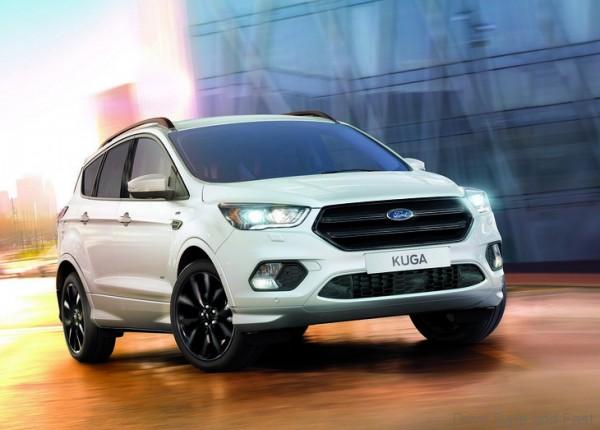
- Ford Lineup Additions: Production of the Ford Kuga will continue uninterrupted, joined by a new European-market Bronco variant starting in 2028.

Optimizing Unused Capacity at the Historic Valencia Hub
For Ford, the joint venture directly resolves critical factory underutilization. The Valencia manufacturing complex boasts a maximum potential output of approximately 500,000 vehicles per year. However, following multiple operational restructurings in Europe, the plant operated at just 26% capacity in 2025, producing only the Kuga SUV.
By sharing assembly capacity across five total models from both brands, Ford aims to radically reduce fixed overheads and drive down vehicle production costs. Ford’s existing local workforce will transition into employees of the new joint venture entity, with workforce expansions planned as vehicle output ramps up. Senior executive leadership confirmed that Geely does not plan to transfer manufacturing personnel from China.
The commercial collaboration draws heavily upon a long-standing corporate relationship dating back to 2010, when Geely acquired Volvo Cars from Ford Motor Company. Both manufacturers emphasize that pooling industrial resources offers a pragmatic pathway to navigate rising production costs, tightening emissions mandates, and aggressive market competition across Europe.

