

Why is the Perodua Kelisa to Daihatsu Gino conversion popular and it is legal in Malaysia and allowed by JPJ?
Some months ago we were looking to buy back a Kelisa (yes we once had a stock Perodua Kelisa in our garage and drove it trouble free for 5 years) but not a stock unit and instead we wanted a Kelisa with the Gino conversion. Why? Well we met a ‘Gino’ converted Kelisa owner and had the opportunity to test drive his car and simply loved the bigger engine power and the cute exterior looks and quality cabin finish.
So, we went through the online classified and found a few units with an acceptable asking price ……. RM15k to RM19k. After all Gino used parts are not cheap and repainting a car properly can be high.
Now, after meeting with a few ‘Gino’ owners/sellers and test driving their cars, we picked this British Racing Green unit and negotiated the price at RM17k.
It had been done up very well (wiring, panel fit and paint) and we were ready to take ownership. Then we found out that the Gino conversion will NOT pass Puspakom inspection for name transfer and a ‘runner’ will be needed to ‘work out’ the inspection.
This of course we could not accept and so we did some research and found out that Gino conversions under the skin would pass Puspakom inspection (is done properly and within the 25% power increase and all used parts import docs were in order) but the exterior body changes is the issue.
The seller understood our reservations and we walked away sadly from this purchase.


So here below is some information for Malaysians looking to have a Gino converted Kelisa and the issues that will come up.
The Perodua Kelisa conversion into a Daihatsu Mira Gino is a popular modding trend in Malaysia, but it sits in a legal gray area with strict enforcement by the Road Transport Department (JPJ).
The Perodua Kelisa (L700 platform) is directly based on the fifth-generation Daihatsu Mira. Because of this shared DNA, the Daihatsu Mira Gino body panels (bumpers, fenders, bonnet, round headlights and classic looking grille) bolt directly onto the Kelisa chassis without requiring structural cutting or any metal fabrication.
The Mira Gino features a distinct, retro-inspired look reminiscent of classic British Minis (round chrome headlights, vintage grille, and classic trim), which gives the aging Kelisa a stylish, high-end appearance.
Due to Japanese Used Car Export regulations, Daihatsu Mira Gino front cuts, body panels, interiors, and engine components (such as the DOHC or YRV Turbo swaps) are widely available in Malaysian potong kereta (halcut/scrap) yards at rising asking prices.
So, is It Legal and Allowed by JPJ? Strictly speaking, full conversions are NOT legal on public roads in Malaysia without official clearance, and JPJ frequently summons drivers for this exact modification at road blocks (thats why we walked away from purchase).
While many owners drive converted Kelisa Ginos without incident daily, JPJ enforces rules against changing a vehicle’s identity.
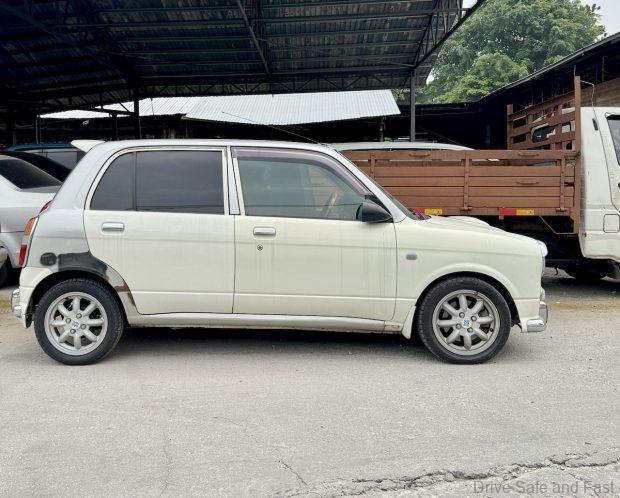
Why JPJ Issues Summons (Saman) for Gino Conversions
Every vehicle registered in Malaysia goes through a Vehicle Type Approval (VTA) process that defines its manufacturer, model, exterior design, and badges. Converting the front fascia, rear hatch, and especially swapping the Perodua badges for Daihatsu emblems alters the vehicle’s approved identity, which violates the Road Transport Act 1987 and the Motor Vehicles (Registration and Licensing) Rules 1959.
JPJ routinely issues P22 summonses and PG1 / Section 61(1) inspection notices. If caught, owners are ordered to revert the vehicle back to its original Perodua specs and present it at a JPJ center for inspection.
What Is Allowed vs. What Is NOT Allowed By JPJ
Minor cosmetic body kit additions that do not alter the car’s dimensions, create sharp edges, or change lighting setups are generally allowed. However, replacing the entire front end (hood, fenders, lights) changes the core profile of the car.
Swapping the Perodua badge for a Daihatsu badge is explicitly illegal under JPJ identity guidelines.
Swapping to a Daihatsu engine (e.g., 1.0L EJ-DE to a Daihatsu YRV or K3-VET) is legal only if registered and approved by JPJ/PUSPAKOM, provided the engine capacity stays within legal limits (typically within 25% of the original capacity).
While the parts fit perfectly due to shared manufacturing platforms, driving a fully converted “Kelisa Gino” on public roads carries a continuous risk of JPJ summonses and failed Puspakom inspections unless kept fully compliant with original vehicle identity records.

