
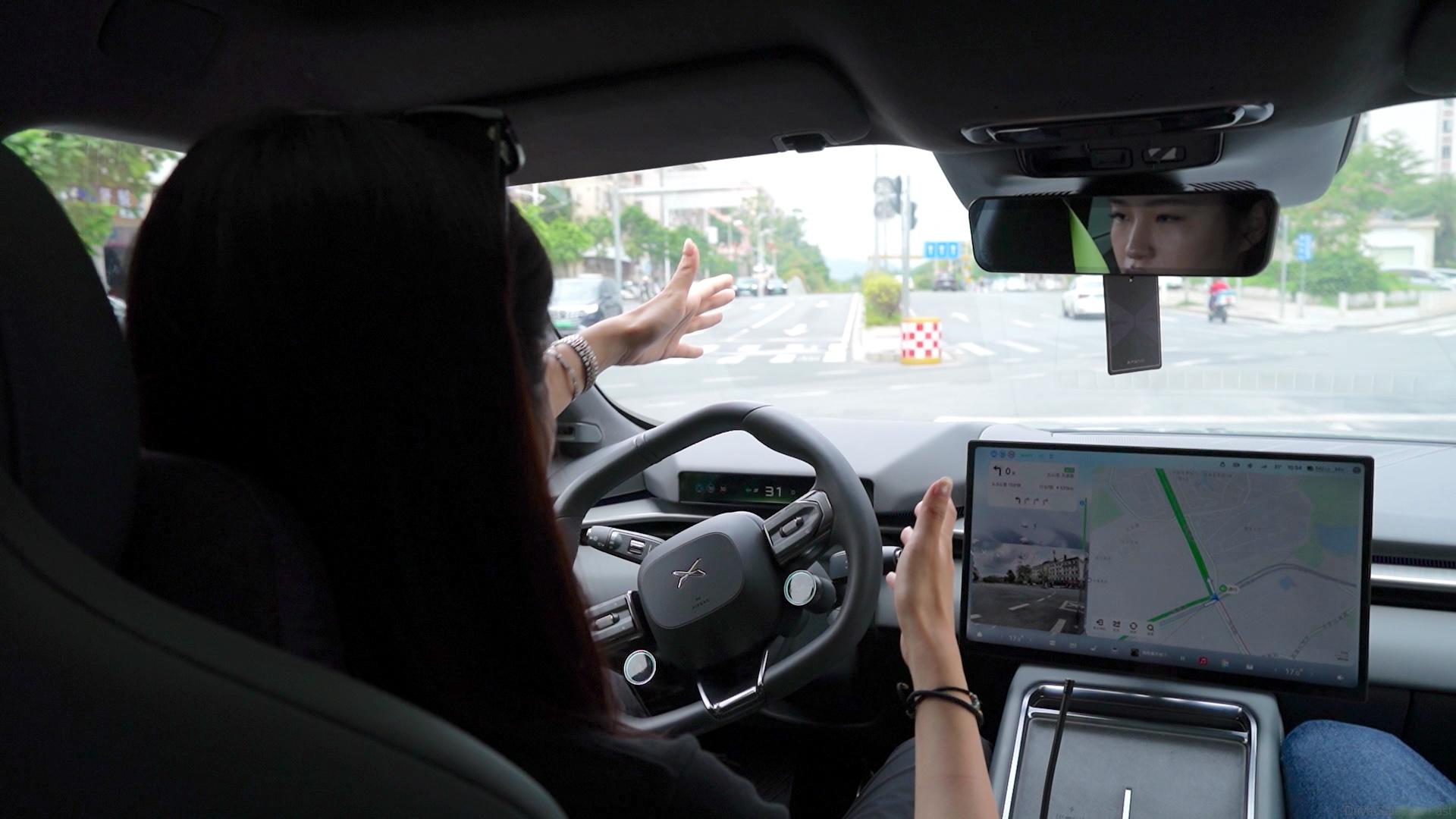
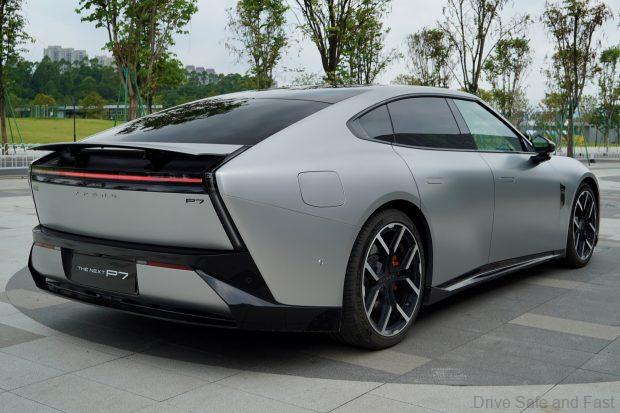
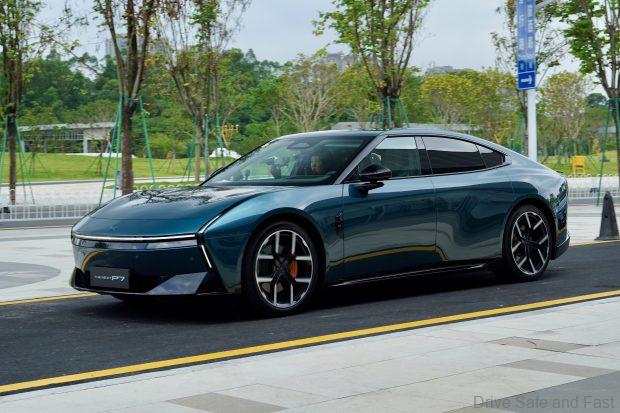
We were allowed to sit in the driver seat of an Xpeng P7 while it drove itself around Guangzhou.
There’s a lot of marketing fluff that surrounds every car company, regardless of whether the brand is legacy or future-ready. XPeng is no exception. The brand wants to be perceived as a future mobility solutions provider, hence its investments into Aridge (flying cars), Iron (Humanoid Robots/Physical AI), and Turing (AI chip design). They’ve given themselves very tight deadlines and ambitious goals, making it easy to see why skeptics might find it hard to believe any of this is actually possible.
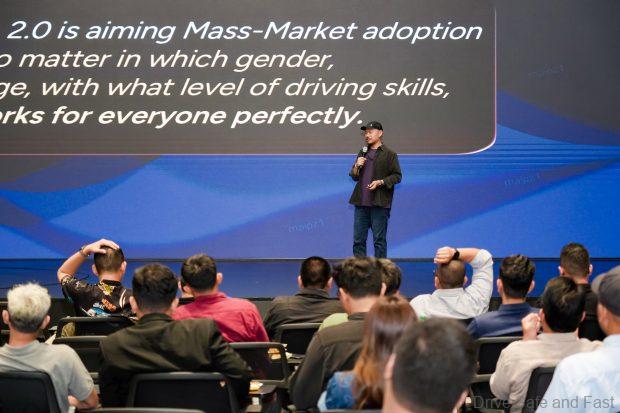
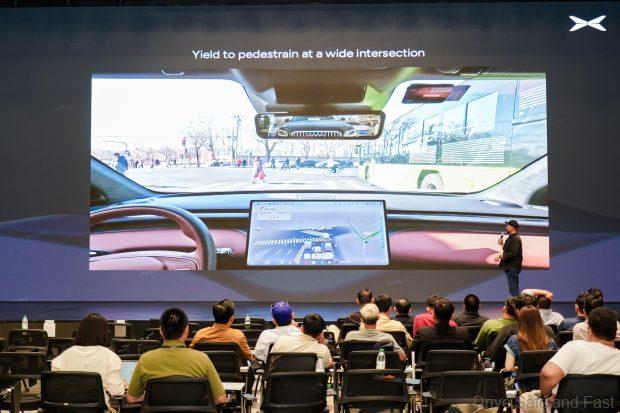
That being said, it is difficult to deny the absolute confidence the brand has in its technology. Oscar Wu, XPeng’s Autonomous Driving Operations Expert, explained to us that the company’s mission to “democratize technology” is closer to being accomplished than you would think.
XPeng’s Self-Driving Journey
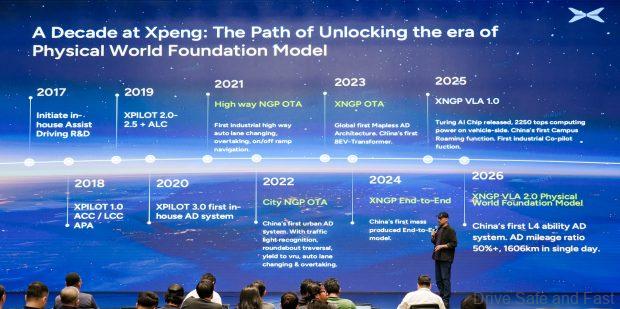
XPeng has been working on autonomous driving from its inception, never shying away from scrapping entire architectures in pursuit of its ultimate goal. Back in 2017, the company started researching its own assisted driving systems rather than buying an off-the-shelf solution. By 2018, they introduced “XPILOT 1.0,” featuring basic Adaptive Cruise Control (ACC), Lane Centering Control (LCC), and Auto Parking Assist (APA). A year later, XPILOT 2.0 and 2.5 dropped, introducing Active Lane Change (ALC) as a key feature. 2020 brought XPILOT 3.0, marking the first completely in-house autonomous driving system from a Chinese automaker.
Suddenly, XPeng went from being just another automotive startup to putting itself firmly on the global map. They were hot on the heels of Tesla in terms of software sophistication, delivering massive feature overhauls via Over-The-Air (OTA) updates. 2021 saw another milestone with the introduction of Highway Navigation Guided Pilot (NGP), followed just a year later by City NGP, which enabled semi-hands-free urban driving. By 2024, they had mastered complete end-to-end autonomous driving.
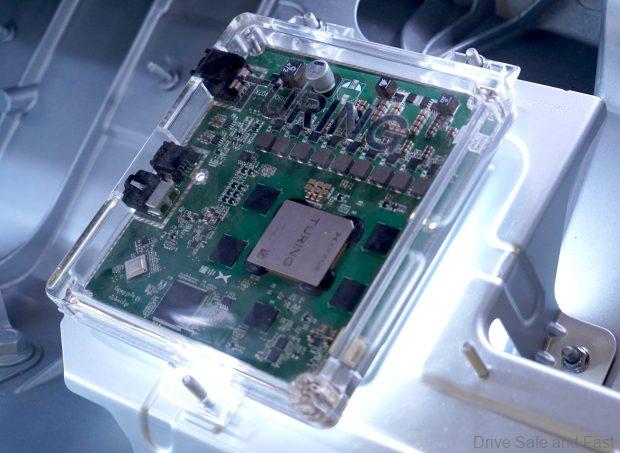
One would think XPeng’s work was done, but they essentially went back to the drawing board as technology leapt forward. XPeng showed the automotive world that its R&D had truly moved to the bleeding edge. They designed their own silicon, and the results were multiple times faster than the Nvidia DRIVE Orin-X chips they relied on previously. This new XPeng Turing chip boasts single-chip performance of 750 TOPS, allowing a triple-chip array to deliver a staggering 2,250 TOPS of computing power. For context, Tesla’s current HW4 hardware operates at around 500 to 600 TOPS.
It should be noted that there is no objective way to gauge the veracity of claimed chip performance. In the computing world, a chip can be benchmarked using a standardised test against its peers. In the automotive world, a car can be put on a dyno to test for wheel horsepower or driven on a drag strip to test acceleration claims. When the two industry collide, things get muddled.
The Custom Silicon Revolution
While XPeng still keeps certain details of the Turing chip under wraps — such as who fabricates it and on which process node — it is highly impressive that a carmaker developed proprietary silicon capable of powering Level 4 autonomous driving in-house rather than outsourcing the work.
With this massive leap in local computing power, XPeng developed its Vision-Language-Action (VLA) model. Version 1.0 was short-lived because it relied on a sequential pipeline—transforming visual data into language-based reasoning before executing a vehicle action—which proved slow and inefficient. Version 2.0 brought a massive architectural shift: an end-to-end vision-to-action pipeline that delivers a 12-fold increase in processing speed and a 5-fold improvement in “emotional response,” translating to smoother, more natural braking behavior.
Taking Advantage of Neural Networks
The vehicle’s seven cameras no longer need to translate the world into terms that humans understand. When the visual input hits the system, it interprets the environment directly based on training data compiled from 100 million video clips—roughly 65,000 years of human driving experience—without an intermediate human language layer.
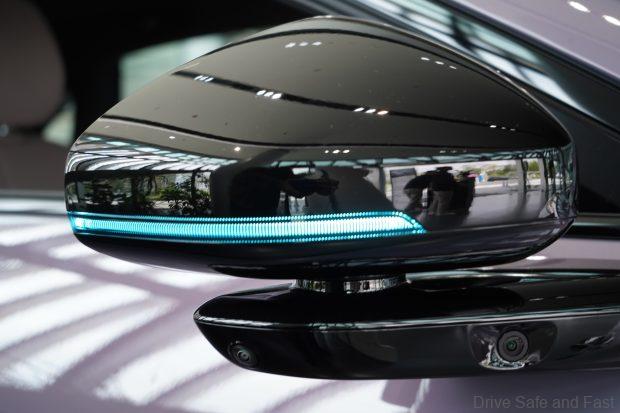
Previously, a visual feed would require a dedicated layer of computing just to interpret the scene: identifying a motorcycle, calculating its relative speed across the screen, predicting its position in Y seconds, and then deciding whether to steer or brake. Today, that clunky interpretation layer is gone. The machine trains on vast libraries of unlabelled data, allowing it to formulate its own fluid reactions based on how a situation unfolds. In a way, it reacts with the instincts of an omniscient, hyper-experienced human driver.
Legality Has Yet to Catch Up to Reality
The unfortunate catch is that while XPeng’s autonomous tech holds immense capability, it lacks an ounce of legal responsibility. The human in the driver’s seat remains completely liable. Regulations still require the driver to touch the steering wheel periodically to affirm legal control over the vehicle.
Oscar Wu noted that XPeng is actively analyzing why its customers have yet to fully hand over the reins. Currently, only about 50% of total drive time is spent in autonomous mode. Surveys reveal that the remaining hesitation is tied directly to four main pillars of refinement:
- No Lane Pre-Selection: The vehicle occasionally fails to position itself early for upcoming turns or exits.
- Imperfect Speed Control: There is still a minor susceptibility to abrupt acceleration or harsh braking when anticipating obstacles.
- Lack of Courtesy in Yielding: The system can struggle with social driving etiquette, such as yielding gracefully to oncoming cars on narrow, single-lane roads.
- Lack of Zone Control: The system doesn’t instinctively exercise human-like precautions, such as giving a wide berth to massive container trucks.
Oscar emphasizes that every localized decision the system makes must balance safety, efficiency, and the specific driving scenario. His insights hint at a deeper engineering frustration regarding human hesitation. In XPeng’s view, the car possesses superior visual data, has trained on vastly more scenarios, and can execute vehicle dynamics with greater precision than any human driver.
Reality Hasn’t Caught Up to Human
Ultimately, XPeng’s work is both vital and deeply necessary for the next logical step in the automotive industry. They are tackling a genuine societal issue: a large percentage of people simply do not enjoy driving and frankly aren’t interested in it either. We should logically agree that if someone feels unsafe or disinterested behind the wheel, they shouldn’t be forced to drive. Yet, driving remains a necessity that public transport cannot entirely replace.
XPeng’s tech stands as the most viable solution to this problem, and their willingness to license this full-stack technology out to other manufacturers could solve the cost barrier down the road. The true bottleneck isn’t the silicon or the software—it’s the human ‘meatbag’ in the driver’s seat who isn’t ready to yield control. On one end, there’s no denying human instinct. The computer has a reset button, but life does not. I don’t blame anyone who takes over the steering wheel as the car attempts to merge into fast moving traffic. This is just a basic instinct. I myself experienced it on my self-drive test drive.
Also, from a legal perspective, the current regulation still puts responsibility squarely on the shoulders of the driver. If the vehicle miscalculates and makes a mistake, it’s still ultimately the driver who goes to court. The current state of the product is impressive, but Level 2+ self driving still requires two minds to share the responsibility of one action, and that’s where the messiness lies. When we get to true Level 3 self driving, I have no doubt that Xpeng will be at the precipice of what’s capable in the industry, and they won’t even charge a premium for it unless the Malaysian government says they have to.
Our self-drive test drive experience in brief.
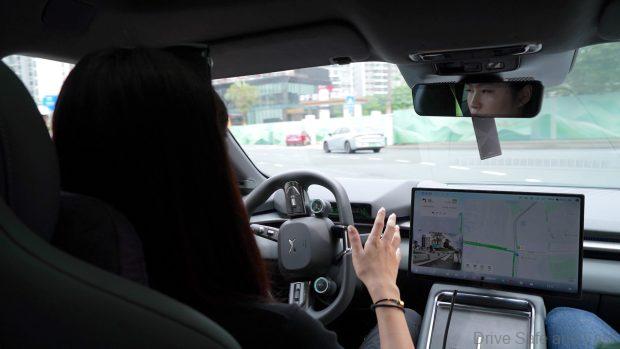
The system it easy to set-up. Pre-select the route on navigation and hit a button on the steering wheel. The car handles nearly everything itself including stopping and going at traffic lights, evading bikes and double parked cars, making lane changes etc. You can at any time increase speed with the throttle pedal or override the controls with ease. Periodically, you will need to put your hands on the steering wheel to acknowledge legal responsibility of the drive. We only experienced minor interruptions. One where we prompted the car to move to another lane to avoid lane hogging (we were at the speed limit, the car behind was not). Another where we had to complete a U-turn that had become illegal due to double parking by other road users. A third when I panicked, unaware that the car could handle merging at high speeds. Otherwise, it performed 80-90% of what I would consider to be day-to-day driving tasks FLAWLESSLY. Very impressive.
Read our other Xpeng HQ visit content here.

