


The Chery Kunpeng Tianqing hybrid engine sets a record when it comes to thermal efficiency.
The global automotive landscape is witnessing a massive paradigm shift as younger Chinese automakers aggressively rewrite the rules of powertrain efficiency. Chery Automobile has officially unveiled its groundbreaking Kunpeng Tianqing hybrid engine, capturing the industry’s attention by achieving a staggering peak thermal efficiency of 48.57%—a new global record for engines of this category.
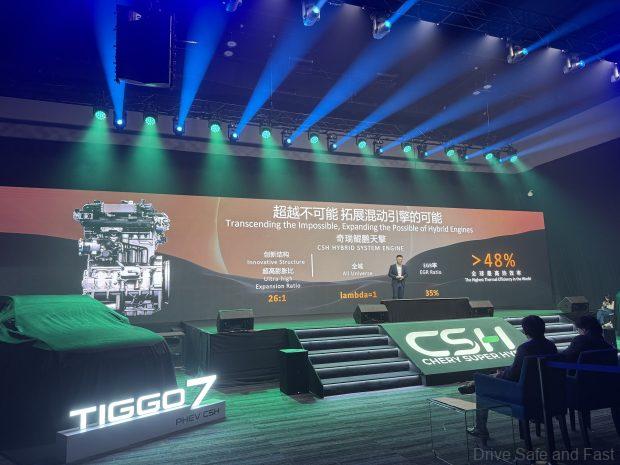
This breakthrough comes amid fierce competition, with rival brands simultaneously launching next-generation powertrains. Together, these advancements signal a major reshuffling of the global hybrid and internal combustion engine (ICE) markets, long dominated by traditional automotive giants.
Understanding Thermal Efficiency: Why the Record Matters
For decades, the holy grail of automotive engineering has been maximizing thermal efficiency—the exact proportion of fuel energy converted directly into vehicle propulsion rather than being wasted as heat.
To put this achievement into perspective, conventional gasoline engines typically max out at efficiencies between 38% and 45%. By reaching a record-breaking 48.57%, Chery has minimized energy loss to unprecedented levels through meticulous structural optimization and drastically enhanced combustion efficiency. Chery already offers a very high thermally-efficient Chery Super Hybrid powertrain in Malaysia, but this takes things even further.
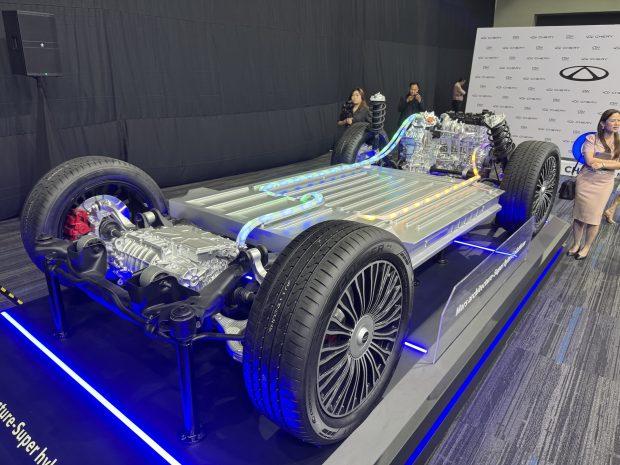
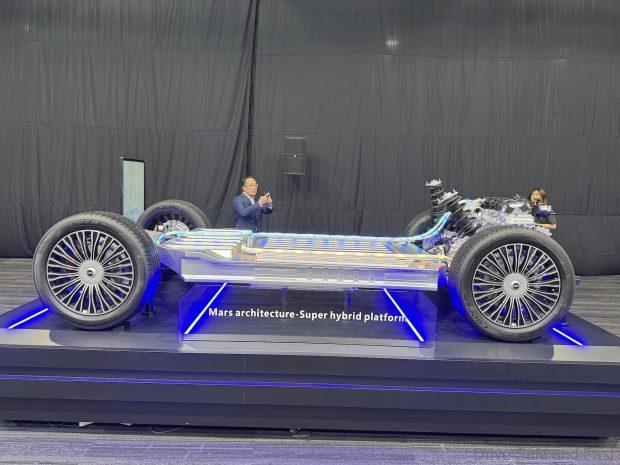
This highly adaptable engine is engineered to power a wide range of future vehicles, including Plug-in Hybrid Electric Vehicles (PHEVs) and Range-Extended Electric Vehicles (REEVs). The focus is now shifting toward ensuring mass-production stability and strict cost control to make this technology commercially viable for mainstream consumers.
The Hybrid Arms Race: A Surge in Next-Gen Powertrains
Chery is not alone in its quest for absolute efficiency. The announcement coincides with major technical rollouts from other automotive powerhouses, creating a hyper-competitive ecosystem:
- Geely’s AI-Driven Engine: Around the same time, Geely launched its own advanced hybrid engine boasting a remarkable 48.41% thermal efficiency. Geely achieves this by integrating advanced artificial intelligence (AI) algorithms that optimize fuel consumption in real-time based on driving conditions.
- Changan’s 500-Bar High-Pressure Engine: Moving into the commercialization phase, Changan has begun mass-producing the world’s first 500-bar high-pressure direct-injection hybrid engine. This system simultaneously elevates thermal efficiency and sharpens power response speed, tackling the traditional lag associated with eco-focused engines.
Shifting Global Market Share and the Hybrid Future
These rapid technological leaps are directly reflecting in global market dynamics. Currently, Chinese automakers account for an overwhelming 59% of the global battery-electric vehicle (BEV) market share, compared to just 3% for Japanese automakers. However, in the traditional ICE and hybrid segments, Japanese brands still hold a 30% share, while Chinese manufacturers follow closely at 20%.
To bridge this gap, manufacturers are leveraging their expertise by integrating new-energy “three-electric” technologies—comprising advanced batteries, electric motors, and power electronics—directly with these ultra-high-efficiency internal combustion engines. This approach creates a compelling middle ground for consumers who are not yet ready to transition fully to pure electric vehicles.
Looking ahead, long-term projections indicate that by 2038, BEVs will represent 49% of global new vehicle sales. This means more than half of the global market will still rely on ICE and hybrid vehicles, ensuring steady demand for highly efficient fuel-burning engines. By pioneering record-breaking thermal efficiencies today, forward-thinking automotive brands are positioning themselves to dominate the global hybrid vehicle market for decades to come.

