


Suzuki 1H 2026 sales numbers are strong due to its focus on economy cars and its reliance on India.
Suzuki Motor Corporation has achieved a landmark shift in the global automotive hierarchy, recording 3.55 million annual vehicle sales for the fiscal year ending March 31, 2026. The milestone allows Suzuki to surpass Honda Motor Co., which logged between 3.37 million and 3.39 million global deliveries over the same period, positioning Suzuki as Japan’s second-largest automaker behind Toyota Motor Corporation.
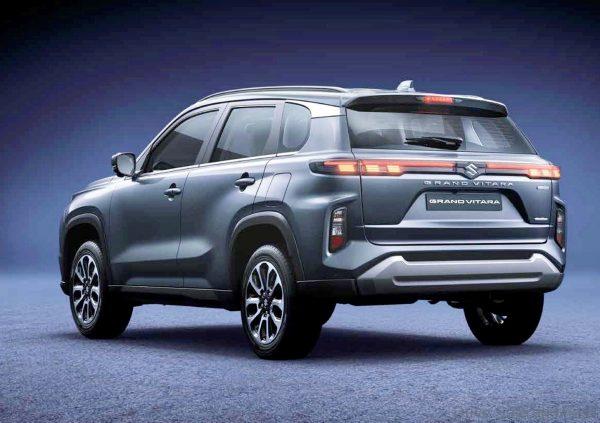
The surge highlights the effectiveness of Suzuki’s focused strategy on lightweight, fuel-efficient, and budget-friendly mobility. While major Japanese competitors faced headwinds in North America and China due to shifting EV adoption rates and supply chain bottlenecks, Suzuki’s insulation from those volatile markets provided a stable platform for growth.

Production and Sales Breakdown: January to June 2026
Suzuki’s momentum has continued strongly into the first half of calendar year 2026. Official figures released on July 30, 2026, outline record-breaking production and sales figures driven primarily by overseas markets:
| Operational Performance (Jan – Jun 2026) | Volume (Units) | Year-on-Year Change (%) | Key Drivers |
| Global Production | 1,886,585 | +14.3% | Record-high production led by Indian facilities |
| Japan Production | 484,794 | +5.4% | Gains driven by export production demand |
| Overseas Production | 1,401,791 | +17.7% | All-time high led by expanded Indian capacity |
| Global Sales | 1,799,736 | +10.3% | Overseas growth offsetting slight Japan domestic drop |
| Overseas Sales | 1,427,631 | +13.8% | Strong volume in India, Africa, and Southeast Asia |
| India Domestic Wholesales | 1,046,665 | +16.8% | First time surpassing 1 million units in a 6-month period |
| Japan Domestic Sales | 372,105 | -1.4% | Growth in standard/small cars offset by lower mini-car sales |
Strategic Drivers: Affordability, Mild Hybrids, and Market Focus
Suzuki’s rise to the second spot among Japanese carmakers rests on several key operational pillars:
- Pragmatic Electrification Strategy: Rather than committing fully to high-cost battery electric vehicles (BEVs), Suzuki focused heavily on accessible, mild-hybrid powertrains across volume sellers like the Swift, Baleno, Vitara, and Fronx crossover. This approach offered immediate fuel savings without the steep price premiums associated with full electrics.
- Minimal Exposure to EV Volatility in China and the US: Having exited the US passenger car market in 2012 and scaled back operations in China, Suzuki remained unaffected by dropping EV margins and escalating trade tariffs that impacted rivals like Honda and Nissan.
- Aggressive Capacity Expansion: Suzuki added roughly 500,000 units of manufacturing capacity in 2026, advancing its strategic target of achieving 4 million units of annual production capacity in India by 2030.
The India Factor: Market Dominance Versus Structural Risk
While Suzuki’s reliance on emerging markets has yielded record volume, it also underscores a growing structural concentration risk. Maruti Suzuki commands roughly 40 percent of the total passenger vehicle market in India, the world’s most populous country.

India alone accounts for over 58 percent of Suzuki’s total global sales volume, contributing 1,046,665 units out of the 1,799,736 vehicles sold worldwide between January and June 2026. Furthermore, Indian assembly lines generated 1,298,807 units out of Suzuki’s 1,401,791 total overseas production volume during the same six-month window. This heavy concentration means Suzuki’s global standing is deeply tied to India’s domestic economic climate, localized supply chain stability, and regulatory shifts surrounding safety and emissions standards. As competing international brands and local manufacturers like Tata Motors and Mahindra expand their own electric and hybrid offerings in India, Suzuki’s primary objective will be defending its market share while diversifying its footprint across secondary growth regions in Africa and Southeast Asia.

