


The start of subsidised diesel renews the discussion around the Kia Carnival 7-Seater 2.2D.
Preamble: We held off on publishing a review on our test drive of the Kia Carnival 7-seater facelift as diesel prices were essentially going up daily at the time. Now it’s July 2026 and the Budi Madani Diesel programme has begun, meaning that the 200 litres of subsidised fuel now includes both petrol and diesel. ‘Budi Diesel’ is priced at RM2.10 per litre for Malaysian citizens and these are of the B10 and B15 blends and you need to have a privately owned diesel vehicle registered in your name, or be an ‘approved person’ if a close family member is using your vehicle and wants to fill your car up. There are resources online you can search for more details. Now, on to the review.
What’s the most popular Korean-engineered vehicle ever sold in Malaysia? If you answered the Kia Carnival, you’d be wrong but not by much. It’s number when you combine the sales of the Kia Carnival and its badge-engineered predecessor, the Naza Ria. With 40,000 registrations across more than 2 decades, it’s clear that the South Koreans have something Malaysians want. In this case, it’s a large people mover that doesn’t break the bank but also has some degree of dignity. Over four generations, this product has only gotten better at its job.
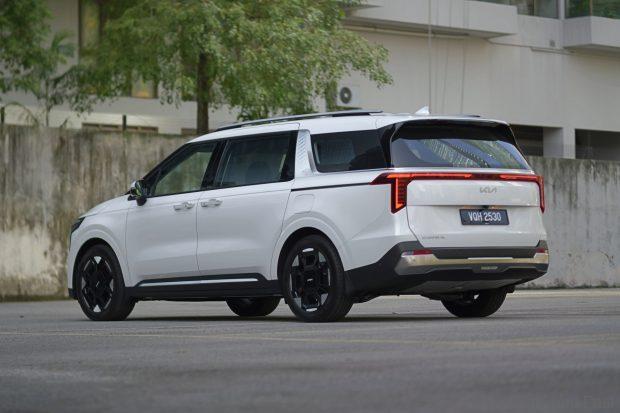
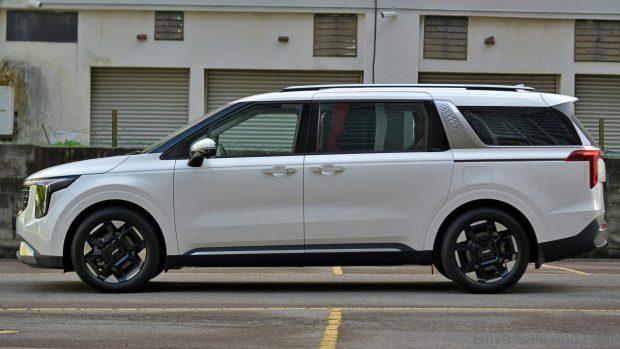
The model we’re testing is the one that does the ‘dignity’ part the best. This is the recently facelifted 7-seater model which comes in a 2-2-3 configuration with Premium Relaxation captain chairs in the middle. This really is the highlight of the vehicle. These seats are wide, extremely comfortable and supportive with fold out armrests on either side and an extendable leg rest if you want to ‘kick back’ and have a nap. It’s perhaps the best 2nd row experience of any vehicle under RM250,000, but if you’re looking for full electronic adjustments, a massage function or a flip-out big screen, you’ll be disappointed. Kia’s approach focuses on a much simpler experience, but they nailed the fundamentals. Even the seat adjustment straddles the line between complex and simple with a one-touch recline function and manual slider for front-back or left-right adjustment.
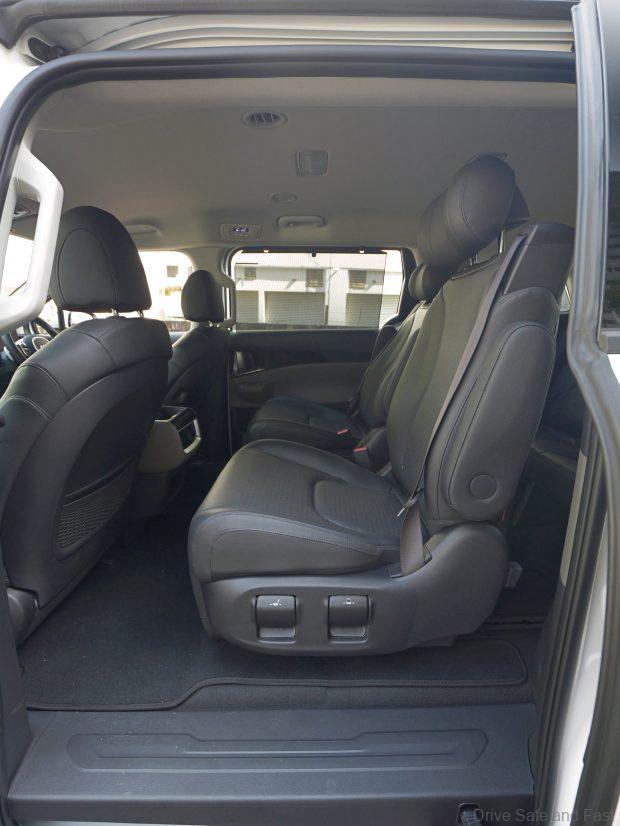
The Carnival 7-seater lends itself to owners who are chauffeur driven on the weekdays but spend weekends with the family. It’s equally rewarding to drive or be driven around in one of these. Kia also offers this new Carnival in an 11-seater configuration and an 8-seater. We’ll be taking the 11-seater next month, so stay tuned for our review on that. It’s a lot more affordable but it also appears to be the most spartan of the three variants, as it lacks sophisticated seat folding mechanisms, simpler faux leather upholstery, a basic 6-speaker media set-up, and very basic safety systems. The 8-seater model is far more compelling, only missing out on the Relaxation seats and the genuine leather upholstery.
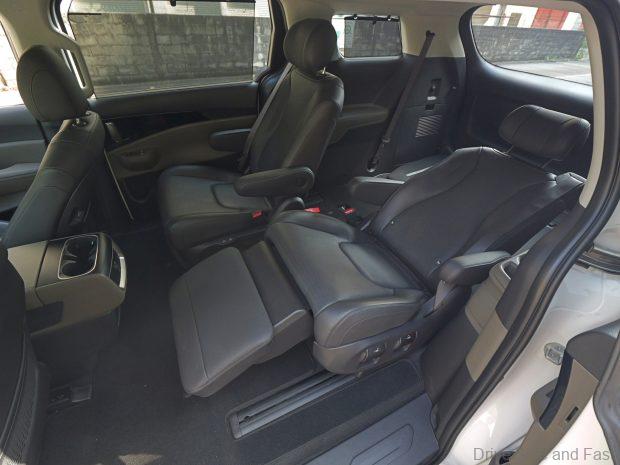
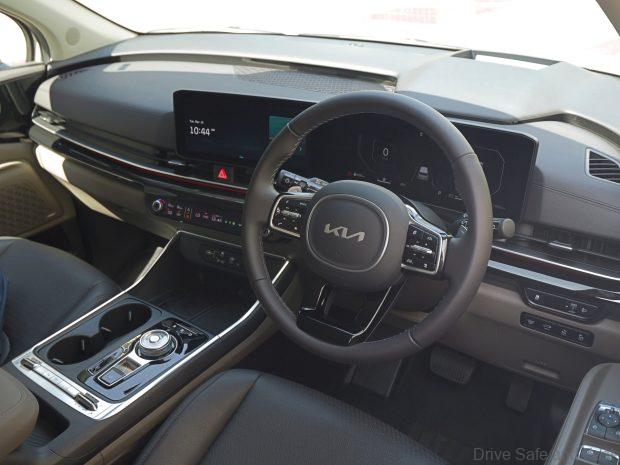
The upholstery upgrade in this 7-seater really does set the tone though. This is perhaps the most pampering and upmarket vehicle ever offered by Kia in Malaysia. The equipment level in here is bordering dangerously close to premium. It’s not just a spec list thing, Kia executes the little things really well, doing a tonne of work to make sure the user experience feels elevated instead of being an afterthought.
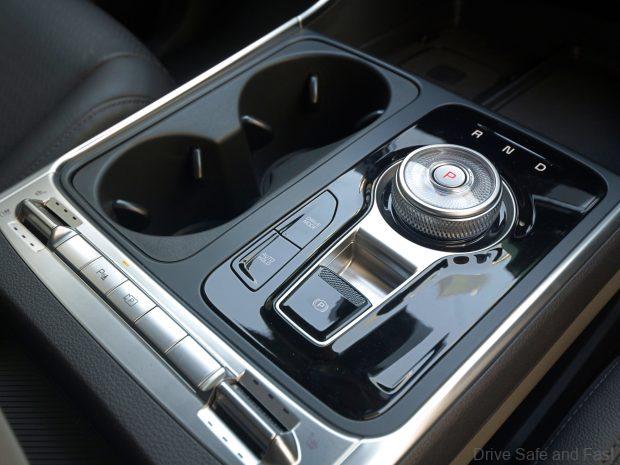
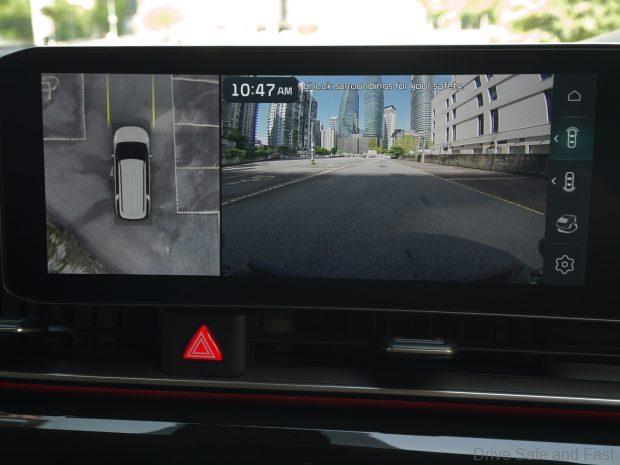
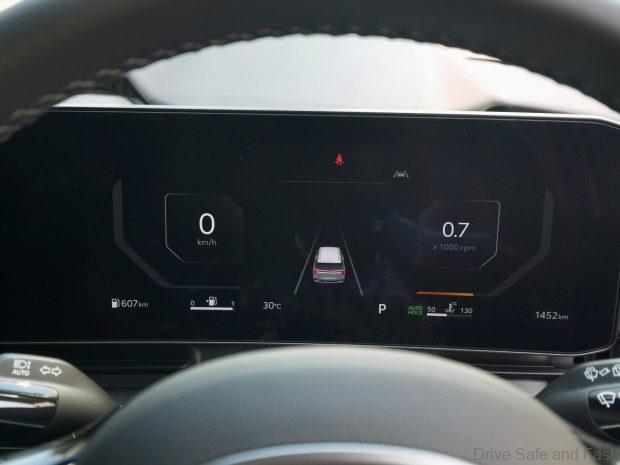
I think this comes across particularly with the curved dual-display (both 12.3″ across) set-up with beautiful, purposeful graphics and animations. In this facelift model, it gets faster processing on the Connected Car Navigation Cockpit system. Even if you’re someone who just leaves the infotainment on Wireless Apple CarPlay or Android Auto, coming back to the vehicle’s default menu interface feels just as polished. In this variant, a heads-up display and full width ambient lighting also elevate the feel of the vehicle while the 12-speaker Bose sound system sets the mood. In this facelift, Kia Malaysia has opted to omit the dual sunroofs, which is fair given our weather.
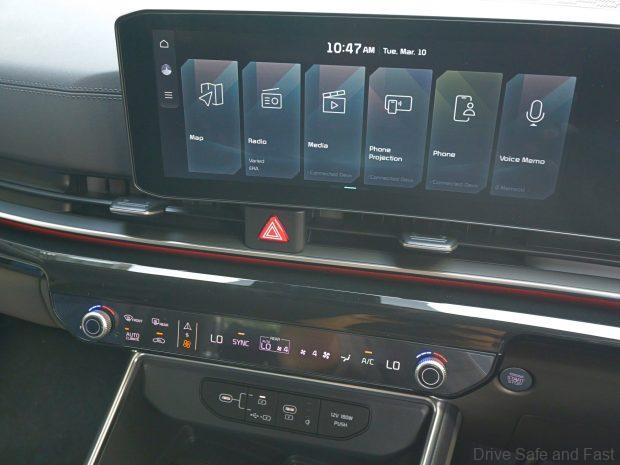
What the Carnival facelift adds that might surprise many is a unique context-switching touch panel. This capacitive control area can be toggled between media controls and climate controls with just a push of a button. It’s an interesting approach to blending futuristic and traditional elements of cabin design and we really like the thinking behind this. It shows that Kia aren’t just following the trend but are wiling to try completely novel ideas too.
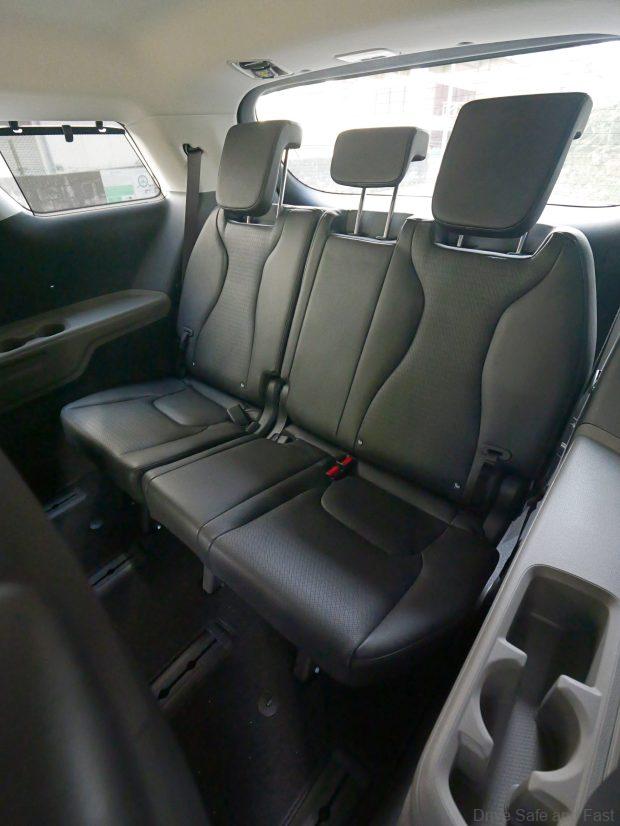
There are other nice-to-haves that one would frankly expect out of a car like this such as a wireless charging pad, 7 USB-C ports, triple zone auto climate control with vents all the way to the last row and 4-way power lumbar support for the driver. Both front seats also get heating and ventilation, perhaps they’re equipped as part of the same package.
In a people mover of this class safety is top priority. Here you get the full ADAS suite including:
- Autonomous Emergency Braking (AEB) now updated with junction turning collision avoidance.
- Adaptive Cruise Control (ACC) with stop-and-go capabilities.
- Lane Centering Assist (LCA).
- Blind Spot Monitoring with collision avoidance alongside active Blind Spot Cameras (these are really cool).
- Rear Cross Traffic Alert with automatic braking.
- Driver Attention Monitor
- Door Opening Warning
- Rear Seat Reminder
You also get 8 airbags and a new front-centre airbag, but the Carnival is safe all the way to the core. This generation moved to the new N3 unibody architecture, giving SUV-like construction with plenty of Ultra High Strength Steel and hot-stamped components in a safety ring structure forming a rigid cage around the passenger compartment. The N3 chassis was also designed for a multi-load path design to absorb kinetic energy in a head-on collision while the Multi Collision Braking system kicks in to stop the vehicle from spinning or rolling further. Compared to previous generation Carnivals and certainly when compared to ladder frame MPVs at large, the latest Kia Carnival is just on another level in terms of passive safety.
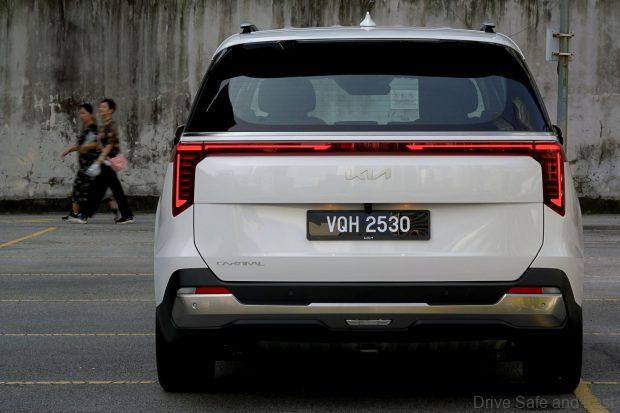
Another advantage of moving the Carnival to the N3 platform comes in the form of rigidity. This chassis is a stiff one thanks to loads of bonding materials and structural adhesives ON TOP of the high strength steel. Not only does all of this make sure the car’s safer in a crash, it also stops the vehicle body from flexing under load. The direct result is that you have a long-wheelbase MPV that drives like a continental sedan and with the NVH to match as nothing in the cabin creaks.
Speaking of NVH, it’s probably time to address the elephant in the room: the Carnival’s still powered by a diesel. No, it’s not noisy at all. This is an ultra modern turbo diesel that you barely hear in the cabin at idle. It doesn’t sound much noisier than a petrol engine even when you’re standing in front of it. The real issue with diesel is the volatility of pricing. While plenty have been scared off diesels due to the insane market prices earlier this year, I think the government has come a realisation that most of the economy actually runs on the stuff. So, as we mentioned in the pre-amble, diesel is now subsidised and that argument can be put to rest. I suspect it’ll take a while for the market to come back around, but just looking at it objectively, if you’re still fuelling up at the pumps 200 litres of subsidised diesel will almost certainly return better mileage than 200 litres of petrol if all other conditions are fixed. And if you’re going to be worried about the long term sustainability of a diesel subsidy, you may as well be worried about the long term sustainability of petrol subsidies too.
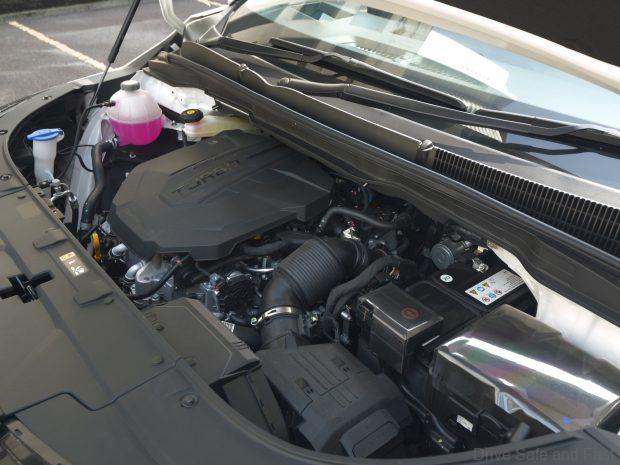
What I do know is that it’s the best fuel type for long distance travel. I know this because I took my extended family on a trip last year and this trip involved 3 vehicles, a Kia Carnival diesel, a petrol 4-door sedan and an all-electric SUV. The EV needed to be charged on multiple occasions. The petrol vehicle was thirsty when fully laden and needed a fill up at the midway point. The Carnival diesel? Well that thing completed the trip and had range enough to reach the opposite end of the country. That’s the secret weapon of a diesel. If you want to chew up highway miles, nothing comes close to a modern diesel and in the Kia Carnival, the 2.2L Smartstream is about as modern and refined as diesels come. Plus it is engineered to take on the palm oil-derived metyl esthers in our B10 and B15 blends anyway.
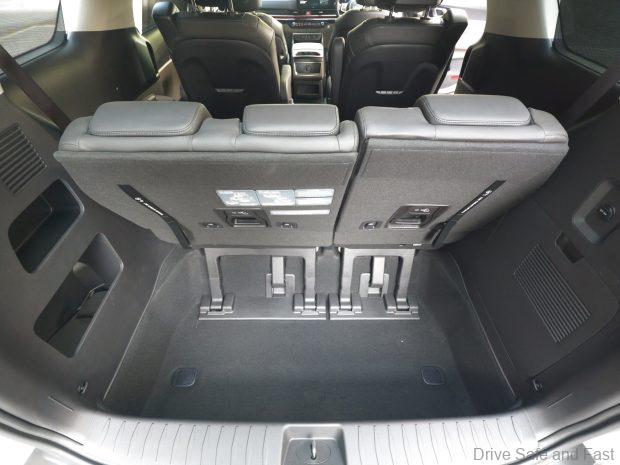
Overall, with the Kia Carnival 7-seater, what you’re getting is a solid sub-RM250K option that gives you a taste of luxury with seating for a large family. Subjectively, there are always going to be people who aren’t interested in a diesel engine. I think that’s fair. However, I do think that it’s objectively the best choice for a vehicle in this class, as PHEV set-ups can push the weight to absurd levels. Objectively, the biggest weakness of the Kia Carnival is also the source of its strength (quite literally).
The N3 chassis has squeezed the floor and roof a little closer together, so the Carnival has a pretty narrow aperture with the rear doors slid open. It’s not as easy to get in and move about versus many of its large rivals. However, as mentioned, the architecture also puts it in a class of its own when it comes to safety. Plus it’s also the reason why the Carnival looks so sleek. Its wagon-like appearance is honestly really a big part of the appeal as plenty of car buyers just don’t find the typical MPV shape to be appealing in the slightest. So, if what you’re looking for is a car that drives with poise and elements of a premium sedan/SUV, plus you’re satisfied with the subsidy, the Carnival 7-seater is an excellent choice.
Kia Carnival 2.2D 7-Seater Specifications
Engine: Inline-4, 16-Valve, DOHC, Turbo Diesel
Capacity: 2151cc
Gearbox: 8-speed Conventional Automatic
Max power: 199hp @ 3800rpm
Max torque: 440Nm @ 1750rpm
Price: RM248,888

