

Starting July 1, 2024, China has officially implemented several new national standards for vehicle crash safety.
Among them, the standard titled “Occupant Protection in Motor Vehicle Side Impact Collisions” represents the most stringent upgrade in nearly two decades. Did you know that occupant protection in side-impact collisions (often called T-bone accidents) is especially critical because a vehicle’s side offers significantly less crush space and structural rigidity than its front or rear.
The new standard increases the mass of the moving deformable barrier used in side-impact tests from 950kg to 1,400kg, better reflecting real-world traffic collision scenarios. The updated standard also introduces additional requirements specifically for electric vehicles: after a side impact, the traction battery within the passenger compartment must not shift position, and it must not catch fire or explode within 30 minutes following the collision.
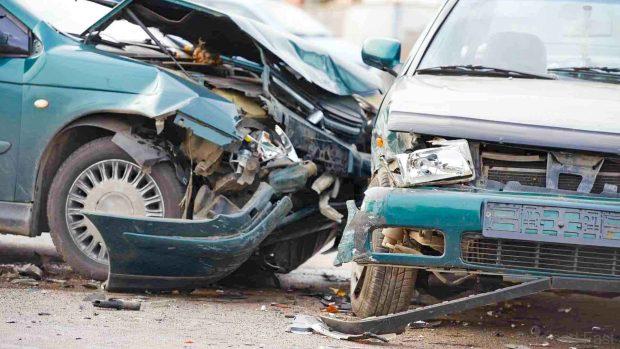
Additionally, vehicles must automatically activate their hazard warning lights after a crash to alert other road users and help prevent secondary accidents.
Furthermore, the concurrently implemented standard “Rear Impact Safety Requirements for Passenger Cars” imposes stricter safety demands regarding rear-end collisions. Building upon existing fuel leakage controls, this standard adds new provisions concerning battery safety and vehicle fire risk.
It also tightens fuel leakage monitoring by shifting from an average measurement over the entire test duration to strict surveillance during the first five minutes immediately after impact.
It is a well known fact that serious injury from side impacts is generally higher than in frontal impacts because there is little vehicle structure with which to control crash forces and for an occupant sitting adjacent to the struck side of the vehicle there is little room for sideways motion before striking the interior.
Research has shown that side-impact collisions account for roughly 30% of passenger vehicle fatalities. To protect occupants, automotive safety features rely on reinforced body structures, advanced airbag systems, and active seatbelts to absorb impact forces and prevent severe cabin intrusion.
Additionally, just because a vehicle is large or has a 5 Star NCAP rating, like a MPV or pickup truck, it does not translate to it being safer.

